Mitsotakis Puts Europe on Notice Over Turkey: Sanctions on Ankara if Cable Tensions Escalate
 ΧΡΟΝΟΣ ΑΝΑΓΝΩΣΗΣ 12 '
Πηγή Φωτογραφίας: eurokinissi//Mitsotakis Puts Europe on Notice Over Turkey: Sanctions on Ankara if Cable Tensions Escalate



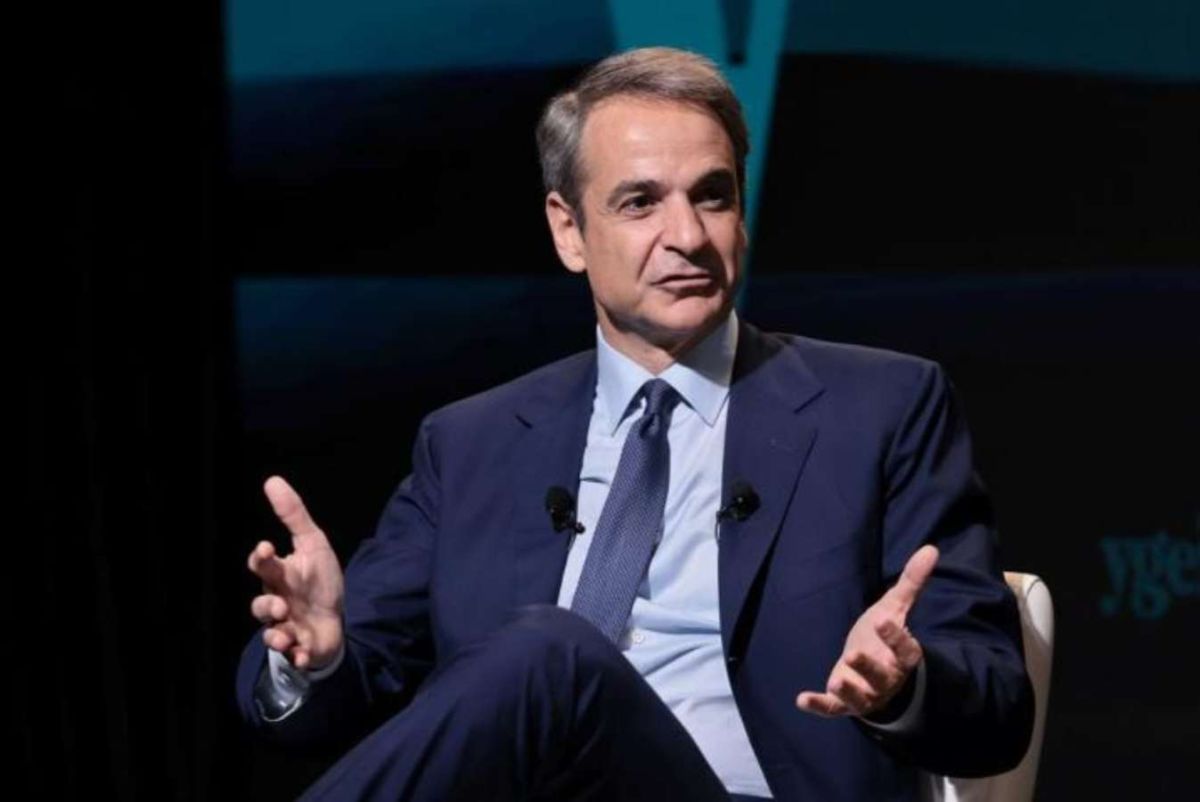
Greek Prime Minister Kyriakos Mitsotakis is preparing to put European leaders on notice over Turkey’s actions in the Eastern Mediterranean, as Athens seeks to transform the dispute surrounding the Greece–Cyprus electricity interconnector into a broader European security issue.
According to a report by the Greek newspaper Apogevmatini, the Greek government is considering raising the possibility of European Union sanctions against Turkey if Ankara escalates tensions, particularly through naval deployments that could obstruct work on the strategically important submarine electricity cable.
The initiative reflects a deliberate shift in Athens’ diplomatic strategy: rather than treating the dispute as another bilateral confrontation with Turkey, Greece wants European partners to recognize that the project is part of the continent’s critical energy infrastructure.
At the center of the confrontation is the French research vessel Abeille Marengo, which is conducting work associated with the Greece–Cyprus interconnector in waters where Turkey asserts maritime claims based on its disputed 2019 agreement with Libya.
The stakes extend well beyond the immediate maritime dispute. For Athens, the question is whether the European Union will defend a strategic energy project when a third country challenges its implementation.
Mitsotakis Takes the Cable Dispute to European Leaders
The Greek government is pursuing a strategy of internationalizing the dispute, seeking to place Turkish objections within the wider framework of European energy security and international maritime law.
According to Apogevmatini, citing reporting attributed to POLITICO, Mitsotakis intends to raise both the electricity interconnector and the Turkey–Libya maritime agreement during discussions with European leaders in Dublin.
Athens argues that any attempt to obstruct the research vessel would represent more than a bilateral disagreement between Greece and Turkey.
It would also affect a project designed to connect Cyprus to the European electricity grid, reducing the island’s long-standing energy isolation.
The central diplomatic question is whether European governments will regard any Turkish obstruction as a challenge to European infrastructure and energy policy rather than simply another Greek–Turkish dispute.
That distinction could prove decisive in determining the EU’s response.
EU Sanctions Against Turkey: A Scenario Under Consideration
The possibility of European restrictive measures has emerged as part of the diplomatic debate, according to the Greek newspaper.
The scenario would become particularly relevant if Turkey deployed naval forces to interfere with the research operations or otherwise escalated tensions at sea.
However, no EU sanctions decision has been announced, and no formally confirmed Greek proposal specifying such measures has been made public.
Any sanctions would require political agreement within the European Union under the applicable decision-making procedures.
Athens’ immediate objective appears to be diplomatic: establishing that interference with an EU-supported energy project could carry wider political consequences.
For Turkey, such a development could increase the costs of pursuing maritime claims through operational pressure.
For Brussels, it would raise a difficult question about the credibility of European strategic autonomy and the protection of infrastructure serving EU member states.
The Abeille Marengo and the Disputed Waters Near Karpathos
The French research vessel Abeille Marengo has become the focal point of the latest confrontation.
Its operations are linked to the planned submarine electricity connection between Greece and Cyprus, known as the Great Sea Interconnector.
The project crosses a strategically sensitive part of the Eastern Mediterranean, where Greece and Turkey maintain competing interpretations of maritime jurisdiction.
Ankara invokes its 2019 maritime delimitation agreement with Libya, which Athens rejects as unlawful and invalid because, in Greece’s view, it disregards the maritime entitlements of Greek islands.
The dispute is not merely about the presence of a research vessel.
It concerns whether Turkey can effectively impose its interpretation of maritime boundaries on activities authorized by Greece and Cyprus.
For Athens, allowing Turkish objections to determine whether the work proceeds could establish a precedent extending far beyond the cable itself.
Cyprus Responds With Counter-NAVTEX
Cyprus has also entered the diplomatic and operational confrontation by issuing a counter-NAVTEX in response to Turkish maritime notifications concerning the French vessel’s activities.
Nicosia insists that Turkey has no authority to issue navigational warnings within the relevant Cypriot NAVTEX service area.
“The only authorized station in the NAVTEX area of responsibility of the Republic of Cyprus is JRCC Larnaca,” the Cypriot position states.
According to the Greek report, the Cypriot notice remains valid until March 20, 2027, while the corresponding Greek NAVTEX is valid until March 6, with the possibility of an extension if the work requires it.
The competing notifications underline the broader jurisdictional disagreement.
A NAVTEX is a maritime safety communication and does not, by itself, establish sovereignty or determine maritime boundaries. Nevertheless, competing notices can become instruments through which governments assert and publicize their positions.
The coordinated Greek and Cypriot response is intended to demonstrate that the research operations are proceeding under the authorization of the authorities Athens and Nicosia consider competent.
Marinakis: No Authorization Was Requested From Turkey
Greek government spokesperson Pavlos Marinakis has rejected suggestions that Turkey was asked to authorize the research operations.
Speaking to Action 24, he emphasized that the French vessel was operating under Greek and Cypriot authorization.
“Some had already predicted that the cable would never be laid. Now it is being laid. Then they claimed that permission would be requested from Turkey. No authorization was issued by Turkey, as the company’s announcement makes clear,” Marinakis said.
He also highlighted the significance of the location.
“A vessel is operating with Greek and Cypriot authorization in an area covered by the illegal and invalid Turkey–Libya memorandum,” he stated.
The government’s argument rests on a distinction between diplomatic notification and formal authorization.
Informing another country of planned maritime operations does not necessarily imply recognition of that country’s jurisdiction.
Athens maintains that no Turkish approval was sought or required.
Ankara Claims It Gave Its Consent
Turkey has presented a different interpretation of events.
According to Turkish media accounts cited by Apogevmatini, Ankara sent a diplomatic note to France on November 10, claiming that it had communicated its consent to the French vessel’s planned research activities.
Turkish sources argue that the relevant maritime area falls within Turkey’s continental shelf claims and that activities there require Turkish consent.
They have also claimed that Ankara “prevented another attempt by Greece to create faits accomplis in the disputed maritime area.”
The Turkish position is that it does not oppose regional energy interconnections in principle, provided the rights of all parties are respected.
Greece rejects the suggestion that Turkish consent was either requested or legally necessary.
The distinction is important: Turkey’s unilateral assertion that it gave consent does not establish that Greece, Cyprus or France recognized Turkish authority over the operations.
The competing narratives illustrate how the same maritime activity can be used to advance sharply different diplomatic claims.
The French Diplomatic Note Becomes a Political Flashpoint
Another source of controversy is the diplomatic communication sent by France to Turkey and Egypt concerning the research activities.
Greek opposition parties have demanded publication of the document, arguing that its precise wording is essential to understanding whether Paris merely notified regional governments or used language that could be interpreted as seeking consent.
Deputy Prime Minister Kostis Hatzidakis said in an interview with Parapolitika 90.1 FM that the French diplomatic note would be made public.
Its publication could help clarify the nature of the communication and the competing interpretations surrounding it.
Hatzidakis also defended the government’s broader foreign policy record, referring to previous tensions with Turkey, Greece’s defense cooperation with France and the planned acquisition of F-35 fighter aircraft.
“They said we would lose at Evros, where migrants would cross the border. That did not happen. They said we would lose in the Aegean in 2020. The prophets of doom were proven wrong,” he said.
He concluded his response with a colloquial expression of frustration:
“Enough is enough.”
Bakoyannis: Turkey Would Have Publicized Any Request for Permission
Former Greek foreign minister and New Democracy lawmaker Dora Bakoyannis also weighed in on the dispute.
She argued that if the French authorities had formally requested permission from Ankara, Turkey would have immediately publicized the request to strengthen its maritime claims.
According to Bakoyannis, the Turkish government would have turned such a development into a major diplomatic and communications campaign.
Her assessment supports the government’s broader position that notification of maritime activities should not be confused with recognition of Turkish jurisdiction.
The argument also highlights the importance of the precise wording used in diplomatic correspondence.
Gerapetritis to Brief Opposition Leaders
The controversy is also intensifying domestic political debate in Greece.
Foreign Minister Giorgos Gerapetritis is scheduled to hold individual meetings with opposition party leaders on Saturday, November 14, to brief them on the diplomatic developments.
The meetings follow demands for clarification about the French diplomatic note, Turkish NAVTEX announcements and the operational status of the interconnector.
The opposition has pressed the government to explain whether the project can continue without interruption and what diplomatic assurances have been secured.
The government, meanwhile, argues that the vessel’s activities demonstrate that Turkish objections have not prevented progress.
The briefings are expected to focus on the legal, operational and diplomatic dimensions of the dispute.
Why the Great Sea Interconnector Matters to Europe
The Great Sea Interconnector is intended to link Cyprus to the European electricity network through Greece.
For Cyprus, the project carries considerable strategic importance because it could end the island’s electricity isolation and provide greater access to the European energy market.
For the European Union, the project forms part of the broader effort to strengthen energy connectivity, diversify supply options and improve the resilience of critical infrastructure.
But the latest confrontation has introduced an additional challenge.
The EU must consider what happens when the construction of infrastructure involving member states encounters opposition from a neighboring country asserting competing maritime rights.
That question goes directly to Europe’s ability to protect its strategic interests.
The Real Test: Will Europe Back Greece if Turkey Escalates?
Athens is attempting to transform the cable dispute into a test of European solidarity.
The Greek position is that a strategic interconnector serving EU member states should not be subject to a unilateral Turkish veto.
At the same time, the government faces the practical challenge of ensuring that the work continues without a dangerous confrontation at sea.
The prospect of sanctions remains conditional and politically uncertain.
European governments would have to assess the nature of any Turkish action, the legal circumstances and the potential consequences of restrictive measures.
For Mitsotakis, however, the immediate objective is to establish a clear European political framework before any further escalation.
The message Athens wants to deliver is that Turkey’s maritime claims cannot be allowed to determine the future of a European energy project.
Whether Brussels is prepared to translate that principle into concrete diplomatic pressure — or potentially sanctions — may become the next defining question in the Eastern Mediterranean.
Source: pagenews.gr
Διαβάστε όλες τις τελευταίες Ειδήσεις από την Ελλάδα και τον Κόσμο