Trump Opens NATO Security Talks with Putin — Is Europe’s Future Now on the Negotiating Table?
 ΧΡΟΝΟΣ ΑΝΑΓΝΩΣΗΣ 14 '
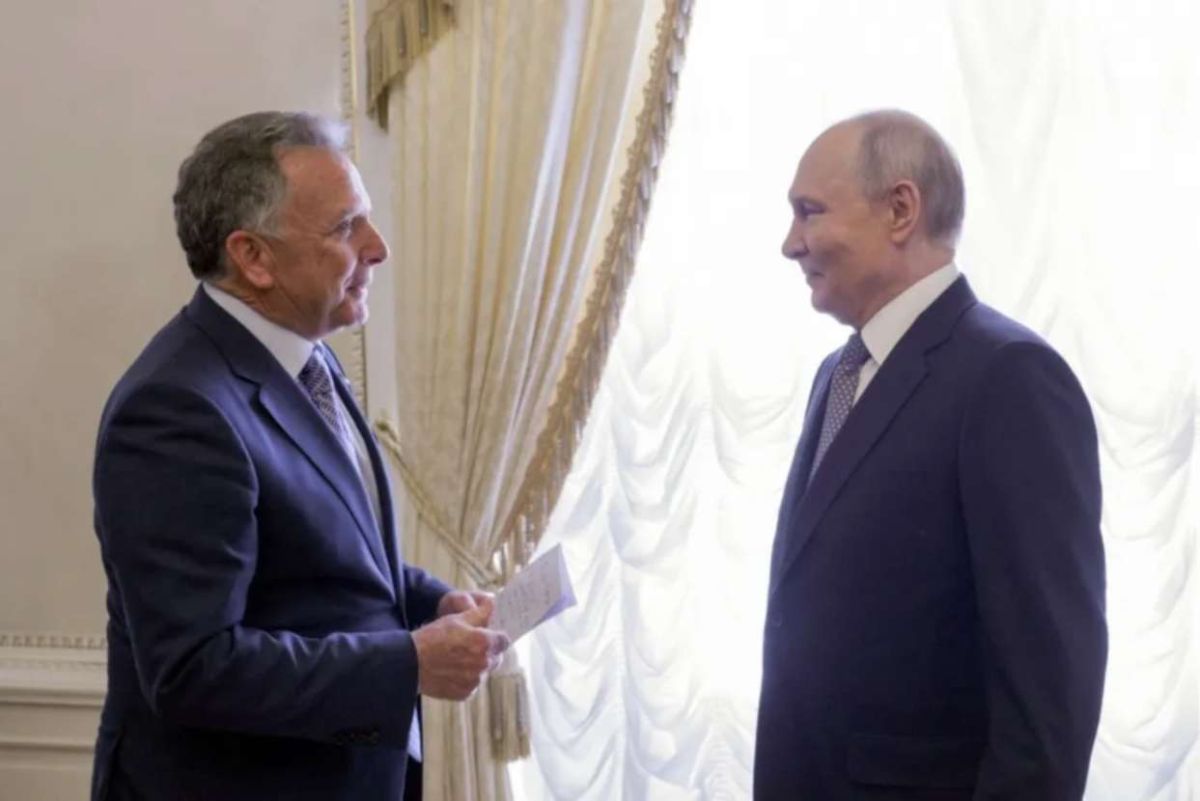
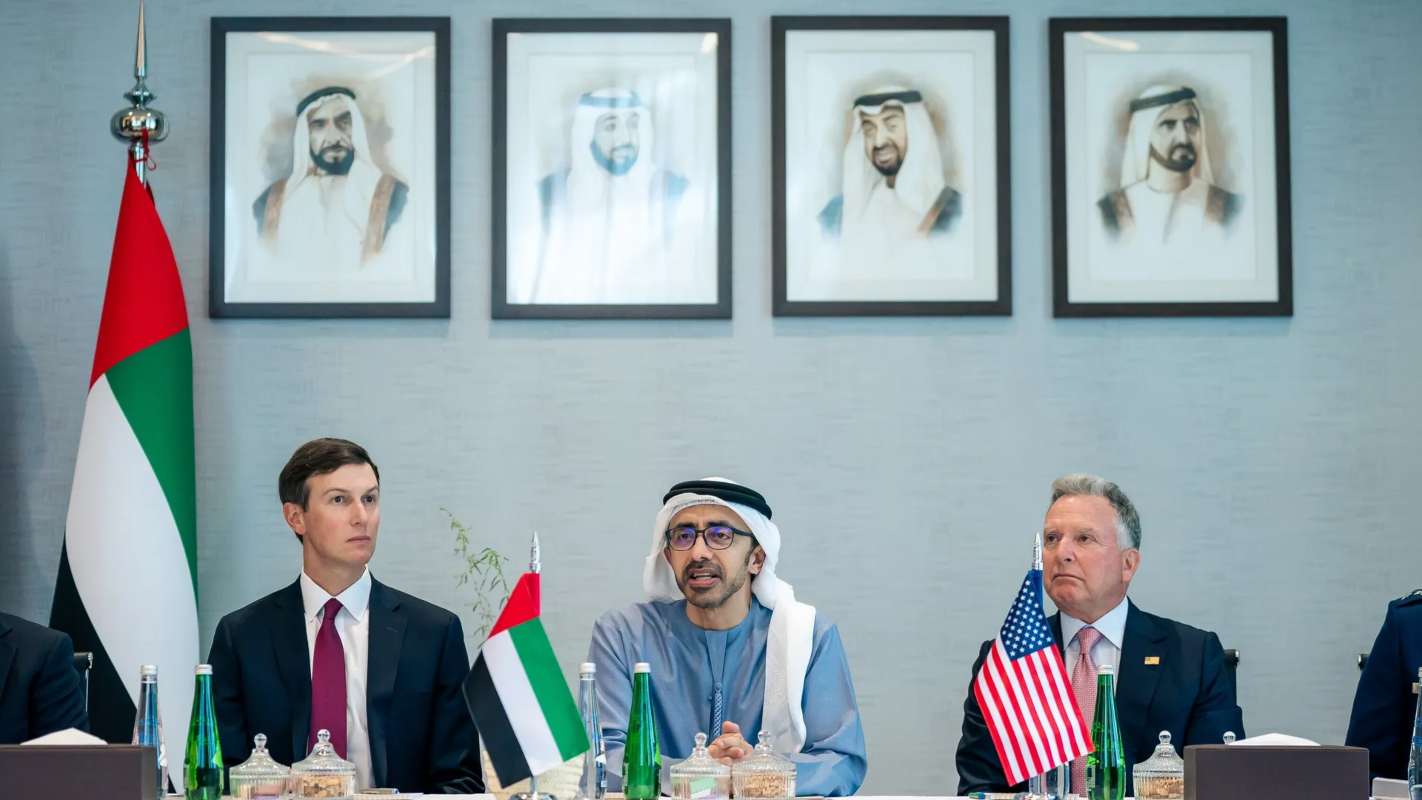
Πηγή Φωτογραφίας: Russian President Vladimir Putin (R) speaks with US President Donald Trump's special envoy Steve Witkoff (L) before a meeting at the Constantine Palace in Strelna, a suburb of St. Petersburg, Russia, 21 October 2026. EPA, GAVRIIL GRIGOROV / SPUTNIK / KREMLIN POOL/UAE Deputy Prime Minister and Foreign Minister Abdullah bin Zayed Al Nahyan and President Trump envoys Steve Witkoff (R), and Jared Kushner (L) attend trilateral talks on Ukraine in Abu Dhabi on Tuesday. Photo: UAE Foreign Affairs Ministry Office/Handout/Anadolu



The United States is opening a potentially far-reaching geopolitical negotiation with Russia, one that could reshape Europe’s security architecture for decades.
According to an exclusive report by Axios, the administration of President Donald Trump has asked Moscow to submit a comprehensive proposal for a future European security agreement, including specific Russian commitments to reduce military tensions across the continent.
The initiative represents a potentially significant shift in Washington’s diplomatic approach.
For years, Russia has demanded restrictions on NATO enlargement and reductions in the alliance’s military presence in Eastern Europe. Previous US administrations rejected those demands, particularly any arrangement that would give Moscow influence over the sovereign decisions of European countries.
The Trump administration now appears willing to discuss elements of a broader security framework as part of negotiations to end the war in Ukraine.
But there is a crucial distinction.
Washington is not simply asking Putin what he wants from NATO. It is demanding to know what Russia is prepared to offer Europe in return.
That question could determine whether the initiative produces a genuine framework for mutual security or becomes another opportunity for Moscow to press for strategic concessions.
The Axios Revelation: Washington Demands Russian Commitments
Citing two sources familiar with the negotiations, Axios reports that US envoys Steve Witkoff and Jared Kushner asked Russian officials to develop a new proposal addressing the continent’s future security arrangements.
The American request goes beyond Moscow’s longstanding objections to NATO enlargement.
It calls for concrete Russian measures that could reduce tensions and reassure European governments about the risk of future military aggression.
Kushner explained Washington’s approach:
“We told the Russians they have their own desires and fears, but they also need to come up with different de-escalation measures and different proposals if they want Europe to look at them favorably.”
The statement reveals the central logic of the American initiative.
A future agreement cannot simply impose limitations on NATO or Ukraine while leaving Russian military behavior unchanged.
Instead, Washington wants Moscow to identify the obligations it would accept as part of a reciprocal arrangement.
The challenge will be determining whether those commitments are credible, enforceable and compatible with the sovereignty of European states.
Is NATO Enlargement Back on the Negotiating Table?
The initiative touches one of the most sensitive foundations of the post-Cold War European order.
Russia has repeatedly demanded restrictions on NATO’s expansion and changes to the alliance’s military posture near Russian territory.
In December 2021, shortly before its full-scale invasion of Ukraine, Moscow submitted draft security agreements to Washington and NATO.
Those proposals included legally binding commitments against further NATO enlargement and restrictions on certain allied military deployments.
Western governments rejected demands that would allow Russia to determine the security choices of independent states.
The new US initiative does not mean Washington has accepted those Russian positions.
It does, however, create a diplomatic opening in which Moscow could revive demands previously regarded as unacceptable.
For Poland, the Baltic states and other countries along NATO’s eastern flank, the implications could be profound.
Any agreement affecting allied deployments or future enlargement would directly influence their security calculations.
The fundamental question is whether a new arrangement would reduce the risk of confrontation or grant Russia an informal sphere of influence over neighboring countries.
The Return of Russia’s 2021 Security Demands
The question of Europe’s security architecture resurfaced during the trilateral negotiations involving the United States, Russia and Ukraine in Abu Dhabi.
According to Axios, Russian negotiators argued that Putin had raised security concerns in 2021 and that the Biden administration had failed to respond adequately.
That argument reflects Moscow’s interpretation of the events preceding the invasion. It does not establish that Russia’s military aggression was justified or unavoidable.
The American representatives responded that the strategic environment had changed substantially since 2021.
As a result, any new Russian proposal would need to reflect present conditions rather than simply reproduce Moscow’s earlier demands.
Washington wants an updated framework incorporating practical measures to reduce military tensions.
The difficult part will be translating broad diplomatic language into specific and verifiable obligations.
What Could a New European Security Agreement Include?
A future Russia–Europe security arrangement could theoretically include military transparency measures, mechanisms to prevent dangerous incidents, restrictions on certain military activities and communication channels for crisis management.
Similar instruments have existed in earlier European arms-control and confidence-building agreements.
However, no publicly confirmed proposal establishes that these specific measures have already been agreed upon or formally included in the current negotiations.
The distinction between mutual de-escalation and geopolitical concessions is essential.
A reciprocal agreement could establish mechanisms that reduce the risk of military confrontation.
An agreement granting Moscow influence over NATO decisions or the defense policies of neighboring countries would raise fundamentally different questions.
European governments are particularly concerned that a diplomatic settlement could undermine the principle that sovereign states are free to determine their own security arrangements.
That concern is central to the emerging debate.
Putin Wants a Deal About Europe — But Questions Europe’s Role
The American initiative faces an immediate contradiction.
Moscow wants negotiations on the future of European security while expressing skepticism about the direct participation of European governments.
During the Abu Dhabi talks, Russian chief negotiator Vladimir Medinsky criticized European leaders, accusing them of prolonging the war through their support for Ukraine.
“I don’t understand what there is to discuss with them,” he said.
Medinsky also argued that the conflict in Ukraine reflected deeper problems in Europe’s security structure.
“In Ukraine, an abscess simply burst. The entire organism needs treatment — a bandage is not enough.”
The metaphor reflects Moscow’s effort to portray the war as part of a broader crisis in relations between Russia and the West.
Ukraine and its Western partners reject the argument that the invasion was an inevitable consequence of NATO policy.
For European governments, meanwhile, negotiations over the continent’s security without their meaningful participation would be politically and institutionally unacceptable.
Washington’s Assurance: No Deal Behind Europe’s Back
According to Axios, the United States has made clear to Russian negotiators that European governments must participate in subsequent rounds of discussions.
Washington recognizes that any future security agreement would require the political consent and practical cooperation of the countries directly affected.
An American source familiar with the negotiations reportedly stressed that the United States would not agree to a new European security architecture without Europe and Ukraine.
The same source indicated that Washington would not grant Moscow veto power over European security decisions.
Those assurances are important, but their significance will ultimately depend on how the negotiations develop.
European concerns extend beyond formal representation.
Governments want guarantees that any agreement will preserve national sovereignty, NATO’s credibility and the principle of collective defense.
The central issue is not merely who sits at the negotiating table.
It is who will have the authority to make decisions once an agreement is reached.
Von der Leyen: End the War Before Redesigning Europe’s Security
European Commission President Ursula von der Leyen has argued that negotiations over a new European security architecture should follow the end of the war in Ukraine.
Washington’s approach differs primarily over timing.
The Trump administration wants discussions about Ukraine’s peace settlement and the future relationship between Russia and Europe to proceed in parallel.
According to the Axios account, European officials in Abu Dhabi agreed to engage in parallel consultations while insisting that final decisions on the security framework should come only after the war ends.
This disagreement is more than procedural.
European governments fear that negotiating long-term security concessions before a sustainable peace settlement could weaken their bargaining position.
Washington, by contrast, sees future security guarantees as an essential component of the peace process itself.
Ukraine at the Center of a Much Larger Agreement
The American strategy reflects the central dilemma facing the negotiations.
Ukraine cannot accept a settlement that leaves it vulnerable to another Russian attack.
Russia wants clarity about the military and political arrangements that would exist after the war.
A source familiar with the American approach told Axios that Zelenskyy needs to understand the security guarantees before agreeing to a settlement, while Putin also wants clarity about the postwar framework.
That helps explain why Washington increasingly treats the two negotiating tracks as interconnected.
Ending the war is no longer simply a matter of drawing a line across the battlefield.
It involves defining the future military balance in Eastern Europe and the role of the United States as a central guarantor of European security.
Abu Dhabi: Difficult Talks, Limited Progress
The new initiative emerged during negotiations held in Abu Dhabi on November 10 and 11.
The American delegation included Witkoff, Kushner and General Alexus Grynkewich, commander of US European Command.
Russian and Ukrainian representatives arrived with major disagreements over territory, ceasefire conditions and the foundations of a possible peace agreement.
Kushner acknowledged the difficulties:
“We had some very difficult discussions.”
Ukrainian negotiator Davyd Arakhamia described the Russian delegation’s limited room for maneuver:
“The Russians came with strict instructions. It was very difficult to soften them, but the process ended productively.”
Despite the disagreements, the parties reached an agreement in principle on a major exchange of prisoners of war.
The final number of prisoners and the timetable for implementation had not been confirmed when the talks concluded.
No substantive breakthrough was announced on a ceasefire or the territorial dispute.
Russia continues to demand control over the whole of Donbas, including areas that remain under Ukrainian control.
Kyiv rejects any settlement that would force it to surrender territory under Russian pressure.
Moscow and Dublin: The Next Diplomatic Test
The initiative is now moving into another phase.
Witkoff and Kushner are expected to raise the request for an updated Russian security proposal directly with Putin in Moscow.
They also intend to explore whether the Kremlin would accept European participation in future negotiations.
Subsequent consultations with Ukrainian President Volodymyr Zelenskyy are planned in Dublin.
The future of European security is also expected to feature prominently in upcoming consultations among European leaders.
The immediate question is whether Moscow will present specific de-escalation measures or simply restate its longstanding demands.
The answer will provide an early indication of whether Russia is prepared to negotiate a reciprocal agreement.
The Strategic Dilemma for Poland and the Baltic States
The implications of the initiative are particularly serious for countries on NATO’s eastern flank.
Poland, Estonia, Latvia and Lithuania have consistently opposed arrangements that could restrict their ability to host allied forces or determine their defense policies.
Their security calculations are shaped by Russia’s invasion of Ukraine and the broader deterioration of relations between Moscow and NATO.
For these countries, a reduction in military tensions would be welcome only if it did not undermine their ability to defend themselves.
A security agreement that limited NATO deployments without credible Russian commitments could create new vulnerabilities.
Conversely, a genuinely reciprocal framework with reliable verification mechanisms might help reduce the risk of escalation.
The difference would depend on the precise obligations, enforcement arrangements and strategic balance established by the agreement.
Could Trump Revive a NATO–Russia Security Framework?
The broader diplomatic effort has revived discussion of mechanisms that once existed to manage relations between Moscow and the Atlantic alliance.
The NATO–Russia Council, established in 2002, was designed to provide a forum for consultation and cooperation.
Its effectiveness deteriorated as relations worsened, particularly following Russia’s actions against Ukraine.
A renewed dialogue mechanism could theoretically provide channels for military communication and crisis prevention.
But reviving institutional dialogue would not automatically resolve the underlying disagreements.
The fundamental challenge remains whether Russia would accept the sovereignty of neighboring states and whether NATO members could negotiate without compromising their collective defense commitments.
A diplomatic framework is only as effective as the political commitments supporting it.
Peace in Ukraine or a New Division of Europe?
The American initiative could become one of the most consequential diplomatic efforts concerning European security since the end of the Cold War.
A balanced agreement based on reciprocal, verifiable commitments could reduce military tensions and help prevent future confrontations.
But an arrangement that restricted Ukraine’s sovereignty or allowed Russia to influence the strategic decisions of European countries could create new instability.
That is the central dilemma behind the negotiations.
Trump is attempting to use the peace process in Ukraine as the starting point for a broader understanding with Moscow.
Putin is seeking recognition of Russia’s strategic interests.
Europe is trying to ensure that its security is not negotiated without its consent.
And Ukraine insists that peace cannot come at the expense of its independence.
The central question is no longer simply when the war will end.
It is whether the security order that emerges afterward will be based on mutual guarantees between sovereign states — or a return to spheres of influence in which major powers determine the choices of smaller nations.
Source: pagenews.gr
Διαβάστε όλες τις τελευταίες Ειδήσεις από την Ελλάδα και τον Κόσμο