“Putin Doesn’t Get to Choose Who Speaks for Europe”: Estonia Backs Costa and Kallas for Ukraine Peace Talks
 ΧΡΟΝΟΣ ΑΝΑΓΝΩΣΗΣ 13 '
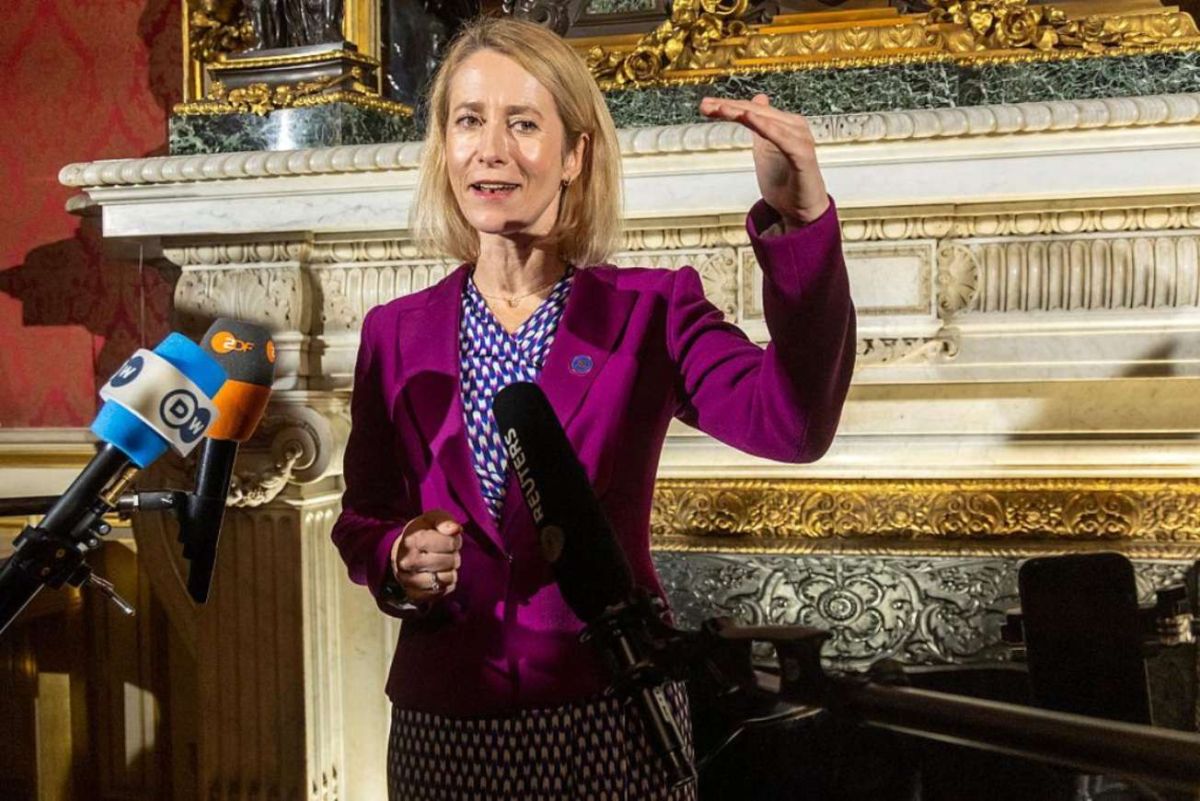
Πηγή Φωτογραφίας: AP Photo//“Putin Doesn’t Get to Choose Who Speaks for Europe”: Estonia Backs Costa and Kallas for Ukraine Peace Talks



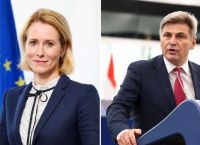
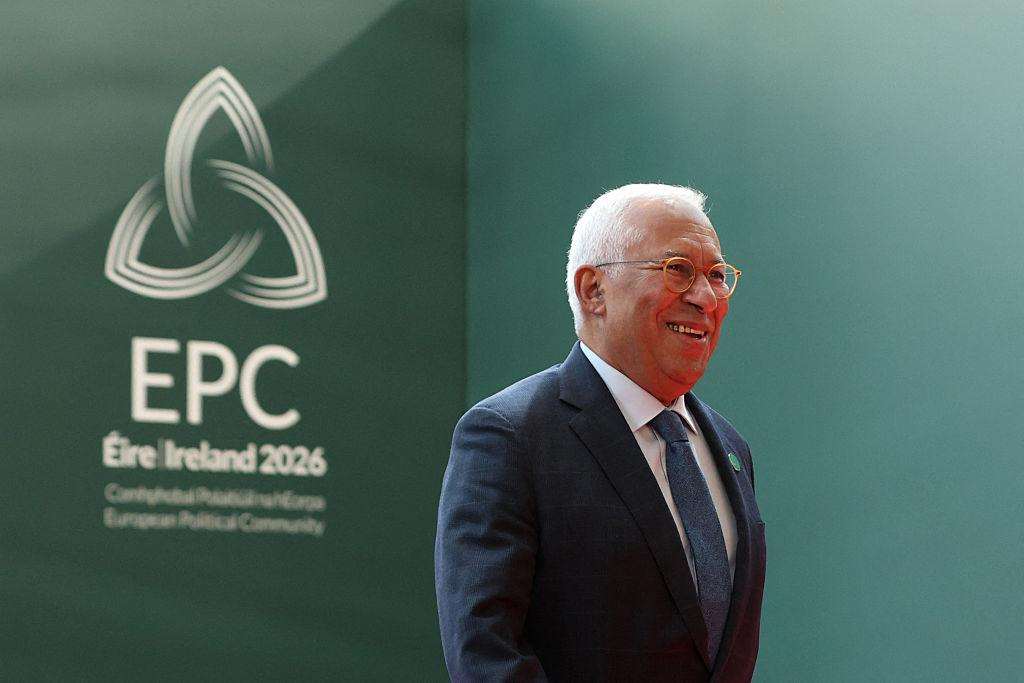
Europe should not allow Vladimir Putin to determine who represents it in negotiations over Ukraine. That is the message from Estonian Prime Minister Kristen Michal, who has called for António Costa and Kaja Kallas to lead the European Union’s diplomatic engagement in efforts to end the war.
Speaking to POLITICO, Michal argued that the EU already has legitimate representatives and does not need to appoint another special envoy.
“Both are clearly accountable to EU countries,” he said, referring to Costa, president of the European Council, and Kallas, the EU’s high representative for foreign affairs and security policy.
His intervention comes as European leaders face mounting pressure to establish a unified position in peace negotiations involving Washington, Moscow and Kyiv.
The dispute is about more than diplomatic protocol. It raises a fundamental question about European political authority: Should the EU speak through its own institutions, or should its most influential member states continue to lead negotiations through national diplomatic channels?
Estonia’s Message: Europe Must Choose Its Own Representatives
Michal’s argument rests on a straightforward principle: European representation should be determined by European governments, not by Moscow’s preferences.
The Estonian prime minister rejected the suggestion that the EU should select an envoy primarily because that person might be acceptable to the Kremlin.
In his view, the decisive criteria should be political legitimacy, institutional accountability and the confidence of EU member states.
That position is particularly relevant to Kaja Kallas.
The former Estonian prime minister has consistently advocated strong European support for Ukraine, tougher sanctions against Russia and a security policy based on deterring further Russian aggression.
Her uncompromising position has made her a prominent figure in European foreign policy, but it has also raised questions among some diplomats about whether Moscow would engage with her directly.
For Estonia, however, Russian objections should not determine the EU’s diplomatic choices.
Michal believes that choosing representatives already accountable to EU governments would strengthen the Union’s legitimacy in any future negotiating framework.
Why Costa and Kallas?
The Estonian proposal would place responsibility for Europe’s participation in peace negotiations with two of the EU’s most senior officials.
António Costa, as president of the European Council, represents the Union externally at the level of heads of state and government on matters relating to the common foreign and security policy, without prejudice to the powers of the high representative.
Kaja Kallas, meanwhile, is responsible for conducting the EU’s common foreign and security policy and coordinating diplomatic positions among member states.
Their roles are complementary, although neither can independently determine a negotiating mandate without the necessary political agreement among EU governments.
Michal argues that this existing institutional framework offers a clearer basis for representation than creating a temporary diplomatic position.
It would also provide continuity.
Both officials serve terms extending to 2029, allowing them to maintain a consistent European position beyond the immediate negotiations.
The proposal reflects Estonia’s preference for collective European decision-making rather than a system dominated by a small number of powerful capitals.
Meloni Pushes the Issue onto the Dublin Summit Agenda
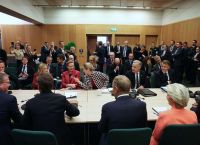
The debate over European representation gained momentum ahead of the informal gathering of EU leaders in Dublin.
Italian Prime Minister Giorgia Meloni raised concerns about the fragmentation of European diplomatic initiatives and the risks of allowing multiple negotiating channels to operate without sufficient coordination.
In a letter to Costa, Meloni called for greater clarity over how Europe should be represented in discussions concerning Ukraine.
Her intervention reflected a growing concern among European governments that separate diplomatic efforts could weaken the EU’s influence.
Several groups of European countries have been involved in discussions about Ukraine’s future security arrangements.
However, those initiatives do not necessarily amount to a single European negotiating position.
Costa agreed to place the issue high on the Dublin summit’s agenda.
The meeting was not necessarily expected to produce an immediate appointment.
Instead, European leaders were seeking to establish a common understanding of how their position should be communicated to Moscow and Washington.
The challenge is to ensure that European governments can influence the substance of a peace settlement without becoming divided over who represents them.
Kushner’s Challenge: Europe Must Find One Voice
Pressure on European leaders has also come from Washington.
Jared Kushner, one of President Donald Trump’s principal negotiators, has publicly questioned Europe’s ability to agree on a single representative.
His remarks highlighted a problem that has repeatedly complicated European diplomacy: the gap between the EU’s collective economic influence and its fragmented foreign-policy decision-making.
The United States has been conducting negotiations involving Russia and Ukraine, while European governments have sought assurances that their interests will be reflected in any eventual agreement.
Recent talks in Abu Dhabi intensified those concerns.
Although European officials participated in a separate expanded meeting, they were not part of the central trilateral negotiating format involving Washington, Moscow and Kyiv.
That distinction matters because a settlement could have far-reaching implications for European security, sanctions, military assistance and Ukraine’s future relationship with Western institutions.
American officials have acknowledged the importance of European involvement, but the precise structure of that participation remains unresolved.
The question for Brussels is whether Europe can establish a coherent negotiating mandate before the next phase of discussions.
France and Germany Resist Giving Brussels Exclusive Control
Estonia’s proposal is not universally supported.
France and Germany have traditionally played leading roles in European diplomacy with Russia and remain reluctant to abandon national channels of communication.
Paris and Berlin believe that their political influence, diplomatic networks and established international relationships can contribute to negotiations.
German Chancellor Friedrich Merz has defended cooperation among Germany, France and the United Kingdom, commonly known as the E3 format.
That framework has also been expanded in certain discussions to include Italy and Poland.
Supporters of these arrangements argue that Europe’s largest powers possess diplomatic resources and security capabilities that can strengthen the continent’s negotiating position.
However, the approach raises concerns among smaller EU countries.
A negotiating framework dominated by a handful of governments could leave other member states with limited influence over decisions affecting their security.
For Estonia and other countries on NATO’s eastern flank, that is particularly sensitive.
They argue that the future European security order cannot be negotiated exclusively by the continent’s largest powers.
Le Pen’s Camp Challenges the EU’s Diplomatic Authority
The disagreement also reflects competing political visions of European integration.
In France, Marine Le Pen’s National Rally has challenged the idea that EU institutions should represent member states in major international negotiations.
National Rally MEP Fabrice Leggeri argued that foreign policy should remain primarily a national responsibility.
He questioned whether Costa or Kallas could legitimately speak on behalf of France.
His position reflects a broader sovereignty-based interpretation of European cooperation, under which national governments retain control over major diplomatic decisions.
The EU treaties, however, explicitly provide for a common foreign and security policy and establish external representation responsibilities for both the European Council president and the high representative.
The practical issue is therefore not whether the EU possesses any foreign-policy role, but how far that role extends when member states have different strategic priorities.
The debate over Ukraine has become a test of whether European foreign policy can operate collectively while respecting national diplomatic authority.
Denmark Warns Against Uncoordinated Contacts with Putin
Concerns over European unity have intensified following separate diplomatic contacts between European leaders and Moscow.
Recent telephone conversations involving leaders from Finland and Norway prompted questions about whether individual initiatives were being sufficiently coordinated with European partners.
Danish Prime Minister Mette Frederiksen warned against an approach in which European governments pursue separate diplomatic strategies without maintaining a common position.
Her intervention reflected the concern that Moscow could receive inconsistent messages from different European capitals.
Such differences could complicate negotiations and undermine efforts to maintain a united approach to sanctions, security guarantees and support for Ukraine.
For Estonia, empowering Costa and Kallas would help address this problem.
A common European negotiating framework would not necessarily prevent bilateral diplomacy.
It would, however, establish a clearer distinction between national diplomatic contacts and positions formally agreed by the EU.
Why Estonia Sees European Unity as a Security Priority
Estonia’s position is closely connected to its geography and security outlook.
The Baltic country shares a border with Russia and has consistently supported military assistance for Ukraine, stronger European defence capabilities and sanctions against Moscow.
For Tallinn, the outcome of the war is directly linked to the future security environment in northeastern Europe.
Estonian officials have repeatedly argued that a settlement must not reward territorial aggression or create conditions for renewed conflict.
They also believe that smaller European countries must participate meaningfully in decisions affecting the continent’s security architecture.
A negotiating arrangement controlled primarily by major powers could create concerns that the interests of smaller states might receive insufficient attention.
Michal’s proposal therefore combines an institutional argument with a strategic one.
He wants the EU to act through representatives who are accountable to all member states, rather than through an informal grouping of national leaders.
Zelenskyy Wants Europe to Make a Decision
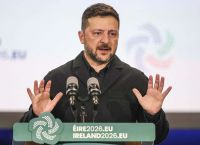
Ukrainian President Volodymyr Zelenskyy has also urged European governments to clarify their representation in peace negotiations.
Kyiv considers European participation essential because any agreement could directly affect Ukraine’s future security guarantees, reconstruction financing and relationship with the European Union.
The negotiations extend beyond the immediate question of ending hostilities.
Russia has sought broader discussions about Europe’s security architecture, while European governments insist that decisions affecting the continent cannot be taken without their participation.
For Ukraine, a coordinated European position could provide additional support in discussions over long-term military assistance and the enforcement of any future agreement.
However, the precise mandate and responsibilities of a European representative remain subject to agreement among member states.
That leaves the EU facing an increasingly urgent institutional and diplomatic decision.
A Wider Battle Over Europe’s Place in the Peace Process
The dispute over Costa and Kallas exposes a structural weakness in European diplomacy.
The European Union has considerable economic influence, provides substantial assistance to Ukraine and has a direct stake in the outcome of the war.
Yet its ability to act as a single diplomatic participant remains constrained by differences among national governments.
Estonia wants the Union to rely on its established institutions.
France and Germany continue to emphasize the importance of national diplomatic capabilities.
Italy is pushing for stronger coordination.
And Ukraine wants a decision that will ensure Europe has a meaningful role in the negotiations.
These positions are not necessarily irreconcilable, but they require agreement on political authority, negotiating mandates and accountability.
The Dublin discussions have therefore become part of a broader debate about the future of European foreign policy.
The Real Question: Can Europe Negotiate as One?
The argument over who should represent Europe is unfolding while diplomatic efforts to end the war in Ukraine continue.
For Estonia, the answer is institutional clarity.
Costa and Kallas already hold positions established under the EU treaties and are accountable through European political structures.
For other governments, the challenge is to preserve the influence of national diplomacy while avoiding fragmentation.
The eventual arrangement could combine EU-level representation with the participation of major European powers.
But any such formula would need to address the concerns of smaller member states and establish a coherent negotiating position.
Michal’s central message is that Europe must decide for itself who speaks on its behalf, rather than allowing Moscow’s preferences to shape that decision.
Whether EU leaders ultimately choose Costa and Kallas, appoint a separate envoy or develop a broader negotiating format remains unresolved.
What is clear is that the Ukraine peace process is also forcing Europe to confront a fundamental question about its own political identity.
Can the European Union translate its economic power, military assistance and collective security interests into a single diplomatic voice — or will its influence continue to depend on negotiations among its most powerful capitals?
Source: pagenews.gr
Διαβάστε όλες τις τελευταίες Ειδήσεις από την Ελλάδα και τον Κόσμο