Agios Lavrentios: The Village Untouched by Time
 ΧΡΟΝΟΣ ΑΝΑΓΝΩΣΗΣ 7 '
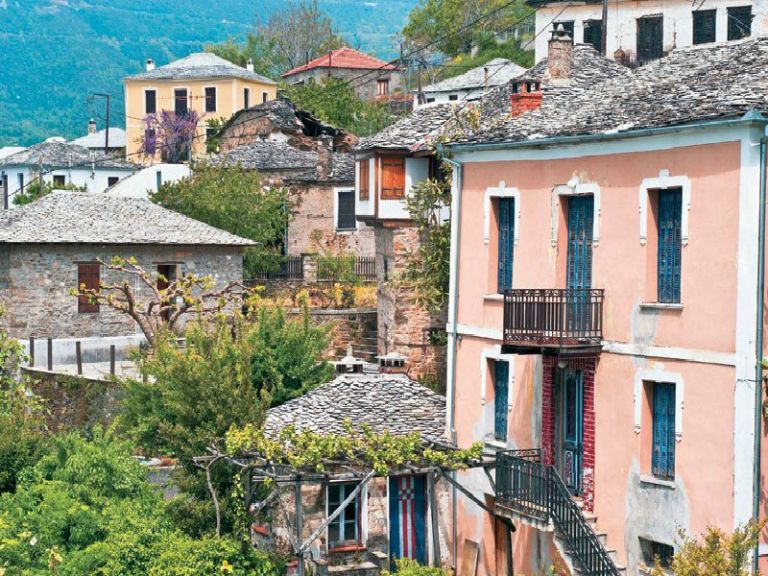
Πηγή Φωτογραφίας: Travelstyle



Located just 20 kilometres from Volos, in western Pelion, the village takes its name from the nearby homonymous monastery of Agios Lavrentiou.
The picturesque and unspoiled setting of this traditional Greek village enchants every wondrous visitor.
In the quiet little village of Agios Lavrentios, the sounds of nature resonating from the village’s streams and brooks, provide the magical background music for spectacular scenes of luscious countryside and quaint streets, accompanied by trademark hospitality of the residents.
Agios Lavrentios carefully preserves its traditional architecture with many churches, mansions, squares, fountains and stone-paved cobblestone streets.
History of Agios Lavrentios
The monastery of Agios Lavrentiou, from which the village takes its name, was built by Roman Catholic Benedictine monks (the Amalfis) during the period of the Crusades in the 11th century.
The monastery was later abandoned to be rebuilt as an Orthodox monastery by Saint Lawrence of Trebizond, a monk from the Great Lavra of Mount Athos.
The reconstruction of the monastery was completed in 1378, with the financial help of the Byzantine emperor Alexios III Komnenos. Today the Monastery of Agios Lavrentiou, located just outside the village, is a women’s convent.
The village began to be inhabited around the time when the Monastery of Agios Lavrentiou was reconstructed, in the 14th century.
The location of the village, and the relative autonomy of the region from central authorities, led to the development of agriculture, crafts and trade. Thus, in the centuries to follow, with the arrival of other new inhabitants – Epirotians, Vlachs and islanders – and with the development of agriculture and trade; the village of Agios Lavrentios grew greatly, reaching a period of prosperity from the end of the 17th century up until the middle of the 19th century.
The Agios Laurentians cultivated olives and fruit trees on the slopes below their village up to the plain between Agria and Lechonia, with the olive trade to all the Balkans and the Danube regions bringing them great profits.
Διαβάστε όλες τις τελευταίες Ειδήσεις από την Ελλάδα και τον Κόσμο