


Greece’s investment momentum set to outlive recovery fund boost, says Bank of Greece
Πηγή Φωτογραφίας: eurokinissi//ΔΕΘ 2025 - LiveGreece’s investment momentum set to outlive recovery fund boost, says Bank of Greece



The Bank of Greece sees continued investment growth after the phase‑out of the Recovery and Resilience Facility, supported by SNSRF allocations, unused RRF loan windows, record EIB financing and a surge in FDI — signaling a shift toward a more private‑sector‑driven Greek investment model.
In its latest assessment of the Greek economy’s trajectory beyond the European Union’s Recovery and Resilience Facility (RRF), the Bank of Greece signals that the nation’s investment boom will not lose momentum once the current Recovery Fund cycle ends. Rather, a blend of ongoing EU structural funds, un‑drawn RRF loans, strong foreign direct investment (FDI) and improved domestic financing conditions are expected to uphold investment momentum.
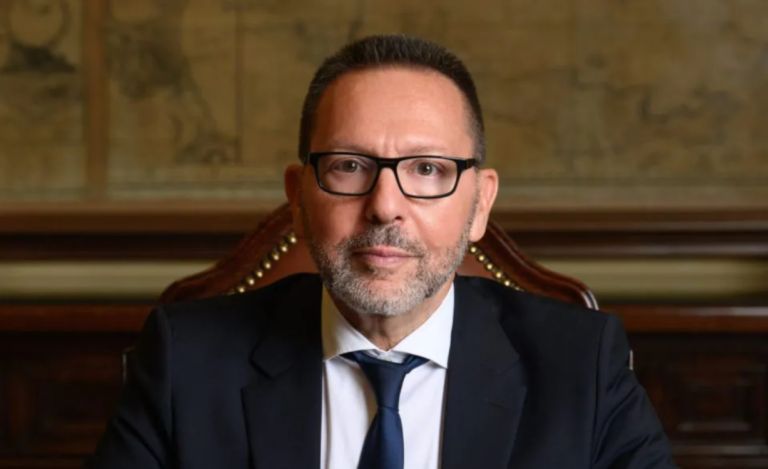
According to central bank Governor Giannis Stournaras, the risk of an “investment gap” — a sharp retrenchment after the RRF’s conclusion — is being mitigated by the interplay of existing and upcoming EU funding programs such as the Structural Funds (ΕΣΠΑ) combined with the residual loan component of the RRF, which remains active through 2029.
Post‑RRF Funding Landscape: SNSRF and Loan Windows
The Bank of Greece’s analysis highlights that the total financial envelope from the pre‑existing SNSRF (ΕΣΠΑ), the RRF and the current programming period remains broadly similar, acting as a “bridge” that cushions the transition to a post‑Recovery Fund world. This continuity is critical as the grants portion of the RRF — approximately €18.2 billion — nears full implementation, while the loan bracket (€17.8 billion) still has around €9.8 billion to disburse through 2029. A portion of these loans — roughly **€2 billion — will be channelled through the Hellenic Development Bank to support targeted lending for small and medium enterprises (SMEs).
Alongside this, some €23 billion in EU structural funds remain to be absorbed under the SNSRF 2021‑27 cycle through the end of the decade, offering another layer of fiscal underpinning. Moreover, preliminary proposals for the EU’s next multi‑annual budget (2028‑34) envisage around €49.2 billion in public expenditure commitments for Greece — roughly on par with the current envelope — affording further continuity in EU capital flows.
FDI Surge and Private Sector Strength
Perhaps the most optimistic indicator comes from FDI trends. Bank of Greece data show that foreign direct investment surged to roughly €11 billion in the first 11 months of 2025, more than double the level of the same period in 2024 — a clear signal of rising global investor confidence in Greek assets. This uptick persists despite broader international headwinds, including geopolitical tensions and tariff pressures.
Private investment is projected to play an increasingly dominant role in Greece’s growth mix. Forecasts from the Ministry of Economy point to overall investment growth of around 10.2% in 2026, while the Bank of Greece estimates an 8.6% expansion, with private capital increasingly outpacing public spending. By 2029, projections suggest private investment could comprise as much as 78 % of total investment activity, up from 61 % in 2026.
External Support and Financial Sector Backing
External institutions are also stepping up. The European Investment Bank (EIB) is poised for another strong year of financing in Greece, with expected commitments near €4 billion in 2026, following an all‑time high of €3.5 billion in 2025. These inflows reinforce funding across strategic sectors and serve as a catalyst for further private capital deployment.
Domestically, the banking sector has strengthened its capacity to underwrite investment. According to more recent central bank commentary, credit to non‑financial corporations has expanded at robust rates, while non‑performing exposures continue to decline, underpinning a more resilient financial system capable of directing cheaper financing toward productive investment.
The Road Ahead: Structural Challenges and Opportunities
Despite this encouraging picture, analysts caution that Greece still contends with structural challenges, including an investment gap relative to EU peers, demographic headwinds, and the need for ongoing reforms to fully capitalize on available funding. The central bank itself has noted that while strong baseline projections exist, sustained reform and efficient fund absorption remain vital to prevent bottlenecks.
As Greece transitions from the Recovery Fund’s stimulus phase toward a more private‑sector‑led investment model, the interplay between EU capital, domestic financial capacity and global investor appetite will determine whether the country’s growth trajectory can continue beyond the RRF era — and potentially reposition Greece as one of Southern Europe’s more dynamic investment destinations.
Source: pagenews.gr
Διαβάστε όλες τις τελευταίες Ειδήσεις από την Ελλάδα και τον Κόσμο







Το σχόλιο σας