Fertilizer Crisis: The “Invisible Shock” That Could Spill Into Food Prices and Inflation
 ΧΡΟΝΟΣ ΑΝΑΓΝΩΣΗΣ 6 '
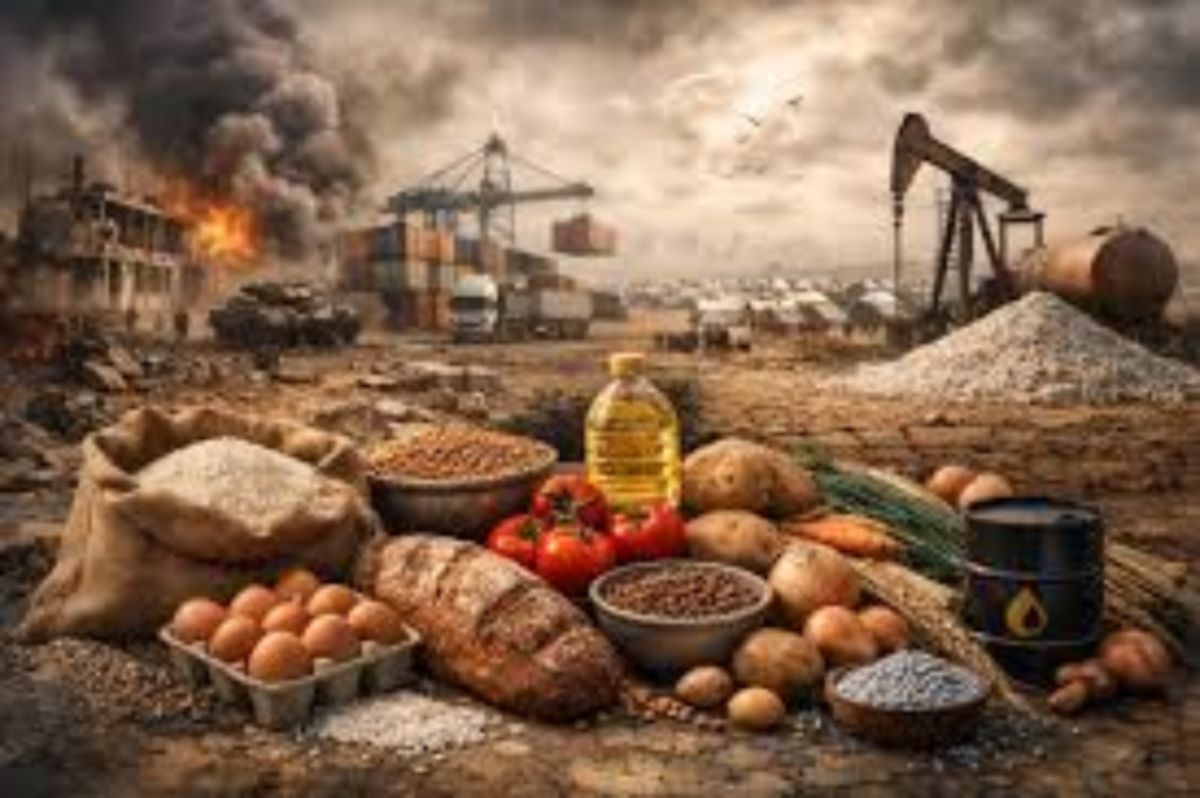
Πηγή Φωτογραφίας: pixabay//Fertilizer Crisis: The “Invisible Shock” That Could Spill Into Food Prices and Inflation



The global fertilizer market is undergoing a non-linear stress test. While supply disruptions linked to geopolitical tensions in the Middle East and ongoing trade restrictions are significant, the system has so far avoided a full-scale breakdown. The data suggests that stabilization mechanisms still exist, but they operate at a higher structural cost and within a far more fragile geopolitical environment.
The 2022 Shock: The Baseline for Comparison
The most important reference point is the 2022 Russia–Ukraine war. Following sanctions on Russian energy exports and restrictions on Belarus, global fertilizer markets experienced an unprecedented price shock.
Prices of fertilizers surged between 150% and 300% at their peak in 2022, particularly for nitrogen-based fertilizers such as urea and ammonia. Natural gas, a core input for nitrogen fertilizer production, also spiked, amplifying production costs globally.
Although markets gradually stabilized in 2023–2024, prices did not return to pre-war levels. Instead, the industry reset to a structurally higher price floor, reflecting a new geopolitical baseline.
Today’s Crisis: Less Extreme, More Complex
Compared to 2022, the current disruption is less violent but more fragmented.
Recent price increases are estimated in the range of 20% to 70%, depending on fertilizer type and region. Unlike the systemic shock of 2022, today’s pressures stem from multiple localized sources: potential disruptions in the Strait of Hormuz, intermittent production shutdowns in the Middle East, and periodic export restrictions from major producers.
This creates a different type of risk: not collapse, but persistent volatility.
Iran–Egypt Production Shock: 15% of Global Supply at Risk
A key vulnerability lies in nitrogen fertilizer production in Iran and Egypt. Together, these two countries account for approximately 15% of global nitrogen fertilizer output.
During recent escalations, Iran temporarily shut down seven ammonia and urea production units, driven by security concerns. Historical patterns suggest that such disruptions typically cause:
- Short-term price spikes of 30% to 80%
- Normalization within 3 to 9 months, assuming production recovery
This reinforces a key pattern: fertilizer shocks tend to be sharp but not permanent unless supply destruction is structural.
The Strait of Hormuz: A Critical Pressure Point
The Strait of Hormuz remains a strategic chokepoint not only for oil and LNG, but also for fertilizer-related trade flows.
- Around 15% of global fertilizer exports are linked to flows passing through the broader Gulf region
- Approximately 20% of global LNG trade is exposed to the same corridor, indirectly affecting fertilizer production costs via energy inputs
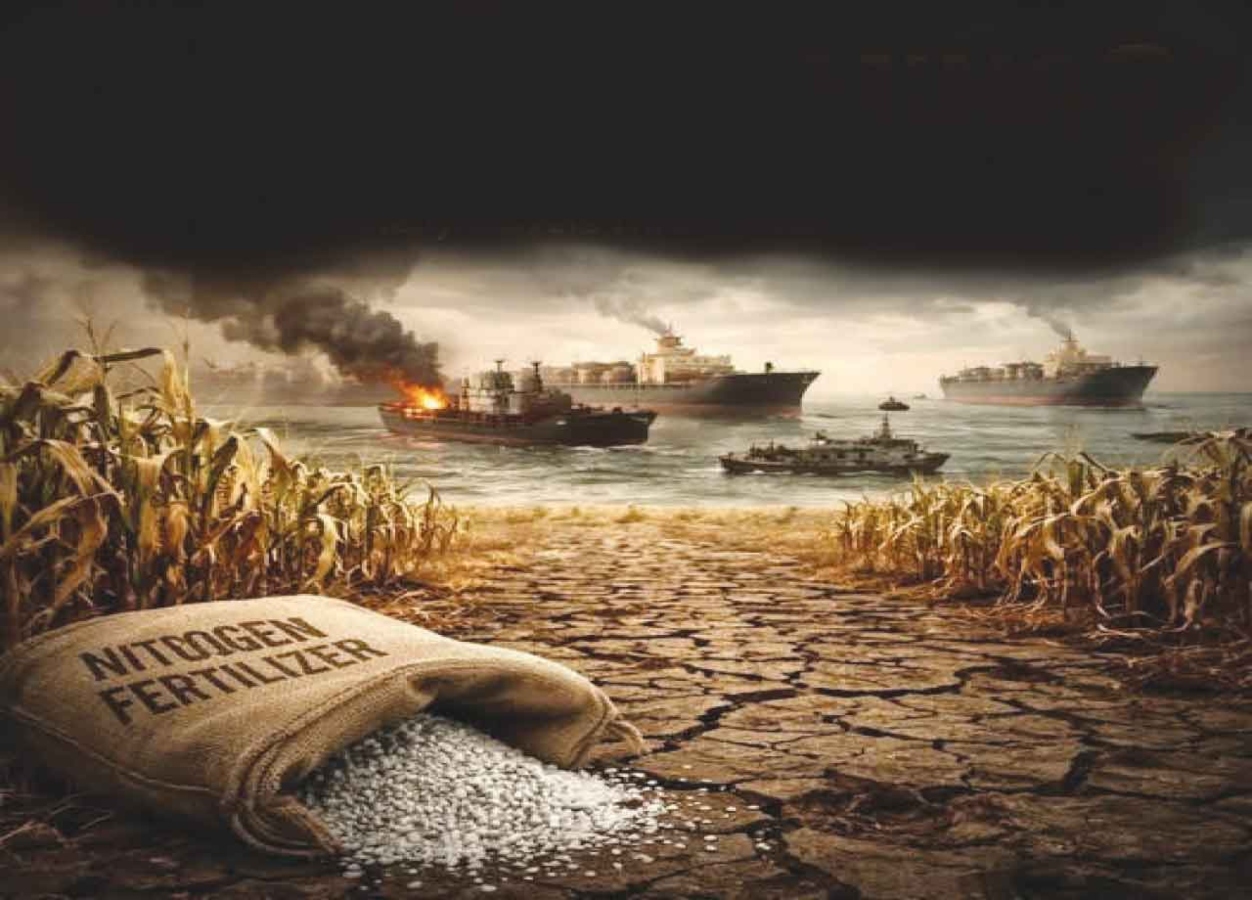
If disruptions persist, the expected economic effects include:
- Shipping delays of 10 to 30 days
- Insurance cost increases of 30% to 120%
- Final product cost increases of 15% to 40%
These are not supply collapses, but friction costs — and in commodity markets, friction alone is inflationary.
Structural Power: Russia, China, and Belarus
The global fertilizer system is heavily concentrated:
- Russia exports 20–25 million tons annually, representing roughly 15% of global fertilizer trade
- China produces about 30% of global urea output, and can restrict exports by up to 40% during domestic tightening cycles
- Belarus controls roughly 20% of global potash supply
Combined, these three actors influence 40% to 55% of critical fertilizer inputs, giving them significant leverage over global pricing.
Why the Market Does Not Collapse
Despite shocks, the system avoids breakdown due to several stabilizing mechanisms:
- Seasonal demand cycles differ between hemispheres, preventing synchronized global shortages
- Developed economies maintain strategic fertilizer inventories covering 2 to 5 months of consumption
- Trade flows can be rerouted, even at higher cost
- Certain sanctions regimes include partial exemptions for fertilizers, particularly from Russia
In practice, this creates a system of “managed dependence” rather than free-market equilibrium.
Trade Paradox: Sanctions Without Full Decoupling
Despite geopolitical tensions, fertilizer trade between adversaries continues:
- The EU and US collectively import an estimated 9–10 million tons of fertilizers from Russia annually (2025 estimates)
- Fertilizers remain partially exempt from sanctions frameworks due to food security concerns
This results in a structural contradiction: political decoupling coexists with physical dependency.
Transmission to Food Inflation
The macroeconomic transmission is delayed but significant:
- A 10% increase in fertilizer prices leads to a 3% to 6% increase in grain production costs
- A 1% increase in food prices contributes approximately 0.2% to 0.4% to CPI inflation in developed economies
- The full impact typically appears with a 6 to 12 month lag
This makes fertilizers a “hidden inflation driver” rather than an immediate shock indicator.
Temporary Relief Mechanisms
Several factors could stabilize the situation:
- Possible “fertilizer corridors” similar to the Black Sea grain deal
- Recovery of Iranian and Russian export capacity after peak domestic agricultural cycles
- Partial reopening of logistics routes through alternative shipping corridors
- Temporary easing of geopolitical tensions to prevent food price spikes
Historically, even limited coordination has been enough to stabilize fertilizer markets after shocks.
Persistent Risks
However, downside risks remain elevated:
- Further escalation in Middle Eastern conflicts
- Targeting of energy infrastructure affecting fertilizer production
- Export restrictions from China or Russia during domestic shortages
- Chronically low global fertilizer inventories
The fertilizer crisis is not a breakdown of the global system — but a structural re-pricing of it.
The world is transitioning into a regime where fertilizers are:
- More expensive
- More geopolitically sensitive
- More concentrated in a few exporting states
- More directly linked to inflation cycles
This is not a short-term disruption. It is a gradual reconfiguration of the global food production chain — one where small supply shocks increasingly translate into global inflation pressure.
In this sense, the fertilizer market is not just reacting to geopolitics. It is becoming one of its central transmission channels into the global economy.
Source: pagenews.gr
Διαβάστε όλες τις τελευταίες Ειδήσεις από την Ελλάδα και τον Κόσμο