F-35 Showdown: Rick Scott Rejects Turkey as US–Ankara Rift Deepens Over S-400 Crisis
 ΧΡΟΝΟΣ ΑΝΑΓΝΩΣΗΣ 4 '
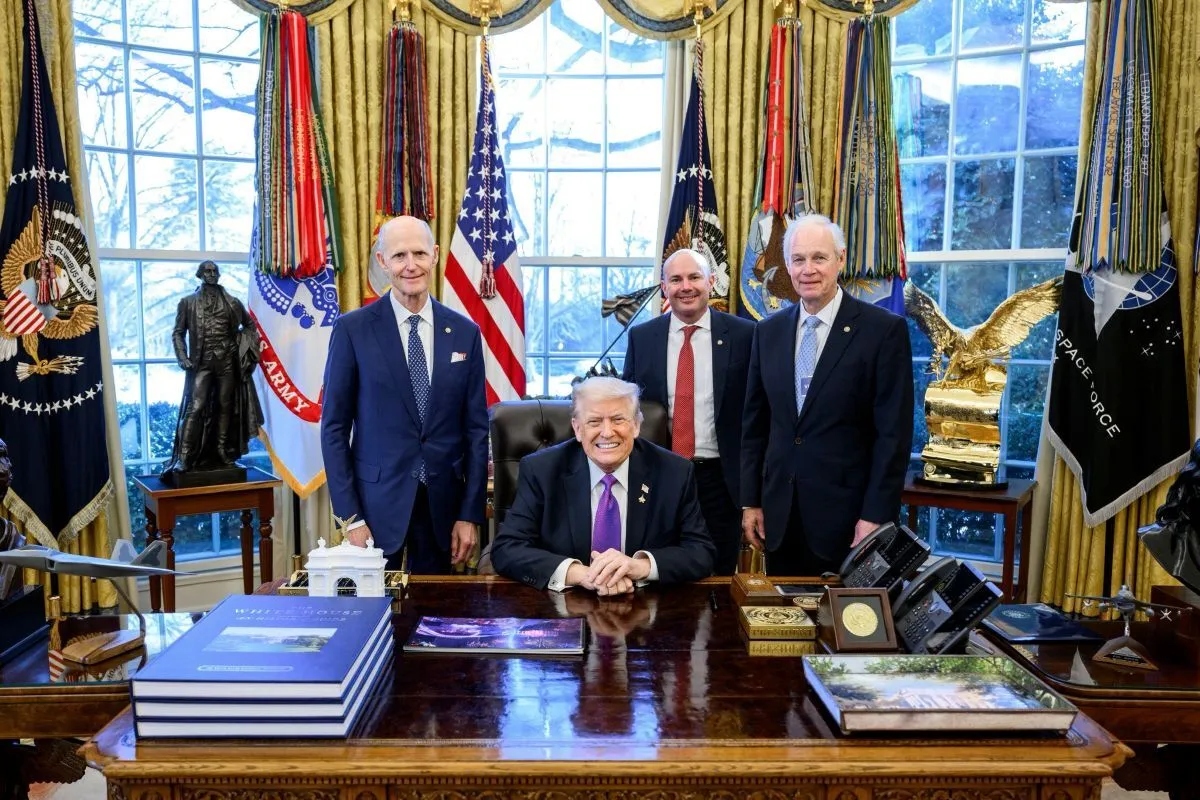
Πηγή Φωτογραφίας: @SenatorRickScott, Facebook//F-35 Showdown: Rick Scott Rejects Turkey as US–Ankara Rift Deepens Over S-400 Crisis



US–Turkey tensions flare again over F-35 fighter jets
A renewed political dispute in Washington has reignited the long-running controversy over whether Turkey could ever return to the F-35 fighter jet program.
Republican Senator Rick Scott from Florida issued a sharp public rebuke of Ankara, responding to comments by US Ambassador Tom Barrack suggesting that defense cooperation with Turkey could eventually be restored.
Scott’s message was uncompromising:“I told you in 2018, Erdoğan, and I’m telling you again: you will NOT get the F-35s.”
The statement reflects a hardline stance in parts of Congress that continue to oppose any reinstatement of Turkey into advanced US defense programs.
The S-400 dispute remains the core issue
At the center of the conflict remains Turkey’s purchase of the Russian S-400 air defense system, which triggered:
- removal from the F-35 joint production program
- US sanctions under CAATSA legislation
- suspension of key defense cooperation channels
US lawmakers argue that operating Russian systems alongside NATO assets creates unacceptable security risks, particularly for stealth technology exposure.
Turkey, the country that funds Hamas, the Muslim Brotherhood, hates Israel, loves Russia and Iran…good luck getting the F35, F16, and any other American made defense platform.
I told Erdoğan in 2018 and I tell him again: you’re NOT getting the F35. https://t.co/7gAHdJGjO1
— Rick Scott (@SenRickScott) April 19, 2026
Ambassador Barrack, however, argued that sanctions have not achieved their intended strategic effect:“Sanctions don’t always work the way people expect. Countries adapt and find ways around them.”
He also suggested that dialogue between President Trump and President Erdoğan could eventually reopen defense discussions.
Washington split: diplomacy vs. deterrence
Barrack’s remarks sparked immediate backlash among Republican lawmakers, highlighting a divide in US policy thinking:
- Hardliners: Turkey is too closely aligned with Russia and Iran to trust with F-35 access
- Moderates/diplomats: NATO unity requires keeping channels open with Ankara
Rick Scott’s intervention reflects the first camp, framing Turkey as strategically unreliable due to:
- defense ties with Russia
- tensions with Israel
- independent regional foreign policy behavior
Turkey’s strategic position
Despite criticism, US officials continue to recognize Turkey’s importance within NATO due to its:
- geographic position bridging Europe and the Middle East
- large military capacity
- role in Black Sea and Mediterranean security dynamics
Barrack emphasized that Turkey remains:“a real state actor with population, resources, and military power that cannot be ignored in regional stability calculations.”
He also suggested that long-term regional cooperation—rather than isolation—would better serve US interests.
Strategic implications
The F-35 dispute is no longer just a procurement issue. It reflects broader strategic disagreements over:
- NATO cohesion and trust
- US–Russia competition
- Middle East security architecture
- Turkey’s independent geopolitical trajectory
For many in Washington, the question is not technical, but political:Can Turkey be both a NATO partner and a purchaser of Russian strategic systems?
The latest exchange between Senator Rick Scott and US diplomatic voices underscores a persistent reality:US–Turkey relations remain structurally tense, despite ongoing diplomatic engagement.
Unless the S-400 issue is resolved or reinterpreted, Turkey’s return to the F-35 program remains highly unlikely in the near term—regardless of political change in Washington or Ankara. Source: pagenews.gr
Διαβάστε όλες τις τελευταίες Ειδήσεις από την Ελλάδα και τον Κόσμο