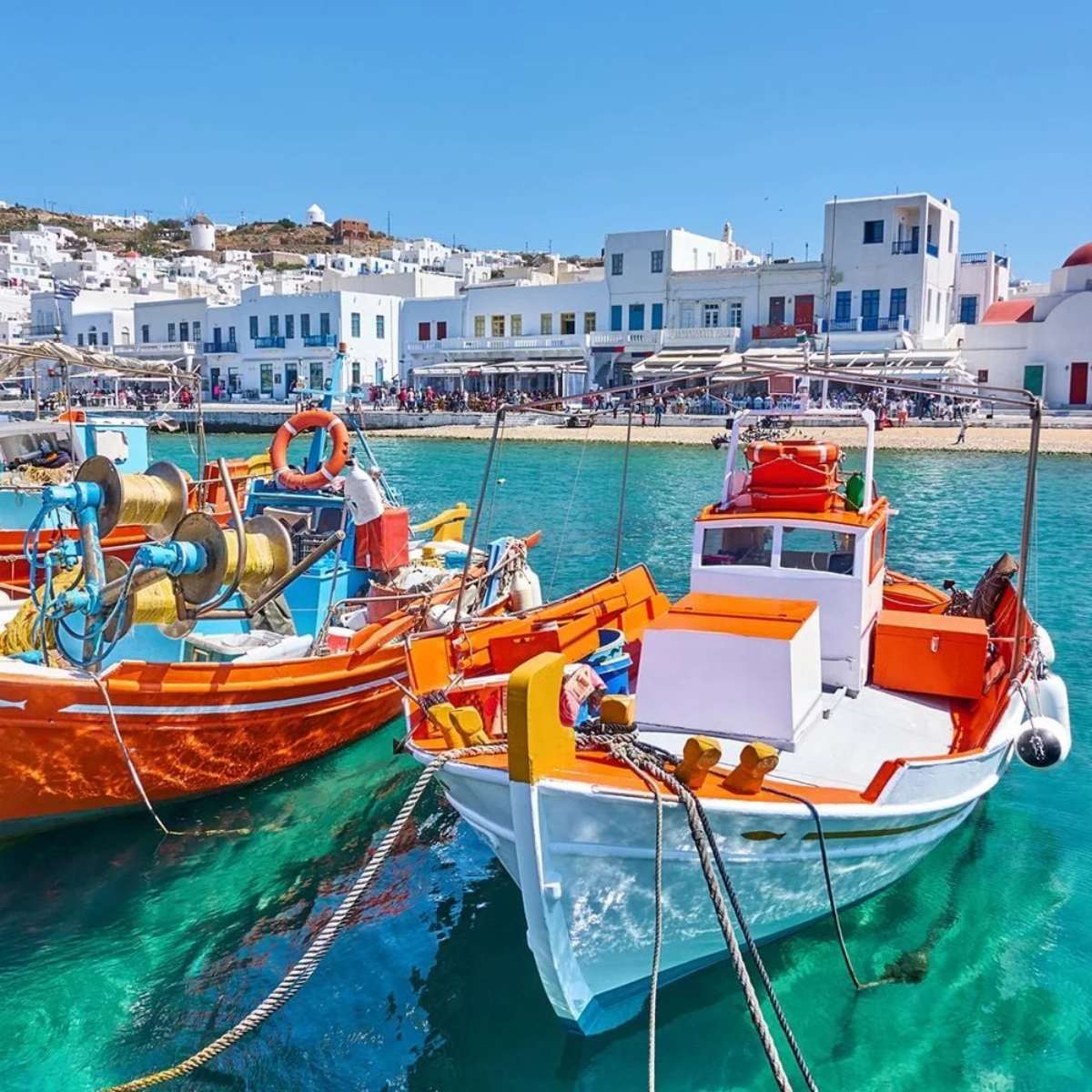
More Tourists, Less Value per Visitor
Greece’s tourism industry continues to deliver impressive records in visitor numbers, but behind the images of packed islands, fully booked hotels and bustling airports lies a more complex economic reality.
According to the latest data from the Bank of Greece, international arrivals (excluding cruise passengers) reached 37.98 million in 2025, an increase of 5.6% compared with 2024. The upward trend has continued during the first half of 2026.
However, while total tourism receipts increased by 9.4%, average spending per trip rose by only 2.8%, and the average length of stay declined by 4.5%.
The figures reveal a structural weakness: Greece is generating growth primarily through higher visitor volumes rather than greater economic value per tourist.
A Growth Model Under Pressure
Tourism remains one of the pillars of the Greek economy, but its growing importance also exposes the country’s vulnerability.
According to Eurostat, inbound tourism receipts account for approximately 9.1% of Greece’s GDP, placing the country among the European Union’s most tourism-dependent economies, behind only Croatia (17.5%), Cyprus, Malta (10.6%), and Portugal (9.6%).
Despite rising overall revenues—which have continued to grow beyond the €21.6 billion recorded in 2024—productivity gains remain limited.
Average visitor spending in Greece continues to lag behind competing Mediterranean destinations such as Spain, Italy, and Portugal, limiting the sector’s contribution to long-term economic growth.


Spain’s Strategy Highlights Greece’s Structural Challenge
The comparison with Spain illustrates the issue clearly.
Although Spain welcomes almost twice as many international tourists as Greece, it consistently achieves significantly higher average spending per visitor.
Its tourism strategy for 2026-2027 focuses on increasing quality rather than quantity by investing in:
- premium urban tourism,
- gastronomy,
- cultural experiences,
- conference and business tourism,
- year-round destinations.
The objective is no longer attracting more visitors but increasing the value generated by each traveler.
Greece, by contrast, continues to rely heavily on a highly seasonal “sun-and-sea” model concentrated in a limited number of island destinations, while a substantial share of demand still comes through low-margin package tourism.
Rising Costs Are Squeezing Profitability
The sector is also facing mounting operational costs.
Higher expenses for:
- energy,
- transportation,
- accommodation,
- labor,
- and supplies
are putting increasing pressure on tourism businesses.
As a result, even when total revenues rise, profit margins often fail to improve at the same pace.
The Hidden Cost of Overtourism
The economic limitations of the current model are accompanied by growing social challenges.
Overtourism is placing considerable strain on:
- public infrastructure,
- water resources,
- transportation networks,
- waste management systems,
- and the natural environment.
At the same time, the rapid expansion of short-term rentals has significantly increased housing costs across many popular destinations.
Doctors, teachers, police officers and other public-sector employees increasingly struggle to secure affordable housing in tourist regions where they are assigned to work.
Labor Market Challenges Persist
Tourism remains one of Greece’s largest employers, yet many jobs continue to be characterized by seasonality, relatively low wages and limited career prospects.
Labor shortages have become increasingly common, while businesses often face difficulties attracting skilled workers despite growing demand.
The expansion in visitor numbers has therefore not translated into a proportional improvement in productivity or employment quality.
The Next Challenge Is Value, Not Volume
Many economists argue that Greece no longer needs simply more tourists.
Instead, it needs visitors who:
- stay longer,
- spend more,
- consume local products and services,
- travel throughout the year rather than only during peak season.
Achieving this requires greater investment in higher-value tourism segments such as cultural, gastronomic, medical, conference and sports tourism, alongside better infrastructure, digital services and workforce development.


A Turning Point for Greek Tourism
Record-breaking arrivals remain a positive achievement for the Greek economy.
However, the latest figures suggest that the country’s tourism model is approaching a critical crossroads.
The challenge for the coming years will not be setting new records in visitor numbers, but increasing the economic value generated by every trip.
Only by shifting from a volume-driven to a value-driven tourism model can Greece transform tourism from a highly dependent growth engine into a truly sustainable source of long-term prosperity.
Source: pagenews.gr