AKTOR’s Big Transformation: From US LNG to the Circular Economy, Exarchou Builds a Regional Powerhouse
 ΧΡΟΝΟΣ ΑΝΑΓΝΩΣΗΣ 12 '
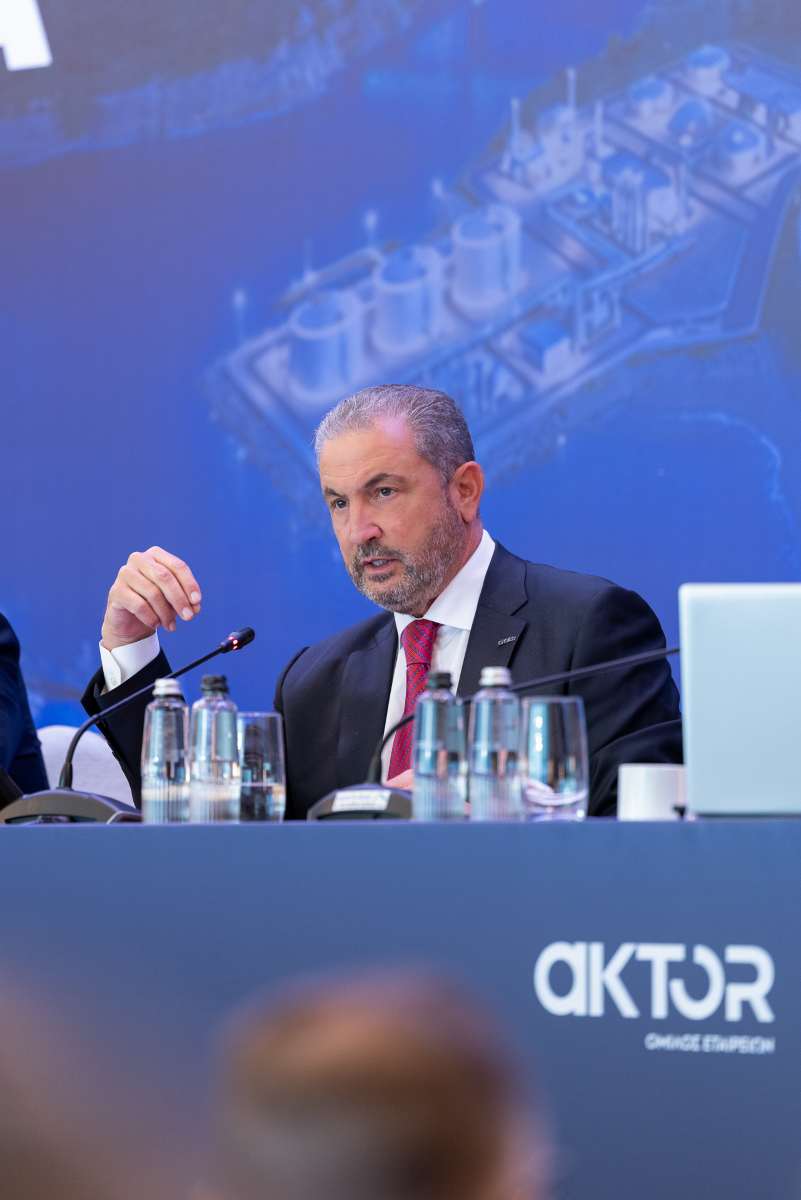
Πηγή Φωτογραφίας: eurokinissi//AKTOR’s Big Transformation: From US LNG to the Circular Economy, Exarchou Builds a Regional Powerhouse



AKTOR is not simply getting bigger. It is changing its identity.
A series of transactions and investments in 2026 is transforming what was traditionally one of Greece’s major construction groups into a diversified infrastructure platform spanning construction, concessions, LNG, renewable energy, storage, environmental services and the circular economy.
At the centre of that strategy is Chairman and CEO Alexandros Exarchou.
His bet is not merely that AKTOR can expand into new businesses. It is that Greece’s geographical position — between the Mediterranean, the Balkans and Central and Eastern Europe — can become a commercial asset as energy routes, infrastructure requirements and environmental investment across the region are being reshaped.
The latest piece of that strategy arrived on August 5.
August 5: The Motor Oil deal adds another pillar
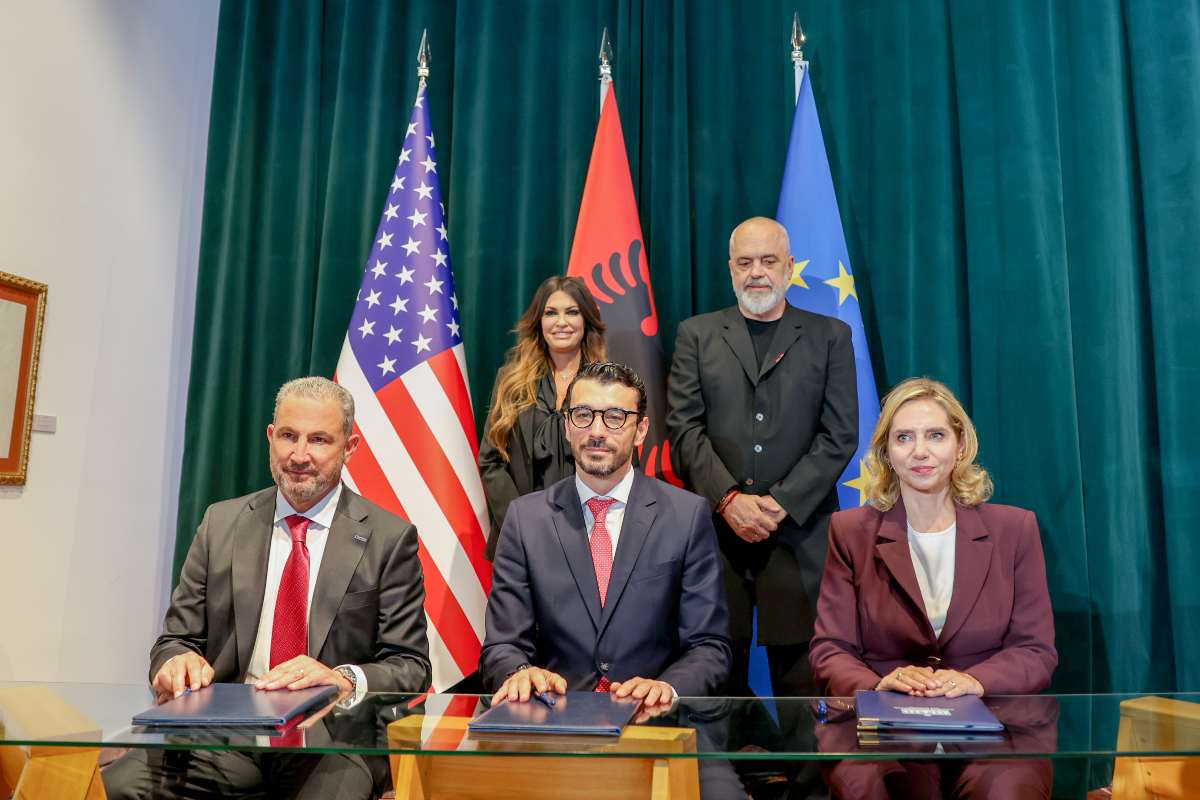
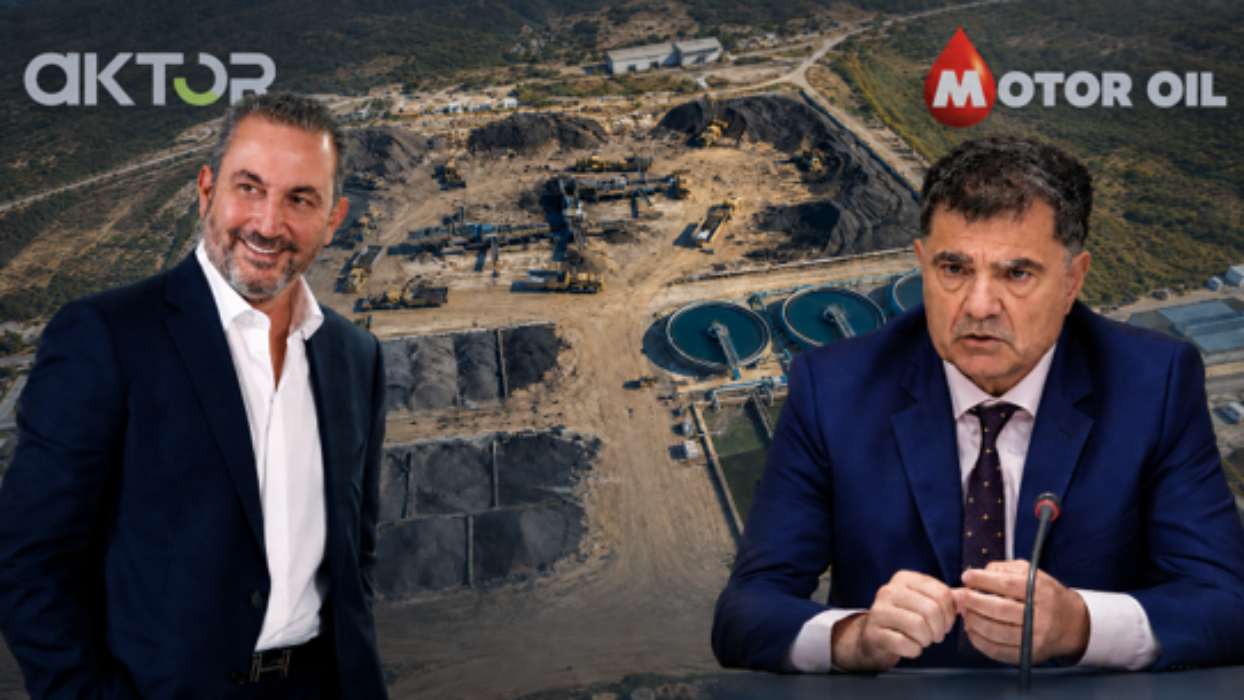
AKTOR Group and Motor Oil Group signed a share purchase agreement and shareholders’ agreement for AKTOR to acquire 75% of MANETIAL LIMITED, the company that owns 100% of HELECTOR and THALIS.
The transaction values the businesses at an Enterprise Value of €300 million on a 100% basis. The final consideration will be determined at closing, taking into account factors including net debt and cash.
Completion is expected no later than the first quarter of 2027 and remains subject to the required regulatory approvals, including clearance from Greece’s Competition Commission.
The deal is important because it takes AKTOR decisively into another category of long-term infrastructure activity: waste management, environmental infrastructure and the circular economy.
HELECTOR and THALIS generated combined EBITDA of €40.8 million in 2025, while their combined EBITDA is expected to exceed €41 million in 2026.
HELECTOR operates across waste management, treatment facilities, concessions and public-private partnerships in Greece and abroad.
THALIS specialises in the design and construction of waste-management and environmental infrastructure.
For AKTOR, therefore, this is considerably more than another acquisition.
It adds specialised environmental capabilities and recurring revenue streams that can complement the group’s existing construction and concession businesses.
From building infrastructure to operating it
This points to one of the most important changes in AKTOR’s business model.
A traditional contractor largely depends on continuously securing and executing new projects.
A diversified infrastructure group can operate differently.
It can combine construction revenues with concessions, energy assets, long-term contracts and operating businesses capable of producing recurring cash flows.
Construction. Concessions. LNG. Renewables. Storage. Facility management. Environmental infrastructure.
The Motor Oil transaction adds another piece to that model.
And it comes as AKTOR is simultaneously building an energy business with potentially much wider geopolitical implications.
The other big bet: Greece as a gateway for US LNG
Energy is where the group’s transformation intersects most directly with Greece’s strategic position.
Atlantic SEE LNG Trade — 60% owned by AKTOR through AKTOR Energy and 40% by DEPA Commercial — has secured a 20-year agreement with US producer Venture Global for LNG supplies beginning on January 1, 2030.
The original agreement covers at least 0.5 million tonnes of LNG annually, with the possibility of significantly increasing contracted volumes.
The commercial logic is clear.
The LNG is not intended simply to arrive in Greece and remain in the domestic market.
The broader strategy is to use Greece as an entry point and move gas northwards towards Central and Eastern European markets.
That creates an emerging route:
US → Greece → Balkans → Central and Eastern Europe.
The Venture Global agreement is also significant in another respect: it represents the first long-term LNG supply contract with a US producer in Greece’s energy history.
That gives AKTOR’s strategy a dimension extending well beyond a conventional corporate diversification story.
Albania and Bosnia put billions on the table
The downstream side of the strategy is already taking shape.
AKTOR LNG USA has signed a 20-year agreement with Albania’s state-owned ALBGAZ covering the supply of 1 billion cubic metres of natural gas annually from 2030.
Estimated revenues over the duration of the agreement amount to approximately €6 billion.
A separate 20-year agreement with Bosnia and Herzegovina’s ALUMINIJ INDUSTRIES and its parent company M.T. Abraham covers 0.5 billion cubic metres annually and is expected to generate approximately €3 billion in revenues over its lifetime.
Taken together, the two agreements represent a potential commercial base of roughly €9 billion over 20 years.
The geographic significance is as important as the headline number.
These are markets north of Greece.
For the strategy to work at scale, Greece must function not merely as an LNG importer but as a transit and trading gateway.
Exarchou’s Vertical Corridor bet
This is where business strategy meets geopolitics.
Greece has LNG infrastructure and pipeline connections capable of providing a southern entry point into Southeast Europe.
The Vertical Corridor is designed to facilitate northbound gas flows through Bulgaria and Romania and potentially onwards towards Moldova, Ukraine and other markets.
AKTOR has also developed memoranda and commercial discussions with counterparties elsewhere in the region.
Interest involving Ukraine’s Naftogaz has covered potential volumes of up to approximately 0.7 million tonnes of LNG annually, while discussions with Romanian companies have involved potential interest of up to approximately 1.4 million tonnes annually.
These expressions of interest should not be treated as equivalent to final binding supply contracts.
But they demonstrate the geographic scale of the market AKTOR is targeting.
Exarchou has repeatedly framed long-term LNG contracts and the Vertical Corridor as part of a broader European energy-security strategy.
The business proposition is straightforward: if more energy enters Europe through Greece, the country’s location itself acquires greater economic value.
AKTOR’s numbers show how quickly the group has changed
This expansion is being built on a company that has already grown dramatically.
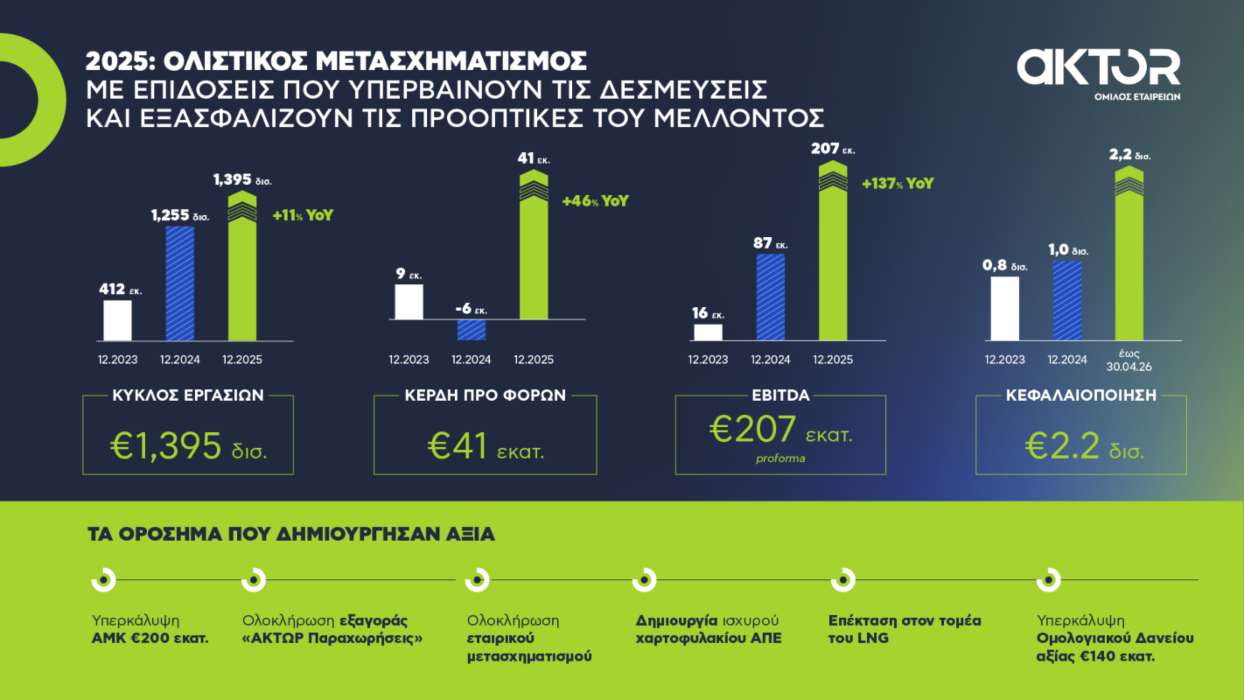
AKTOR Group reported revenue of €1.395 billion for 2025, up 11%.
Pro forma adjusted EBITDA reached €207 million, compared with €87 million in 2024 — an increase of 137%.
Its project backlog stood at €4.7 billion, while approximately €1 billion of new projects were signed during 2025.
The longer-term comparison is even more striking.
AKTOR’s turnover is now roughly six times its 2022 level.
Management has set targets for 2030 of between €4.6 billion and €5.5 billion in revenue and EBITDA of €550 million to €600 million.
Those targets help explain why diversification has become central to the strategy.
The objective is no longer simply to expand the construction operation.
It is to change the composition and duration of the group’s earnings.
More than €1 billion for renewables and storage
Natural gas is only one part of AKTOR’s energy strategy.
By the end of 2026, the group plans to have 420 MW of solar photovoltaic capacity and 100 MW of storage systems in operation.
It also has a 145 MW wind portfolio targeted for operation around the end of 2028.
Overall, renewable energy and storage projects under development exceed 1.3 GW.
Investment required to achieve the group’s strategic objectives in the sector is expected to exceed €1 billion through 2028-2029.
That gives AKTOR’s energy strategy two distinct legs.
LNG addresses diversification of supply and energy security.
Renewables and storage position the company within Europe’s longer-term energy transition.
From €90 million in LNG EBITDA to €41 million in the circular economy
Two numbers illustrate particularly well where Exarchou is trying to take the company.
Based on LNG contracts already signed or currently being developed, AKTOR estimates that these activities could eventually generate annual EBITDA approaching €90 million from 2030.
Over a 20-year horizon, that would amount to approximately €1.8 billion.
Now add the Motor Oil transaction.
HELECTOR and THALIS are expected to generate combined EBITDA exceeding €41 million in 2026.
The common thread is important.
These businesses have the potential to provide longer-duration and more predictable earnings than a business model relying overwhelmingly on the construction cycle.
That is what makes the transformation strategically significant.
What does Greece gain?
AKTOR’s corporate objective is naturally to generate returns for its shareholders.
But if the strategy is successfully executed, the implications extend beyond the company.
The first potential benefit is geopolitical.
Greater volumes of LNG entering European markets through Greek infrastructure would strengthen Greece’s role as an energy gateway into Southeast Europe.
The second is economic.
LNG trading, transportation, renewable energy, storage, environmental infrastructure and waste management all require investment, technical expertise and specialised services.
The third is regional influence.
A Greek group establishing long-term commercial positions from Albania and Bosnia and Herzegovina to other Balkan and Eastern European markets expands Greece’s corporate footprint in the region.
And the fourth concerns infrastructure.
The acquisition of HELECTOR and THALIS gives AKTOR greater exposure to environmental and circular-economy projects at a time when waste management, resource efficiency and environmental infrastructure are becoming increasingly important components of European investment policy.
The benefits are not automatic.
They depend on execution, regulatory approvals, infrastructure availability, competitive transport costs and the conversion of non-binding discussions into actual commercial contracts.
But the direction is increasingly clear.
Exarchou is building more than a bigger AKTOR
Viewed individually, the transactions can look unrelated.
Motor Oil. HELECTOR. THALIS.
Venture Global and US LNG.
Albania and Bosnia and Herzegovina.
The Vertical Corridor.
More than 1.3 GW of renewable and storage projects under development.
Construction and concessions.
Viewed together, however, they tell a different story.
Alexandros Exarchou is attempting to turn AKTOR from a major Greek contractor into a diversified regional infrastructure group operating across some of the most strategically important sectors of the coming decade.
The company would not simply build infrastructure.
It would increasingly operate assets, participate in energy flows and generate revenue from businesses ranging from LNG and renewable power to concessions and the circular economy.
For Greece, the opportunity is larger still.
For years, the country’s ambition to become an “energy hub” has been repeated more often than it has been measured.
The next phase will be judged by actual flows, contracts and infrastructure: how much energy enters through Greece, how much moves north into Europe, how many Greek businesses participate in that value chain and how much long-term investment the country attracts.
If AKTOR executes the strategy now taking shape, its transformation could therefore coincide with something considerably larger than the emergence of another major Greek corporate group.
It could become part of Greece’s own transformation from Europe’s southeastern edge into a strategic gateway for energy, infrastructure and investment across the wider region.
Source: pagenews.gr
Διαβάστε όλες τις τελευταίες Ειδήσεις από την Ελλάδα και τον Κόσμο