ESM Sounds Alarm for the Eurozone: War and Market Shock Could Threaten Growth and Public Debt
 ΧΡΟΝΟΣ ΑΝΑΓΝΩΣΗΣ 4 '
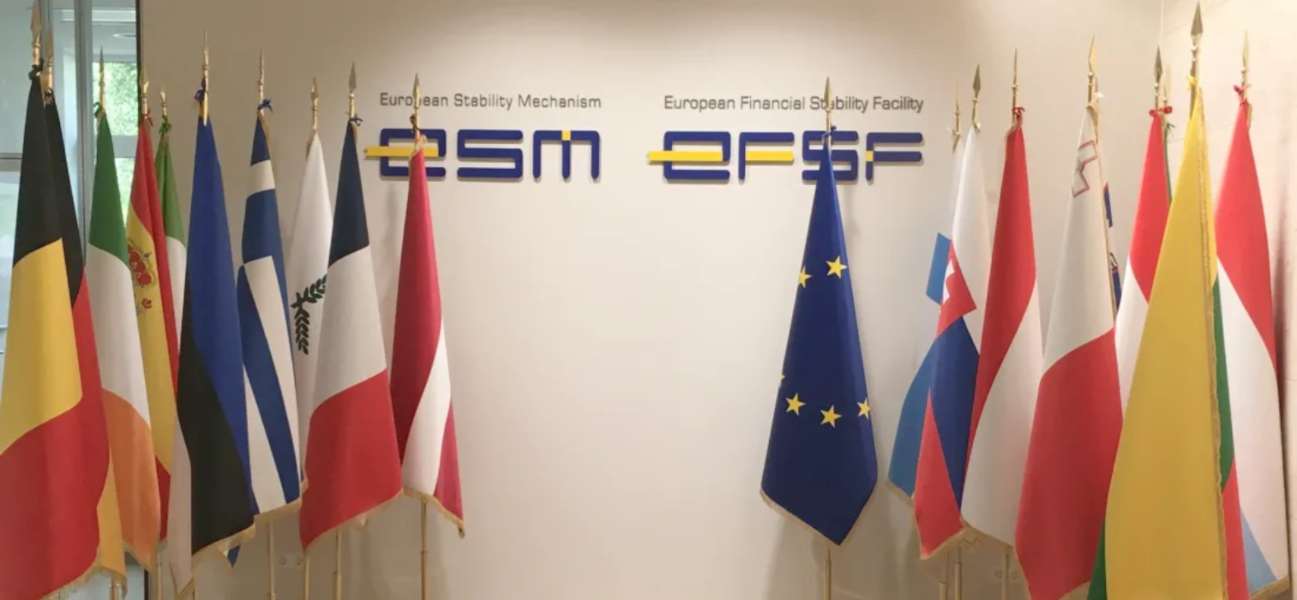
Πηγή Φωτογραφίας: AP Photo//ESM Sounds Alarm for the Eurozone: War and Market Shock Could Threaten Growth and Public Debt



The Eurozone has demonstrated remarkable resilience over the past five years, weathering a succession of unprecedented shocks, including the COVID-19 pandemic, the energy crisis, soaring inflation, and ongoing geopolitical conflicts. Yet, according to the European Stability Mechanism (ESM), this resilience should no longer be taken for granted.
In the inaugural edition of its Euro Area Stability Watch, the ESM warns that Europe is entering a new phase of heightened uncertainty, where shrinking fiscal space, geopolitical instability, and financial market risks could significantly challenge the region’s economic outlook.
A Global Economic Power Facing New Pressures
The Eurozone remains one of the world’s largest economic blocs.
Key figures include:
- 20 member states share the euro as their common currency.
- Combined GDP exceeds €16 trillion, accounting for roughly 15% of global economic output.
- The region is home to more than 347 million people.
- Public debt across the Eurozone averages around 87% of GDP, well below pandemic peaks but still elevated in several member states.
- Inflation has eased considerably since its 2022 highs, although price stability remains a key challenge for policymakers.
Against this backdrop, the ESM believes the Eurozone remains vulnerable to new external shocks.
Two Major Risks Could Reshape Europe’s Economic Outlook
The report identifies two external risks that could have severe consequences if they materialize simultaneously.
Escalating Geopolitical Tensions
The first risk is a renewed escalation of conflicts in the Middle East or broader geopolitical instability.
According to the ESM, such developments could trigger:
- another surge in energy prices,
- renewed disruptions to global supply chains,
- weaker business investment,
- slower consumer spending,
- higher production costs across Europe.
Despite reducing its dependence on Russian energy since 2022, Europe remains highly exposed to developments in global energy markets.
A Potential Shock from U.S. Financial Markets
The second risk originates in the United States.
The ESM notes that elevated valuations across U.S. financial markets, coupled with political uncertainty and concerns over America’s long-term fiscal outlook, increase the probability of a sharp market correction.
Such a scenario could tighten global financial conditions, raise borrowing costs and increase volatility across European equity and bond markets.
The Downside Scenario
In the report’s adverse scenario—assuming no monetary or fiscal policy intervention—the Eurozone would effectively enter recession while inflation could climb back toward 5%.
Investment and exports would weaken, economic growth would remain subdued for several years, and public debt would increase across nearly all member states.
The ESM estimates that by 2035, the Eurozone’s debt-to-GDP ratio could be approximately 20 percentage points higher than under its baseline scenario.
Defence Spending Can Become an Investment
One of the report’s most notable conclusions concerns Europe’s growing defence expenditure.
Rather than viewing defence solely as a fiscal burden, the ESM argues that well-targeted spending can generate long-term economic benefits.
Investments directed toward:
- European defence manufacturing,
- research and development,
- technological innovation,
- integrated European supply chains,
can stimulate economic activity and strengthen Europe’s industrial base.
According to the ESM, up to €0.53 of every additional euro spent on defence could return to public finances through stronger economic growth and higher tax revenues.
A Critical Decade for Europe
The ESM concludes that Europe’s resilience in the coming years will depend not only on external developments but also on the quality of economic policymaking.
Maintaining fiscal credibility, strengthening productivity, and investing strategically in Europe’s competitiveness will be essential if the Eurozone is to navigate an increasingly uncertain geopolitical and financial environment.
Source: pagenews.gr
Διαβάστε όλες τις τελευταίες Ειδήσεις από την Ελλάδα και τον Κόσμο