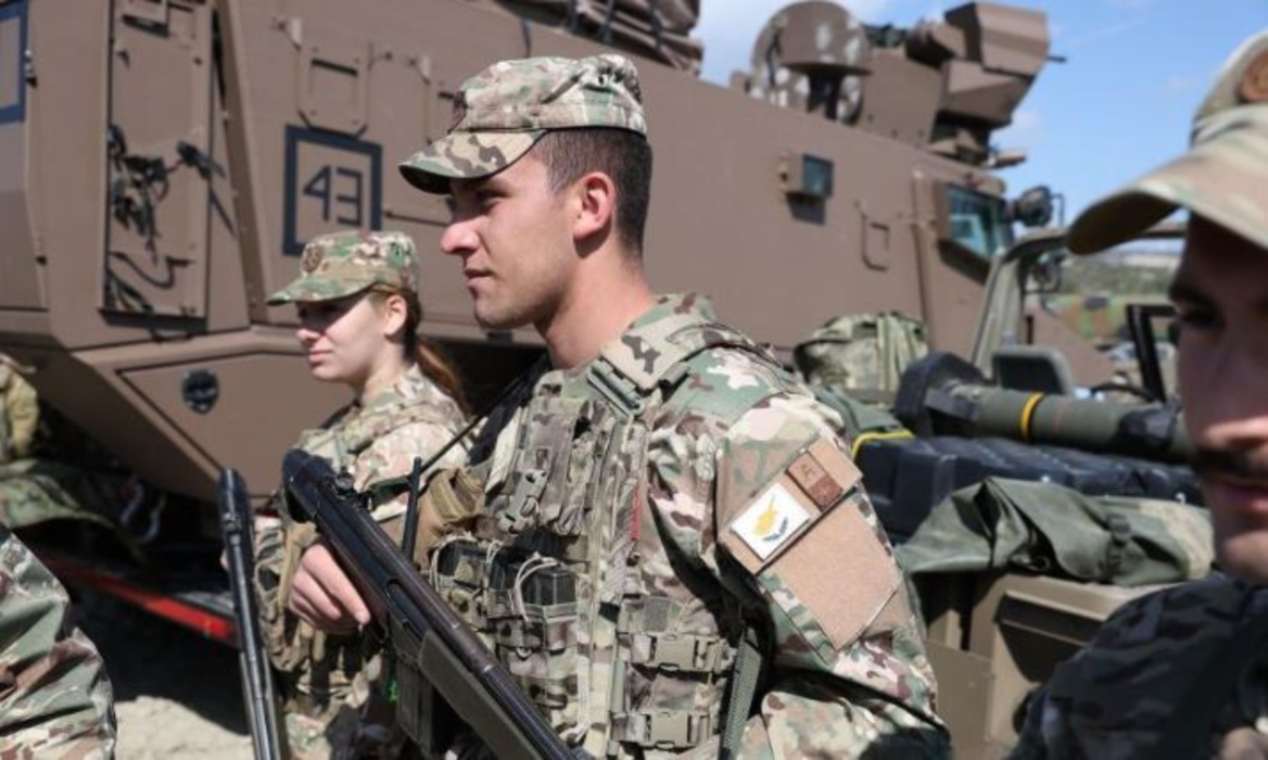
Europe’s security landscape is undergoing one of its most profound transformations since the end of the Cold War, with Cyprus joining Austria, Ireland and Malta in reassessing long-standing neutrality policies as the European Union accelerates its common defense strategy.
The four countries, traditionally outside military alliances, are adapting to the EU’s evolving security framework following Russia’s invasion of Ukraine, growing instability in the Middle East and heightened concerns over Europe’s strategic autonomy.
Cyprus moves closer to Europe’s defense core
For Cyprus, the shift carries particular geopolitical significance. Although the island remains outside NATO, it is increasingly aligning with the EU’s defense and security initiatives, strengthening cooperation with European partners while modernizing its armed forces.
The move reflects a broader effort by Nicosia to reinforce its strategic role in the Eastern Mediterranean, where regional tensions, energy security and maritime stability have become central European priorities.
Neutrality under growing pressure
Austria, Ireland and Malta are also adjusting their defense policies without formally abandoning neutrality.
While each country maintains its constitutional or political commitment to military non-alignment, all four have expanded participation in EU defense projects, joint procurement initiatives, cybersecurity cooperation and military mobility programs.
The changes highlight a broader European consensus that neutrality no longer guarantees security in an increasingly unstable geopolitical environment.


Europe’s new defense doctrine
The EU’s evolving defense strategy emphasizes greater strategic autonomy, stronger defense industries, increased military readiness and closer coordination among member states.
Rather than replacing NATO, Brussels aims to complement the alliance by enhancing Europe’s ability to respond independently to regional crises, hybrid threats and attacks on critical infrastructure.
The new approach has gained momentum as European governments significantly increase defense spending and deepen cooperation on advanced military capabilities.


Eastern Mediterranean gains strategic importance
Cyprus’ gradual integration into Europe’s defense architecture also reflects the growing strategic importance of the Eastern Mediterranean.
Energy corridors, maritime security, regional conflicts and the protection of critical infrastructure have elevated the region’s importance for European policymakers, making Cyprus an increasingly valuable security partner despite its traditional non-aligned status.
As Europe’s security doctrine continues to evolve, the continent’s remaining neutral states are finding themselves closer than ever to the Union’s collective defense framework, marking a historic transformation in the EU’s geopolitical posture.
Source: pagenews.gr