Turkey Welcomes the President It Refuses to Recognize: Cyprus Scores a Diplomatic Victory in Antalya
 ΧΡΟΝΟΣ ΑΝΑΓΝΩΣΗΣ 11 '
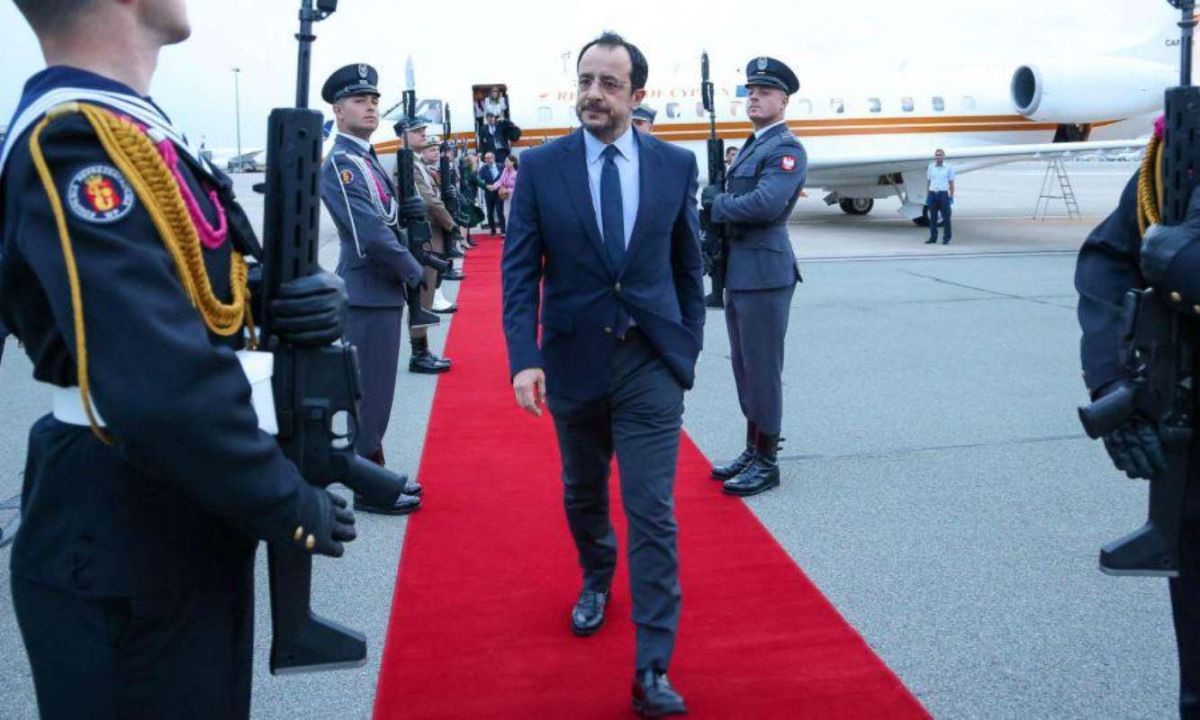



Turkey does not recognize the Republic of Cyprus. Yet, on Turkish territory, a representative of Ankara’s diplomatic establishment welcomed the internationally recognized President of Cyprus. The scene in Antalya illustrates one of the most enduring contradictions in Eastern Mediterranean geopolitics.
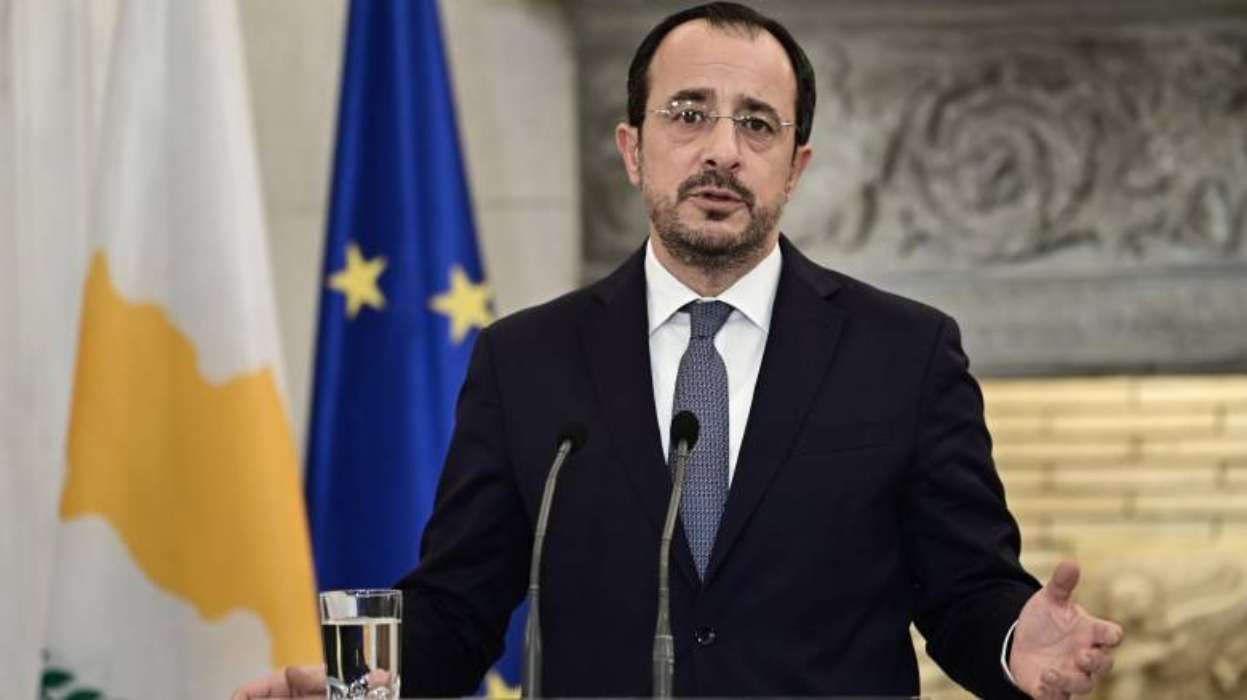
The arrival of President Nikos Christodoulides in Antalya for the leaders’ segment of the United Nations Climate Change Conference, COP31, represents far more than a routine appearance at an international summit.
It is a diplomatic moment with implications for Turkey’s relations with Cyprus, the European Union and the broader Eastern Mediterranean.
For Nicosia, the visit demonstrates that Cyprus’s internationally recognized statehood cannot simply be set aside by Ankara’s political preferences.
For Turkey, it exposes the practical limitations of maintaining a policy of non-recognition while seeking a prominent role in international diplomacy.
The symbolism is significant, even if the underlying political dispute remains unresolved.
A Diplomatic Welcome That Exposes Ankara’s Contradictions
Christodoulides arrived at Antalya International Airport shortly before 9 p.m. local time, traveling via Rhodes because there are no direct air connections between the Republic of Cyprus and Turkey.
According to reports, the Cypriot delegation was officially received by Aivo Orav, the European Union’s ambassador to Turkey, alongside a representative of the Turkish diplomatic establishment.
Turkish-language reporting also identified Mehmet Ali Kahraman, associated with Turkey’s COP31 presidency, among those welcoming the delegation.
The presence of a Turkish official carries considerable political symbolism.
Ankara continues to refer to the internationally recognized Republic of Cyprus as the “Greek Cypriot administration,” reflecting its refusal to recognize the government in Nicosia.
Yet the visit required Turkish authorities to accommodate the Cypriot President within the diplomatic arrangements of an international conference.
Another detail attracted attention: vehicles transporting Christodoulides and his delegation reportedly displayed the designation “Cyprus Delegation.”
In most international settings, such wording would be unremarkable.
In Turkey, where the official terminology surrounding Cyprus remains politically sensitive, it becomes a diplomatic signal.
The designation does not constitute formal recognition of the Republic of Cyprus by Ankara. Nevertheless, it illustrates the tension between Turkey’s established political position and the realities of international representation.
Christodoulides was subsequently welcomed at his hotel by Greece’s ambassador to Turkey, Theodoros Bizakis.
The Cypriot delegation includes Foreign Minister Constantinos Kombos, Government Spokesperson Constantinos Letymbiotis, Nikos Tornaritis and senior officials.
Behind the Scenes: How Cyprus Secured Its Place at COP31
The significance of the Antalya visit becomes clearer when examining the diplomatic developments that preceded it.
According to published accounts, Turkish President Recep Tayyip Erdoğan initially extended personal invitations to the leaders of the other 26 European Union member states while excluding Christodoulides.
The reported omission triggered diplomatic activity by Nicosia, coordinated with European institutions and member-state governments.
Cyprus subsequently secured an official invitation.
If the reported sequence is confirmed in full, it represents an important diplomatic achievement for the Cypriot government.
The issue went beyond ceremonial protocol.
It raised a fundamental question about whether a country hosting a major United Nations conference could use its bilateral political disputes to determine which EU member-state leaders should participate.
For Brussels, allowing such an exclusion to stand would have risked creating an uncomfortable precedent.
Turkey ultimately faced a choice: maintain its exclusionary approach and risk a broader diplomatic confrontation with the EU, or accommodate the Cypriot President without changing its formal position on recognition.
The outcome favored the latter approach.
For Nicosia, this created an opportunity to demonstrate that international institutional legitimacy remains a powerful diplomatic asset.
Why the European Union Matters More Than Ever
The Antalya episode highlights a broader geopolitical reality: the Cyprus question is not simply a bilateral dispute between Nicosia and Ankara.
The Republic of Cyprus is a full member of the European Union, and its participation in European institutions is inseparable from the EU’s relationship with Turkey.
That institutional position gives Cyprus influence beyond its geographic size.
Turkey remains economically and strategically connected to Europe through trade, customs arrangements, migration cooperation, investment and regional security.
These relationships create incentives for Ankara to avoid unnecessary confrontations with European institutions.
For Cyprus, the strategic challenge is to convert EU membership into sustained diplomatic leverage.
For Turkey, the challenge is more complicated.
Ankara seeks deeper engagement with Europe while continuing to reject recognition of one of the Union’s member states.
The Antalya summit demonstrates how this contradiction can become visible even in diplomatic settings unrelated to the Cyprus dispute itself.
The climate agenda may have brought the leaders together, but the underlying political implications extend far beyond environmental policy.
Erdoğan and Christodoulides: The Meeting That Is Not on the Agenda
Despite the symbolism surrounding the visit, Nicosia has avoided suggesting that a major diplomatic breakthrough is imminent.
Government Spokesperson Constantinos Letymbiotis clarified that no formal meeting has been scheduled between Christodoulides and either President Erdoğan or Turkish Foreign Minister Hakan Fidan.
However, the possibility of informal encounters on the sidelines of the conference has not been ruled out.
Even a brief exchange between the Cypriot and Turkish presidents would attract considerable diplomatic attention.
It would not, by itself, represent a change in Ankara’s Cyprus policy.
Nevertheless, such contact could offer an opportunity to reopen channels of communication at a time when the political differences remain substantial.
The Cypriot government’s longer-term objective is not simply to secure a photograph with Erdoğan.
It is to restore meaningful negotiations under the relevant United Nations framework.
That objective remains difficult, particularly given Turkey’s support for a two-state solution and the Republic of Cyprus’s commitment to a bizonal, bicommunal federation with political equality, as envisaged in the relevant UN resolutions.
The Turkish Cypriot Factor: Another Diplomatic Variable
The reported presence of Turkish Cypriot leader Tufan Erhürman at the same international gathering adds another dimension to the Antalya summit.
Whether Christodoulides and Erhürman will hold discussions remains uncertain.
Their presence in the same diplomatic environment nevertheless raises questions about possible contacts and the future of UN-led efforts.
The central obstacle remains the fundamental disagreement over the political settlement.
Turkey has increasingly promoted a two-state framework, while Nicosia maintains that negotiations must remain anchored in the internationally agreed federal parameters.
These positions are difficult to reconcile.
Yet international gatherings can create opportunities for communication even when formal negotiations remain stalled.
The political importance of such encounters depends less on ceremonial gestures than on whether they can contribute to a credible diplomatic process.
The UN Dimension: Could Antalya Create New Momentum?
The visit also comes amid continued efforts to maintain international engagement on the Cyprus question.
Christodoulides held a telephone conversation with United Nations Secretary-General António Guterres on November 10, discussing recent diplomatic contacts and the prospects for renewed engagement.
The possibility of another trilateral meeting involving the UN and the leaders of the two Cypriot communities has been raised, potentially within November.
This gives the Antalya visit a wider diplomatic context.
The central question is whether international engagement can help overcome the persistent deadlock.
For Nicosia, maintaining the UN framework remains essential.
For Ankara, the challenge is whether its current position leaves sufficient room for a mutually acceptable negotiating process.
The Antalya summit does not resolve these differences.
It does, however, provide another reminder that the Cyprus question remains connected to wider international diplomatic relationships.
Climate Diplomacy Meets Eastern Mediterranean Geopolitics
COP31 is primarily a global conference focused on climate change.
For the Eastern Mediterranean, however, climate policy increasingly intersects with energy security, infrastructure and regional stability.
Cyprus, Greece and Turkey face common environmental pressures, including prolonged heatwaves, water scarcity, wildfires and growing demands on electricity networks.
These challenges create potential areas for practical cooperation, even among governments divided by longstanding political disputes.
The region is also becoming increasingly important to European energy diversification and the development of cross-border electricity infrastructure.
Projects involving electricity interconnections, renewable energy and energy resilience carry strategic implications for the broader Eastern Mediterranean.
For Cyprus, participation in international climate diplomacy strengthens its ambition to position itself as a regional hub for cooperation.
For Turkey, hosting COP31 provides an opportunity to project international influence and diplomatic leadership.
But the presence of Christodoulides demonstrates that Ankara’s ambitions as an international host must coexist with the diplomatic realities of Cyprus’s internationally recognized status.
From Antalya to Dublin: Cyprus Takes Its Case to Europe
Following his participation in Antalya, Christodoulides is expected to travel to Dublin for the European Political Community summit on November 12 and an informal European Council meeting on November 13.
The sequence offers Nicosia an opportunity to connect the diplomatic developments in Turkey with broader European discussions on security, energy and EU-Turkey relations.
The Cypriot President is also expected to hold bilateral contacts during COP31, including discussions with European Commission President Ursula von der Leyen.
For Cyprus, the strategic objective is to ensure that its dispute with Turkey remains firmly embedded in the European diplomatic agenda.
The challenge is not merely to preserve international recognition, which the Republic of Cyprus already possesses.
It is to translate that recognition into meaningful political influence over future negotiations and regional developments.
A Symbolic Victory, Not Yet a Strategic Breakthrough
The images from Antalya are politically striking.
A Turkish diplomatic representative welcomed the President of a state that Ankara continues to refuse to recognize.
Cyprus participated in a major international summit hosted by Turkey despite the political tensions surrounding its invitation.
And the European dimension of the issue appears to have played an important role in securing that participation.
Yet the distinction between symbolism and substance remains crucial.
Turkey has not formally recognized the Republic of Cyprus. It has not abandoned its position on a two-state settlement, and there is no evidence that the Antalya visit marks a fundamental shift in Turkish strategy.
Nevertheless, the episode exposes a structural weakness in Ankara’s diplomatic position.
Turkey can refuse bilateral recognition of the Republic of Cyprus, but it cannot erase the country’s membership of the European Union or its internationally recognized legal status.
For Nicosia, that is the central diplomatic advantage.
For Ankara, it is a persistent constraint on its wider European ambitions.
The real geopolitical message from Antalya is that Cyprus does not need Turkey’s recognition to exercise its rights as a sovereign, internationally recognized state. What it needs is sustained international consistency in defending those rights.
Source: pagenews.gr
Διαβάστε όλες τις τελευταίες Ειδήσεις από την Ελλάδα και τον Κόσμο