Cyprus Takes Turkey’s “Artificial Maritime Border” to the UN
 ΧΡΟΝΟΣ ΑΝΑΓΝΩΣΗΣ 8 '
Πηγή Φωτογραφίας: AP Photo//Cyprus Takes Turkey’s “Artificial Maritime Border” to the UN



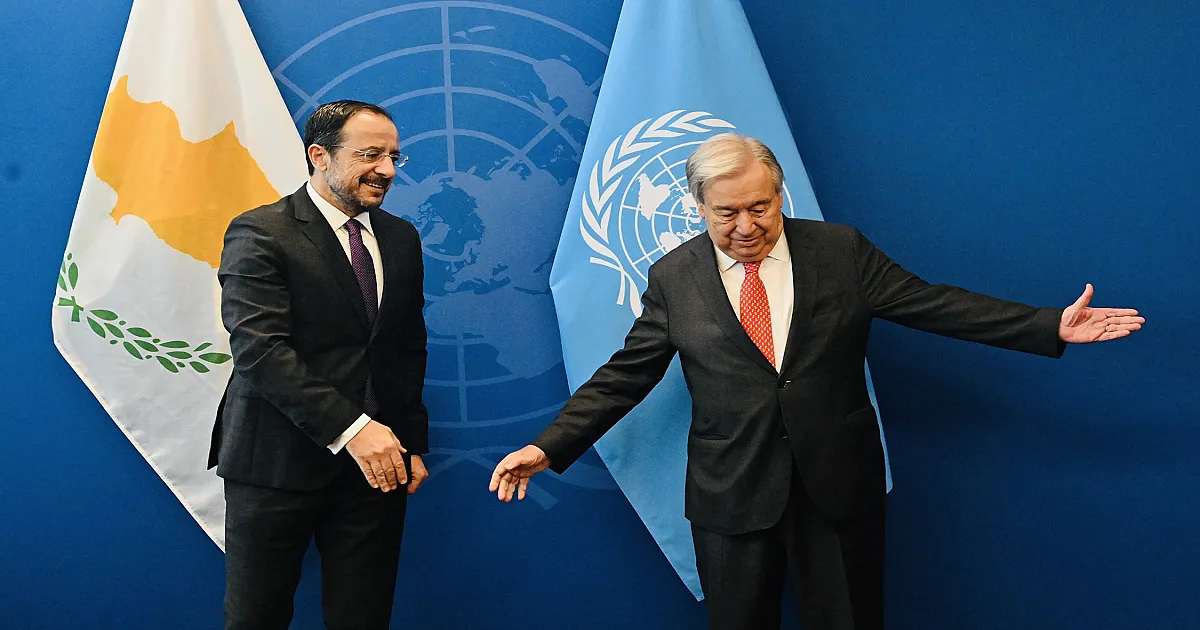
Cyprus has brought its objections to the Turkey–Libya maritime memorandum back before the United Nations, warning that its recent approval by Libya’s eastern-based parliament threatens the rights of neighbouring states and risks deepening regional tensions.
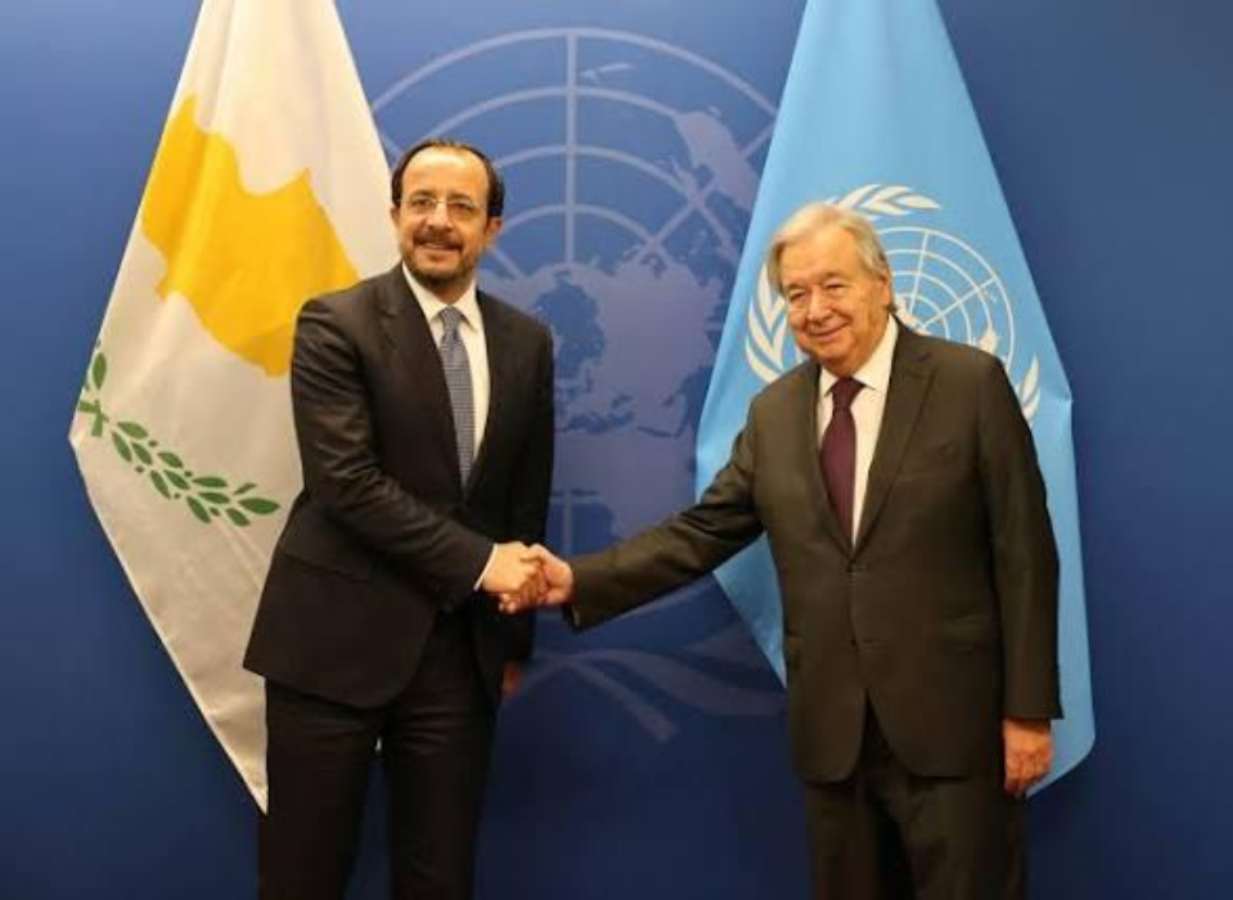
In a letter dated October 23 to UN Secretary-General António Guterres, Cyprus’s Permanent Representative, Ambassador Maria Michail, challenges both the agreement’s legal foundations and the political objectives served by the parliamentary decision of October 20.
The intervention connects two issues: the protection of maritime rights and the dangers of using Libya’s institutional fragmentation to advance the ambitions of outside powers.
“Libya’s independence, sovereignty and territorial integrity must not be subordinated to the geopolitical pursuits and ambitions of third states,” Michail stresses.
For Nicosia, the dispute therefore extends beyond the location of a maritime boundary. It concerns whether external influence inside Libya can be translated into claims affecting other coastal states.
Why the timing matters
The Cypriot letter expresses serious concerns about the motives and interests served by the timing of the decision.
Its political significance stems from the involvement of a parliament that had previously opposed the memorandum. Approval gives Ankara broader backing within Libya’s divided political system.
That does not settle competing maritime claims or remove the objections of third countries. It does, however, provide Turkey with an additional argument for presenting the agreement as increasingly embedded in Libya’s political landscape.
Cyprus is challenging the attempted progression from domestic political endorsement to external consequences.
According to the letter, Ankara is seeking to “impose an artificial maritime reality at the expense of the sovereign rights of third states.”
Nicosia describes these actions as reflecting “a deliberate policy of escalation in the Eastern Mediterranean” and constituting “a serious threat to regional peace, security and stability.”
These formulations place the memorandum within a broader security debate. Their diplomatic purpose is to attract attention from governments whose concerns extend to regional stability, navigation and the protection of international rules.

Parliamentary approval cannot determine another country’s rights
The central legal argument is that approval of a bilateral agreement by a national parliament does not, by itself, establish maritime rights at the expense of other states.
Cyprus maintains that the memorandum is incompatible with international law and “produces no legal effects for third parties.”
The letter also challenges the geographical premise of the delimitation. It argues that the agreement attempts to establish a boundary between states that “do not have opposite or adjacent coasts,” constructing “a non-existent maritime border”while disregarding the maritime rights of other coastal states, including those generated by Greek islands.
The substantive objection is that islands cannot simply be removed from the geographical assessment to produce a preferred boundary.
An important distinction nevertheless applies. An island’s entitlement to maritime zones and the effect it receives in a particular delimitation are separate legal questions. Delimitation requires consideration of the relevant geography, applicable principles and international jurisprudence.
That distinction does not justify disregarding islands’ maritime entitlements at the outset.
What Article 121 establishes
The letter invokes Article 121(2) of the United Nations Convention on the Law of the Sea, recognising islands’ entitlement to:
“A territorial sea, a contiguous zone, a continental shelf and an exclusive economic zone.”
The provision operates subject to the exception in Article 121(3) concerning rocks that cannot sustain human habitation or economic life of their own.
It does not automatically guarantee full effect for every island in every maritime delimitation. It does establish the starting principle that islands possess maritime entitlements under the applicable rules.
Cyprus also stresses the customary international law character of the rule it invokes. This is significant because Turkey is not a party to UNCLOS.
Non-participation in a convention does not release a state from obligations that bind it independently under customary international law. The legal argument therefore cannot be reduced to whether Ankara has signed the treaty.
Ankara’s political objective goes beyond the map
The memorandum’s strategic value for Turkey extends beyond the boundary it purports to establish.
It supports Ankara’s effort to position itself as an indispensable participant in decisions concerning energy routes, infrastructure and security arrangements in the Eastern Mediterranean.
Broader acceptance within Libya can strengthen that political position even while the agreement remains contested internationally.
This creates a continuing challenge for Greek and Cypriot diplomacy. An agreement rejected as contrary to international law can still generate political pressure and shape the calculations of other governments.
The response consequently requires sustained engagement with the countries and institutions from which Turkey seeks support, accommodation or acceptance.
Libya’s alliances cannot be taken for granted
The eastern-based parliament’s changed position illustrates the fluidity of Libya’s political relationships.
A Libyan actor’s rapprochement with Turkey does not necessarily imply alignment with Ankara on every question. Equally, earlier opposition to Turkey does not guarantee permanent resistance to its objectives.
For Athens and Nicosia, the implication is that diplomatic engagement must reach across Libya’s competing centres of power.
Maintaining communication, monitoring shifting alignments and developing substantive cooperation are necessary complements to legal objections. Relationships built around a single political camp can become vulnerable when domestic interests change.
The Cypriot letter adds another element to this approach: it links the protection of Libya’s sovereignty with the protection of neighbouring states’ maritime rights.
That argument can resonate beyond governments directly involved in the delimitation dispute. It raises questions about institutional stability, external interference and the consequences of exploiting a fragmented state’s vulnerabilities.
Why the intervention matters for Greece
Cyprus has its own direct interest in defending the legal framework governing the Eastern Mediterranean. Its intervention also reinforces Greece’s position that the rights of islands cannot be disregarded through an agreement between other countries.
The letter forms part of a continuing diplomatic record. It refers to earlier communications with the UN in January, April and July 2020, together with a note verbale submitted in August 2025.
Those references demonstrate that the recent Libyan decision has not altered Nicosia’s objections.
Cyprus requests circulation of the letter as a document of the General Assembly and the Security Council, alongside publication through the UN’s relevant maritime-law channels.
Such circulation would formally record the Cypriot position. It would not constitute UN endorsement or a judicial ruling on the memorandum.
Its diplomatic value lies in preserving a clear record of opposition and preventing the impression that the parliamentary decision has gone unchallenged.
The next test is political cohesion
The effectiveness of the intervention will depend on whether its arguments translate into sustained support.
Maintaining common positions with European and regional partners, pursuing lawful maritime-delimitation processes and remaining diplomatically engaged with Libya are central to that effort.
The absence of legal effects against third states does not eliminate the political leverage an agreement may generate.
Cyprus is addressing both dimensions: defending maritime entitlements while warning against using Libya’s instability to reshape regional expectations.
For Athens and Nicosia, the harder task will be keeping those principles reflected in their partners’ decisions when competing economic and geopolitical interests test their cohesion.
Source: pagenews.gr
Διαβάστε όλες τις τελευταίες Ειδήσεις από την Ελλάδα και τον Κόσμο