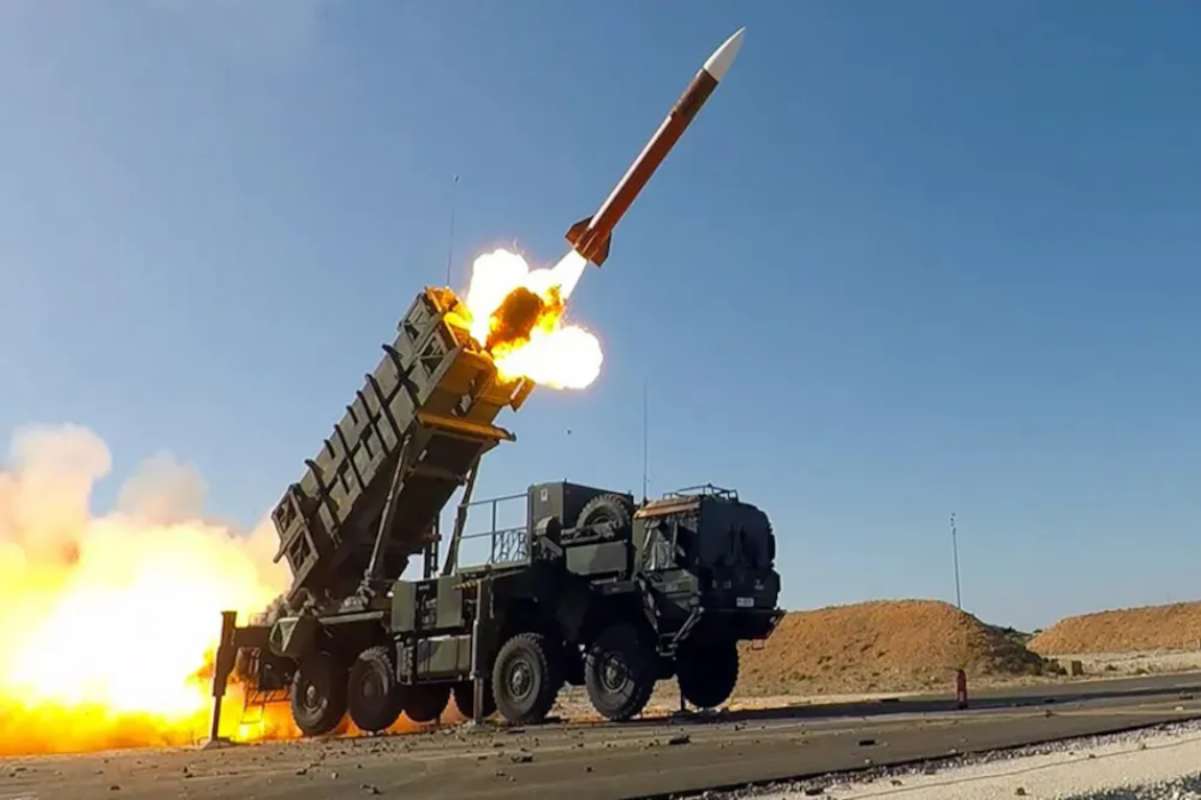
Greece is moving ahead with a significant reconfiguration of its air and missile defense posture in the Eastern Mediterranean, as the continuing war in the Middle East forces Athens to reassess the protection of critical Greek, U.S. and NATO infrastructure.
The relocation of a Greek Patriot battery from Karpathos to Souda Bay in Crete is now underway, marking the transition from contingency planning to operational deployment.
The move strengthens the defensive umbrella over Crete, home to one of the most strategically important U.S. and NATO military hubs in the Eastern Mediterranean.
At the same time, Athens is considering whether to extend for only a short period — or terminate altogether — the deployment of another Greek Patriot battery in Saudi Arabia, potentially bringing a valuable air-defense asset back closer to Greek territory.
Why Souda is moving to the center of the map
The decision reflects the rapidly changing security environment created by the Middle East conflict.
Souda Bay is far more than a Greek military installation. It is a crucial logistical and operational hub for both the United States and NATO, supporting naval and air operations across the Eastern Mediterranean and the wider Middle East.
U.S. aircraft, including aerial refueling platforms, frequently operate through Crete, while the island also hosts major Greek military capabilities.
The relocation therefore signals a shift in priorities: Athens increasingly sees Crete as a strategic asset requiring stronger protection against potential missile and drone threats.
The move follows earlier assessments by Greek defense officials that the Patriot battery positioned on Karpathos could be redeployed if the threat environment surrounding Souda deteriorated.


That contingency is now becoming reality.
Patriot, S-300 and F-16 Vipers: Crete’s defensive shield
The arrival of the Patriot battery adds another layer to an already formidable concentration of Greek military capabilities on Crete.
The island hosts the S-300 air-defense system, while the 115 Combat Wing at Souda operates upgraded F-16 Viper fighter aircraft.
The Patriot adds an especially important capability: defense against certain categories of ballistic missiles as well as aircraft and other aerial threats.
That matters considerably in the current conflict.
Iran and its regional adversaries have demonstrated throughout the Middle East war that long-range missiles and drones are no longer peripheral weapons. They have become central instruments of military coercion and strategic deterrence.
For Greece, that means air defense planning can no longer focus solely on conventional regional scenarios.
The Greek air-defense equation
- Karpathos → Souda: relocation of the Patriot battery is underway.
- Crete: home to critical Greek, U.S. and NATO military infrastructure.
- 115 Combat Wing: F-16 Vipers operate from Souda.
- S-300: another major air-defense capability is already located on Crete.
- Saudi Arabia: Athens is reviewing the future of its deployed Patriot battery.
- Eastern Mediterranean: increasingly exposed to spillover from the Middle East war.
Saudi Arabia deployment also under review
The second major decision concerns the Greek Patriot battery deployed in Saudi Arabia as part of the Hellenic Force in Saudi Arabia (HFSA).
Its future is now being reconsidered.
Athens is reportedly examining two scenarios: a short extension of the mission or the withdrawal of the battery and its return to Greece.
The deployment has provided Greece with valuable operational experience and strengthened its strategic relationship with Riyadh. But the regional security equation has changed dramatically.
As threats move closer to the Eastern Mediterranean, the value of having an additional Patriot system available for Greece’s own defensive requirements inevitably increases.
A final decision is expected after the military and political leadership assesses the evolving operational picture, with the issue requiring consideration at the level of Greece’s Government Council for Foreign Affairs and Defence, KYSEA.
From Gulf deployment to homeland defense?
The potential return of the Saudi-based Patriot would carry significance beyond the military hardware itself.
Greece initially sent the system to Saudi Arabia as part of a broader policy of deepening defense ties with Gulf partners and contributing to the protection of critical energy infrastructure.
Bringing it home would not necessarily represent a retreat from that strategic relationship.
Instead, it could indicate that Athens now believes the balance between overseas commitments and homeland defense needs to be recalibrated.
That distinction becomes increasingly important as the Middle East conflict expands geographically.
Cyprus and the wider Eastern Mediterranean
Greek defense planning is also being shaped by developments around Cyprus and the broader Eastern Mediterranean.
Athens has repeatedly stressed its security commitments in the region, while Greek military forces maintain a presence in and around the Republic of Cyprus.
The broader objective is therefore emerging more clearly: Greece wants sufficient flexibility to move scarce high-value air-defense assets rapidly according to the direction of the threat.
A potential request for defensive assistance from another allied country would likewise have to be evaluated politically and operationally, with any deployment requiring the appropriate government decision.
Souda becomes even more strategic
The relocation ultimately reveals something larger about Greece’s reading of the war.
The Middle East crisis is no longer viewed in Athens as geographically distant.
Its military consequences now reach the Eastern Mediterranean, affecting maritime routes, energy infrastructure, NATO facilities and American military assets.
Souda sits at the intersection of all four.
That explains why strengthening Crete’s air-defense architecture has become a priority — and why the future of Greece’s Patriot battery in Saudi Arabia is suddenly being reconsidered.
The message behind the deployment is therefore straightforward: as the regional threat map changes, Greece is moving its most valuable defensive assets to where the risks are becoming greatest.
Source: pagenews.gr