Fidan Demands Written Notice for Greece–Cyprus Cable: Ankara’s Strategic Game the Aegean & 12 Nautical Miles
 ΧΡΟΝΟΣ ΑΝΑΓΝΩΣΗΣ 14 '
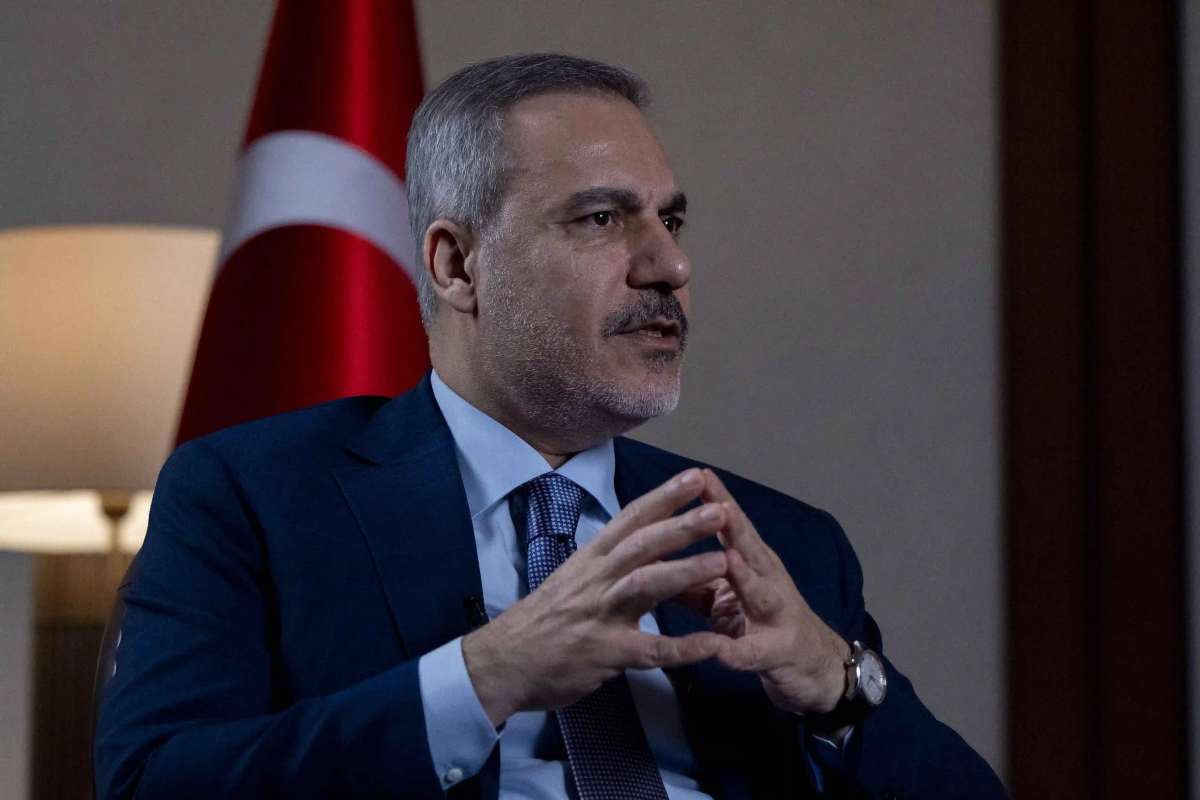
Πηγή Φωτογραφίας: AP Photo//Fidan Demands Written Notice for Greece–Cyprus Cable: Ankara’s Strategic Game Over the Aegean and 12 Nautical Miles



A significant diplomatic intervention by Turkish Foreign Minister Hakan Fidan has brought the Greece–Cyprus electricity interconnection, maritime jurisdiction, and the longstanding disputes between Athens and Ankara back into the geopolitical spotlight.
Speaking at the European Policy Centre in Brussels on October 20, 2026, Fidan addressed questions concerning the Great Sea Interconnector (GSI), Turkey’s 1995 parliamentary resolution, the so-called Blue Homeland doctrine, and the future of Greek–Turkish relations.
His statements, reported by the Greek newspaper Ta Nea, reveal a carefully constructed diplomatic position: Ankara claims that it does not oppose the electricity interconnection in principle, but insists on receiving written notification of maritime survey activities, including their precise geographical coordinates.
More importantly, the Turkish foreign minister explicitly linked this requirement to preserving the existing maritime status quo.
This distinction carries substantial geopolitical implications.
The central question is whether Ankara is seeking routine maritime coordination or attempting to establish a procedural role in activities taking place within contested maritime areas.
For Greece and Cyprus, the difference between notification and authorization is fundamental.
The Cable Dispute: Ankara Demands Written Coordinates
Addressing the Great Sea Interconnector, Fidan argued that Turkey was not fundamentally opposed to the project.
However, he made clear that Ankara expects to receive formal written information before vessels conduct maritime surveys.
According to the Greek-language account published by Ta Nea, Fidan stated:
“We have no objections.”
He nevertheless insisted that survey vessels should provide written notification, rather than merely verbal communication, specifying the research activities and their coordinates.
The Turkish foreign minister characterized this as a limited procedural request:
“That is all we are asking for. Nothing more.”
Yet his remarks went further.
Fidan warned against actions that could alter the existing maritime situation, emphasizing the need to avoid establishing a new status quo.
The implications are significant.
Turkey is effectively linking the implementation of a European energy infrastructure project to the broader dispute over maritime jurisdiction in the Eastern Mediterranean.
From Ankara’s perspective, surveys conducted in areas it considers disputed could create precedents affecting future maritime claims.
From Athens’ perspective, accepting a notification procedure must not imply recognition of Turkish authority over areas where Greece maintains that it possesses sovereign rights.
The legal distinction between maritime safety coordination and the requirement for prior authorization is therefore central to the dispute.
Erdogan’s Alternative: Electricity From Turkey Instead of Greece?
Another important element of Fidan’s intervention concerned the economic rationale behind the electricity interconnection.
The Turkish foreign minister indicated that President Recep Tayyip Erdogan had raised the issue in discussions involving Greek Prime Minister Kyriakos Mitsotakis.
He also referred to French President Emmanuel Macron in the broader context of the project.
According to Fidan’s account, Ankara believes that supplying electricity to Cyprus from mainland Turkey could offer a geographically shorter alternative to the planned interconnection.
Turkey’s argument emphasizes distance, infrastructure costs, and the economic feasibility of competing energy routes.
However, the debate extends well beyond engineering calculations.
The two approaches represent fundamentally different visions of regional energy integration.
The Great Sea Interconnector is designed to connect Cyprus to the European electricity system through Greece, reducing the island’s energy isolation and strengthening its integration into the European Union’s energy market.
A connection through Turkey would create a different structure of energy interdependence, involving a country whose relations with the Republic of Cyprus remain deeply contested.
Consequently, comparing the two options solely on the basis of cable length or construction expenditure would overlook their wider strategic implications.
Energy security, regulatory compatibility, supply diversification, and political dependence are equally important considerations.
International Maritime Law: Notification Is Not the Same as Permission
The legal framework governing submarine cables is a crucial part of the dispute.
The United Nations Convention on the Law of the Sea (UNCLOS) establishes important rights and obligations concerning maritime activities.
Article 58 recognizes freedoms associated with the laying of submarine cables in exclusive economic zones.
Article 79 addresses submarine cables and pipelines on the continental shelf, subject to the specific conditions established by the Convention.
However, not every activity conducted by a survey vessel falls under the same legal category.
Marine scientific research, preliminary route investigations, navigational safety procedures, and actual cable installation may involve different legal requirements.
The precise maritime location also matters.
For Athens and Nicosia, the central challenge is to proceed with the project without accepting arrangements that could be interpreted as recognizing additional Turkish jurisdiction.
Ankara, meanwhile, maintains that activities in disputed maritime areas should not establish precedents before the underlying disagreements are resolved.
The confrontation is therefore not simply about the technical execution of an electricity project. It concerns which state can exercise which powers in maritime areas where competing legal claims exist.
Casus Belli: Fidan Challenges the Interpretation, Not the 1995 Resolution
Fidan also addressed one of the most sensitive issues in Greek–Turkish relations: the Turkish Parliament’s 1995 resolution concerning the potential extension of Greek territorial waters to 12 nautical miles in the Aegean.
The Turkish foreign minister challenged the characterization of the resolution as a threat of war.
According to the published Greek account, he argued:
“It does not constitute a threat of war.”
Fidan emphasized that the measure was a parliamentary declaration rather than legislation.
His argument distinguished the formal legal status of the resolution from its political interpretation.
Nevertheless, the substance of the 1995 decision remains highly significant.
The Turkish Grand National Assembly authorized the government to take all necessary measures should Greece extend its territorial waters beyond six nautical miles in the Aegean.
Athens considers this position incompatible with international law and the principle of peaceful dispute resolution.
Article 3 of UNCLOS recognizes the right of states to establish territorial seas extending up to 12 nautical miles.
The Convention also contains rules governing maritime delimitation between states with adjacent or opposite coastlines.
Turkey is not a party to UNCLOS and maintains that the Aegean’s geographical characteristics require a different approach.
Greece, by contrast, considers the extension of territorial waters to be a sovereign right recognized under international law.
Fidan’s intervention does not, by itself, amount to a withdrawal or substantive amendment of the 1995 parliamentary position.
Rather, it reflects an effort to challenge how that position is presented internationally.
Why the Casus Belli Debate Matters to European Defence
The location of Fidan’s remarks is politically important.
Turkey is seeking a stronger role in Europe’s evolving security architecture, emphasizing its military capabilities, NATO membership, defence industry, and strategic geographical position.
The European Union’s Security Action for Europe (SAFE) instrument has become part of the wider discussion concerning defence-industrial cooperation and the participation of third countries.
For Greece, the continued existence of the 1995 Turkish parliamentary resolution raises questions about deeper European defence cooperation with a country maintaining the possibility of coercive measures against an EU member state.
Fidan’s attempt to distinguish the resolution from a formal declaration of war can therefore be interpreted as an effort to address this political obstacle.
However, rhetorical clarification is not equivalent to a change in policy.
A substantive shift would require a clear alteration or withdrawal of the position expressed in 1995.
Until then, the dispute remains an important factor in relations between Turkey, Greece, and the European Union.
Blue Homeland: No Draft Law, but Maritime Disputes Remain
Fidan also addressed speculation concerning possible legislation associated with Turkey’s Blue Homeland doctrine.
He stated:
“There is no draft law on Blue Homeland.”
He further indicated that the issue of a maritime park had not yet been discussed.
These remarks suggest that no immediate legislative initiative was being presented in the context of his Brussels appearance.
However, the absence of a particular bill does not mean that Ankara has abandoned its wider maritime positions.
The Blue Homeland concept has long been associated with Turkey’s strategic interpretation of maritime jurisdiction in the Aegean, Eastern Mediterranean, and Black Sea.
It has also become a prominent reference point in Turkish naval and geopolitical discussions.
For Greece, the relevant issue is not merely whether a particular legislative proposal exists, but how Turkish maritime claims are reflected in official policy, diplomatic activity, and operational decisions.
The underlying disagreements therefore remain unresolved.
Greek–Turkish Relations: A Calmer Aegean, but Persistent Differences
Fidan acknowledged the relative improvement in bilateral relations following the renewed diplomatic engagement between Athens and Ankara in 2023.
He argued that cooperation had improved and that military tensions had declined.
As quoted in the Greek-language report, he stated:
“The Aegean has become a calmer place over the past three years.”
The Turkish foreign minister nevertheless criticized the role of anti-Turkish rhetoric in Greek domestic politics.
He suggested that political considerations inside Greece complicated efforts to reach agreements on longstanding disputes.
This is Ankara’s political interpretation of the obstacles facing bilateral negotiations.
Athens maintains that the disputes involve substantive questions of international law and maritime jurisdiction, rather than merely domestic political considerations.
The distinction matters because improved political relations do not necessarily imply convergence on the underlying legal issues.
Both governments may seek to reduce tensions while continuing to disagree over the continental shelf, exclusive economic zones, and territorial waters.
Erdogan’s Political Role and the Limits of Diplomatic Engagement
Another element of Fidan’s intervention was his emphasis on President Erdogan’s willingness to engage with successive Greek prime ministers.
The Turkish foreign minister portrayed Erdogan as possessing the political authority necessary to pursue solutions to longstanding bilateral disputes.
This message suggests that Ankara sees room for political negotiations at the highest level.
Yet a fundamental obstacle remains: Greece and Turkey do not fully agree on the scope of the issues to be negotiated.
Athens identifies the delimitation of the continental shelf and exclusive economic zones as the central outstanding dispute that could be referred to international adjudication.
Ankara’s agenda encompasses a broader range of maritime and security questions.
This difference over the negotiating framework has repeatedly complicated attempts to reach a comprehensive settlement.
Diplomatic engagement can help manage disagreements, but it cannot automatically resolve competing interpretations of international law.
The Great Sea Interconnector: Energy Infrastructure Becomes Geopolitical Leverage
The Great Sea Interconnector is much more than a submarine electricity cable.
It is part of a broader effort to strengthen European energy connectivity, improve electricity-market integration, and reduce Cyprus’ isolation from continental electricity networks.
Its strategic importance also extends to the integration of renewable energy and the diversification of regional energy infrastructure.
However, the project’s geographical route intersects with contested interpretations of maritime jurisdiction.
This explains why even preliminary survey operations can acquire significant diplomatic consequences.
Turkey seeks to preserve its influence over developments in the Eastern Mediterranean.
Greece and Cyprus seek to implement a European energy project without compromising their legal positions.
The European Union, meanwhile, faces the challenge of supporting strategic energy infrastructure while managing tensions between a member state and a NATO ally that remains an EU candidate country.
The result is a complex geopolitical equation in which energy investment, international law, regional security, and diplomatic influence are closely connected.
The Three Questions That Will Shape the Next Phase
Three issues will be particularly important as the situation develops.
First, the status of Turkey’s written-notification demand. Will it remain a technical request designed to improve maritime coordination, or will Ankara seek to transform it into a requirement for prior consent?
Second, the future of the 1995 resolution. Will Fidan’s interpretation lead to meaningful diplomatic steps, or will the underlying Turkish position remain unchanged?
Third, the European Union’s response. Will Brussels treat the Great Sea Interconnector primarily as a bilateral dispute involving Greece and Turkey, or as a strategic European energy project requiring broader institutional support?
The answers will influence not only the implementation of the cable but also the wider geopolitical environment in the Eastern Mediterranean.
Conclusion: Diplomatic Dialogue Without Strategic Convergence
Fidan’s Brussels statements illustrate the dual character of Turkey’s current diplomatic approach toward Greece.
On the one hand, Ankara emphasizes dialogue, reduced tensions, and its stated willingness not to oppose the electricity interconnection in principle.
On the other, it links maritime activities to preservation of the status quo and maintains its established positions concerning territorial waters and maritime jurisdiction.
For Greece, the challenge is to preserve diplomatic communication while ensuring that technical arrangements do not create unintended legal or political precedents.
For Cyprus, the stakes include energy security, infrastructure integration, and the strategic consequences of alternative electricity routes.
For the European Union, the dispute raises broader questions about the protection and implementation of cross-border energy infrastructure.
The decisive issue is not simply whether the Greece–Cyprus cable will proceed. It is whether the project can be implemented through procedures that preserve maritime safety and cooperation without implying recognition of contested jurisdictional claims.
That is where energy policy intersects with the central geopolitical disagreements shaping the future of the Eastern Mediterranean.
Πηγή: pagenews.gr
Διαβάστε όλες τις τελευταίες Ειδήσεις από την Ελλάδα και τον Κόσμο