Fidan Courts Cairo and Rome Without Athens — Egypt’s Rejection Tests Turkey’s Maritime Push
 ΧΡΟΝΟΣ ΑΝΑΓΝΩΣΗΣ 8 '
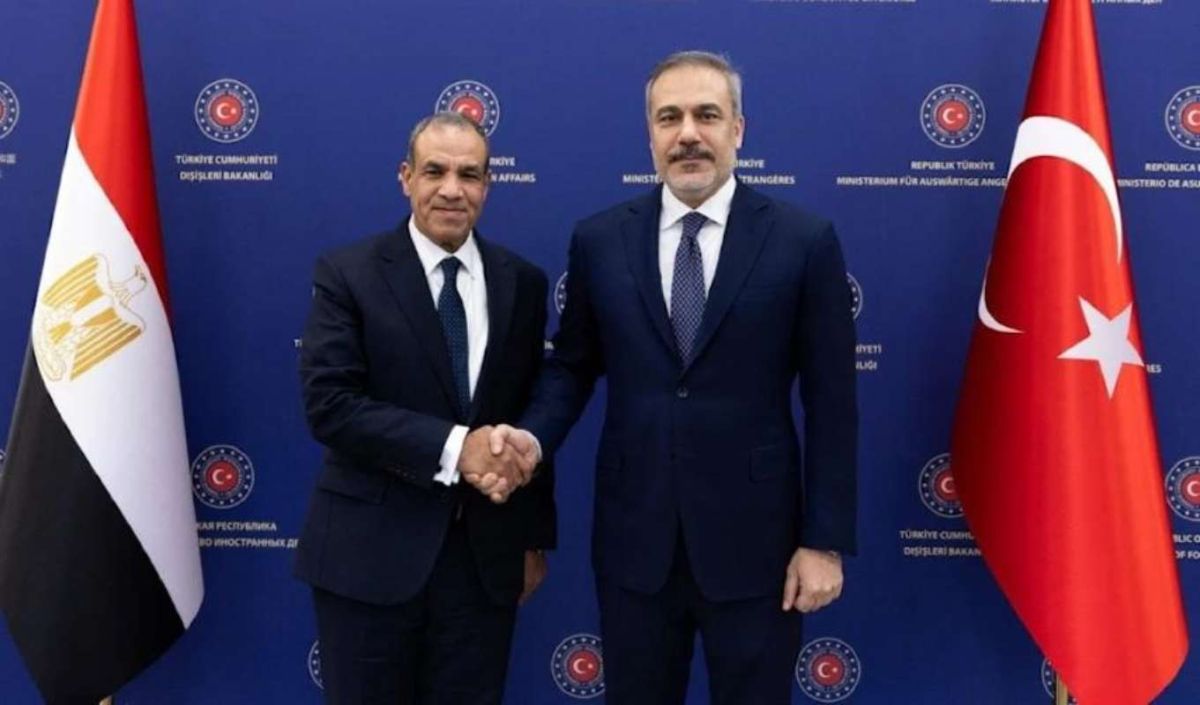
Πηγή Φωτογραφίας: AP Photo//Fidan Courts Cairo and Rome Without Athens — Egypt’s Rejection Tests Turkey’s Maritime Push



Hakan Fidan’s proposal for discussions with Egypt and Italy over Libya and maritime issues reveals Ankara’s next objective: turning the Libyan parliament’s approval of the Turkey–Libya maritime memorandum into an opening for wider regional negotiations.
Greece was absent from the arrangement described by the Turkish foreign minister. However, no agreement establishing such a mechanism has been announced, nor has Cairo or Rome announced acceptance of the memorandum.
Indeed, during the same round of diplomacy, Egyptian Foreign Minister Badr Abdelatty reiterated Cairo’s categorical rejection of Libya’s ratification directly to Fidan.
This distinction matters: Turkey presents Egypt’s objections as concerns that dialogue could address; Egypt continues publicly to reject the ratification.
What Fidan proposed
Speaking in Istanbul after regional ministerial meetings on Friday, October 23, Fidan acknowledged Egyptian reservations and expressed willingness to discuss them.
He suggested that Turkey, Italy and Egypt could meet to address matters concerning Cairo and Libya:
“Positive, constructive approaches can certainly be proposed. They should be proposed, and we have no problem with that. I conveyed this to my Egyptian counterpart. This is also our president’s position.”
The initiative is politically significant because it seeks to create a negotiating space around a memorandum Athens rejects.
But expressing willingness to hold talks does not establish that the other parties have agreed on their participants, scope or conditions.
Greece’s absence and the diplomatic stakes
The omission of Greece carries particular weight because Athens’s objections concern the disregard of Greek islands’ maritime rights.
One possible interpretation is that Ankara wants to address each country’s objections separately, making a coordinated regional response harder to sustain.
That is an interpretation of Turkey’s initiative, rather than evidence of an agreed arrangement to sideline Greece.
Italy’s attendance at the broader Istanbul meetings likewise does not, by itself, demonstrate endorsement of Turkey’s maritime claims. Participation in regional consultations and acceptance of a particular maritime settlement are separate decisions.
Fidan dismisses the reaction as “political uproar”
Fidan defended Ankara’s position that the memorandum was already legally effective, portraying the renewed opposition as disproportionate:
“We signed the memorandum of understanding in 2019. Almost seven years have passed since then.”
He continued:
“The fact that, seven years later, a memorandum already legally in force was also accepted by Libya’s House of Representatives has become the subject of such political uproar is, of course, surprising to us.”
The assertion of legal validity reflects Turkey’s position. It is not an internationally agreed conclusion and does not overturn the European Union’s rejection of the memorandum.
Fidan also acknowledged Greece’s diplomatic mobilisation:
“We clearly see the initiatives Greece is taking at European Union level. This is understandable.”
His remarks indicate that European involvement is itself part of the diplomatic pressure Ankara must manage.
Abdelatty’s response was not acceptance
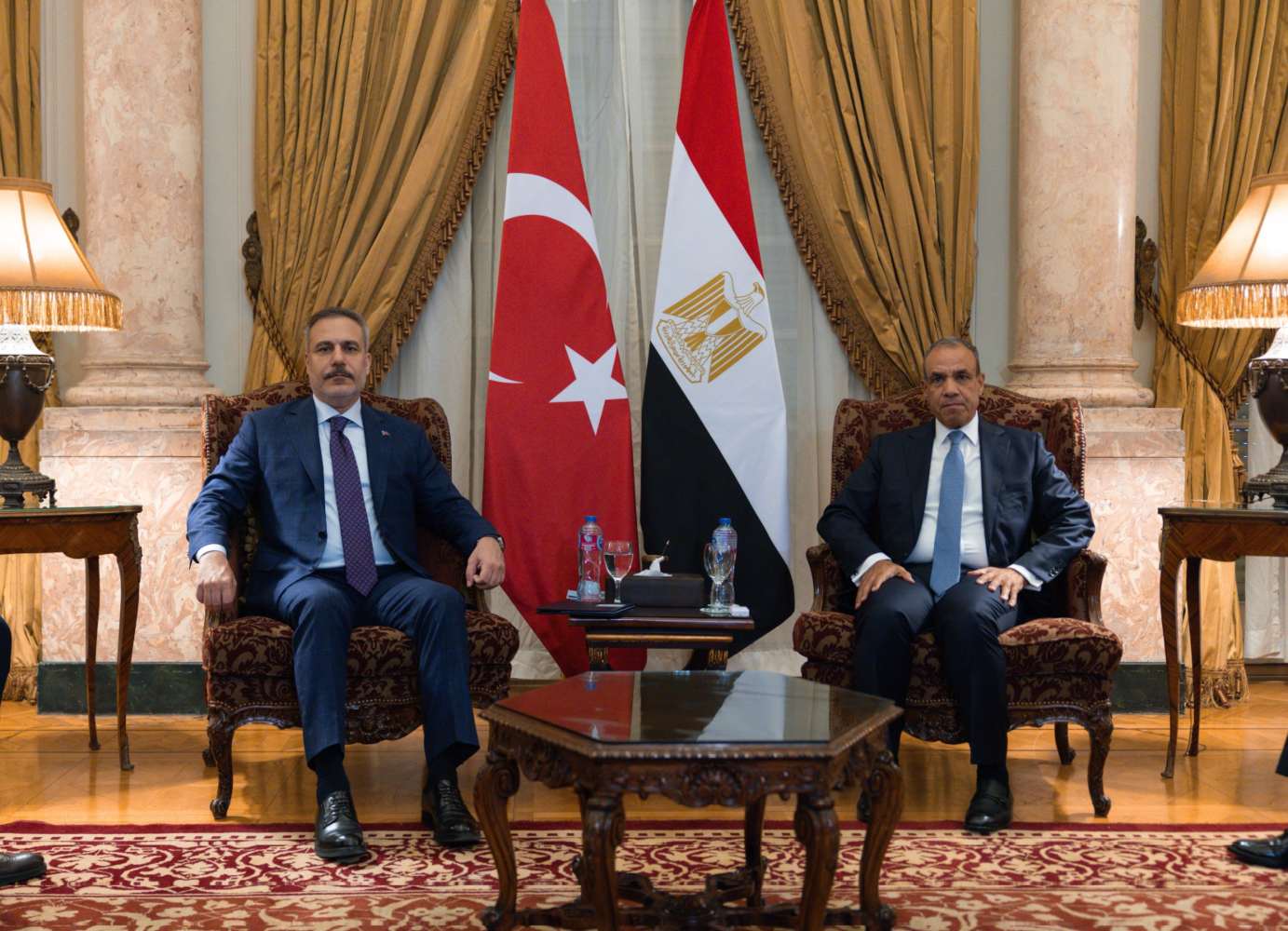
The strongest counterweight to Ankara’s presentation comes from the Egyptian account of the Abdelatty–Fidan meeting.
According to that account, Abdelatty reiterated Egypt’s categorical rejection of the ratification of the 2019 memorandum. He emphasised international maritime law and the United Nations Convention on the Law of the Sea—UNCLOS as the framework for delimiting exclusive economic zones and continental shelves.
The same account said Fidan acknowledged Egypt’s concerns about Libya and supported continued consultation.
Consequently, there is no basis for concluding that Turkey has already overcome Cairo’s objections. The available evidence shows that the two countries remain in dialogue despite their disagreement.
For Athens, this requires sustained coordination with Egypt. Greek–Egyptian cooperation does not preclude Cairo’s contacts with Ankara; Egyptian–Turkish contacts do not automatically mean abandonment of cooperation with Greece.
Gerapetritis: Greece and Egypt share a common understanding
In an October 21 interview with Mega News 104.6, Greek Foreign Minister George Gerapetritis acknowledged Turkey’s sustained efforts to secure parliamentary ratification in Libya.
He linked the development to shifting internal Libyan power balances and argued that it had not been unexpected. On cooperation with Cairo, he stated:
“Greece and Egypt have an entirely common understanding.”
He also expressed an unequivocal position on the memorandum:
“This memorandum will not be implemented.”
That statement constitutes a commitment by Greek diplomacy. Its effectiveness will be assessed through subsequent actions and developments on the ground.
Extending the EEZ agreement remains a negotiation
During their telephone conversation on October 22, Gerapetritis and Abdelatty agreed to continue consultations aimed at extending the geographical scope of their 2020 EEZ delimitation agreement.
This establishes a concrete direction for cooperation. It does not amount to a new agreement, published coordinates or completed negotiations.
Its political significance lies in the possibility of Athens and Cairo extending an existing delimitation through mutually accepted rules.
Progress will be the substantive test. Announcements of coordination matter, but they cannot substitute for a negotiated outcome.
What Filis and Despotopoulos emphasise
Analyses by Konstantinos Filis and Alexandros Despotopoulos, published by SKAI, distinguish between Turkey’s growing political influence and the memorandum’s legal standing.
Filis attributes the Libyan development to Ankara’s systematic expansion of its presence across both western and eastern Libya. He cautions against abrupt Greek reactions.
Despotopoulos separates the political and communications advantage Turkey gains from ratification from the memorandum’s international legal status. He also stresses the importance of Greece maintaining channels with both Tripoli and Benghazi.
The practical implication is that Greece needs legal arguments, international support and a sustained presence in Libya’s decision-making centres.
Libyan reunification as another negotiating asset
Fidan also linked his remarks to efforts to bring Libya’s rival camps closer together, suggesting that “very good news”could follow.
The connection is politically important. If Turkey strengthens its role as a mediator, it could gain additional leverage with countries interested in Libya’s stability.
That does not mean Ankara controls the outcome. Reuniting political institutions and military structures depends on the Libyan parties themselves and on competing regional interests.
The UN and Europe: Support with defined limits
Greece’s intervention in closed Security Council consultations and its letter to the UN secretary-general formally record Athens’s objections.
They do not constitute a Security Council ruling on maritime delimitation.
The European Union has separately reaffirmed that the memorandum infringes third countries’ rights and cannot produce legal consequences for them. This provides meaningful diplomatic support, while leaving Greece with the continuing task of monitoring developments at sea and sustaining regional partnerships.
What will determine the next stage
The available evidence does not establish that Fidan’s proposal caught Athens by surprise. It does establish a Turkish attempt to broaden negotiations through an arrangement that did not include Greece in the composition described.
Three developments will show whether the initiative gains substance: whether Italy accepts a defined negotiating format, whether Egypt changes its position, and whether practical steps are taken to implement Turkish–Libyan maritime claims.
For Greek diplomacy, the challenge is to translate international backing into sustained coordination and workable agreements.
Fidan’s proposal is a negotiating move. Egypt’s rejection remains the publicly recorded position.
Source: pagenews.gr
Διαβάστε όλες τις τελευταίες Ειδήσεις από την Ελλάδα και τον Κόσμο