The Strait of Hormuz in the east.
Bab el-Mandeb in the west.
Between them lies the Arabian Peninsula.
And it is precisely across this geopolitical arc that Turkey is trying to expand its role.
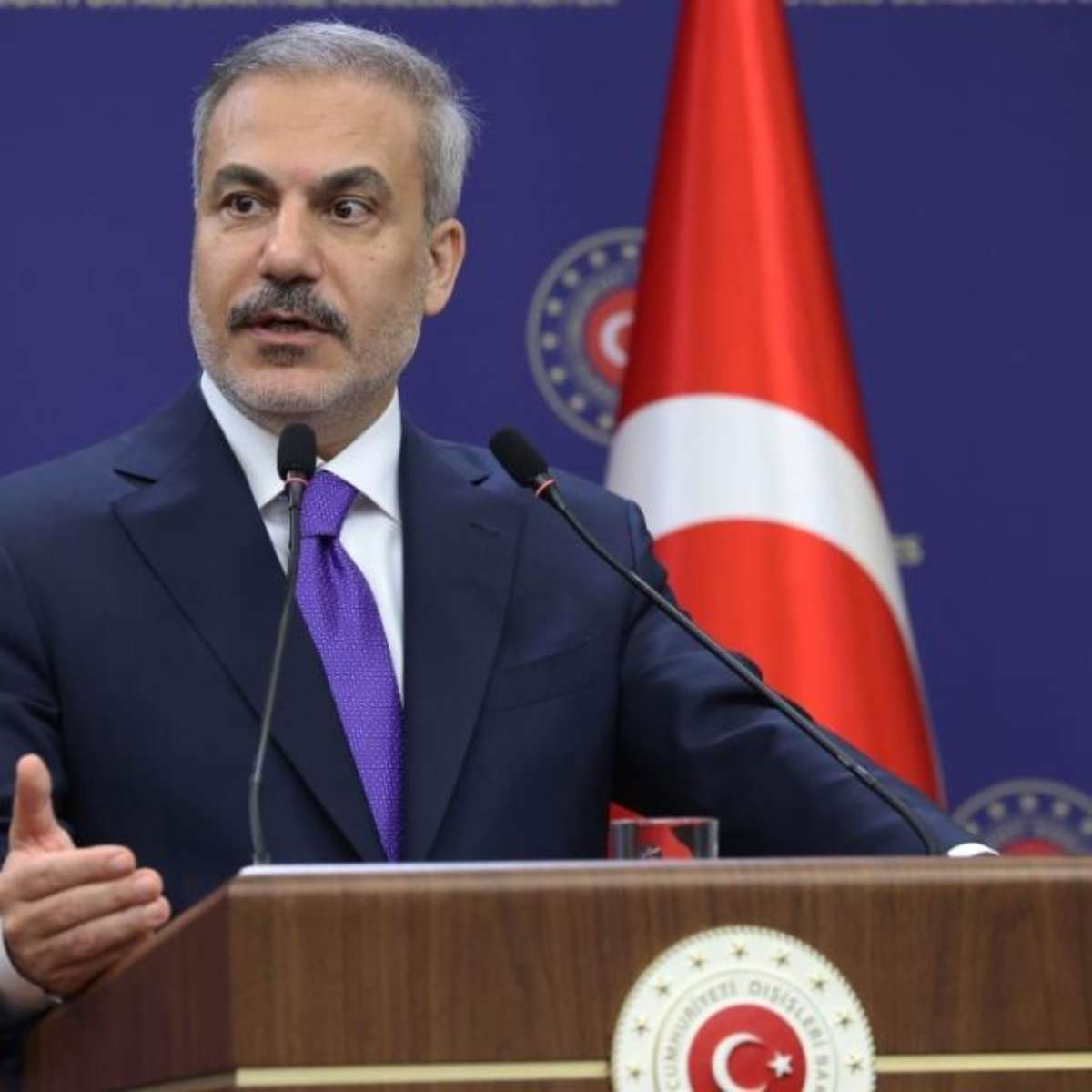
Turkish Foreign Minister Hakan Fidan traveled to the United Arab Emirates on Monday, where he met UAE President Mohamed bin Zayed Al Nahyan.
Officially, Ankara and Abu Dhabi discussed bilateral relations, regional security and efforts to advance a sustainable peace in the Middle East.
Behind the diplomatic language, however, lies a far more urgent strategic reality.
Yemen is entering another dangerous phase, the Houthis have strengthened their position along the Red Sea, and pressure on Hormuz has turned the two maritime gateways into an increasingly interconnected energy-security problem.
Fidan–MBZ: A New Ankara–Abu Dhabi Coordination
Fidan was received by MBZ in Abu Dhabi.
According to the UAE’s official WAM news agency, the two discussed ways to deepen bilateral cooperation as well as regional and international developments.
Particular attention was given to efforts aimed at strengthening:
“security and stability in the Middle East and advancing a sustainable peace process for the benefit of all the peoples and countries of the region.”
The timing is significant.
The UAE sits close to several overlapping crises.
The US–Iran war has transformed the Gulf security environment.
Hormuz remains central to negotiations involving Washington and Tehran.
And on the opposite side of the Arabian Peninsula, renewed fighting in Yemen is again threatening the southern entrance to the Red Sea.


Turkey Puts Hormuz and Bab el-Mandeb on the Same Map
Ankara’s message is notable.
Turkey says freedom of navigation must be protected both through the Strait of Hormuz and Bab el-Mandeb.
The two crises can no longer be viewed entirely in isolation.
For Gulf economies, they represent two ends of the same strategic energy system.
Hormuz carries enormous volumes of Gulf oil and LNG toward world markets.
Bab el-Mandeb connects the Red Sea with the Gulf of Aden and, through the Suez Canal, European markets.
If both routes come under sustained pressure simultaneously, the consequences extend far beyond the Middle East.
They become global.
The Houthis Have Changed the Map
Turkey’s diplomatic activity comes amid renewed Houthi advances in Yemen.
The Iran-aligned movement has made important gains along Yemen’s western coast, including around Mokha and strategic territory and islands near Bab el-Mandeb.
Those advances potentially increase the Houthis’ ability to threaten maritime traffic through the southern Red Sea.
They also create a particularly difficult strategic problem for Saudi Arabia.
As pressure on Hormuz complicates the kingdom’s eastern export routes, instability near Bab el-Mandeb threatens the western maritime corridor as well.
Saudi Oil Is Caught Between Two Fronts
This is where the energy dimension becomes critical.
Saudi Arabia possesses the East-West Pipeline, allowing crude oil from fields in the kingdom’s east to reach the Red Sea without passing through the Strait of Hormuz.
In a Gulf crisis, that is an enormous strategic advantage.
But the value of the western route diminishes if maritime traffic through the southern Red Sea is also exposed to serious disruption.
Houthi advances therefore matter well beyond Yemen.
They put pressure on Riyadh’s strategic alternative to Hormuz.
And This Is Where Turkey Enters the Equation
Ankara has already condemned Houthi attacks against Saudi Arabia.
Fidan has said Turkey stands in strong solidarity with Riyadh and could help address specific Saudi military requirements if requested.
The issue also intersects with Turkey’s developing defense cooperation with Saudi Arabia and Pakistan.
The aim is to strengthen coordination, intelligence sharing, training and technical military capabilities as regional security deteriorates.
But Ankara Is Not Announcing a Turkish War in Yemen
There is an important red line.
Turkey has not announced plans to deploy combat forces against the Houthis inside Yemen.
Its emphasis has instead been on areas such as:
joint defense planning,
training,
intelligence cooperation,
technical military assistance,
and greater interoperability with regional partners.
The logic is clear.
Strengthen Saudi deterrence without turning Turkey into a direct combatant in Yemen.
Ankara Wants a “United Yemen”
At the same time, Turkey continues to emphasize a political solution.
Ankara says it supports a peaceful, stable and territorially united Yemen.
The word “united” matters.
Yemen is not divided simply between the Houthis and the internationally recognized authorities.
The anti-Houthi camp itself contains competing armed groups, local power centers and southern separatist ambitions.
Containing the Houthis therefore does not automatically solve Yemen’s political crisis.

Saudi Arabia and the UAE Do Not Always See Yemen the Same Way
That makes Fidan’s presence in Abu Dhabi particularly significant.
Saudi Arabia and the UAE spent years fighting on the same side against the Houthis.
Their priorities, however, have not always been identical.
Riyadh has traditionally placed particular emphasis on border security and Yemen’s territorial integrity.
Abu Dhabi has cultivated close relationships with southern and coastal forces whose political ambitions have sometimes differed from those of the central government.
The regional environment has now changed again.
And Turkey is trying to maintain working relationships simultaneously with:
the UAE,
Saudi Arabia,
Pakistan,
Qatar,
and Iran.
Turkey’s Iran Paradox
This may be the most difficult part of Ankara’s strategy.
The Houthis are aligned with and supported by Iran.
Yet Turkey does not want its support for Saudi security to become a broader confrontation with Tehran.
Fidan has repeatedly emphasized diplomacy and argued that Iran’s stability has consequences for the wider region.
Ankara is therefore trying to maintain two positions at once:
support Saudi Arabia against Houthi threats — without opening a Turkish front against Iran.
That is a difficult balance.
But it also illustrates the kind of regional role Turkey is seeking.
Ankara Wants “Regional Ownership”
There is a broader concept behind Fidan’s diplomacy.
Turkey argues that Middle Eastern states need greater responsibility for resolving the region’s own crises.
Turkish officials have repeatedly emphasized what they describe as greater regional ownership rather than permanent dependence on outside powers.
In practice, that means:
less reliance on external intervention,
more coordination among regional states,
and stronger regional security mechanisms.
For Ankara, it also creates an opportunity.
Turkey wants to become one of the central players in whatever new Gulf and Middle Eastern security architecture emerges from the current wars.
Ankara Sees a New Arc of Power
Fidan’s trip is therefore about more than Yemen.
And it is about more than Hormuz.
Turkey is simultaneously building:
a strategic relationship with the UAE,
deeper defense ties with Saudi Arabia and Pakistan,
channels with Iran,
a major position in Syria,
and a growing role across the energy and trade corridors connecting Asia, the Middle East and Europe.
These actors do not all share the same interests.
Far from it.
Ankara’s strategic value lies partly in its attempt to maintain channels with states that are themselves competitors.
The Emerging Triangle: Ankara–Riyadh–Abu Dhabi
Only a few years ago, relations between Turkey, Saudi Arabia and the UAE were marked by intense regional rivalry.
The picture today is markedly different.
Investment.
Defense industries.
Energy.
Trade.
Security coordination.
The Iran crisis and renewed instability in Yemen are accelerating that rapprochement.
It should not be mistaken for a unified alliance with identical policies.
But it does amount to a much denser mechanism of strategic coordination than existed during the previous decade.
Two Straits, One Global Problem
Ultimately, geography is driving the story.
On one side:
Hormuz.
On the other:
Bab el-Mandeb.
Between them:
Saudi Arabia,
the UAE,
Yemen,
and Oman.
Around them:
Iran,
Turkey,
Pakistan,
the United States,
China,
and Europe.
This is no longer simply another conflict in Yemen.
It is increasingly a contest over the maritime arteries carrying energy and trade from the Gulf to the rest of the world.
And Fidan’s meeting with MBZ sends a clear signal about Turkey’s ambitions.
Ankara does not want to watch the new regional balance being built from the sidelines. It wants a seat at the table where it is shaped.
Source: pagenews.gr