Fidan Raises the Stakes Over the Cable: “Don’t Make a Reckless Move”–Kasos 2, France and the Three Scenarios
 ΧΡΟΝΟΣ ΑΝΑΓΝΩΣΗΣ 11 '
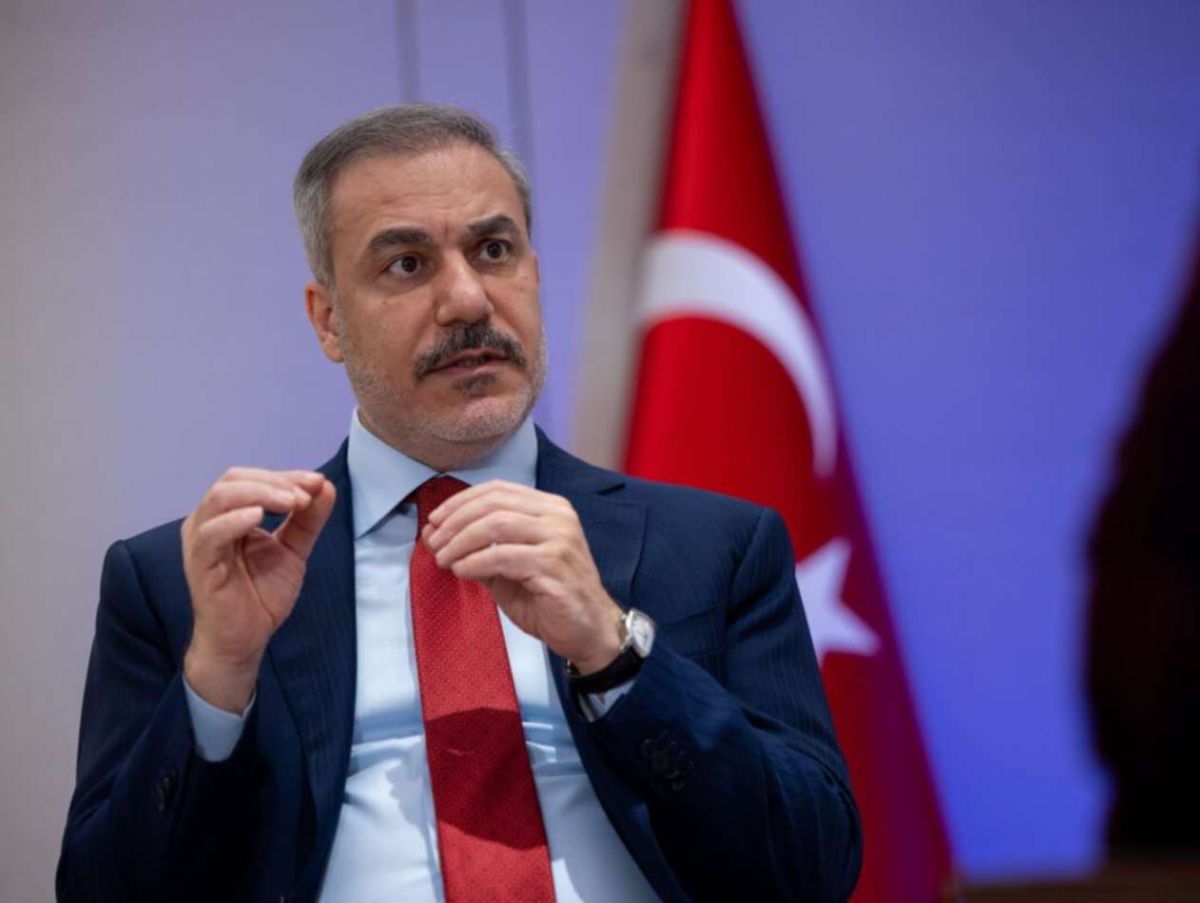
Πηγή Φωτογραφίας: AP Photo//Fidan Raises the Stakes Over the Cable: “Don’t Make a Reckless Move” – Kasos 2, France and the Three Scenarios


Turkey has issued one of its sharpest recent warnings toward Greece, bringing military power directly into the rhetoric surrounding Greek-Turkish relations.
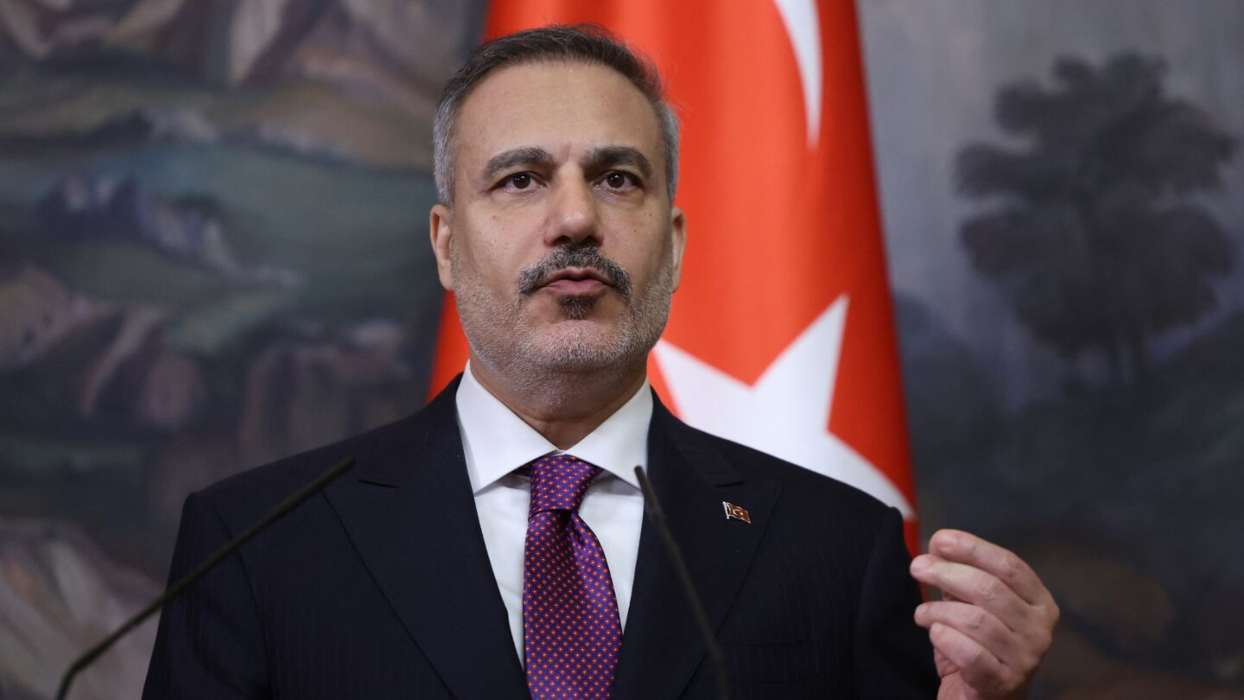
Foreign Minister Hakan Fidan warned against what he described as a possible Greek “reckless move,” saying that Turkey’s Armed Forces and Coast Guard were in an extremely sensitive posture and expressing hope that statements coming from Greece would remain at the level of rhetoric and domestic political calculation.
According to the remarks as reported in the material, Fidan warned that if Greece went further, “the seriousness and power of the Turkish state are known to everyone.”
What makes the statement particularly significant is what Fidan did not say.
He did not specify which Greek action Ankara would consider “reckless.”
That ambiguity opens several fronts simultaneously.
The three messages hidden in Fidan’s warning
Professor of International Law Angelos Syrigos argued that the wording was deliberately ambiguous and designed to send multiple messages at once.
According to Syrigos, it could mean:
“Be careful with the cable.”
It could also mean:
“Be careful not to proceed with the extension of Greek territorial waters around Kastellorizo.”
Or it could be a warning against deploying weapons connected to Greece’s “Achilles Shield” on the eastern Aegean islands.
These are three separate disputes, but they converge on one fundamental question: how far Ankara is prepared to go to challenge Greek actions that Athens regards as falling within its sovereign rights or defensive responsibilities.
Of the three, the most immediate flashpoint may be the Great Sea Interconnector.
The cable is back at the center of the Greek-Turkish equation
The Great Sea Interconnector is designed to connect the electricity grids of Greece and Cyprus and is designated an EU Project of Common Interest.
The European Union has committed €657 million in funding to a project estimated to cost around €1.9 billion.
Its geopolitical importance extends well beyond its price tag.
Cyprus remains the EU’s last member state without an electricity interconnection to the continental European grid. The GSI is designed to end that energy isolation.
The problem is geography.
The planned route crosses waters where Greece and Turkey maintain conflicting positions over maritime jurisdiction.
And that brings the discussion straight back to Kasos.
Kasos 2024: The confrontation nobody has forgotten
In July 2024, the Italian-flagged Ievoli Relume was conducting seabed surveys for the cable between Kasos and Karpathos.
Turkey deployed five warships to the area, arguing that the vessel had entered what Ankara considers its continental shelf. Athens rejected that claim and deployed its own naval assets.
The survey work was ultimately completed, with then-Foreign Minister George Gerapetritis stating that the operation had proceeded according to plan and within waters Greece considers part of its maritime jurisdiction.
But the precedent remained.
Syrigos highlighted precisely this point: the appearance of several Turkish warships around an unarmed research vessel provides an indication of the kind of pressure Ankara may again seek to exert when surveys resume.
The critical question is whether the next operation will look anything like the first.
Why the equation is different this time
One major factor has changed since 2024:
France now has a direct economic and strategic interest in the project.
On August 5, French infrastructure investor Meridiam signed an agreement to acquire a majority stake in the Great Sea Interconnector company. At the same time, an agreement involving Greece’s IPTO, GSI and French cable manufacturer Nexans covered the next phase of seabed survey work.
Meridiam’s entry is more than a corporate transaction.
It effectively gives Paris a much more direct stake in the successful completion of the project.
That political dimension became even clearer after Mitsotakis met Macron at the Élysée Palace on September 9, when the two leaders discussed the next steps for the GSI following the French company’s entry into the project.
Greek reporting has also said that Macron agreed that the survey vessel undertaking the new work for Nexans would sail under the French flag.
That would create a markedly different diplomatic environment from the 2024 Kasos confrontation.
Mitsotakis: Turkey has no legal basis to block the project
Athens has already made its position public.
At the Thessaloniki International Fair, Mitsotakis described the electricity interconnection as one of Europe’s largest Projects of Common Interest and said he expected work to restart within months.
He also argued that Turkey has no legal basis to prevent such a project from being implemented.
Days later, in an interview with ERTnews, the Greek prime minister said work would resume “soon.”
He also explicitly linked Meridiam’s decision to take a majority stake to the French group’s confidence that the project can be completed, while confirming coordination between Athens and Paris over the next steps.
The cable is therefore no longer only a Greek-Cypriot project facing Turkish objections.
It now carries a significant French corporate stake and an even stronger European political dimension.
The question is not whether Turkey will react
Given the Kasos precedent, some form of Turkish response cannot be ruled out.
The more important question is at what level that response would occur.
Several possible scenarios were discussed following Fidan’s remarks: a Turkish naval presence near the survey area; challenges through NAVTEX notices, radio communications and diplomatic protests; or, in a more serious escalation, an attempt to interfere operationally with the vessel.
The discussion also raised the possibility that Athens would approach a second Kasos episode differently, with a stronger Greek naval and aerial presence around the operation.
That, however, remains an analytical assessment rather than an officially announced operational plan by the Greek Armed Forces.
And that distinction matters.
The French factor complicates Ankara’s calculations
French involvement does not mean French warships will automatically appear alongside the survey vessel.
No such military commitment has been publicly announced.
But it changes the diplomatic equation.
Meridiam has a majority economic interest in GSI.
Nexans is central to manufacturing and laying the cable.
Macron has personally discussed the project with Mitsotakis.
And any attempt to obstruct the operation would therefore affect not only a Greek-Cypriot infrastructure project, but French commercial interests and an EU-backed energy project.
That is the crucial difference from the Kasos episode of 2024.
Second possible target: Kastellorizo and the 12-mile issue
Fidan’s warning may also have a broader audience.
Mitsotakis recently reiterated Greece’s position that extending territorial waters up to 12 nautical miles is a right under international law that Athens may exercise when it judges the circumstances appropriate.
Syrigos therefore identified another possible interpretation of Ankara’s message:
“Be careful not to proceed with the extension of Greek territorial waters around Kastellorizo.”
There has, however, been no public Greek announcement that such an extension around Kastellorizo is imminent.
The distinction between an established Greek legal position and an immediate policy decision is essential.
Third front: Achilles Shield and the Aegean islands
The other possible target is Greece’s military reinforcement of the eastern Aegean islands.
Fidan again invoked Ankara’s longstanding position concerning the demilitarized status it says applies to certain Greek islands.
Athens rejects Turkey’s broader interpretation and argues that Greece has the right to defend its territory, particularly in light of the security environment in the Aegean.
The debate following Fidan’s remarks specifically raised the future deployment of systems connected with the Achilles Shield, Greece’s planned multilayer air and missile defense architecture.
Syrigos noted that Turkey has previously issued diplomatic protests even when Greece replaced older military equipment on the islands, while arguing that those protests did not prevent Athens from maintaining their defenses.
Fidan’s other explosive reference: “Greek political friends”
There was another particularly sensitive element in the discussion surrounding Fidan’s statements.
The Turkish foreign minister was reported as referring to “Greek political friends” with whom the Turkish side talks and makes “secret moves” toward resolving disputes.
Syrigos interpreted the formulation as an attempt to create internal political friction in Greece, because it immediately invites speculation over who these politicians might be and what the supposed “secret moves” involve.
No evidence was presented in the material establishing the existence of unofficial political channels of the kind implied.
The claim should therefore be treated as a Turkish assertion, not an established fact.
New York – but no confirmed Mitsotakis–Erdogan meeting
The timing adds another layer.
Mitsotakis is heading to the United States for the UN General Assembly in New York.
The Greek prime minister has said that no meeting with Recep Tayyip Erdogan is currently scheduled, while leaving open the possibility that circumstances could change.
Syrigos, commenting on the latest atmosphere, said he did not expect a bilateral meeting under the current circumstances and described Ankara as being in a phase of sending messages.
Whether a meeting eventually takes place remains a matter of scheduling and diplomacy rather than something that can currently be stated as settled.
The real test will come at sea
The strategic picture is becoming clearer.
Athens says the Great Sea Interconnector will proceed.
Meridiam has entered the project with a majority role.
Nexans is central to the cable’s construction and installation.
Mitsotakis and Macron have discussed the next steps.
And the European Union has committed hundreds of millions of euros to an infrastructure project it considers strategically important.
Turkey, meanwhile, continues to contest maritime jurisdiction in parts of the area through which the project is planned to pass.
That is why Fidan’s warning matters.
The decisive moment will come when the survey vessel returns to sea.
Only then will it become clear whether Ankara limits its response to NAVTEX notices, diplomatic protests and military signaling—or whether it attempts to recreate the pressure seen off Kasos in 2024. The difference this time is that any new confrontation would test not only Greek-Turkish de-escalation, but also the much greater French and European weight now sitting behind the cable.
Source: pagenews.gr
Διαβάστε όλες τις τελευταίες Ειδήσεις από την Ελλάδα και τον Κόσμο