Fidan in Moscow: Turkey Builds a “Power Broker” Role Between Russia, the U.S. and Iran
 ΧΡΟΝΟΣ ΑΝΑΓΝΩΣΗΣ 8 '
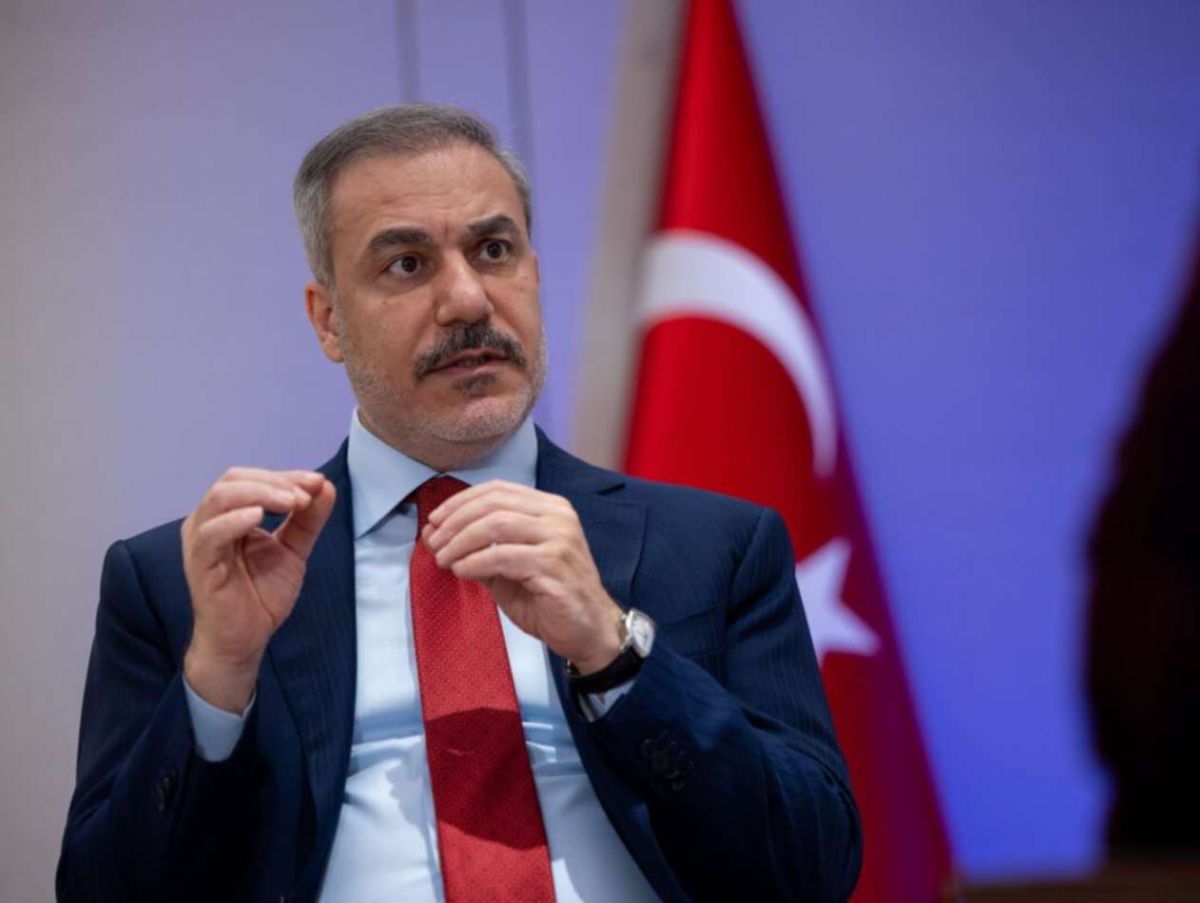
Πηγή Φωτογραφίας: AP Photo//Fidan in Moscow: Turkey Builds a “Power Broker” Role Between Russia, the U.S. and Iran



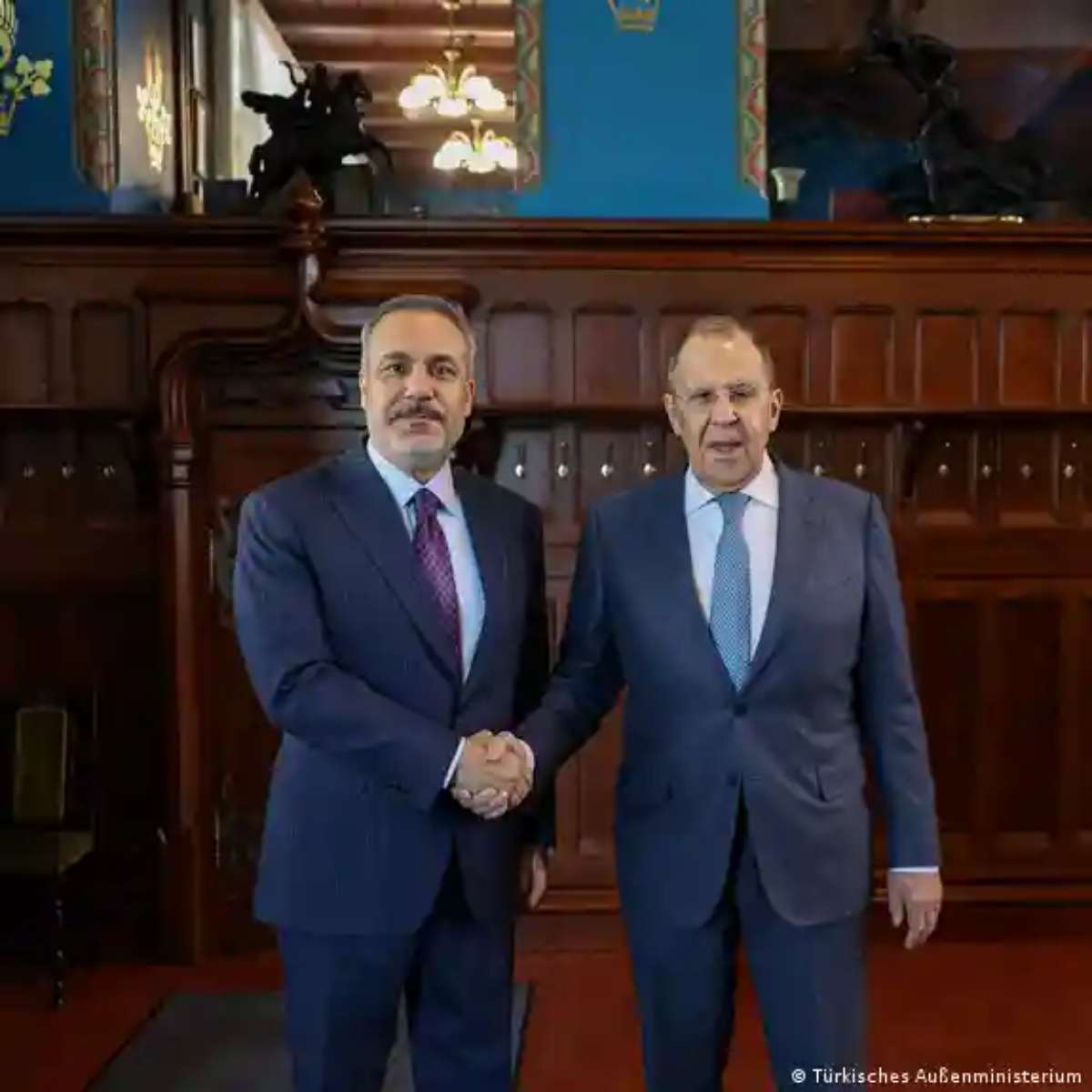
The meeting between Hakan Fidan and Sergey Lavrov in Moscow was much more than another entry in the long calendar of Turkish-Russian diplomacy.
Behind the references to “mutual trust,” economic ties and Black Sea security lies a much larger Turkish ambition: Ankara is positioning itself at the intersection of three major geopolitical tracks — Russia and the West, the United States and Iran, and the emerging security alignments of the Middle East.
Turkey’s foreign minister also used his meeting with his Russian counterpart to explain Ankara’s role in the U.S.-Iran agreement, portraying it not simply as a temporary pause in confrontation but as a possible starting point for a new regional security architecture.
“Historical depth, strong economic foundations and mutual trust”
Fidan used particularly strong language to describe relations with Russia.
“Turkey-Russia relations are based on deep historical foundations, strong economic ties, political dialogue established between our leaders and mutual trust.”
For the foreign minister of a NATO member, that is significant language.
Turkey is not presenting Moscow simply as an unavoidable interlocutor. It is describing Russia as a strategic partner with whom it has built an institutionalized relationship at the highest political level, despite the war in Ukraine and the wider confrontation between Russia and the West.
That does not mean Ankara and Moscow agree on everything.
They have competed or found themselves on opposing sides in Syria, Libya and parts of the South Caucasus, while Turkey remains firmly embedded in NATO.
Yet one of the defining characteristics of the Erdoğan-Putin relationship has been the ability to compartmentalize confrontation and cooperation — keeping channels open even when their interests collide.
Ankara moves between Trump and Tehran
The second major issue in Moscow was Iran.
Fidan described the U.S.-Iran agreement as an “extremely valuable diplomatic milestone” in efforts to stop the cycle of regional confrontation.
He then set a considerably more ambitious objective:
“Our greatest hope is that this step, which provides a breath of fresh air to our region and the entire world, will evolve into a structural and lasting security architecture rather than remain a temporary calm.”
That formulation reveals much about Turkey’s strategy.
Ankara does not simply want to help implement an agreement between Washington and Tehran.
It wants a seat at the table when the question becomes: what comes next?
Pakistan and Qatar: The network behind Turkish diplomacy
Fidan described an intensive diplomatic network surrounding the negotiations, saying Turkey had remained in continuous contact particularly with Pakistan, Qatar and the United States.
That combination is important.
Ankara is attempting to operate simultaneously within NATO, through its strategic partnerships across the Muslim world, in dialogue with Tehran, in cooperation with Moscow and in continuous negotiation with Washington.
This is not conventional alignment.
It is a foreign policy built around multiple centers of power.
And Fidan increasingly appears to be trying to convert Turkey’s ability to move between those centers into strategic leverage.
Israel emerges as the unpredictable variable
Fidan was also pointed in his comments regarding Israel.
Turkey hopes the remaining technical negotiations between Washington and Tehran can be completed within the agreed timeframe “without being affected by any sabotage.”
He also argued that President Donald Trump demonstrated political determination in reaching the agreement despite Israeli objections.
The reference matters because Turkish-Israeli relations have deteriorated sharply, while Ankara increasingly views Israel’s regional military strategy as conflicting with Turkey’s own ambitions — from Syria to the broader Middle East.
For Ankara, therefore, stabilizing the U.S.-Iran track is not isolated from its growing strategic competition with Israel.
The Black Sea marks the limits of Turkish flexibility
Relations with Moscow also have clear limits.
Fidan raised the security of navigation in the Black Sea and stressed the need to prevent incidents capable of harming Turkish interests.
Turkey occupies an unusual strategic position there.
It has refused to embrace a policy of complete political and economic isolation of Russia, yet it also has a vital interest in preventing uncontrolled military escalation in the Black Sea.
The Turkish Straits, commercial shipping, energy routes and Ankara’s responsibilities under the Montreux Convention make the region central to Turkish national strategy.
This explains Turkey’s difficult balancing act: it supports Ukraine in important areas while remaining the NATO power capable of maintaining a functional strategic relationship with Moscow.
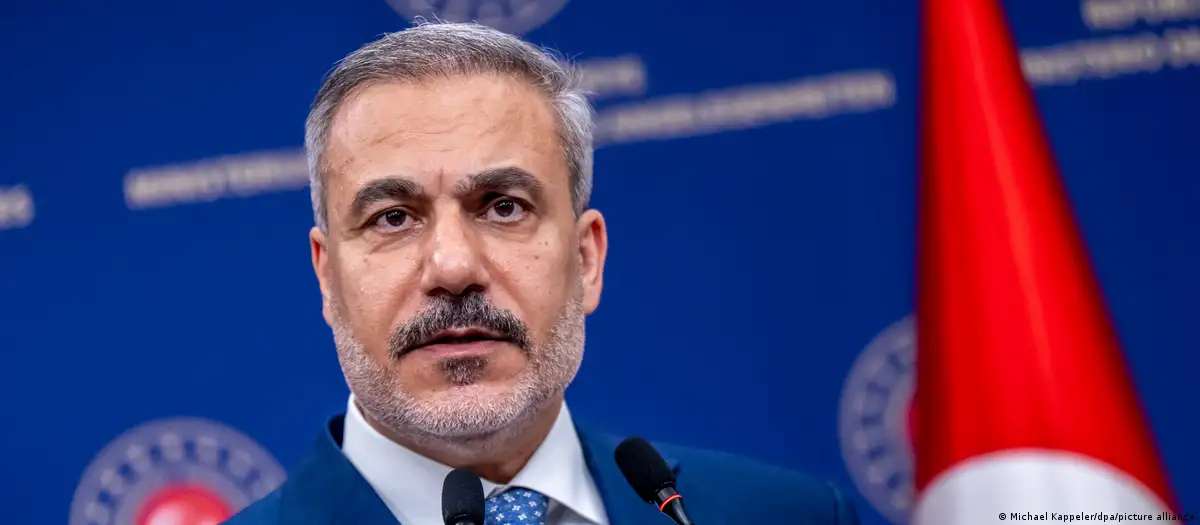
Turkey wants Russia and Ukraine back at the table
The same logic applies to Ukraine.
Ankara continues to seek a return to negotiations between Moscow and Kyiv and wants to preserve Turkey as a potential venue and intermediary for future diplomacy.
The model is familiar:
do not completely abandon either side;
maintain access to both;
and make yourself indispensable when negotiations eventually become necessary.
This is one of the central characteristics of contemporary Turkish foreign policy under Erdoğan and Fidan.
Trump creates new room for Ankara
Fidan also placed considerable emphasis on Donald Trump’s personal political will in securing the agreement with Tehran.
From Ankara’s perspective, Trump’s approach creates a new window of opportunity.
The White House is more willing to use bilateral bargaining, leader-to-leader diplomacy and regional intermediaries.
That is precisely the diplomatic environment in which Turkey believes it has a comparative advantage.
Ankara can speak to Washington while maintaining channels with Tehran.
It can remain inside NATO while talking strategically to Moscow.
And it can leverage its relationships with Qatar, Pakistan and other regional powers when traditional diplomatic channels become blocked.
From “difficult ally” to indispensable intermediary
For years, Turkey was frequently described in Western capitals as a “difficult ally.”
The S-400 dispute, relations with Russia, disagreements with Washington and repeated tensions with European governments reinforced that perception.
Fidan’s strategy seeks to turn precisely that weakness into an asset.
Turkey increasingly presents its ability to speak with competing powers not as evidence of unreliability, but as proof of geopolitical usefulness.
With Moscow, Ankara can discuss Ukraine.
With Tehran, regional security.
With Pakistan and Qatar, broader regional diplomacy.
With Washington, Iran and NATO.
And with Europe, Black Sea security, migration and the continent’s evolving defense architecture.
The underlying proposition is straightforward: the more actors that need Ankara when they cannot speak directly to each other, the greater Turkey’s geopolitical value becomes.
Fidan wants to make Turkey “too useful to ignore”
That is the real geopolitical story behind the Moscow meeting.
Turkey is no longer merely attempting to balance Russia against the West.
It is trying to go one step further — turning those seemingly contradictory relationships into a permanent source of national power.
The more rival camps can communicate through Ankara when they cannot communicate effectively with each other, the more strategically valuable Turkey becomes.
That explains why Fidan can speak in Moscow about “mutual trust” with Russia while simultaneously emphasizing cooperation with the United States over Iran.
From Ankara’s perspective, these are not contradictory relationships.
They are parts of the same strategy.
Turkey’s larger ambition is no longer simply to stand between competing geopolitical camps. It wants to become a hub through which those camps are forced to communicate.
If the U.S.-Iran agreement proves durable, Ankara will almost certainly seek to convert its diplomatic contribution into something larger: influence over the security architecture that follows.
And that is where Fidan’s Moscow message becomes important for Europe as well.
Turkey is signaling that it does not intend to be merely a NATO flank state or a bridge between East and West. It wants to be one of the powers helping design the rules of the emerging order.
Source: pagenews.gr
Διαβάστε όλες τις τελευταίες Ειδήσεις από την Ελλάδα και τον Κόσμο