Gerapetritis–Fidan in New York: Channels Open, Tensions High – GSI, Cyprus and Athens’ Message
 ΧΡΟΝΟΣ ΑΝΑΓΝΩΣΗΣ 8 '
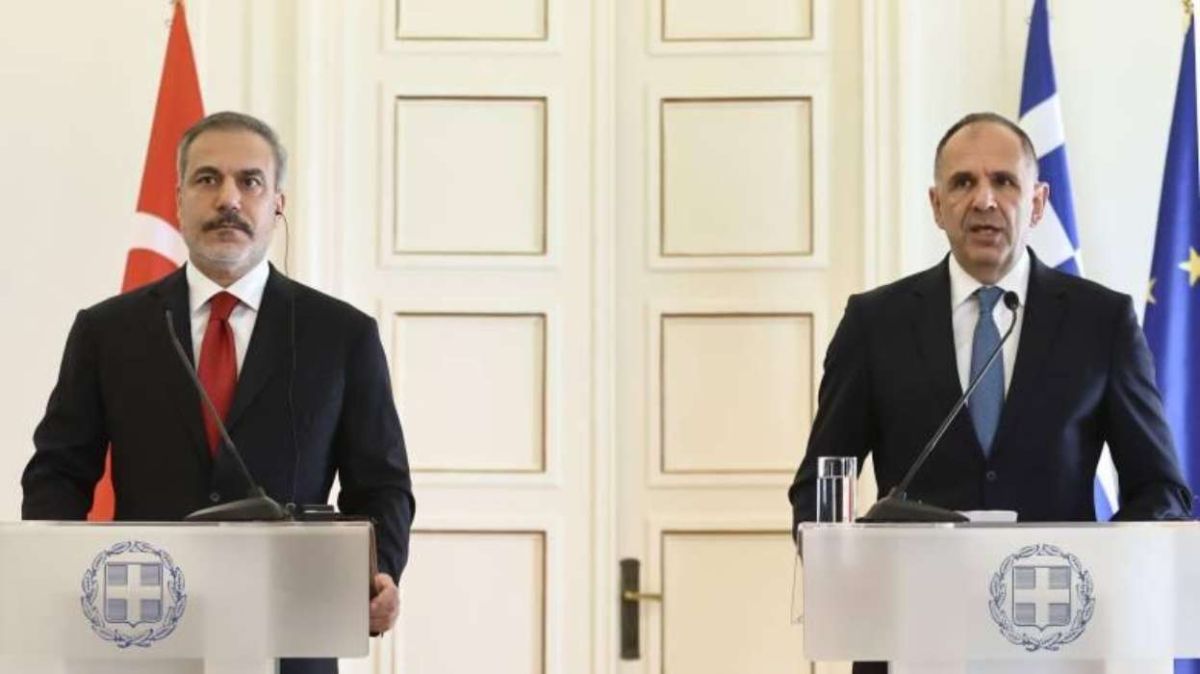
Πηγή Φωτογραφίας: eurokinissi//Gerapetritis–Fidan in New York: Channels Open, Tensions High – GSI, Cyprus and Athens’ Message



Greek diplomacy is keeping its channel with Ankara open even at a time of heightened tensions.
On the sidelines of the 81st United Nations General Assembly in New York, Greek Foreign Minister George Gerapetritis held a brief, unscheduled conversation with Turkish Foreign Minister Hakan Fidan, with reports indicating that the two agreed to meet again.
The contact carries particular significance after weeks of sharper rhetoric, with Ankara once again raising questions over the militarisation of Greek islands and Athens insisting on international law and Greece’s right to defend its territory.
“The channels of communication have always remained open”
A senior Greek diplomatic source stressed that communication between Athens and Ankara had never ceased.
That, however, does not mean relations have returned to normal.
Quite the opposite.
“The channels of communication have always remained open.”
The same source underlined the need for continuous dialogue in order to ease the tensions accumulated in recent weeks.
“More tension has been generated than what we were accustomed to. The situation needs to be de-escalated, but that does not depend on us.”
The wording reflects Athens’ current approach: preserve dialogue without playing down bilateral disputes or accepting Ankara’s positions.
The meeting was not scheduled
The fact that the conversation took place outside the official programme is itself noteworthy.
Gerapetritis had said on September 1 that no meeting with Fidan had been scheduled during the UN General Assembly, although he had left the door open to another encounter in the near future.
“We have not scheduled one at the General Assembly, but it is very likely that there will be a meeting in the coming period. We meet periodically.”
The New York contact therefore indicates that even without a formal bilateral meeting on the calendar, the two sides want to maintain direct communication.
The Greece–Cyprus cable in the background
One of the most sensitive geopolitical issues surrounding Greek–Turkish relations is the planned electricity interconnection between Greece and Cyprus.
Athens maintains that the Great Sea Interconnector is a European project of common interest and should proceed as planned.
Gerapetritis has also pointed to the involvement of French infrastructure investor Meridiam as further strengthening the project’s European dimension.
According to the latest diplomatic assessments, Athens is prepared to issue the necessary NAVTEX when requested so that survey work can proceed.
The Greek position is that the surveys will continue and that any party obstructing a European project would have to assume the corresponding political and diplomatic responsibility.
“Whoever obstructs it assumes responsibility”
Athens does not want the GSI to be treated solely as another bilateral Greece–Turkey dispute.
It is a European project.
It carries European backing.
It has a French dimension.
And it is directly connected to Cyprus’ energy security and the broader energy architecture of the Eastern Mediterranean.
That European dimension is one of Athens’ main diplomatic arguments.
The objective is to ensure that any attempt to obstruct the project is seen not simply as another Greek–Turkish confrontation, but as interference with a wider European infrastructure project.
Cyprus: Diplomatic movement, but no illusions
Diplomatic activity is also intensifying around the Cyprus issue.
Greece supports a return to a substantive UN-led process but is cautious about expectations of an immediate breakthrough.
Athens is seeking to keep the issue active internationally, support Nicosia and resist the entrenchment of Ankara’s position in favour of a two-state solution.
Gerapetritis builds regional trilaterals
Greece also used the New York meetings to deepen its regional partnerships.
Gerapetritis participated in two trilateral formats:
Greece–Cyprus–Egypt,
and
Greece–Cyprus–Jordan.
The Greek Foreign Ministry confirmed that both trilateral meetings took place on September 25 as part of Greece’s diplomatic activity around the UN General Assembly.
Gerapetritis said:
“We are building a Greece with a strong diplomatic footprint, strong alliances, and a very broad, intensive and active foreign policy.”
He added:
“We held two important trilateral meetings, with Cyprus and Jordan, and with Cyprus and Egypt. They are extremely important for the presence of both Greece and Cyprus in the broader region and for strengthening our relations in a region shaken by the wars across the wider Middle East.”
Energy security becomes national security
Gerapetritis also placed particular emphasis on freedom of navigation.
Athens’ concern extends far beyond the Aegean and Eastern Mediterranean.
It involves the entire network of global energy and trade routes:
the Persian Gulf,
the Red Sea,
the Black Sea,
overland pipelines,
and major maritime corridors.
The Greek Foreign Ministry has warned that attacks on international shipping have disrupted global supply chains and affected both energy and food security.
Gerapetritis put the issue starkly:
“Any shipping crisis, any obstruction of freedom of navigation, constitutes an enormous risk to the supply chain and, ultimately, to the prosperity of peoples.”
The risk of an energy squeeze
This may be one of the most consequential geopolitical messages coming from Athens.
If simultaneous disruption occurs in the Persian Gulf, the Red Sea and the Black Sea, alongside attacks or disruptions affecting overland pipelines, Europe could face pressure across several energy arteries at once.
It would no longer be a crisis confined to a single chokepoint.
It could become a combined disruption across multiple routes carrying energy and goods toward European markets.
For Greece, that scenario also reinforces the importance of its role as a major shipping nation, an energy gateway and a regional diplomatic actor.
Greece takes the UN Security Council presidency in October
The timing is particularly significant because Greece assumes the rotating presidency of the United Nations Security Council in October.
It will be Athens’ second presidency during its two-year term as a non-permanent member.
The Greek Foreign Ministry has said the presidency comes during a critical period for international security and amid the process surrounding the selection of the next UN Secretary-General.
Gerapetritis said:
“Greece assumes the presidency of the United Nations Security Council in October for the second time during its two-year term. This is an exceptionally important period. The major issues troubling humanity will be addressed.”
Rubio is also on the horizon
Greece–US relations form another part of this increasingly dense diplomatic picture.
US Secretary of State Marco Rubio is expected to visit Greece in early October in connection with the sixth Greece–US Strategic Dialogue, with defence, security, migration and broader strategic issues on the agenda.
The expected visit therefore coincides with Greece’s UN Security Council presidency, renewed movement in Greek–Turkish relations, the GSI issue and heightened international concern over energy security.
That gives Athens an unusually concentrated diplomatic window in October.
Dialogue with Ankara – but no blank cheque
The message emerging from New York is ultimately twofold.
Greece does not seek to cut off dialogue with Turkey.
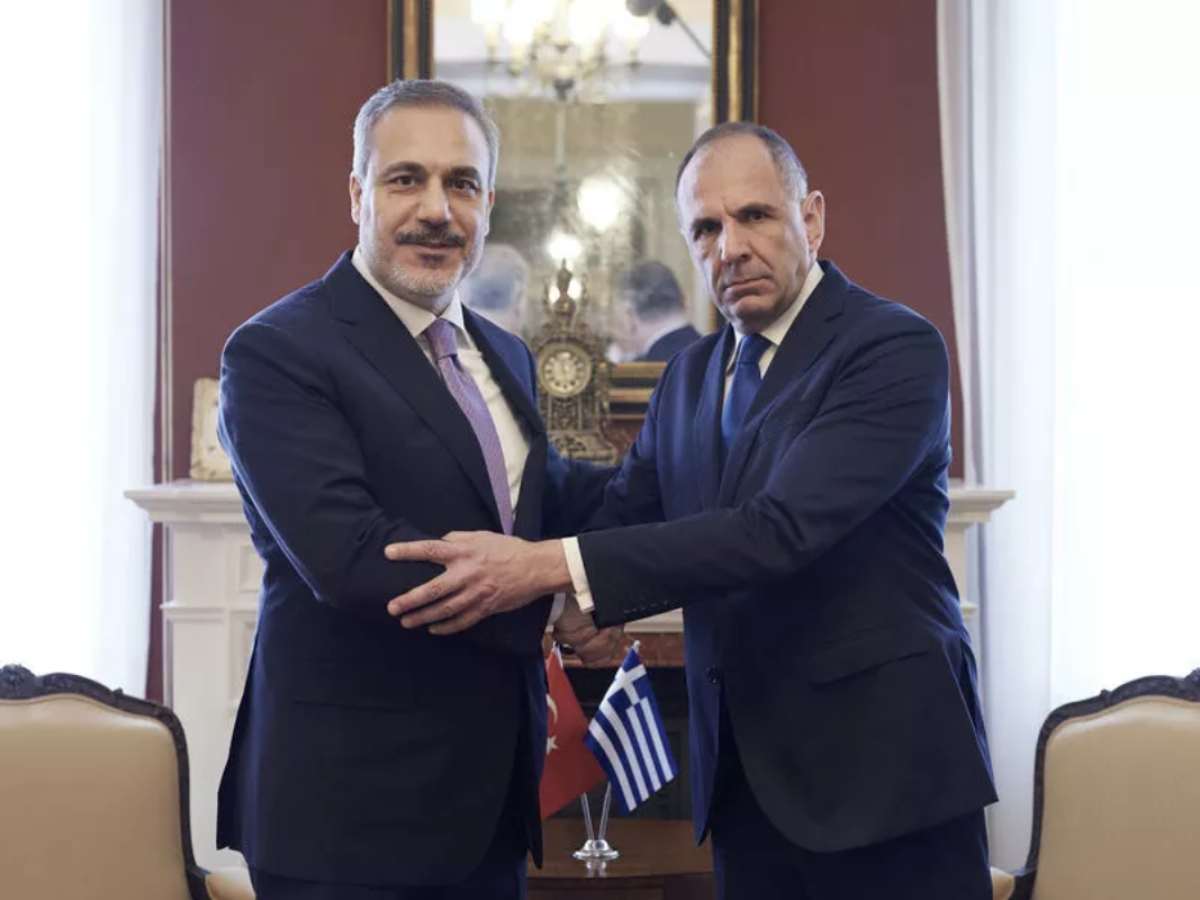
Gerapetritis and Fidan maintain a direct channel and, according to the information emerging from New York, are expected to meet again.
At the same time, Athens is strengthening regional partnerships, emphasising the European character of the GSI, deepening its relationship with Washington and preparing to chair the UN Security Council.
The Greek strategy is therefore not simply “dialogue or deterrence.”
It seeks to pursue both.
Keep the door open to Fidan while simultaneously strengthening the diplomatic and geopolitical framework surrounding any new period of tension.
Source: pagenews.gr
Διαβάστε όλες τις τελευταίες Ειδήσεις από την Ελλάδα και τον Κόσμο