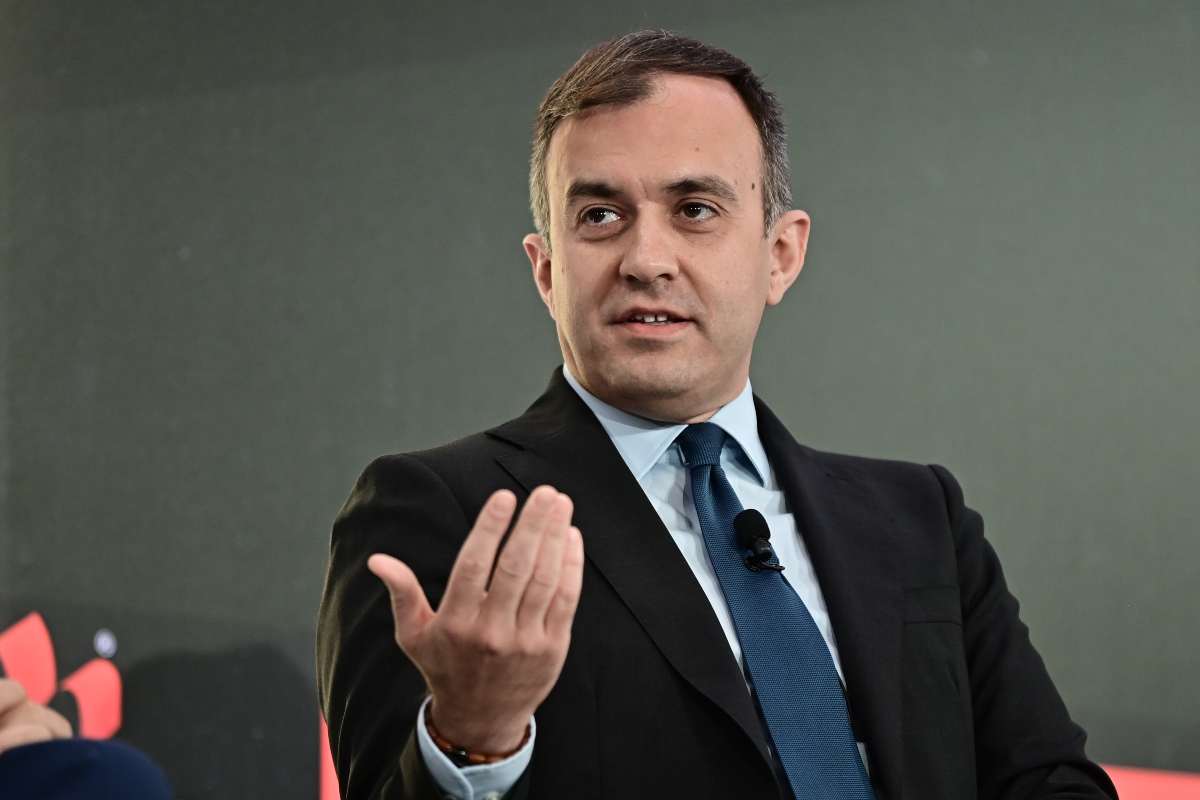
Tasos Chatzivasileiou rejected the suggestion that Greece needs prior political approval from another country to conduct surveys for the Greece–Cyprus electricity interconnection.
Ahead of Marco Rubio’s visit to Athens, he linked defence cooperation with energy infrastructure, arguing that Greek and American interests converge across a broad range of regional issues.
“Rubio’s arrival in Athens is, in itself, a geopolitical vote of confidence in Greece,” he said, placing the visit against a backdrop of heightened challenges in the Eastern Mediterranean.
“We do not need a green light from anyone”
A central question in the discussion concerned Washington’s position on the Great Sea Interconnector, and whether progress on survey work depends on broader diplomatic considerations.
Chatzivasileiou responded:
“First of all, we do not need a green light from anyone to proceed with surveys concerning the GSI cable. Let us be clear about that.”
He emphasised the project’s European character and European funding, presenting the interconnection as infrastructure with significance beyond the countries it directly connects.
“When the time comes, you can be certain that everything will be done in the appropriate manner,” he added.
His statement reaffirmed the political commitment to continuing the project. During the interview, he did not announce a new agreement with the United States or confirm a specific date for surveys to resume.


Greece as an energy gateway to the north
Chatzivasileiou highlighted the Vertical Corridor, which aims to strengthen natural gas flows from Greece towards markets in Southeastern and Eastern Europe.
He identified Alexandroupoli and Greece’s energy facilities as infrastructure that gives practical substance to cooperation with the United States.
In his account, the capacity to channel liquefied natural gas towards these markets strengthens both energy security and Greece’s strategic position.
He also referred to Souda Bay, connecting Greece’s military importance with its expanding energy role.
“Greece is not a pillar of stability merely in words. It is one in practice,” he argued.
Rubio and the foundations of “3+1” cooperation
Chatzivasileiou recalled Rubio’s involvement in Eastern Mediterranean policy before becoming US secretary of state.
In 2019, as a senator, Rubio joined Bob Menendez in introducing legislation on security and energy cooperation in the Eastern Mediterranean. The initiative sought to deepen American cooperation with Greece, Cyprus and Israel through energy and defence measures.
Chatzivasileiou cited that record to argue that Rubio understands the region’s geopolitical challenges and the importance of cooperation between its partners.
This history provides context for the visit. Specific American commitments to today’s infrastructure projects, however, will depend on official statements and the outcome of the talks.
Egypt also features in the interconnection strategy
The energy agenda Chatzivasileiou described extends beyond the electricity cable connecting Greece and Cyprus.
He also discussed GREGY, the proposed Greece–Egypt electricity interconnection, as a project that could link renewable energy production in North Africa with the European market.
The design envisages a submarine connection between Egypt and mainland Greece, with a transmission capacity of up to 3,000 MW. Electricity would serve the Greek market and could also be exported to other European countries.
GREGY is a separate project from GSI, with its own route and development process. In Chatzivasileiou’s remarks, both belong to a broader strategy: giving Greece a larger role in moving energy between regions.
Turkish claims and the Greek position
Chatzivasileiou connected the timing of Rubio’s visit with Turkish moves concerning marine parks in the Aegean and Eastern Mediterranean, which he characterised as expressions of unlawful claims.
He maintained that plans for the electricity interconnection remain in place, referring to statements by Greek Foreign Minister George Gerapetritis.
In his assessment, Rubio’s presence creates an opportunity to highlight the common interests of Greece and the United States.
The position he outlined was that diplomatic cooperation can support the implementation of energy projects, while decisions on advancing them remain the responsibility of the Greek side.
Partnerships guided by national interests
Asked about cooperation between other countries in the Middle East, Chatzivasileiou argued that Athens should concentrate on its own relationships and the protection of its interests.
He referred to Greece’s ties with Saudi Arabia, Gulf countries and Israel, rejecting the idea that Greece should seek to intervene in every partnership established by other states.
“Our job, first and foremost, is to defend Greece’s national interests,” he said.
His remarks connected energy policy with the wider diplomatic agenda: developing infrastructure, strengthening partnerships and making use of Greece’s geographic position in a region where energy and security are closely intertwined.
Source: pagenews.gr