Papastavrou: “The Vertical Corridor Limits Turkey and Russia” — “Permission for the Cable? Absolutely Not”
 ΧΡΟΝΟΣ ΑΝΑΓΝΩΣΗΣ 9 '
Πηγή Φωτογραφίας: eurokinissi//Papastavrou: “The Vertical Corridor Limits Turkey and Russia” — “Permission for the Cable? Absolutely Not”



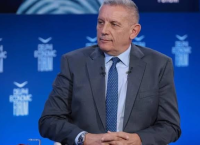
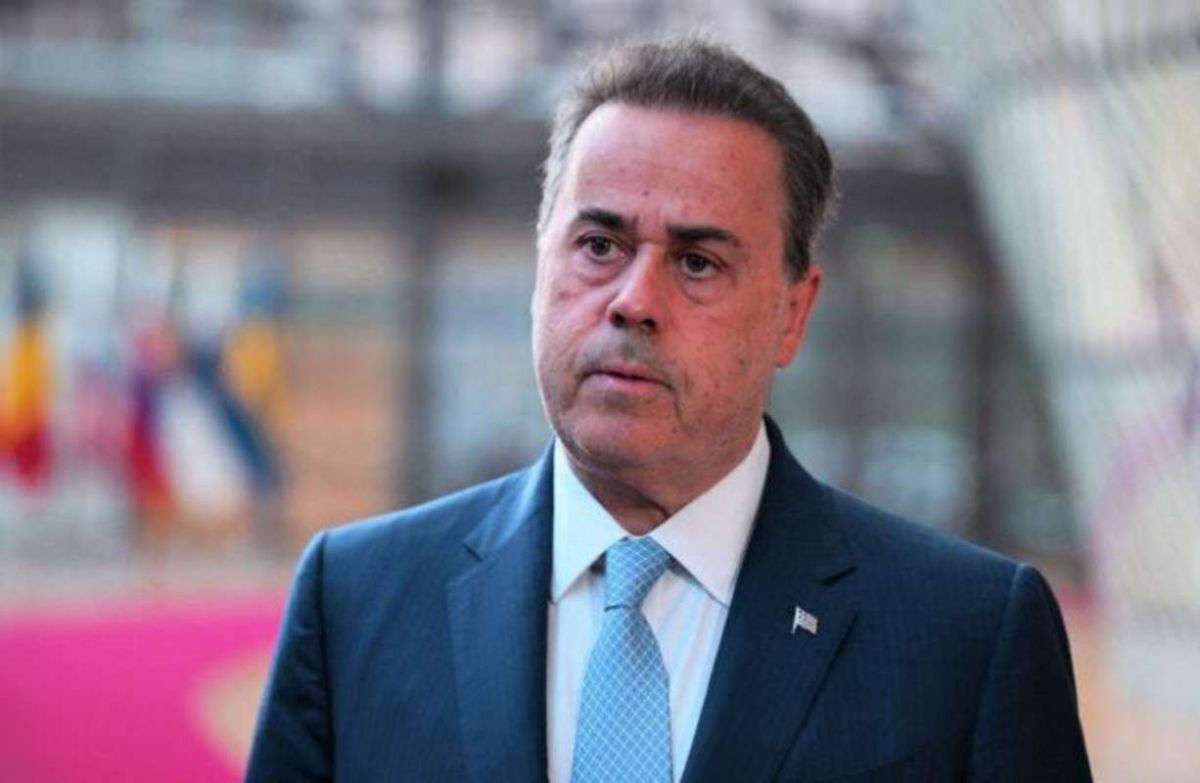
Energy is rapidly becoming one of Greece’s most important geopolitical instruments, according to Environment and Energy Minister Stavros Papastavrou, who linked the Vertical Gas Corridor, US LNG, hydrocarbon exploration, the Greece–Cyprus–Israel electricity interconnector and Marco Rubio’s visit to Athens into a broader strategic picture.
Papastavrou’s central argument is that Greece’s energy infrastructure is no longer simply an economic asset but an increasingly important element of the country’s regional geopolitical position.
His strongest statement concerned the Vertical Gas Corridor:
“The Vertical Corridor strengthens and upgrades Greece’s role in the region and limits the role of Turkey and Russia. That is the reality.”
“For the First Time, Gas Is Moving From South to North”
Papastavrou described the Vertical Corridor as Greece’s and the wider region’s response to the European Union’s decision to reduce its dependence on Russian natural gas.
For decades, he said, gas largely flowed from north to south.
The direction is now being reversed.
“For decades natural gas flowed from north to south. Now, for the first time, it is happening the other way around.”
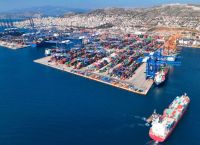
In this emerging energy architecture, Alexandroupolis assumes a central role.
“Alexandroupolis, which was once a border region, is essentially becoming the gateway for American natural gas — or gas from other sources — so that it can move north through the Vertical Corridor.”
The strategy is to use Greek LNG infrastructure and interconnected pipelines to channel alternative gas supplies northward toward Bulgaria, Romania, Moldova, Ukraine and the wider Central and Eastern European market.
The Turkey and Russia Factor
Papastavrou explicitly gave the project a geopolitical dimension.
His assessment is that as Greece’s capacity to import LNG and move it north increases, dependence on alternative supply routes — particularly those associated with Russia and Turkey — is reduced.
“Greece’s role is being upgraded and the role of Russia and Turkey is being limited,” he said.
He added:
“That is why it is very important that we move forward and that everyone understands the geopolitical significance the success of the Vertical Corridor has for our country.”
This is Papastavrou’s political and geopolitical assessment of the project’s implications.
The Cable: “Permission From Turkey? Full Stop”
Papastavrou was even more categorical when the discussion turned to the electricity interconnection linking Greece, Cyprus and Israel.
Asked directly whether Athens would need any form of Turkish permission before the next stage of work begins, he replied:
“Permission, or anything resembling permission, is out of the question because it is not required. Full stop.”
Turkey has advanced a different interpretation concerning operations in maritime areas over which Ankara asserts jurisdiction.
Athens rejects the argument that Turkish authorization is required for the project, distinguishing navigational notification from permission.
The Key Signal: “A Matter of the Coming Weeks”
Papastavrou also provided an important indication about the project’s timetable.
He referred to the entry of French infrastructure investor Meridiam and said that the necessary regulatory steps were taken during August and September to allow the company to participate in the project’s shareholding structure.
“We are proceeding in a measured way, with planning and determination toward implementation,” he said.
Then came the clearest timing signal:
“Implementation of the electricity interconnection has begun and is moving forward. It is a matter of the coming weeks.”
The minister stopped short of announcing a precise date, saying he would not pre-empt the company responsible for implementing the project.
Meridiam as a Vote of Confidence
Papastavrou also used Meridiam’s involvement to respond to questions over the interconnector’s viability.
In his assessment, the decision of a major international infrastructure investor to enter the project represents a significant vote of confidence.
“Instead of welcoming the fact that the largest French investment group is essentially saying ‘yes’ to this specific project — and therefore putting an end to all the questioning — that it is good, viable and correct, people ask when it will happen,” he said.
The assessment that the investment settles questions over the project’s viability is Papastavrou’s position.
Rubio in Athens: Greece-US Relations at a “Historic High”
The third part of the energy equation is the United States.
Papastavrou placed particular emphasis on US Secretary of State **Marco Rubio’s visit to Athens.
“It essentially signifies the historically high level at which relations between Greece and America currently stand,” he said.
He also emphasized Rubio’s long-standing familiarity with Eastern Mediterranean affairs, recalling his involvement as a senator in US initiatives linking energy and regional security.
Papastavrou attached particular significance to the fact that Rubio is visiting Athens during his current trip without making a corresponding stop in Turkey, presenting this as politically noteworthy.
ExxonMobil, Energean and the Return of Drilling
The minister also connected the strengthening of US-Greek relations with American investment in Greece’s upstream energy sector.
“America’s two largest energy companies are investing in exploration in our country, which is a vote of confidence in Greece,” Papastavrou said.
He specifically referred to plans for an exploratory drilling operation involving ExxonMobil, Energean and HELLENiQ ENERGY.
According to Papastavrou, the project represents:
“A double vote of confidence in Greece.”
The minister presented the planned operation as Greece’s first exploratory drilling campaign of this kind in almost half a century.
“There Was Never Pressure, a Threat or Blackmail”
Papastavrou also addressed recent reports suggesting that the Greek government had come under US pressure over energy-related decisions.
He rejected those claims categorically.
“There was never any question of pressure, threat or even blackmail — as we even heard — for the government to take any action.”
This is the minister’s public denial of the allegations contained in those reports.
Heating Oil Measures Coming Next Week
The interview also produced a significant domestic energy-policy announcement.
Papastavrou confirmed that the government will announce its heating oil measures next week, as households prepare for the winter season.
He stressed that high volatility in international energy markets and geopolitical uncertainty require the government to work with relatively short forecasting horizons.
“There is such great volatility in prices and such significant geopolitical turmoil that the safest approach is to operate within a limited timeframe in order to keep up with developments,” he said.
He also said there would be a significant increase in heating support, noting that roughly 1.17 million people were covered during the previous period.
The support applies to eligible heating needs rather than exclusively to heating oil, with geographical and climatic factors also taken into account.
Electricity Prices: “We Are Here to Intervene If Necessary”
On electricity prices, Papastavrou stopped short of announcing another immediate intervention.
He did, however, leave the option open should market conditions deteriorate.
“Prices are gradually rising. What I can say is that, in a measured way, we are here to intervene if that becomes necessary.”
At the same time, he stressed that protecting Greece’s fiscal position remains a red line.
“We cannot undermine the country’s public finances,” he said.
Papastavrou argued that targeted energy support must therefore be balanced against EU fiscal rules and the need to preserve the credibility Greece has rebuilt in international debt markets.
Energy Becomes a Geopolitical Asset
Papastavrou’s broader message rests on three interconnected pillars: US LNG and the Vertical Corridor, hydrocarbon exploration involving major international energy groups, and the Greece–Cyprus–Israel electricity interconnection.
His argument is that these projects are no longer solely about energy supply.
They are increasingly about Greece’s position in the emerging energy and security architecture of Europe and the Eastern Mediterranean.
That is why his statement on the Vertical Corridor carried an explicitly geopolitical message:
“It upgrades Greece’s role in the region and limits the role of Turkey and Russia.”
And when it comes to Ankara’s claims over the electricity interconnector, his message was even more categorical:
“Permission, or anything resembling permission, is out of the question because it is not required. Full stop.”
Source: pagenews.gr
Διαβάστε όλες τις τελευταίες Ειδήσεις από την Ελλάδα και τον Κόσμο