Syrigos: A “Geopolitical Earthquake” for Greece — The Energy Corridor, Power Cable and S-400 Barrier
 ΧΡΟΝΟΣ ΑΝΑΓΝΩΣΗΣ 5 '
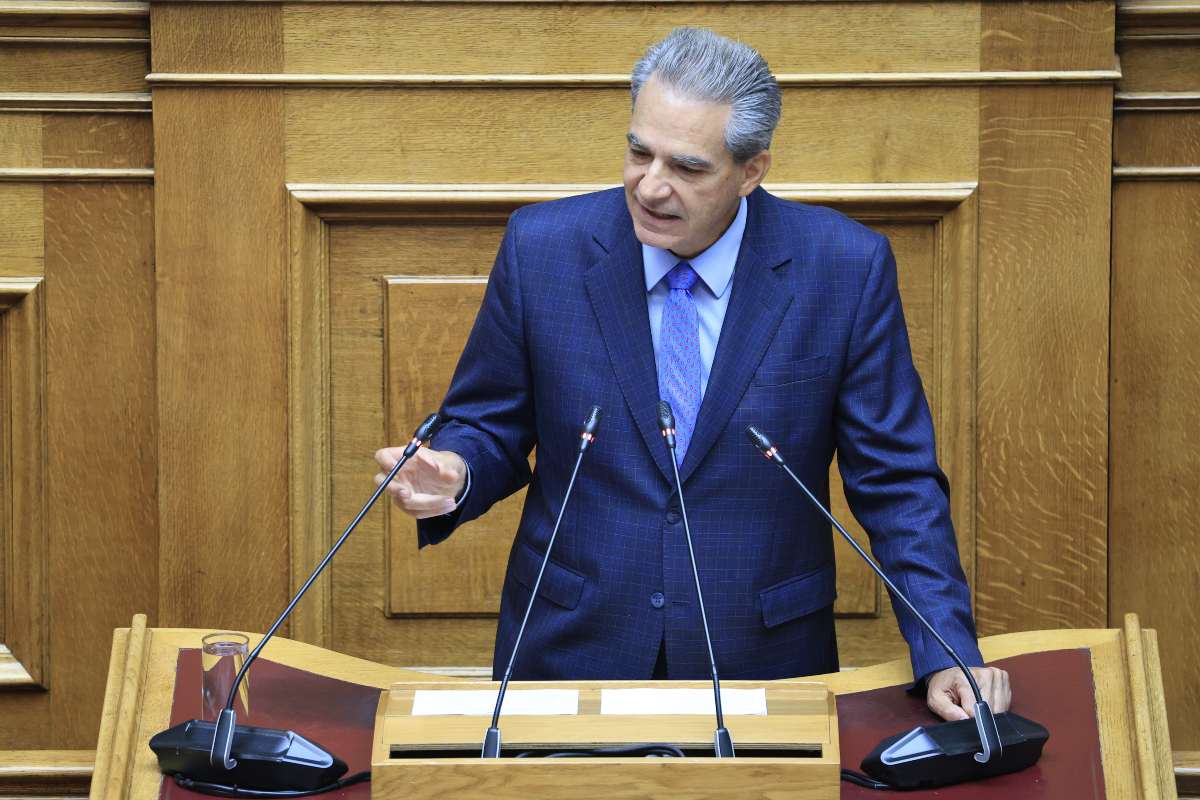
Πηγή Φωτογραφίας: eurokinissi//Syrigos: A “Geopolitical Earthquake” for Greece — The Energy Corridor, Power Cable and S-400 Barrier



Greece’s role as an energy gateway and a strategic partner of the United States is central to Angelos Syrigos’s assessment of Marco Rubio’s visit to Athens.
Speaking on SKAI, the professor of international law and New Democracy MP identified two major priorities for the Greek side: deeper defence cooperation and stronger American engagement in energy projects that increase Greece’s regional importance.
His remarks also addressed Turkey’s ambitions to acquire F-35 fighter jets and the challenges facing the electricity interconnection between Greece, Cyprus and Israel.
Energy strengthens Greece’s strategic position
Syrigos placed particular emphasis on the Vertical Corridor, which is intended to facilitate the movement of natural gas from Greece towards markets further north.
In his assessment, supplying American gas through Greece to the Balkans and beyond gives Athens a more consequential role in regional energy security.
The significance extends beyond commercial transactions. Energy infrastructure can strengthen relationships between countries, diversify supply routes and increase the strategic value of the territory through which those routes pass.
Syrigos argued that this north–south connection adds considerable weight to Greece’s position at a time when the United States is pursuing stronger energy links with Europe.
The hypothetical railway link that could change the map
One of his strongest descriptions concerned the potential combination of the energy corridor with a high-speed railway connection between Alexandroupoli and Odesa.
Syrigos described such a combination as a “geopolitical earthquake”, arguing that it could produce a major strategic change.
He presented the railway connection as a hypothetical development, rather than an approved project. His argument was that combining energy infrastructure with a major transport route could substantially increase Greece’s importance as a gateway towards the Black Sea region.
Under that scenario, Alexandroupoli would gain additional significance through the convergence of transport, energy and strategic cooperation.
Defence cooperation and access to American systems
On defence, Syrigos highlighted Greece’s interest in obtaining access to American weapons systems that have not previously been made available to it.
He linked that objective to the broader military relationship between Athens and Washington, including cooperation involving American facilities in Greece.
His remarks set out a Greek negotiating priority, without identifying a completed agreement or announcing a specific new weapons package.
For Athens, the practical question is whether the strategic relationship can deliver capabilities that strengthen the country’s armed forces.
Turkey’s S-400s remain the F-35 obstacle
Syrigos also addressed the prospect of Turkey acquiring American F-35 fighter jets.
His assessment was explicit:
“I believe that as long as it has the S-400s, it is out of the question for it to receive F-35s.”
He therefore treated Turkey’s possession of the Russian air-defence system as the decisive obstacle to its ambitions.
The statement represents Syrigos’s assessment of the constraints facing Ankara, rather than an announcement of a new American decision.
He also attached political significance to Rubio’s itinerary, which includes Greece alongside Iceland and Portugal, without a corresponding visit to Turkey. That interpretation does not, by itself, establish a change in Washington’s policy towards Ankara.
The electricity cable and the distinction between notification and permission
On the electricity interconnector, Syrigos focused on the dispute over the conditions under which the necessary survey work can proceed.
He distinguished between notifying the relevant parties about maritime activities and seeking their permission, presenting that distinction as central to the Greek position.
In his account, Turkey’s objections raise the question of whether routine procedures could be turned into a requirement for Turkish approval.
Syrigos also discussed coordination between Greece and France in relation to the companies involved in the project. His comments framed the issue as one involving diplomatic preparation, maritime rights and the practical ability to complete the work.
“The project will move forward”
Referring to the developments around Kasos, Syrigos acknowledged that the programme had not been carried out as Greece would have wished.
He argued that pauses can provide time to assess Turkey’s intentions and pursue discussions, while maintaining that completion remains the objective.
“The project will move forward,” he said.
His position brings together two priorities: diplomatic management of the obstacles and continued commitment to the interconnection.
Across energy, defence and maritime infrastructure, Syrigos presented Rubio’s visit as an opportunity for Greece to turn its strategic importance into tangible cooperation. The significance of that opportunity will depend on the decisions and commitments that follow.
Source: pagenews.gr
Διαβάστε όλες τις τελευταίες Ειδήσεις από την Ελλάδα και τον Κόσμο