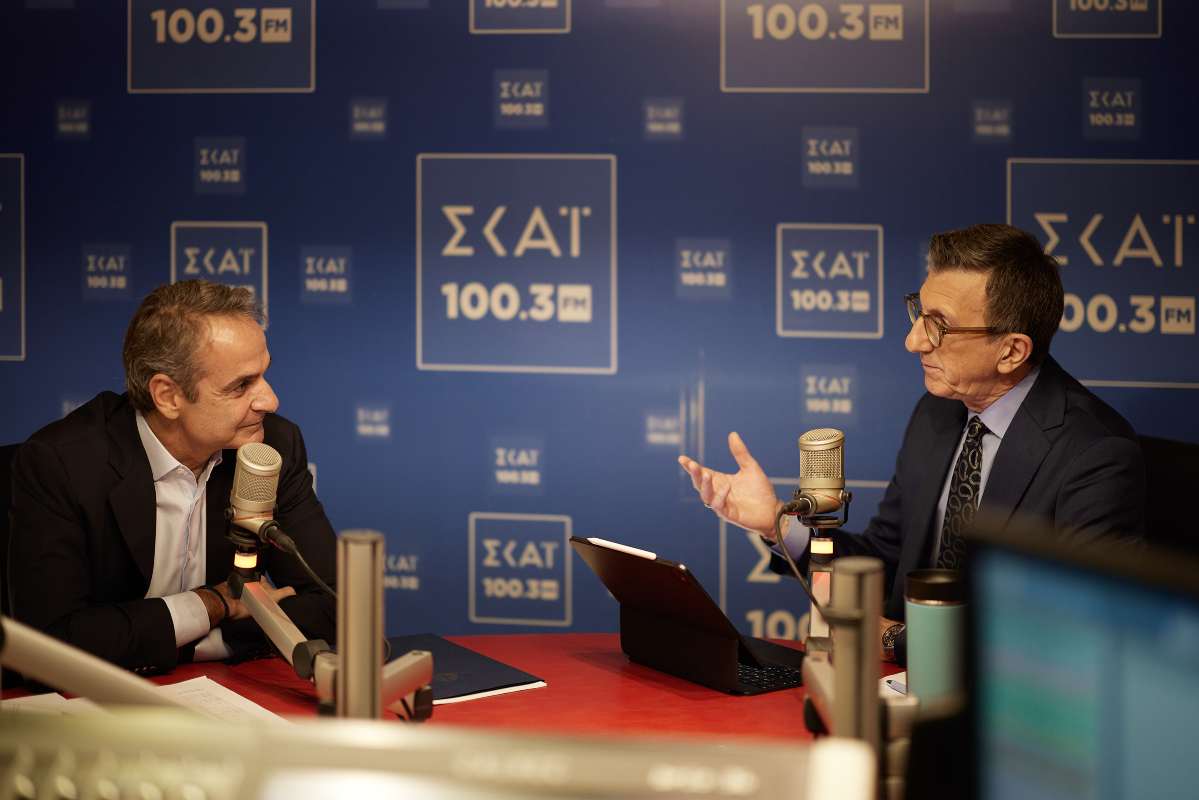
Greek Prime Minister Kyriakos Mitsotakis has reaffirmed his determination to advance the Greece–Cyprus electricity interconnection without compromising Greek sovereign rights, placing the strategically important energy project at the center of Athens’ diplomatic agenda following US Secretary of State Marco Rubio’s visit.
Speaking to SKAI Radio and journalist Aris Portosalte on Friday, October 9, 2026, Mitsotakis addressed the future of the Great Sea Interconnector (GSI), relations with Turkey, Washington’s regional priorities and Greece’s expanding strategic cooperation with Israel.
His remarks came one day after Rubio concluded his visit to Greece, during which energy connectivity, defense cooperation and regional security featured prominently.
The prime minister presented the electricity interconnection as a project extending beyond Greek and Cypriot interests, emphasizing its European dimension and potential expansion toward Israel.
At the same time, he avoided disclosing operational details about the next stages of the project, leaving important questions about implementation and maritime security unresolved.


“Not the Slightest Concession”: Mitsotakis Draws a Line on the Interconnector
The most consequential part of the interview concerned the Great Sea Interconnector, a proposed undersea electricity link designed to connect Greece and Cyprus.
Mitsotakis acknowledged the sensitivity of the issue while insisting that the project must move forward.
“I do not want to revisit any operational details on this issue because it is extremely sensitive. However, I believe there is a framework within which the cable can and must proceed without us making absolutely any concession regarding our sovereign rights,” the prime minister said.
The statement encapsulates Athens’ declared position: Greece intends to support the project’s implementation without accepting limitations on its sovereign rights.
The distinction matters because the project operates in a maritime environment marked by competing Greek and Turkish positions over jurisdiction and maritime entitlements.
For Athens, advancing the interconnector is both an energy priority and a test of its ability to carry out strategically important infrastructure projects.
Yet the prime minister did not specify when the next maritime surveys would take place or what operational arrangements might accompany them.
Those questions remain central to the project’s future.
From a Bilateral Project to a European Strategic Corridor
Mitsotakis emphasized that the Greece–Cyprus electricity connection should no longer be viewed solely through the lens of bilateral relations.
“This is no longer a Greek-Cypriot project. It is a European project,” he stated.
The distinction is significant.
The interconnector is intended to reduce Cyprus’ electricity isolation and strengthen the integration of energy networks across the Eastern Mediterranean.
Its potential extension to Israel would also create opportunities for deeper regional electricity cooperation.
For Greece, the European character of the project strengthens the diplomatic argument for its implementation.
It places the infrastructure within broader European objectives concerning energy security, cross-border connectivity and market integration.
However, European political support does not automatically resolve the technical, financial and maritime-security challenges associated with construction.
The project’s success will ultimately depend on practical implementation.
Washington’s Support: Why Rubio’s Visit Matters
The prime minister linked the interconnector to the broader strategic relationship between Athens and Washington.
According to Mitsotakis, the United States supports regional energy-connectivity projects, including infrastructure that could eventually link Greece, Cyprus and Israel.
American interest in such projects reflects the strategic importance of the Eastern Mediterranean, where energy infrastructure intersects with maritime security, trade and defense cooperation.
The prime minister also highlighted the institutional significance of Rubio’s visit.
“Marco Rubio’s visit took place within the framework of the United States–Greece Strategic Dialogue, an institutionalized process for strengthening our bilateral relations,” Mitsotakis said.
He went on to stress what he described as the unusual nature of Rubio’s participation.
“I want to remind your listeners that Mr. Rubio does not frequently travel abroad to participate in this kind of strategic dialogue,” he added.
The prime minister argued that the visit reflected the importance Washington attaches to Greece.
Nevertheless, a distinction remains between diplomatic support for energy connectivity and a specific American commitment to provide military protection for construction activities.
No such operational guarantee was established in the statements provided.
Turkey, Maritime Rights and the Unresolved Kasos Question
The Greece–Cyprus interconnector has become closely associated with wider tensions in the Eastern Mediterranean.
Particular attention has focused on previous maritime survey activities near the Greek island of Kasos.
The Greek government maintains that it has not retreated from its sovereign rights.
Mitsotakis reiterated that position during the interview and referred to previous research activities conducted within Greek territorial waters.
The issue remains politically contested.
Critics have questioned whether Turkish objections affected the progress of survey operations, while the government rejects interpretations suggesting that Greece accepted restrictions on its rights.
A careful assessment requires distinguishing between territorial waters and other maritime zones, where different legal rights and jurisdictional arrangements apply.
The decisive question is whether the next stages of the interconnector can proceed according to the project’s requirements.
“A Light Breeze, a Slight Swell”: Mitsotakis on Relations With Turkey
Despite the tensions surrounding the interconnector, Mitsotakis adopted a relatively restrained tone when describing the broader state of Greek–Turkish relations.
“There is a light breeze, a slight swell, but just as the weather changes, the same happens in Greek–Turkish relations,” he remarked.
The metaphor reflects Athens’ effort to maintain diplomatic communication with Ankara while defending its established positions.
The government continues to support dialogue and mechanisms for managing tensions, even as disagreements persist over maritime jurisdiction and regional activities.
This approach involves a delicate balance.
Greece seeks to avoid unnecessary escalation while maintaining its position that strategic infrastructure projects should not require concessions on sovereign rights.
Whether that balance can be sustained will depend partly on the conduct of both countries during future maritime operations.
France and the European Security Dimension
France remains another important component of Greece’s strategic calculations.
Athens and Paris have developed substantial defense cooperation, while French commercial and technological interests are relevant to infrastructure development in the Eastern Mediterranean.
The combination of European institutional involvement and the participation of major European companies broadens the project’s international significance.
From the Greek government’s perspective, these relationships can strengthen diplomatic support for implementation.
However, the presence of French interests should not be confused with an automatic commitment to intervene militarily in the event of a dispute.
The operational implications of international support remain an important unanswered question.
Greece and Israel: A Strategic Partnership Beyond Individual Governments
Mitsotakis also addressed Greece’s relationship with Israel, emphasizing that the partnership is institutional rather than dependent on any particular Israeli administration.
This distinction is especially relevant amid continuing regional instability and international criticism of Israeli government policies.
The prime minister presented defense cooperation as one of the relationship’s principal benefits.
He referred specifically to Greece’s planned Achilles Shield, an integrated air and missile defense initiative.
According to Mitsotakis, Greece intends to secure ownership of the system’s software and source code.
If delivered under those terms, such an arrangement could have important implications for technological autonomy, system maintenance and future upgrades.
The prime minister also argued that closer cooperation with Israel has not undermined Greece’s relationships with Arab countries or the Palestinian Authority.
Athens, he noted, has criticized Israeli government actions it considers excessive, particularly in the West Bank.
He also expressed support for progress toward the second phase of the Trump administration’s peace framework for Gaza.
A Broader Diplomatic Network: The US, Europe, India and the Arab World
Mitsotakis portrayed Greece’s foreign policy as operating through several complementary strategic relationships.
“Greece has a strategic alliance with the United States, which is reflected in agreements we have signed. Greece is a member of the European Union and a member of NATO,” he said.
He continued by highlighting the country’s wider diplomatic connections.
“At the same time, Greece is a country that has built a very strong network of relationships with countries of the Arab world, with India and with Israel.”
The prime minister’s argument was that Greece’s regional role depends on its ability to maintain multiple partnerships rather than rely exclusively on a single relationship.
Energy connectivity forms part of this wider strategy.
The development of electricity links, transport corridors and security cooperation could increase Greece’s relevance in the Eastern Mediterranean and surrounding regions.
The extent of those benefits, however, will depend on whether planned infrastructure and cooperation initiatives translate into operational results.
Ukraine, International Law and the Cyprus Parallel
The prime minister also addressed Russia’s war against Ukraine, connecting Greece’s position to the principles underpinning its own foreign policy.
Mitsotakis reiterated that Greece sided with Ukraine following Russia’s invasion because Ukraine was the country under attack.
He argued that the decision reflected both international law and broader moral considerations.
According to the prime minister, Greece’s foreign policy is founded on respect for international law and the inviolability of borders.
He also warned against an outcome that would reward military aggression.
The discussion then turned to Cyprus.
“We must not forget that our homeland and Hellenism still carry the open wound of Cyprus,” Mitsotakis said.
He noted that, 52 years after Turkey’s 1974 invasion, a substantial part of the island remains under occupation.
The comparison illustrates a central element of Greece’s diplomatic position: opposition to territorial conquest by force is regarded as a principle with direct relevance to both Ukraine and Cyprus.
For Athens, the credibility of international legal norms is closely connected to its own long-standing security concerns.
Energy Infrastructure as a Test of Regional Influence
The Great Sea Interconnector illustrates how energy projects increasingly intersect with geopolitics.
An undersea electricity cable is not simply a technical investment.
It involves international financing, regulatory cooperation, maritime jurisdiction, security arrangements and diplomatic coordination.
For Cyprus, the project offers the prospect of stronger electricity connectivity with the European energy system.
For Greece, it represents an opportunity to expand its role in regional energy infrastructure.
For Israel, a future extension could provide additional possibilities for electricity trade and cooperation.
For the European Union, the project fits within broader efforts to strengthen interconnected energy markets.
But the geopolitical importance of the infrastructure also increases its exposure to regional disputes.
That is why diplomatic declarations must eventually be matched by construction progress, financing certainty and workable security arrangements.
The Next Test: Turning Diplomatic Support Into Construction Progress
Mitsotakis’ interview outlined the government’s central arguments for proceeding with the Greece–Cyprus interconnector.
Athens considers the project strategically necessary, emphasizes its European status and sees American support as an important diplomatic factor.
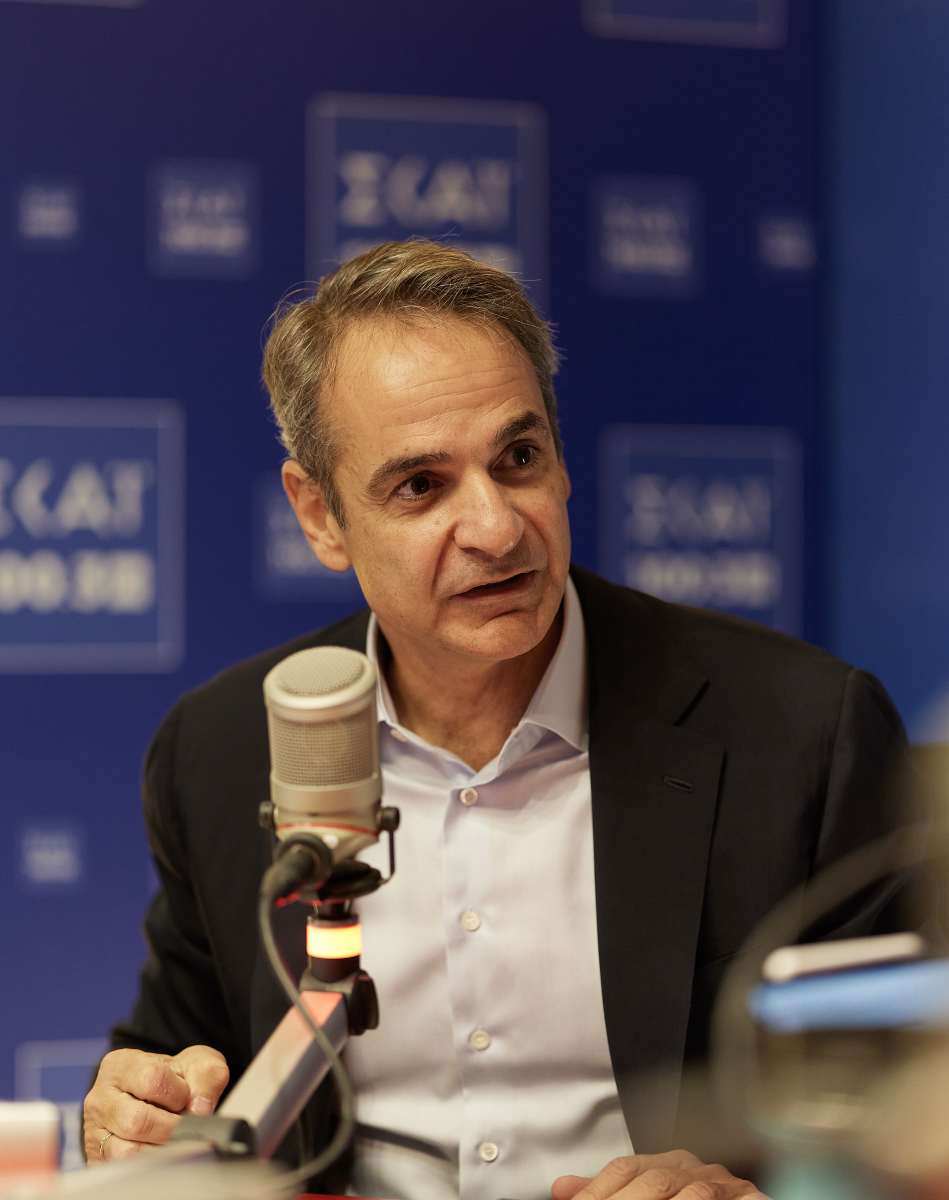

The prime minister also insists that implementation must not involve concessions on Greek sovereign rights.
At the same time, the absence of publicly disclosed operational details leaves significant questions unanswered.
The next phase of maritime surveys and construction will therefore be a crucial test of the government’s stated approach.
Mitsotakis has established the political position: the cable should move forward without concessions on sovereign rights. The challenge now is translating that position into measurable progress on a project with consequences for Greece, Cyprus, Israel and the wider Eastern Mediterranean.
Source: pagenews.gr