Mitsotakis Unveils €95 Million Energy Relief Package for Greek Industry
 ΧΡΟΝΟΣ ΑΝΑΓΝΩΣΗΣ 7 '
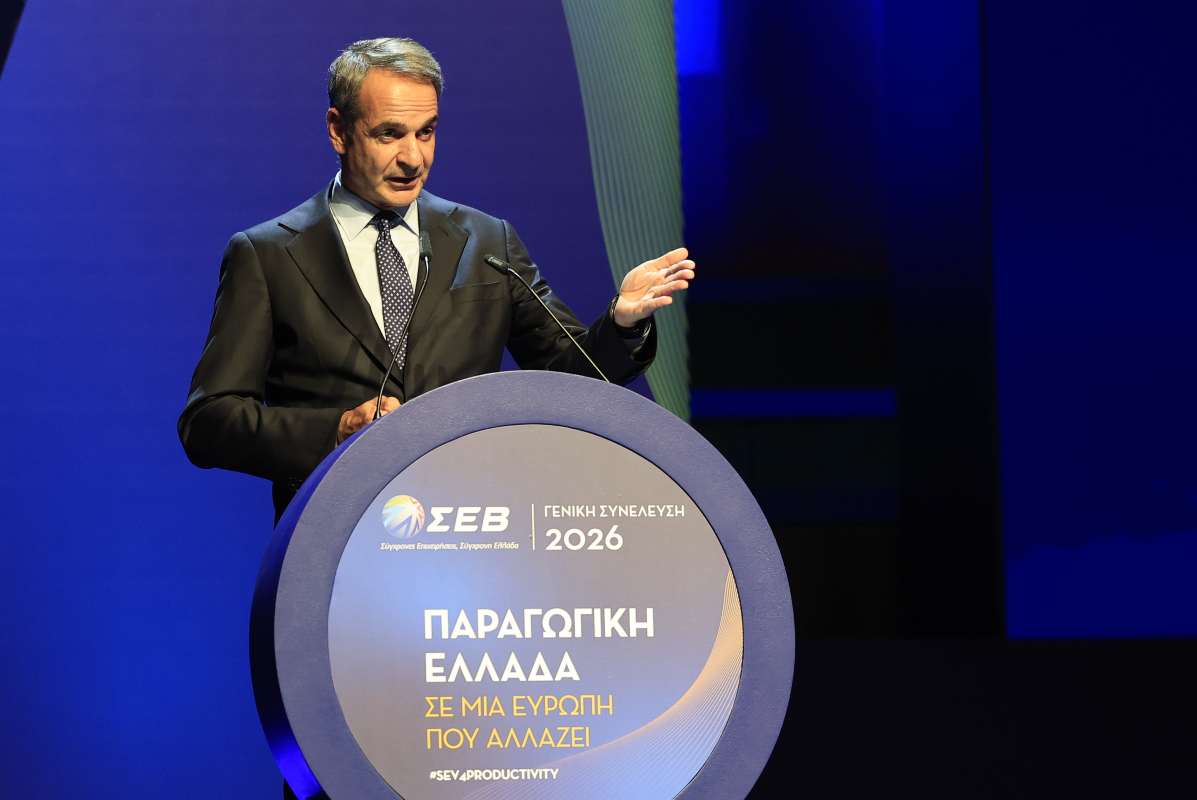
Πηγή Φωτογραφίας: eurokinissi//Mitsotakis Unveils €95 Million Energy Relief Package for Greek Industry



Greek Prime Minister Kyriakos Mitsotakis announced a €95 million support package for Greek industry on Tuesday, seeking to cushion manufacturers from the sharp increase in energy costs as the international energy shock increasingly spills over into the wider economy.
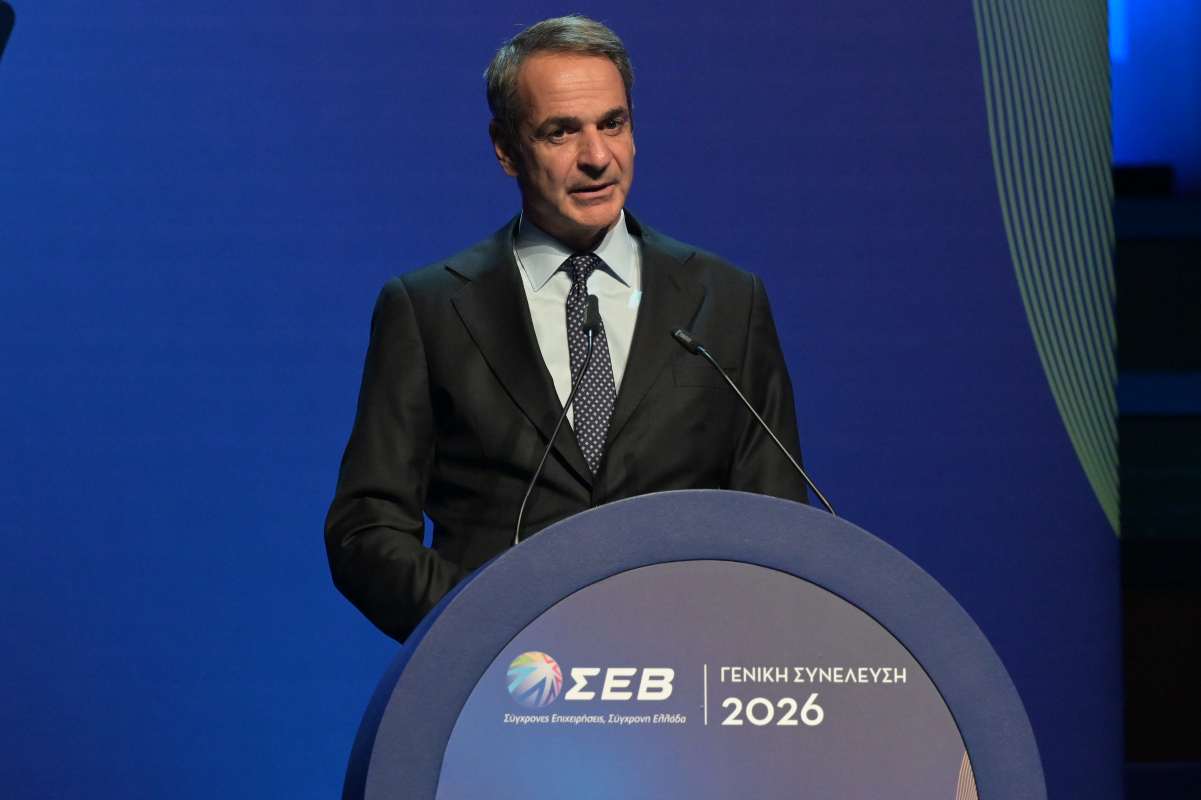
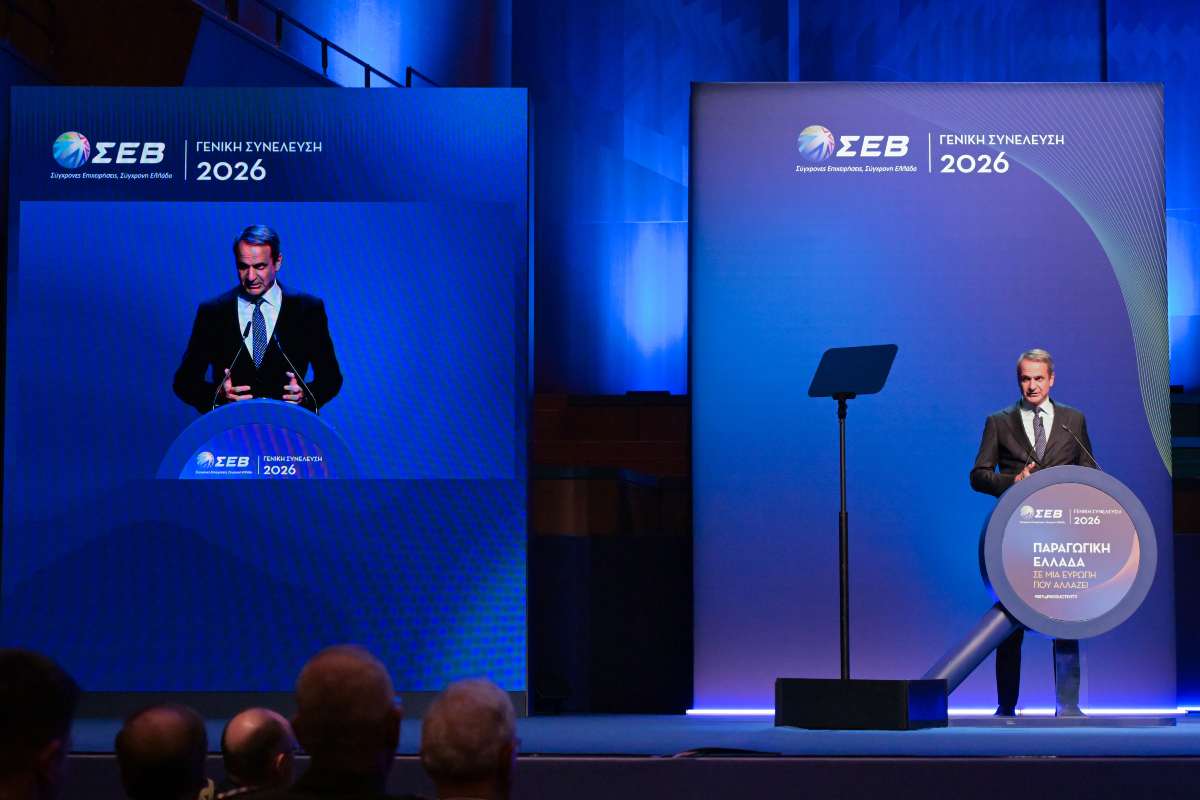
Speaking at the open event of the Hellenic Federation of Enterprises (SEV) Annual General Assembly, Mitsotakis presented the measure as an emergency intervention aimed at protecting the country’s productive base and industrial competitiveness.
“Extraordinary circumstances require extraordinary interventions,” the prime minister said.
The announcement comes as energy-intensive companies face mounting pressure from elevated electricity and fuel prices, reviving the wider European debate over whether the continent can preserve its industrial competitiveness while simultaneously pursuing the green transition.
€95 Million Shield for Industry
The immediate response from Athens is the new €95 million intervention.
Mitsotakis linked the package to the government’s broader measures addressing the energy crisis, arguing that Greece’s national policy arsenal has so far demonstrated its resilience.
He pointed in particular to recent interventions in the fuel market, saying they have helped keep costs around, or in some cases below, European averages.
But the prime minister made clear that the issue extends beyond Greece.
The energy shock, he argued, is increasingly becoming an economic and competitiveness crisis, requiring action at both national and European level.
Mitsotakis Pushes von der Leyen for a European Response
Mitsotakis said he has already raised with European Commission President Ursula von der Leyen the possibility of a coordinated European response.
One potential first step, according to the Greek proposal, would be greater but strictly time-limited fiscal flexibility for EU member states.
The reasoning is that inflation has simultaneously generated additional government revenues, particularly from VAT.
Athens argues that part of this additional fiscal space could be used to finance temporary measures protecting households and businesses without undermining the EU’s broader fiscal framework.
The proposal effectively seeks to prevent governments from having to choose between fiscal discipline and emergency support for their industrial base during an exceptional energy shock.
Greece’s Borrowing Costs Become Part of the Argument
Mitsotakis also highlighted what he described as Greece’s dramatically improved fiscal credibility.
He said Greece can now borrow at lower rates than four of the seven G7 economies, using the comparison to underline how far the country has moved from the sovereign debt crisis era.
Against a backdrop of global financial turbulence, he argued that Greece stands out as one of the economies capable of generating not only primary surpluses but overall fiscal surpluses while continuing to reduce public debt.
For the government, that fiscal performance is important for another reason: it provides Athens with greater room to respond to extraordinary shocks without jeopardising market confidence.
François Villeroy de Galhau: Greece Is an “Example of Courage and Hope”
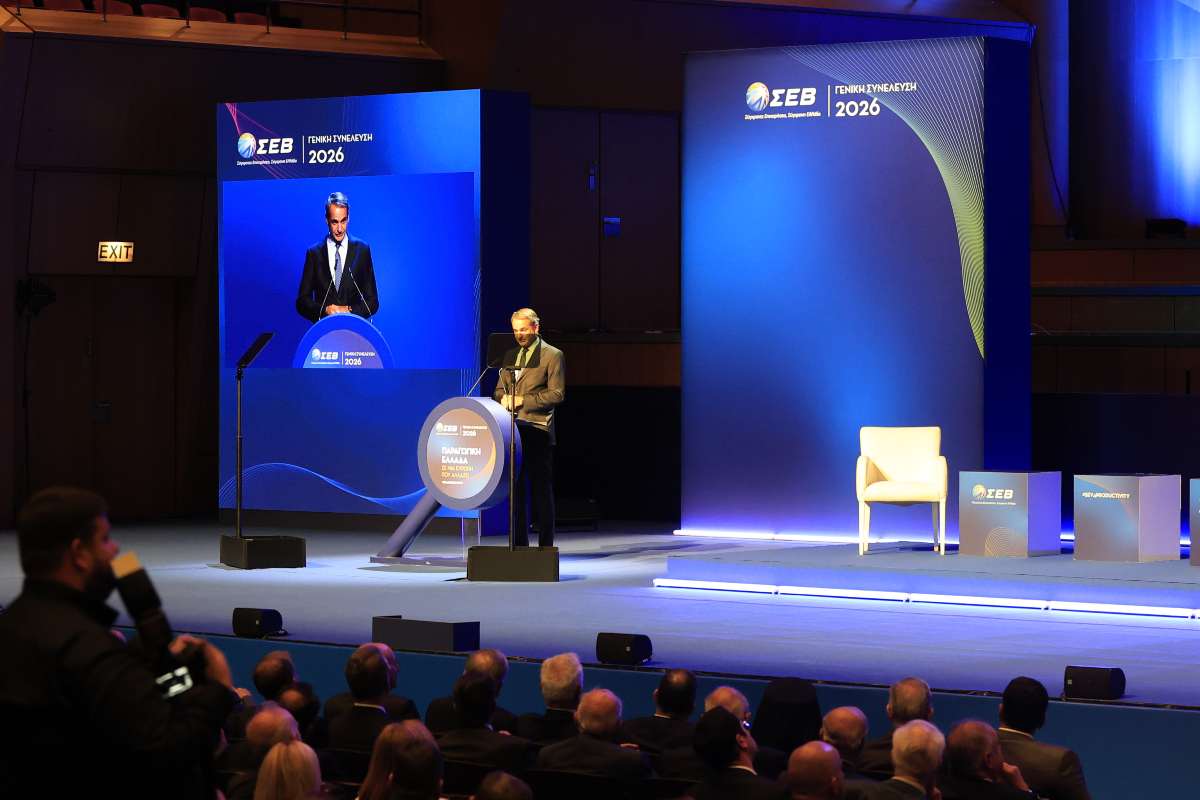
Greece’s economic turnaround was also highlighted at the SEV event by François Villeroy de Galhau, former Governor of the Bank of France and former member of the European Central Bank’s Governing Council.
Villeroy de Galhau described Greece as an “example of courage and hope,” pointing to its fiscal surpluses and rapid reduction in public debt.
He argued that Greece’s economic success story should become better known internationally, while recalling France’s support for Athens during the most difficult years of the Greek financial crisis.
Turning to the current turmoil affecting French bond markets, he expressed confidence that both France and the euro area would ultimately overcome the pressures.
Mitsotakis Sets 2030 Target for the Justice System
The prime minister used his SEV address to go beyond the immediate energy crisis and outline some of the structural priorities for the coming years.
One of the most ambitious concerns the speed of the Greek justice system.
Mitsotakis said the objective is for Greece to become one of Europe’s five fastest countries in the administration of justice by 2030.
The issue is closely linked to investment.
Long judicial delays have historically been cited by businesses as an obstacle to investment, particularly in complex commercial, property and administrative disputes.
Accelerating the judicial system is therefore being presented not only as an institutional reform but as an economic competitiveness measure.
Spatial Planning: Tackling a Long-Standing Investment Barrier
The second major priority is spatial and urban planning.
Mitsotakis acknowledged that decades of fragmented rules and regulatory uncertainty have created serious problems across the country.
Three spatial planning frameworks have already been established, while the government is simultaneously moving ahead with the difficult process of developing Local Urban Plans for municipalities across Greece.
For investors and industrial companies, the issue is critical.
Competitive energy prices alone cannot attract investment if major projects become trapped for years in licensing, land-use or planning disputes.
Renewables Have Transformed Greece’s Energy Mix
Energy itself forms the third major pillar of the government’s longer-term agenda.
Mitsotakis pointed to the substantial increase in the penetration of renewable energy sources into Greece’s electricity mix as one of the most significant changes of recent years.
But the next stage is more difficult.
Europe must continue decarbonising its economy while preventing high electricity costs from eroding its industrial base.
For Greece, that means combining greater renewable generation with stronger grids, storage, interconnections and a competitive electricity market capable of delivering lower costs to industry.
From an Energy Crisis to an Industrial Competitiveness Crisis
The €95 million package therefore addresses only one part of a much larger challenge.
Greek manufacturers compete with companies operating in countries with different energy mixes, different levels of state support and, in many cases, structurally lower electricity costs.
That is why Mitsotakis’s intervention at SEV effectively operated on two levels:
€95 million in immediate support from Athens — and pressure for a broader response from Brussels.
The central argument is that Europe’s energy crisis can no longer be viewed exclusively through the lens of household bills.
If high energy costs persist, they increasingly become a question of where factories invest, where production remains economically viable and whether European industry can compete with the United States and Asia.
For Athens, the answer is now taking shape around a combination of emergency support, fiscal credibility, faster structural reforms and a push for common European action.
And Mitsotakis’s message to Greek industry was clear: in extraordinary conditions, the government is prepared to intervene to protect the country’s productive capacity.
Source: pagenews.gr
Διαβάστε όλες τις τελευταίες Ειδήσεις από την Ελλάδα και τον Κόσμο