Ecofin Set to Greenlight Greece’s Energy Escape Clause — What Changes and the €400 Million Winter Buffer
 ΧΡΟΝΟΣ ΑΝΑΓΝΩΣΗΣ 8 '
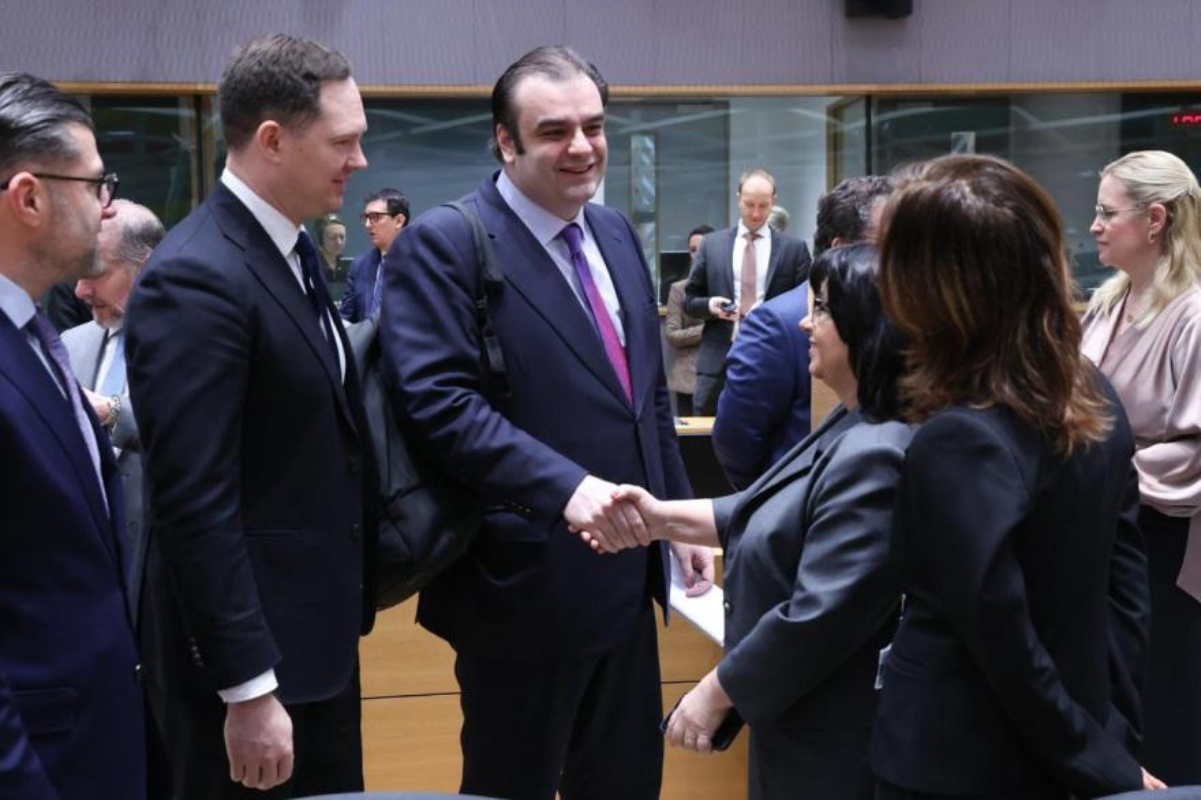
Πηγή Φωτογραφίας: eurokinissi//Ecofin Set to Greenlight Greece’s Energy Escape Clause — What Changes and the €400 Million Winter Buffer



Greece is set to secure a new fiscal tool for dealing with energy costs, with EU finance ministers expected to greenlight Athens’ request to extend the national escape clause to eligible energy security spending at the October 9 Ecofin meeting in Luxembourg.
Greece occupies a unique position in the process.
It is the only EU member state to have submitted such a request.
The mechanism does not mean that Brussels is transferring a new package of EU funds to Athens.
What it does provide, however, is potentially significant fiscal flexibility.
Under specific conditions, additional eligible energy expenditure will be allowed greater flexibility under the EU’s new fiscal framework and the agreed net expenditure path.
And that comes as energy costs continue to weigh on households, businesses and, in particular, European industry.
Greece Stands Alone in Requesting the Energy Clause
Athens’ request is effectively an extension of the national escape clause mechanism initially activated for higher defence expenditure.
Greece asked for comparable fiscal flexibility to cover specific spending related to energy security.
The request has gone through the European Commission’s assessment process, with the Council now expected to take the next step.
Once approved, Greece will gain additional room to finance eligible energy investments and measures without those expenditures weighing on its agreed net expenditure trajectory in the same way as ordinary spending.

What It Actually Means
This is the key point.
The EU’s revised fiscal rules establish a specific net primary expenditure path for each member state.
The national escape clause allows a temporary deviation from that trajectory for specified categories of expenditure.
Greece could therefore finance eligible energy security measures with greater flexibility without using up its normal fiscal room in the same way.
This is not a new EU fund. It is additional fiscal space.
The distinction matters.
This Is Not “Free Money”
There is an important caveat.
The escape clause does not make the underlying expenditure disappear from Greece’s public finances.
Athens still has to finance the measures.
If additional borrowing is required, or if the expenditure affects the overall fiscal balance, it can ultimately have an impact on public debt.
The energy clause therefore provides flexibility under the expenditure rule — not the elimination of the cost itself.
That is why its use will have to remain targeted.
The 0.3% of GDP Annual Ceiling
Specific limits apply to the energy security mechanism.
The annual deviation can reach up to 0.3% of GDP.
There is also a second ceiling:
cumulative flexibility for energy measures cannot exceed 0.6% of GDP through the end of 2028.
Using a Greek nominal GDP figure of roughly €260 billion simply to illustrate the order of magnitude:
0.3% would be equivalent to around €780 million,
while
0.6% would be roughly €1.56 billion.
These figures should not be interpreted as an automatic pool of money available for spending, nor do they mean Athens will necessarily use the full amount.
They illustrate the potential scale of the fiscal flexibility created by the mechanism.
How It Differs From the Defence Escape Clause
The European precedent was established with defence.
The national escape clause for defence spending covers a four-year period and allows flexibility of up to 1.5% of GDP relative to the baseline year.
The energy provision is significantly narrower.
Its 0.3% annual limit and cumulative 0.6% ceiling show that Brussels is not opening the fiscal taps without restrictions.
But the mechanism does recognise that energy security, like defence, can constitute an exceptional strategic priority requiring additional investment.
Greece Already Has a €400 Million Winter Buffer
The energy clause comes as the Greek government already has around €400 million in domestic fiscal space available for potential interventions during the winter.
That effectively creates two layers of protection.
On one side is the fiscal buffer already generated by the Greek economy.
On the other is the prospective European mechanism providing greater flexibility for eligible energy security investments.
Athens would therefore have more options if energy pressures intensify or additional structural measures become necessary.
Not a Blank Cheque for Subsidies
There is another crucial distinction.
The new mechanism does not provide a general licence for any energy-related expenditure or broad-based subsidy scheme.
The European Commission has established eligibility requirements.
Measures must be linked to energy security and must be cost-effective.
They must also contribute to decarbonisation and/or energy savings and cannot undermine the EU’s broader energy and climate objectives.
That significantly shapes the nature of the clause.
Brussels does not simply want governments to subsidise energy consumption.
The objective is to support investment that can permanently reduce energy vulnerability.
Where the Spending Could Go
Eligible measures can include interventions that improve the resilience of the energy system.
Energy-efficiency upgrades to buildings and infrastructure are particularly relevant, provided they deliver meaningful reductions in energy consumption.
The new fiscal capacity could therefore accelerate investments that permanently reduce energy costs rather than merely subsidising them for a limited period.
The direction of travel is clear:
from emergency subsidies to long-term energy resilience.
Brussels Will Check Greece Twice a Year
The mechanism will not operate without oversight.
The European Commission will monitor its implementation twice a year.
The key dates are:
April 15 and October 15.
Athens will have to provide detailed information on the expenditure undertaken and demonstrate that it complies with EU requirements.
The Commission will assess whether each measure is eligible, targeted and cost-effective, strengthens energy security and contributes to the energy transition or energy savings.
The Bigger European Message
The Greek case matters beyond Greece itself.
The European Union is effectively recognising that energy security now has a fiscal dimension alongside other strategic priorities.
Europe continues to face higher energy costs than several of its main global competitors.
Industry is demanding cheaper and more predictable power.
Geopolitical instability continues to affect gas and oil markets.
And reducing dependence on vulnerable energy supply chains requires enormous investment in grids, storage, interconnections and energy efficiency.
Fiscal policy can therefore no longer be viewed separately from energy strategy.
Why Greece Moved First
Energy security carries particular geopolitical importance for Greece.
The country sits on the EU’s southeastern flank and has spent recent years seeking to strengthen its role as a regional energy hub.
Electricity interconnections, power grids, natural gas and LNG infrastructure, renewable energy and efficiency upgrades are increasingly components of a single strategic framework.
Being able to finance more eligible measures without exhausting ordinary fiscal space therefore carries considerable significance.
From Energy Crisis to Energy Defence
Perhaps the most important element of the Ecofin decision lies in the philosophy behind it.
Following successive energy shocks, Europe is increasingly treating secure energy supplies not merely as an economic issue but as a question of strategic resilience.
Greece is the first member state seeking to make use of that shift through the EU’s new fiscal framework.
If Ecofin gives the expected approval on October 9, Athens will gain a new instrument.
Not a blank cheque.
Not a new EU funding pot.
But additional fiscal flexibility to invest in energy security without eligible expenditure weighing on its agreed net expenditure path in the same way as ordinary spending.
And with another challenging energy winter ahead, the combination of roughly €400 million in existing domestic fiscal firepower and the new European flexibility gives Athens significantly greater room to manoeuvre.
Source: pagenews.gr
Διαβάστε όλες τις τελευταίες Ειδήσεις από την Ελλάδα και τον Κόσμο