Rubio: Turkey’s Shadow Over the Greece–Cyprus Power Cable — What Washington Refused to Promise on Kasos
 ΧΡΟΝΟΣ ΑΝΑΓΝΩΣΗΣ 12 '
Πηγή Φωτογραφίας: eurokinissi//Rubio: Turkey’s Shadow Over the Greece–Cyprus Power Cable — What Washington Refused to Promise on Kasos



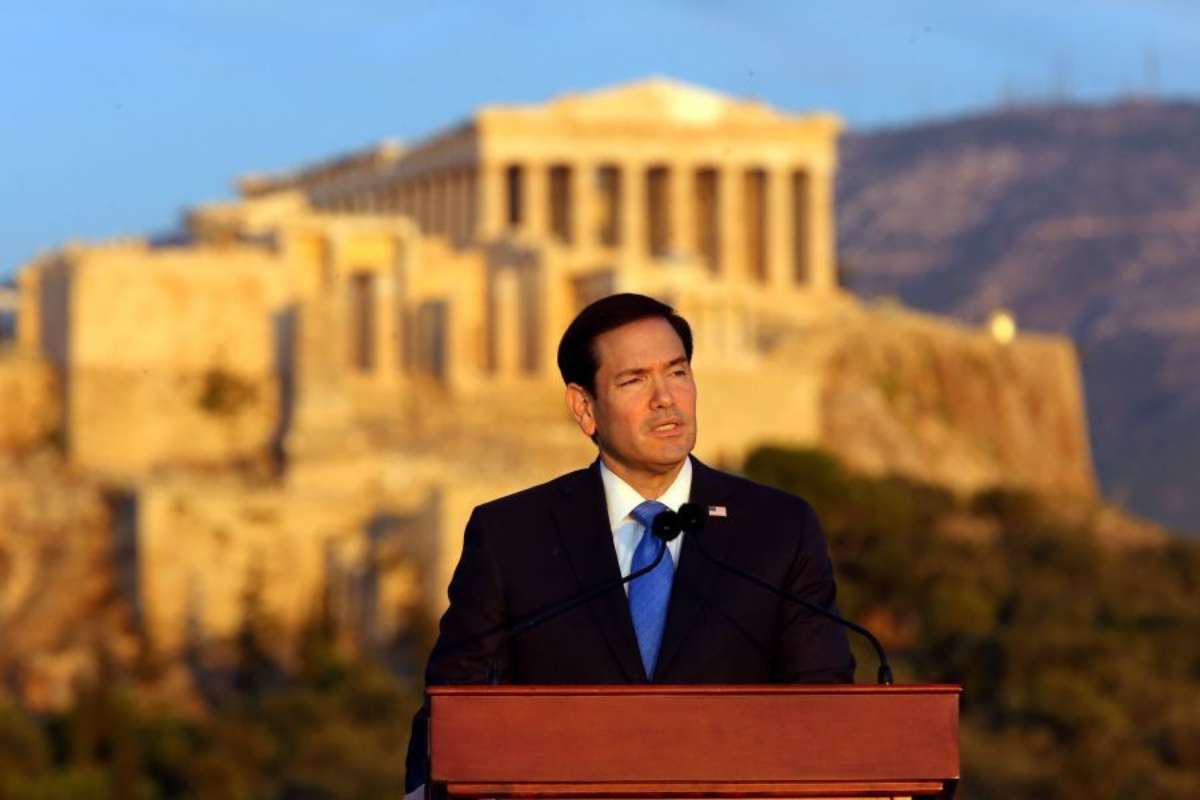
The visit of US Secretary of State Marco Rubio to Athens reaffirmed the strategic importance of Greek-American relations. Yet it also left one of the Eastern Mediterranean’s most sensitive geopolitical questions unresolved: the future of the Greece–Cyprus electricity interconnector and Washington’s position on Turkish objections to the project.
Behind the announcements on energy security, defence cooperation and Greece’s strategic role, Rubio’s response to a question about regional energy interconnections revealed the diplomatic complexities surrounding the Great Sea Interconnector.
Rubio did not question the importance of the project or withdraw American support for regional energy connectivity. On the contrary, he reiterated Washington’s commitment to the success of such initiatives.
However, he avoided naming Turkey and offered no specific public commitment on how the United States would respond if the cable-laying operations encountered renewed obstruction.
That distinction raises a fundamental question for Athens: how far does American support extend when energy cooperation collides with Turkey’s maritime claims?
Rubio’s Critical Remarks: “Other Countries” and Diplomacy Behind Closed Doors
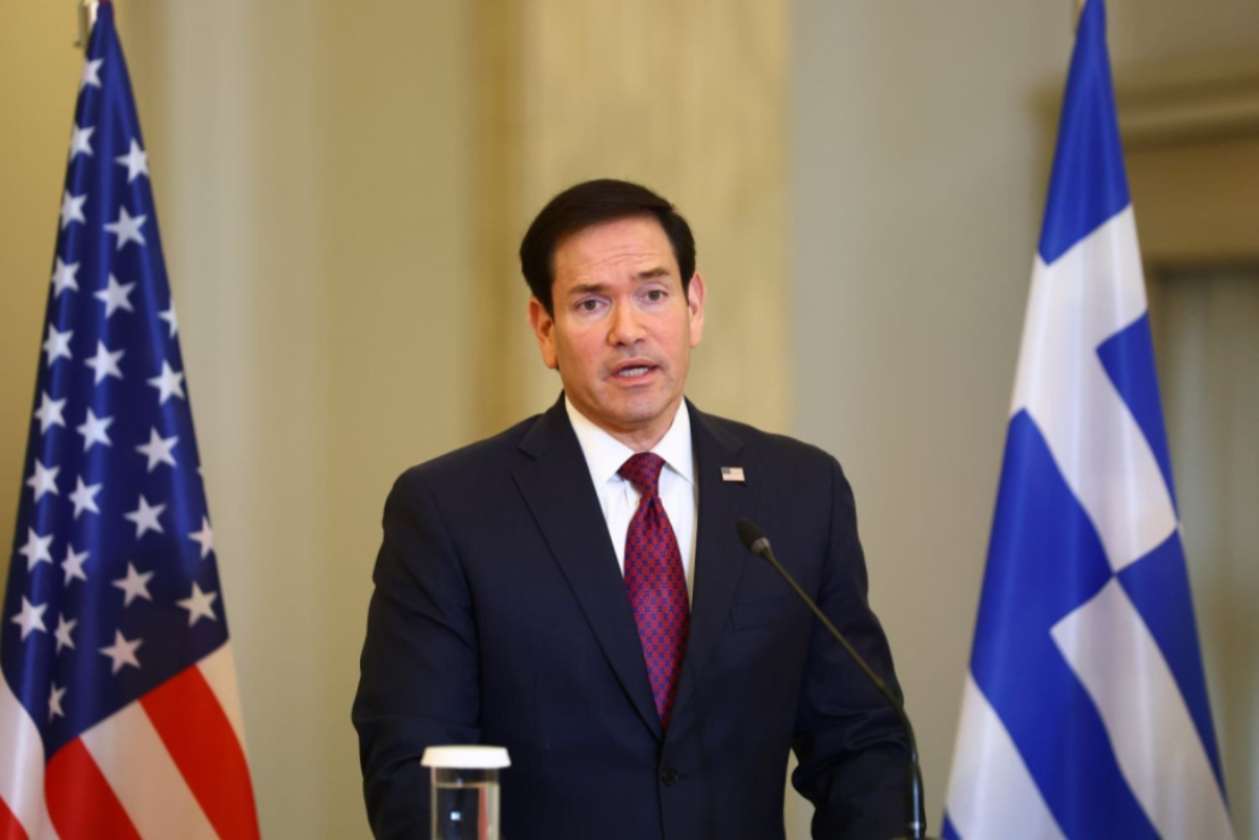
During his joint press conference with Greek Foreign Minister George Gerapetritis on October 7, Rubio was asked about American support for energy infrastructure and electricity interconnections.
His response had two distinct dimensions.
First, he linked energy security directly to national security, arguing that recent international conflicts had demonstrated the dangers of dependence on limited energy routes and suppliers.
Countries, he explained, need diversified energy corridors because disruptions in supply can undermine their ability to pursue independent national policies.
But Rubio also acknowledged that some of the projects under discussion involved sensitive regional circumstances and additional countries.
He declined to identify those countries, using the telling phrase:
“I won’t say who.”
He went on to indicate that highly sensitive issues involving other countries were better addressed through private diplomatic engagement than through public exchanges at a press conference.
This formulation is particularly significant given Turkey’s longstanding objections to maritime activities associated with the Greece–Cyprus electricity interconnection.
Rubio did not explicitly identify Ankara. Consequently, interpreting his remarks as a reference to Turkey remains a geopolitical reading of the circumstances rather than a direct statement by the Secretary of State.
Nevertheless, the diplomatic implications deserve careful examination.
Washington Still Wants the Energy Projects to Succeed
An equally important part of Rubio’s response was his reaffirmation of American support for energy connectivity.
The Secretary of State emphasised that Washington remained committed to the success of regional energy initiatives and regarded Greece as an important partner.
He also linked the development of energy corridors to American interests, Greek interests and broader international security.
These remarks are essential to understanding the American position.
Rubio did not announce that Washington was abandoning the Great Sea Interconnector or endorsing Turkish demands.
Instead, the United States expressed support for the broader energy strategy while declining to specify publicly how it would address possible objections from third countries.
The distinction between strategic support and a concrete diplomatic or operational commitment is at the centre of the controversy.
Does Turkey Gain a Say Over the Cable?
The Great Sea Interconnector is far more than a conventional infrastructure investment.
Its objective is to connect Cyprus to the European electricity network through Greece, reducing the island’s longstanding energy isolation.
Yet implementation depends on more than engineering, financing and regulatory approvals.
Turkey maintains maritime claims in the Eastern Mediterranean and has challenged activities connected with surveys and the installation of submarine infrastructure.
Ankara has sought to link certain maritime operations to its own interpretation of jurisdiction and maritime boundaries.
The Turkish-Libyan maritime memorandum forms part of this wider dispute.
Athens rejects the memorandum’s implications for Greek maritime rights, arguing that it disregards the entitlements of Greek islands under international law.
The central issue is therefore whether Turkey can turn its political objections into a practical condition for the project’s implementation.
Diplomatic consultation with Turkey does not automatically mean recognising a Turkish right to authorise the cable.
Nothing in Rubio’s public remarks establishes that the United States accepts such a right.
What his comments do indicate is that Washington recognises the existence of regional sensitivities and prefers to address them through diplomacy.
For Athens, that leaves an important question unanswered: can the project proceed without Turkish approval while avoiding another confrontation at sea?
Kasos: Where Maritime Claims Meet Operational Reality
The waters around Kasos have become a focal point of the dispute over the Greece–Cyprus electricity connection.
Previous tensions surrounding marine surveys demonstrated how disagreements over maritime jurisdiction can develop into operational obstacles.
For Greece, protecting its maritime rights and allowing lawful activities to proceed are central elements of its position.
For Turkey, maritime operations in contested areas provide opportunities to assert its own claims.
The dispute therefore has both legal and operational dimensions.
A state may lack a recognised right to approve a particular activity while still possessing the capacity to disrupt it through diplomatic pressure or naval deployments.
That distinction matters enormously for the interconnector.
Even temporary interruptions can affect survey schedules, installation contracts, vessel availability and project costs.
The question is not simply who has the legal authority to approve the project, but whether the participating governments can ensure that the necessary work proceeds.
Why Washington Prefers Quiet Diplomacy
Rubio’s preference for discreet diplomatic engagement is consistent with the wider strategic challenge facing the United States in the Eastern Mediterranean.
Washington maintains important security relationships with both Greece and Turkey, two NATO allies whose maritime positions differ substantially.
American diplomacy must balance regional stability, alliance cohesion and the development of energy infrastructure.
This does not mean that Washington regards every Greek and Turkish legal argument as equally valid.
Nor does it establish that the United States has adopted Ankara’s interpretation of maritime jurisdiction.
Rather, Rubio’s remarks suggest that the administration is reluctant to discuss publicly the specific diplomatic measures it may pursue to manage the dispute.
Quiet diplomacy may preserve room for negotiation.
But it also leaves uncertainty about what practical support Greece could expect if the interconnector faced renewed difficulties.
Gerapetritis, Rubio and the Limits of Dialogue
Rubio also spoke positively about Greek Foreign Minister George Gerapetritis and the importance of pursuing dialogue and regional stability.
That approach reflects Washington’s interest in preventing disputes between NATO allies from developing into wider crises.
For Athens, however, diplomacy must serve two objectives simultaneously.
The first is to maintain communication channels and reduce the risk of escalation.
The second is to ensure that legitimate maritime activities do not become dependent on acceptance of contested Turkish claims.
These objectives are not necessarily incompatible.
The challenge is to find diplomatic arrangements that allow the project to advance without prejudicing the legal positions of the countries involved.
The Turkish-Libyan Memorandum and International Maritime Law
Turkey’s arguments concerning parts of the Eastern Mediterranean are linked to its interpretation of maritime delimitation and the legal effect of its agreement with Libya.
Greece disputes these claims where they disregard the maritime entitlements of Greek islands.
International maritime law contains provisions governing the laying of submarine cables, although the precise legal framework depends on the maritime zone and the activities being undertaken.
Under the United Nations Convention on the Law of the Sea, submarine cables enjoy important protections, particularly in exclusive economic zones and on continental shelves.
However, the legal position must distinguish between the installation of a cable, associated survey activities and the legitimate regulatory powers of coastal states.
The existence of overlapping maritime claims does not, by itself, establish a third country’s right to grant or withhold permission for a submarine cable.
Equally, the legal freedom to lay cables should not be confused with the absence of all technical, environmental or regulatory requirements.
These distinctions are crucial when assessing Turkish objections and the diplomatic response.
The Economic Price of Geopolitical Uncertainty
The Great Sea Interconnector is also a major investment project whose financial viability depends on predictable implementation.
Large-scale submarine electricity infrastructure requires specialised vessels, complex engineering operations, long-term financing and coordinated regulatory decisions.
Geopolitical uncertainty can affect each of these elements.
Potential interruptions to marine surveys or cable installation may increase costs, complicate contractual arrangements and undermine confidence in project timelines.
This means the dispute extends beyond Greek-Turkish relations.
It directly concerns Cyprus’s energy security, the credibility of European cross-border infrastructure planning and the willingness of investors to finance projects in politically sensitive maritime regions.
For the governments and companies involved, diplomatic uncertainty has measurable economic consequences.
The European Union Cannot Remain Outside the Equation
The Great Sea Interconnector has a significant European dimension.
The European Union has long supported stronger electricity connections between member states, energy diversification and the integration of isolated electricity systems.
Cyprus occupies a particularly important position because of its lack of an electricity interconnection with the wider European grid.
Consequently, the future of the project cannot be regarded exclusively as a bilateral matter between Athens and Nicosia.
It also raises a broader European policy question.
How should the EU support strategic energy infrastructure when implementation encounters objections from third countries?
Addressing that question requires legal clarity, diplomatic coordination, sound financing arrangements and practical measures to manage operational risks.
American support can contribute to this process, but it cannot replace decisions by Greece, Cyprus and the European institutions.
What Rubio’s Visit Actually Revealed
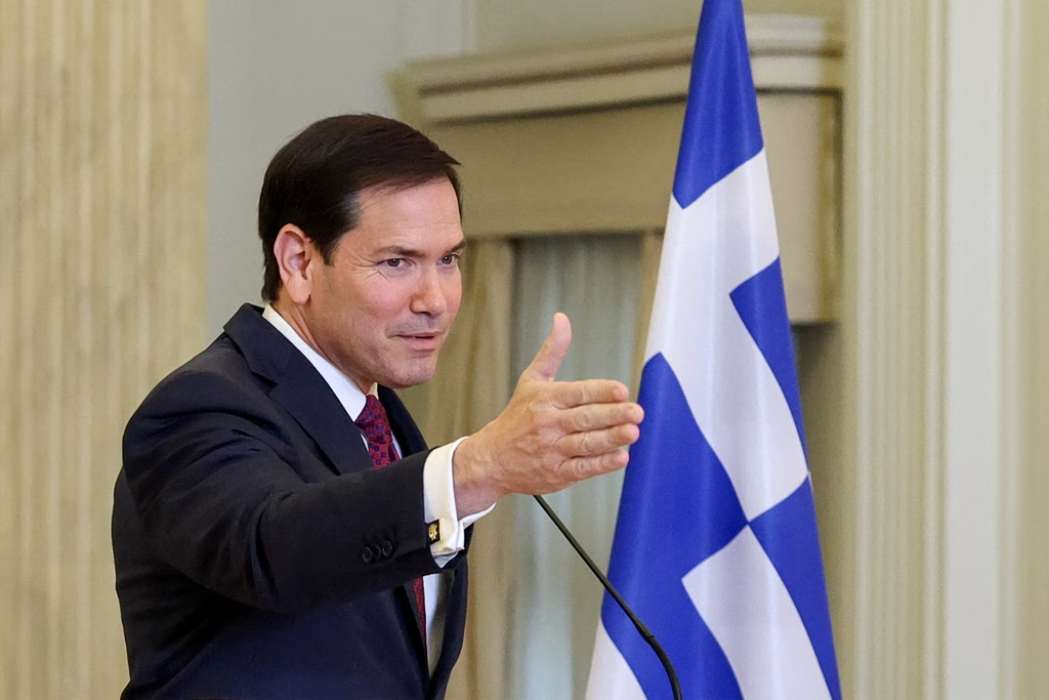
Rubio’s visit confirmed Greece’s strategic importance to Washington.
Energy cooperation, defence ties and regional security remain central pillars of the relationship.
However, his remarks on energy interconnections demonstrated that a broad strategic partnership does not automatically translate into a specific public American commitment concerning every regional dispute.
Washington wants energy infrastructure to succeed.
It has not publicly explained what measures it would take if Turkish objections created fresh obstacles to the Greece–Cyprus cable.
That uncertainty remains politically significant.
It also creates an important distinction between what the United States supports in principle and what it is prepared to undertake in practice.
Four Questions That Remain Unanswered
Following Rubio’s statements, four questions deserve particular attention.
First: Will Washington undertake a specific diplomatic initiative to facilitate the Greece–Cyprus electricity interconnection?
Second: What position would the United States adopt if Turkey attempted to make its prior approval a practical condition for maritime operations?
Third: How will Greece, Cyprus and the European Union coordinate their responses to the project’s financial, regulatory and geopolitical challenges?
Fourth: When will the next phase of marine surveys and installation work begin, and what arrangements will be in place to prevent further interruptions?
The answers will determine whether strategic declarations can be translated into practical progress.
The Bottom Line: Turkey Was Not Named, but the Geopolitical Problem Remains
Marco Rubio did not announce a change in American policy in Turkey’s favour.
Nor did he recognise a Turkish right to approve the Greece–Cyprus electricity interconnector.
His references to sensitive circumstances involving other countries nevertheless highlighted the fact that regional objections remain part of Washington’s diplomatic calculations.
For Athens, the challenge is to secure the project’s implementation without allowing diplomatic consultation to become acceptance of disputed maritime claims.
Rubio’s visit reaffirmed the strength of the Greek-American partnership.
But the central question surrounding Kasos and the Great Sea Interconnector remains unresolved:
When the next phase of operations begins, how far will Washington go in supporting the project if Ankara objects?
Source: pagenews.gr
Διαβάστε όλες τις τελευταίες Ειδήσεις από την Ελλάδα και τον Κόσμο