Vertical Gas Corridor:Greece Upends Turkey’s Energy Strategy–AKTOR Takes Strategic Position New Energy Map
 ΧΡΟΝΟΣ ΑΝΑΓΝΩΣΗΣ 8 '
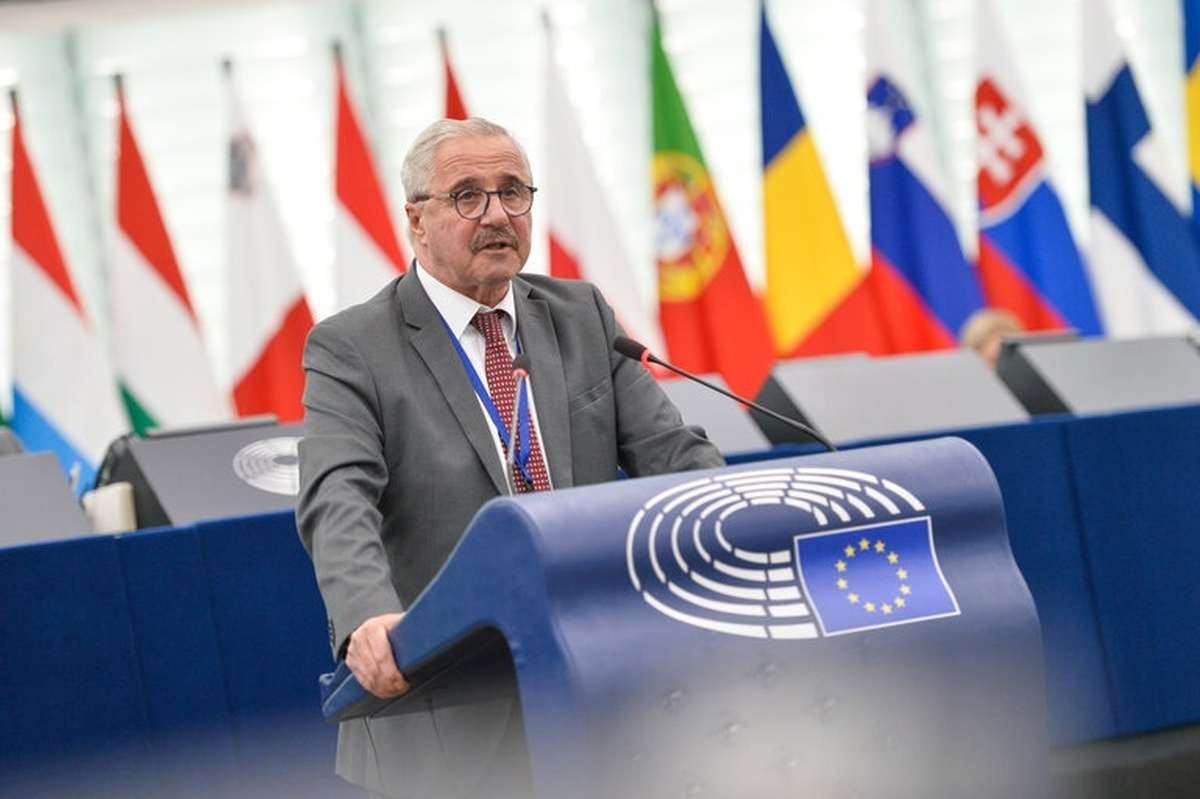
Πηγή Φωτογραφίας: eurokinissi//Vertical Gas Corridor: Greece Upends Turkey’s Energy Strategy – AKTOR Takes Strategic Position on New Energy Map



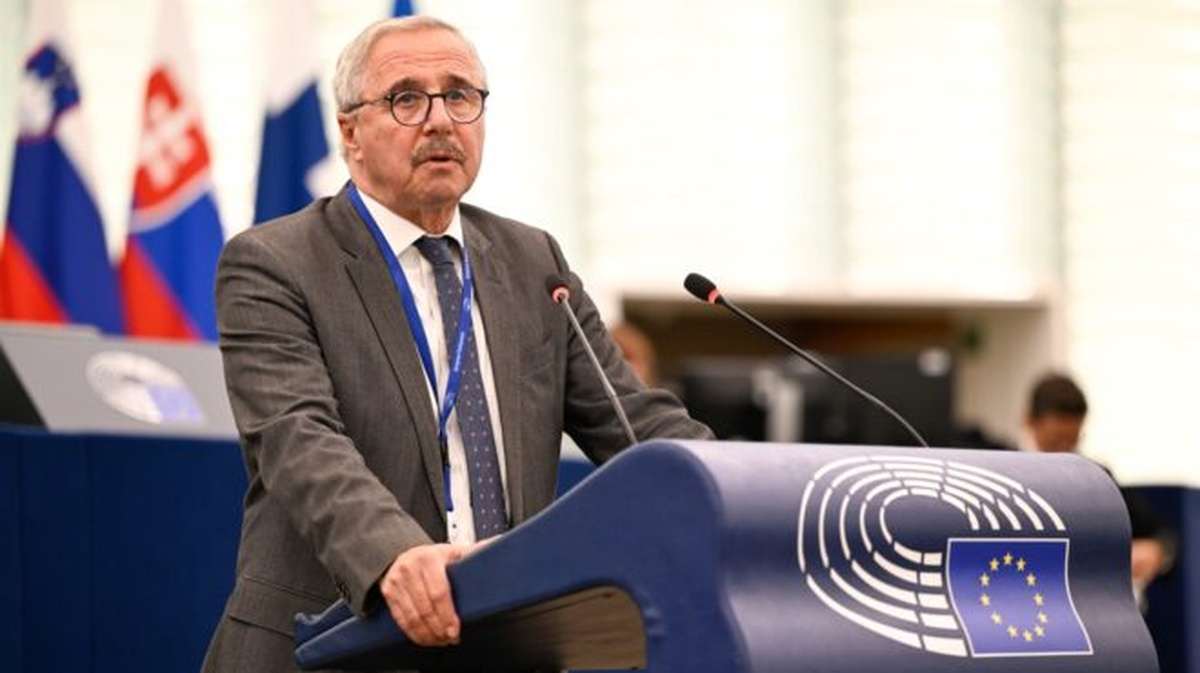
The Vertical Gas Corridor through Greece has upended Turkey’s energy strategy. That is the central message delivered by Giannis Maniatis, PASOK MEP, Vice-President of the Socialists & Democrats (S&D) Group and former Greek Minister of Environment and Energy.
Speaking to Real FM and journalist Nikos Hatzinikolaou, Maniatis argued that the Vertical Corridor has disrupted a broader Turkish-Russian plan centered on TurkStream, creating an alternative route for supplying European markets.
But the significance of the shift goes well beyond pipeline infrastructure.
It represents a change in the energy and geopolitical balance of Southeast Europe, as Greece strengthens its ability to serve as a southern gateway for natural gas and LNG flowing north through Bulgaria and Romania toward Moldova, Ukraine and the wider Central and Eastern European market.
And it is within this changing landscape that AKTOR’s energy strategy takes on broader geopolitical significance.
The Greek group does not own or operate the Vertical Corridor. Rather, through Atlantic SEE LNG Trade, it has positioned itself in a crucial part of the emerging energy chain: securing and marketing LNG volumes that can enter Europe through Greece and move north through the region.
Maniatis: The Vertical Corridor Has Disrupted Turkey’s Plans
According to Maniatis, Turkey and Russia had developed an alternative architecture for supplying European markets through TurkStream.
Russian gas would flow through Turkey and Bulgaria before connecting with the wider European network.
The Vertical Corridor, however, provides a competing route.
Gas entering the European system through Greece can move north, creating an alternative supply chain that does not depend on the Turkish route.
Maniatis stressed that the Greek corridor not only competes with TurkStream but also enjoys the backing of the European Union, adding another strategic dimension to the challenge facing Ankara’s energy ambitions.
For Maniatis, this is precisely why the project has caused concern in Turkey.
The Major Shift: Energy Flows Can Now Start in Greece
The geopolitical importance of the Vertical Corridor lies partly in the changing direction of regional energy flows.
For decades, much of the region’s gas infrastructure was designed around an east-to-west model.
The Vertical Corridor introduces another axis:
South to north.
Natural gas and LNG entering the European system through Greece can move toward Bulgaria, Romania, Moldova and Ukraine.
Greece therefore has the potential to become more than a transit country or an end-user market.
It can increasingly function as an entry and commercial gateway for energy supplies serving a much larger European market.
That carries geopolitical consequences.
The more alternative sources and routes Europe can access, the less dependent it becomes on any single supplier or transit corridor.
TurkStream vs Vertical Corridor: Two Different Energy Models
This is why Maniatis’ intervention is about more than competition between two pieces of infrastructure.
At stake are two different models for supplying Europe.
One relies on Russian gas reaching European markets through Turkey.
The other allows LNG and other gas supplies to enter through Greece and move north into Southeast, Central and Eastern Europe.
Greece is therefore not competing with Turkey as a gas-producing country.
The strategic competition concerns Turkey’s ambition to become an indispensable energy gateway between the East and Europe.
The development of an alternative Greek route changes that equation.
And this is where the corporate dimension enters the story.
AKTOR Enters the New Energy Geography
Energy corridors acquire strategic importance only when there are actual molecules to transport.
Infrastructure requires suppliers, buyers, contracted volumes and commercial agreements.
This is precisely where AKTOR has established a potentially significant position.
Through Atlantic SEE LNG Trade, in which AKTOR holds 60% and Greece’s DEPA Commercial holds 40%, the group has moved into the supply and trading of LNG destined for the broader Southeast and Eastern European market.
AKTOR is not the operator of the Vertical Corridor.
Its strategic relevance comes from something different: it has positioned itself within the commercial chain that can supply LNG volumes capable of using Greece’s northbound energy routes.
That distinction is crucial.
Why AKTOR’s Position Is Becoming Strategically Important
The emerging architecture can be understood through four interconnected elements.
The Vertical Corridor provides the route.
Greek LNG infrastructure provides the entry gateway.
International producers provide the gas.
Commercial players secure the volumes, contracts and customers needed to turn infrastructure into actual energy flows.
AKTOR has chosen to position itself in this final but critical part of the chain.
Through Atlantic SEE, it has secured long-term access to US LNG and begun building commercial relationships across the wider region.
Its long-term agreement with US producer Venture Global, expanded in June 2026, provides for 1 million tonnes of LNG annually for 20 years from 2030, double the original contracted quantity.
That is equivalent to approximately 1.3 billion cubic metres of natural gas per year.
Those volumes take on much greater strategic value when combined with Greece’s ability to channel gas north into European markets.
From Greece to Ukraine: The Model Is Already Being Tested
The connection is no longer purely theoretical.
Atlantic SEE has already signed a commercial agreement for the sale of US LNG to Ukraine’s Naftogaz, with the supply entering through Greece and moving toward the Ukrainian market through regional infrastructure.
This offers a concrete example of the emerging model:
LNG reaches Greece, enters the regional network and moves north toward Eastern Europe.
The commercial strategy pursued by AKTOR therefore intersects directly with the geopolitical transformation described by Maniatis.
Infrastructure alone does not create an energy hub.
Commercial flows do.
AKTOR Is Positioning Itself Along a Geopolitical Shift
This is what makes AKTOR’s move different from a conventional expansion into another business sector.
Through Atlantic SEE, the group is positioning itself in a market whose development is linked to three major strategic changes:
Europe’s effort to diversify its energy sources and routes;
the growing role of US LNG in European energy security;
and Greece’s emergence as a potential gateway to the Balkans, Central Europe and Ukraine.
The result is a business strategy with a clear geo-economic dimension.
The value lies not merely in buying and selling LNG, but in participating in the commercial ecosystem surrounding a new European energy route.
Greece’s Competition With Turkey Moves Into Geo-Economics
Maniatis’ intervention ultimately highlights two interconnected levels of change.
The first is state-level and geopolitical.
The Vertical Gas Corridor provides an alternative route through Greece and, according to the former energy minister, has disrupted part of Turkey’s strategy built around TurkStream.
The second is commercial and geo-economic.
As the Greek route attracts real energy flows, companies capable of securing supply, customers and long-term contracts become increasingly important to its operation as a commercial corridor.
It is on this second level that AKTOR has already established a meaningful position.
Not because it owns the Vertical Corridor.
But because it has positioned itself within the commercial chain capable of turning that geopolitical infrastructure into an active energy artery.
That may prove to be one of the most consequential elements of Greece’s changing energy role.
Greece no longer wants merely to sit on Europe’s energy map. It increasingly wants new energy flows into Europe to start from Greek gateways — and AKTOR has already secured a position within that emerging geography.
Source: pagenews.gr
Διαβάστε όλες τις τελευταίες Ειδήσεις από την Ελλάδα και τον Κόσμο