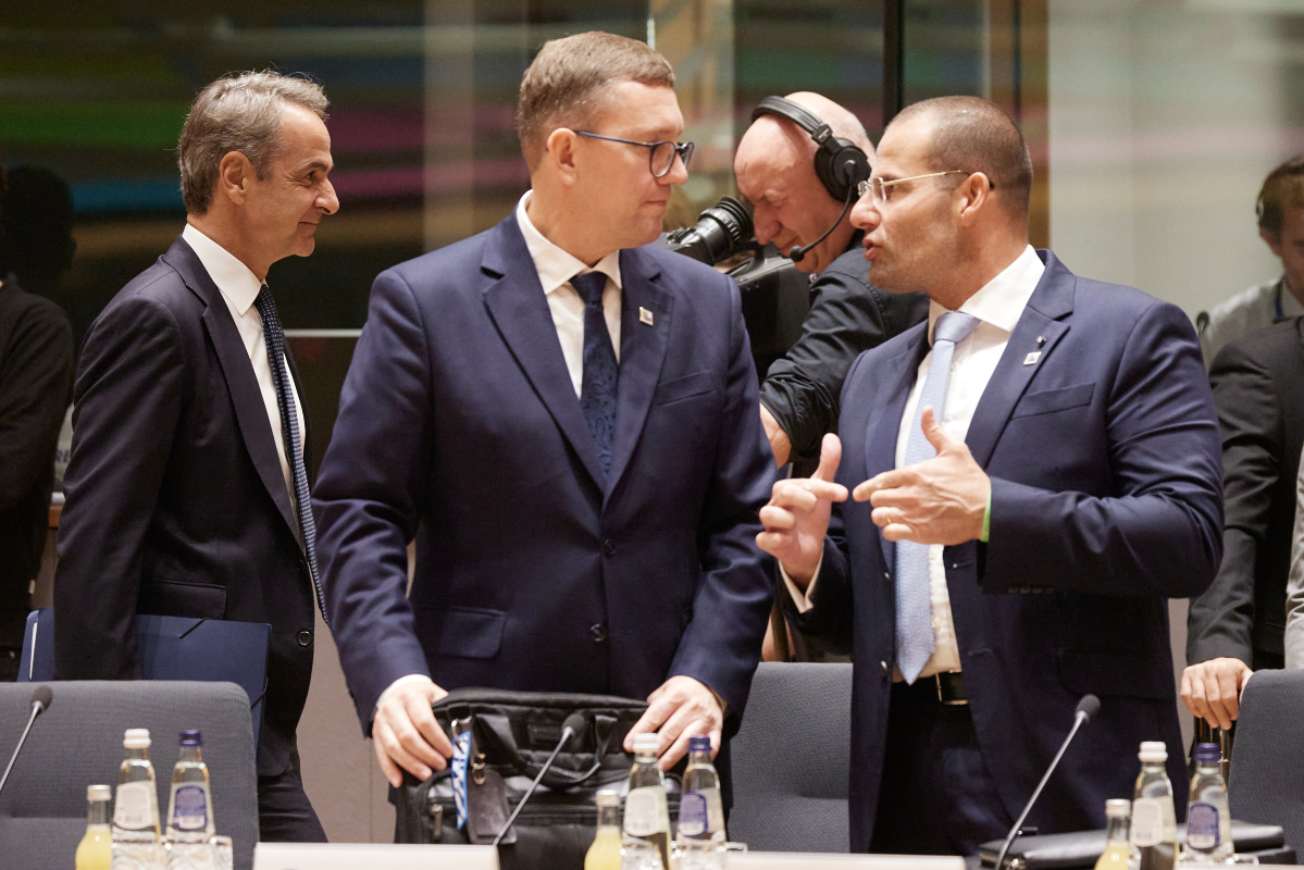
European Union leaders opened their Brussels summit facing two pressures on the bloc’s industrial economy: intensifying competition from Chinese exports and persistently high energy costs.
Together, they are testing Europe’s ability to retain manufacturing, attract investment and protect jobs. The discussions also expose disagreements over how far governments should intervene in trade and energy markets—and how those interventions should be funded.
The summit on October 15–16 brings these questions together with negotiations over the next EU budget and Ukraine’s financial needs.
The central challenge is whether Europe can deliver affordable energy, competitive production and sufficient funding for its strategic commitments.
A €360 Billion Trade Imbalance
The EU’s goods trade deficit with China reached €360 billion in 2025 and is on course to exceed that level this year.
Concern extends beyond the automotive sector. Industry groups blame rising Chinese exports for pressure on European manufacturers and factory closures.
Draft summit conclusions indicate that leaders want the European Commission to continue negotiations with Beijing while making greater use of existing trade defence measures and developing additional instruments.
The approach combines engagement with the prospect of stronger restrictions. Governments want to preserve commercial relationships while responding to demands for protection from European businesses.
The political stakes are substantial. Anxiety over jobs and industrial investment is feeding dissatisfaction that far-right parties are exploiting.


Hybrid Cars Are Only the Starting Point
The summit follows an agreement between the Commission and Beijing to limit Chinese hybrid vehicle exports to the European market.
European officials see the arrangement as an initial step towards a broader rebalancing of trade. It does not resolve the wider pressures facing European industry.
Restrictions in one sector may offer relief. Longer-term competitiveness also depends on energy prices, access to finance, technological investment and a more effective single market.
Trade measures can buy time, but European manufacturers still need conditions that make production commercially viable.
Germany’s Changing Position
Joint Franco-German proposals are expected to feature prominently in the discussions, including calls for action against certain imports and a faster response to practices that harm European industry.
Berlin’s position marks a shift from its earlier opposition to EU tariffs on Chinese electric vehicles.
Germany’s extensive commercial ties with China place it at the centre of the dilemma. Its exporters need access to the Chinese market, while domestic manufacturers face growing competition from Chinese suppliers.
The challenge is to protect industrial capacity without triggering retaliation that could damage European exports.
Expensive Energy Complicates the Response
Trade protection offers limited reassurance when European production remains costly.
Energy prices therefore occupy a central place in the summit debate. Governments are seeking immediate relief while considering how to strengthen energy security and reduce external dependencies.
Options under discussion include a one-year delay to methane emissions rules affecting oil and gas imports, alongside further temporary measures.
These remain proposals under consideration. Their discussion does not amount to a final summit decision.
The broader question is how Europe can reduce short-term costs while maintaining a credible framework for investment.
A Clash Over Carbon Pricing
One of the sharpest disagreements concerns the EU Emissions Trading System, which requires power generators and industrial companies to purchase allowances for their carbon dioxide emissions.
Countries including Italy and the Czech Republic want the system weakened or suspended to ease costs.
The prime ministers of Finland, Sweden and Denmark defend it as a driver of energy security and investment in clean industry.
The dispute reflects different priorities: immediate relief for producers versus maintaining incentives to reduce dependence on imported fossil fuels.
Any compromise must address today’s pressures while preserving confidence in investments intended to lower future energy costs.
Budget Talks Add Another Fault Line
Negotiations over the 2028–2034 Multiannual Financial Framework add a further layer of difficulty.
The EU’s long-term budget requires unanimous approval, bringing together governments with different spending priorities and financial capacities.
The budget debate is directly connected to competitiveness. Investment in energy, technology, infrastructure and security requires funding, while national budgets are already under pressure.
Leaders must decide how to accommodate new demands alongside established programmes—and how to distribute the cost among member states.
Agreement on strategic ambitions will have limited practical value without agreement on financing them.
Ukraine’s Needs Remain Central
Ukraine is another major item on the summit agenda, with President Volodymyr Zelenskyy expected to join the relevant discussions.
Leaders will consider the country’s 2027 funding needs and the continuation of European support.
Dutch Prime Minister Rob Jetten urged European countries to increase their financial, military and non-military assistance, arguing that several are falling behind.
The discussion adds another obligation to an already demanding European agenda: strengthening economic resilience at home while sustaining commitments to Kyiv.
Europe’s Interconnected Test
The summit’s disputes are closely linked. High energy costs weaken manufacturers, Chinese competition intensifies industrial anxiety, and budget constraints make collective responses harder.
For the EU’s 27 leaders, the task is to turn these pressures into a coherent policy response.
The practical test will be whether their decisions help retain production in Europe, improve energy affordability and provide the resources needed to deliver their commitments.
Source: pagenews.gr