Trump–Xi: The “Selective Reciprocity” at the Heart of the Summit’s Biggest Contradiction
 ΧΡΟΝΟΣ ΑΝΑΓΝΩΣΗΣ 9 '
Πηγή Φωτογραφίας: AP Photo//Trump–Xi: The “Selective Reciprocity” at the Heart of the Summit’s Biggest Contradiction



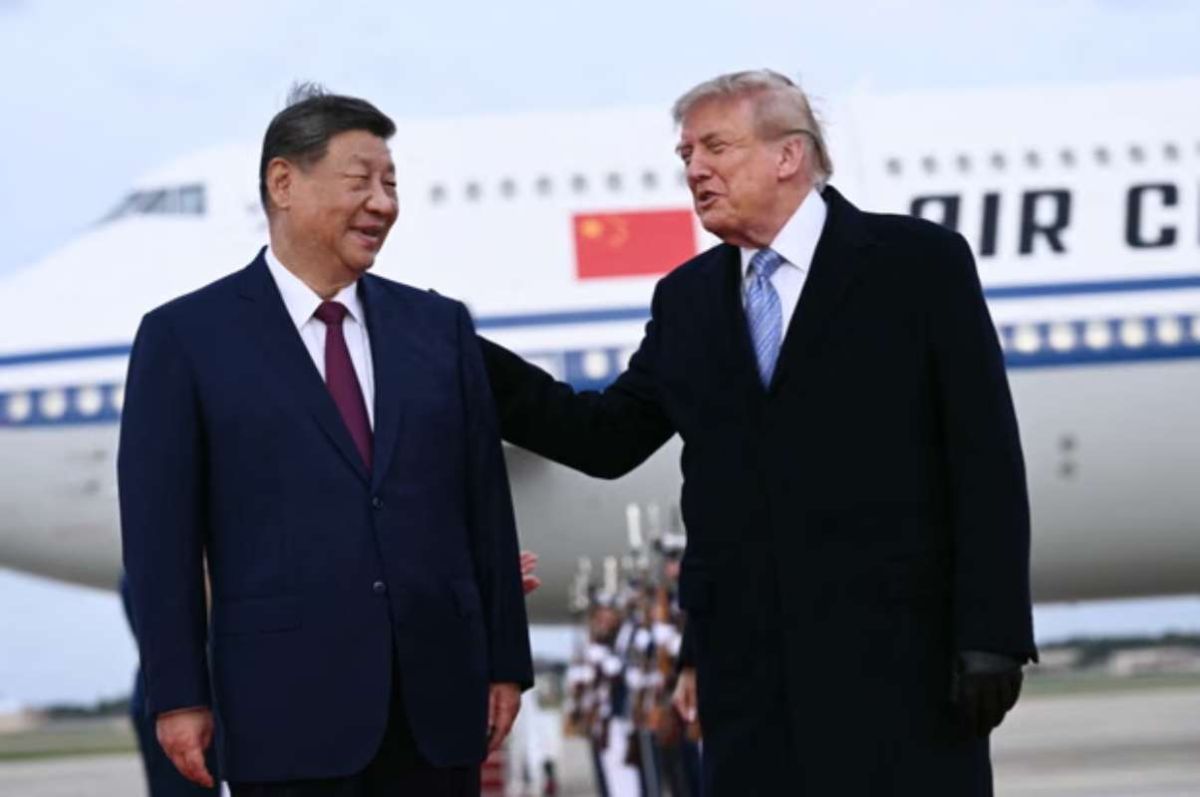
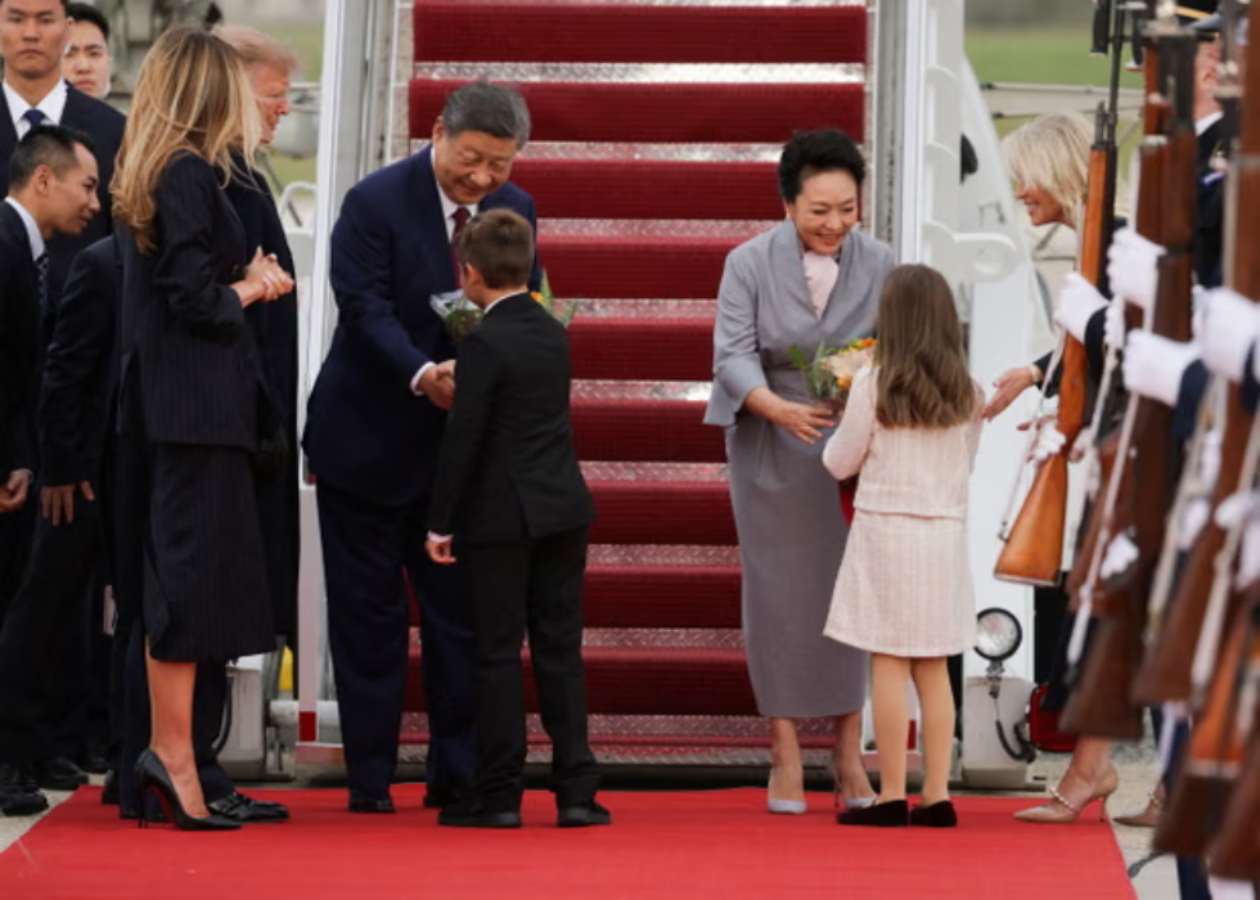
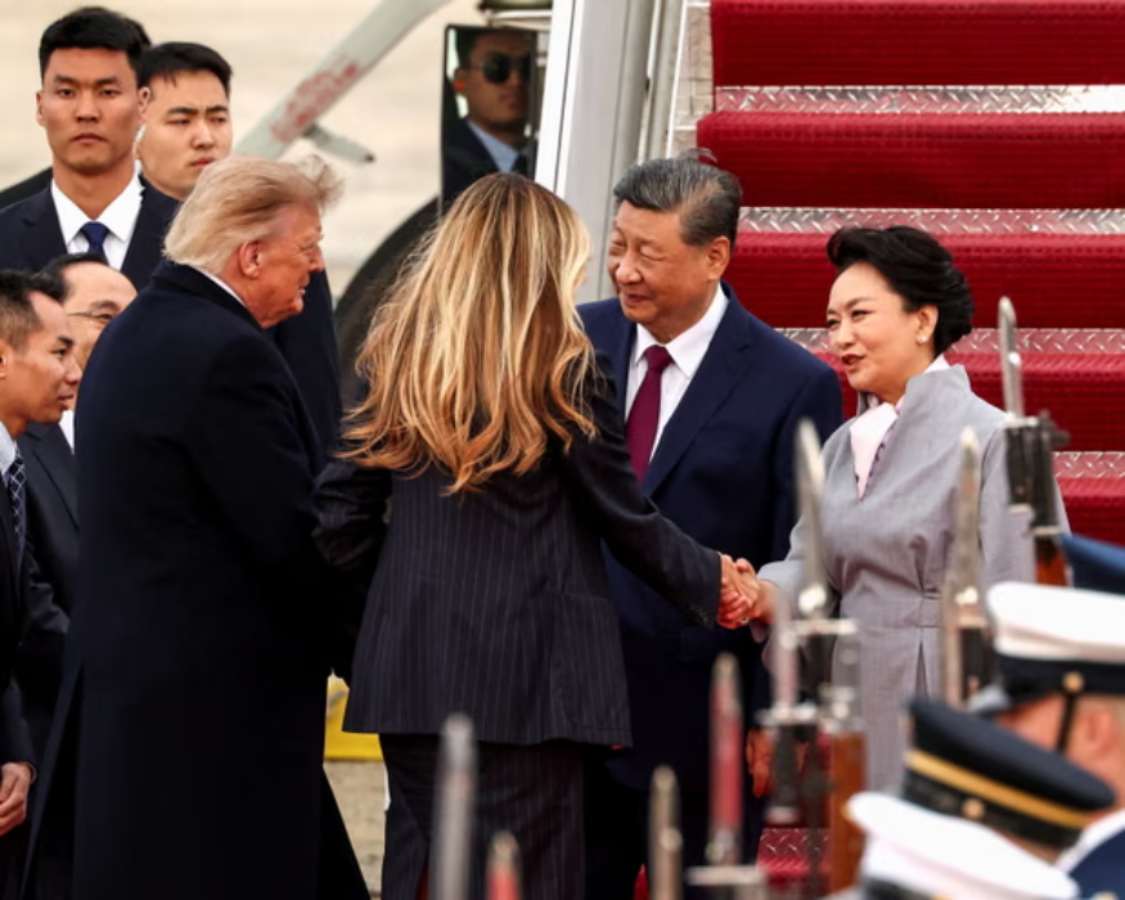
The images at Joint Base Andrews were choreographed to send a message.
Xi Jinping landed in the United States for what the Council on Foreign Relations describes as his first state visit to Washington in a decade. Donald Trump chose to greet him personally on the tarmac — a highly symbolic gesture, especially because the reception went beyond what Beijing had offered the American president during Trump’s visit to China in May.
And that is where the first contradiction begins.
The Trump administration has elevated “reciprocity” into one of the central principles of its trade and foreign policy toward China.
In practice, however, reciprocity is applied selectively.
Where the cost of confrontation is manageable, Washington pushes hard.
Where Chinese retaliation could disrupt critical US supply chains, financial markets or the domestic political environment, pressure becomes more calibrated.
Third Trump–Xi meeting in eleven months
The Washington summit is the third face-to-face meeting between Trump and Xi in just eleven months.
The first came in Busan in October 2025, when both sides sought to cool an escalating trade confrontation.
Trump then travelled to Beijing in May.
Washington is now the third stage in a relationship that has not been normalized so much as converted into a model of managed strategic competition: enough pressure to preserve leverage, but not enough to trigger a rupture neither side can easily control.
That helps explain why expectations for a breakthrough remain limited.
The more realistic objective appears to be stabilization — not resolution.
The “three Ts”: Trade, Taiwan, Technology
The formal agenda revolves around three major files:
- Trade
- Taiwan
- Technology and AI
All three are, in different ways, variations of the same strategic question:
Who possesses the more credible leverage — and who is actually prepared to use it?
Rare earths: Beijing’s weapon works best when it is not fired
The clearest shift in leverage in the US–China relationship is no longer simply about tariffs.
It is about critical minerals.
China maintains a dominant position in rare-earth processing and refining, materials essential to electric vehicles, semiconductors, advanced manufacturing and modern weapons systems.
That dependence gives Beijing a form of economic deterrence.
China does not need to shut down the entire supply chain.
It only needs to demonstrate that it could.
And that is precisely what makes rare earths such a powerful bargaining tool.
Taiwan: Washington’s bargaining chip remains in reserve
The same logic applies in reverse over Taiwan.
Washington has significant military support options available to Taipei, but every major move carries political and strategic consequences.
Beijing considers Taiwan a core interest and has repeatedly warned Washington against steps it views as crossing its red lines.
The result is a familiar pattern.
The United States can accelerate arms support.
China can escalate military pressure.
But both sides understand that using those tools at full force could produce the very confrontation they are trying to avoid.
The leverage matters because it remains partly unused.
AI: A summit of presidents — and CEOs
Artificial intelligence is the third strategic battlefield.
And the guest list tells much of the story.
Jeff Bezos.
Elon Musk.
Sundar Pichai.
Sam Altman.
Jensen Huang.
Tim Cook.
The presence of America’s technology elite around the summit underlines how central AI has become to the relationship.
These companies are simultaneously exposed to:
China as a market,
China as a production base,
Washington as a regulator,
and the US government as the gatekeeper of advanced technology exports.
This is why full technological “decoupling” remains far harder in practice than in political rhetoric.
The missing file: Iran
And then there is the issue that is not formally at the center of the agenda.
Iran.
It may be the file that best reveals the limits of Trump’s China strategy.
In August, the US Treasury launched Operation Economic Outcast, a campaign designed to intensify Iran’s economic isolation.
Washington warned that entities facilitating Iranian oil sales, financial transactions or strategic trade could face US sanctions.
The rhetoric was sweeping.
The implementation has been more selective.
The China problem
China remains Iran’s most important economic partner and its dominant oil customer.
That creates a fundamental constraint for Washington.
If the United States genuinely sought to seal off Iran from the global economy, it would eventually have to confront Chinese banks, trading companies and energy interests on a much larger scale.
But doing so could transform the Iran sanctions campaign into a direct US–China financial confrontation.
That is precisely where the doctrine of reciprocity begins to collide with geopolitical reality.
Washington says no one is beyond the reach of American sanctions.
But the one country with the greatest capacity to undermine the Iran strategy is also the one economic rival the United States cannot pressure without calculating the wider consequences.
No evidence of a secret bargain
There is an important distinction.
There is no public evidence showing that Trump and Xi have struck an explicit bargain such as:
Washington spares Chinese banks in exchange for concessions on rare earths.
Nor is there evidence of a formal trade:
Taiwan restraint in exchange for Chinese cooperation on Iran.
Claiming such a deal as established fact would go beyond what is publicly known.
What can be observed is a pattern.
Both sides possess powerful tools.
Both repeatedly stop short of using them to their maximum extent.
That mutual restraint may be the real foundation of the current relationship.
Leverage is more valuable before it is spent
The logic increasingly resembles deterrence more than conventional economic diplomacy.
Beijing has rare-earth leverage.
Washington controls access to the dollar-centered financial system.
The United States can expand military support to Taiwan.
China can sharply increase military pressure around the island.
Washington can impose harsher secondary sanctions on Chinese companies involved with Iran.
Beijing can retaliate against American technology and industrial interests.
But every lever has the same paradox:
Once fully used, it loses some of its value as a bargaining instrument.
That is why both governments continue to hold back their most disruptive options.
Midterms sharpen Trump’s calculation
Domestic politics makes the balance even more delicate.
The US midterm elections are less than six weeks away.
Trump therefore needs a summit that can be presented domestically as strength without producing a new trade shock capable of unsettling markets, manufacturing or inflation.
Xi also faces his own political calendar in Beijing.
Both leaders have reasons to look uncompromising.
Both also have reasons to avoid a crisis they cannot contain.
Managed ambiguity may be the real summit outcome
That is why the most plausible outcome may not be a grand strategic agreement.
It may be something far less dramatic but potentially more important:
an extension of the trade truce,
continued negotiations,
some additional Chinese purchases of US goods,
a non-binding AI dialogue,
and further postponement of the most dangerous decisions on Taiwan and critical minerals.
In other words, the summit may produce managed ambiguity.
Enough progress for both sides to claim success.
Not enough movement to force either side into a visible concession.
The real test comes after the cameras leave
The most important decisions will likely come after the summit itself.
What happens when temporary rare-earth arrangements expire?
Does Washington finally move on the Taiwan arms package?
Does the Treasury apply its Iran sanctions architecture more aggressively against major Chinese financial or energy interests?
Those decisions will determine whether Trump’s doctrine of reciprocity is truly universal — or whether it remains conditional on the cost of enforcing it.
The Trump–Xi relationship is no longer based on trust.
It is based on something colder:
each side understands that the other possesses tools it would rather not be forced to use.
And that may ultimately be the real purpose of the summit.
Not agreement.
Not friendship.
But mutual restraint. Source: pagenews.gr
Διαβάστε όλες τις τελευταίες Ειδήσεις από την Ελλάδα και τον Κόσμο