Trump’s $24.3 Billion F-35 Deal With Saudi Arabia: Israel’s Edge and China’s Reach Put to the Test
 ΧΡΟΝΟΣ ΑΝΑΓΝΩΣΗΣ 9 '
Πηγή Φωτογραφίας: AP Photo//Trump’s $24.3 Billion F-35 Deal With Saudi Arabia: Israel’s Edge and China’s Reach Put to the Test



The Trump administration has taken one of the most consequential steps yet in the transformation of the US-Saudi security relationship.
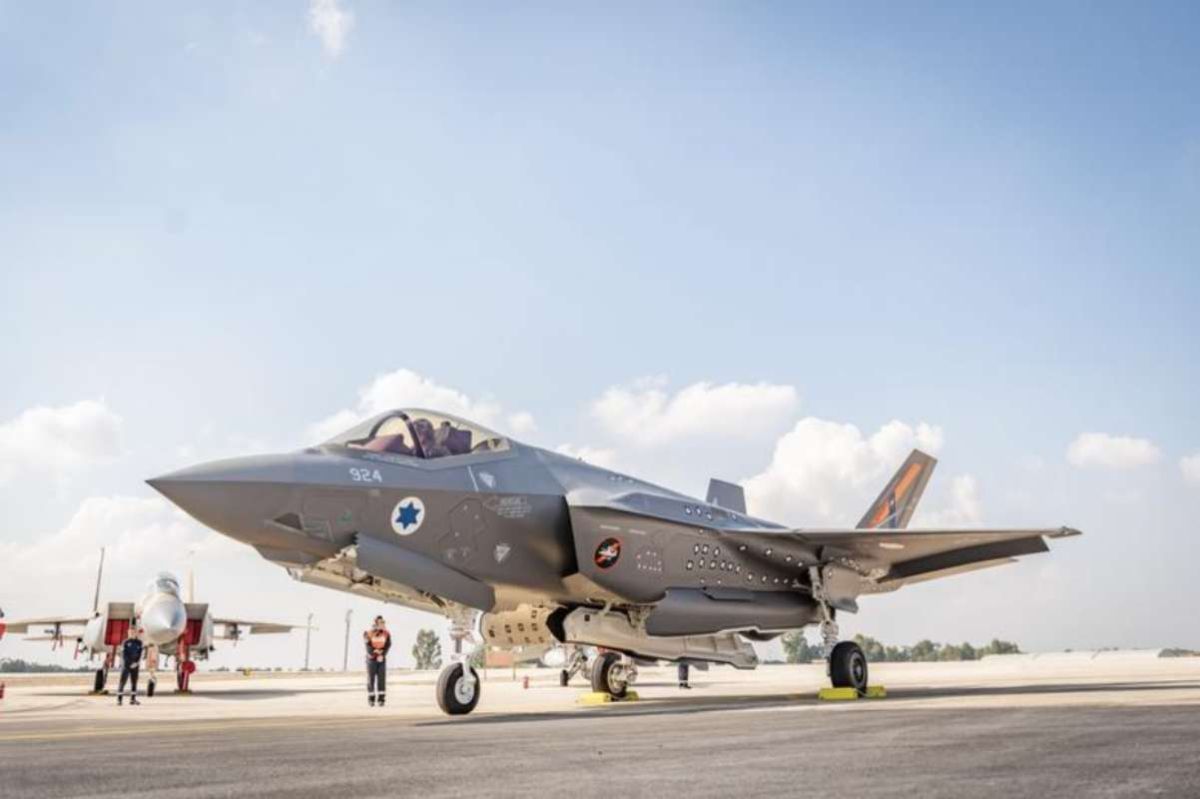
The US State Department on September 17 approved a potential $24.3 billion Foreign Military Sale of 48 Lockheed Martin F-35 Lightning II fighters to Saudi Arabia. The package also includes 49 Pratt & Whitney F135 engines, communications equipment, software, spare parts and extensive support.
If completed, the sale would break a significant regional barrier.
Israel is currently the only Middle Eastern country operating the F-35. Saudi Arabia would become the first Arab state to acquire the aircraft.
From Trump’s Promise to a $24.3 Billion Package
The decision has been building for months.
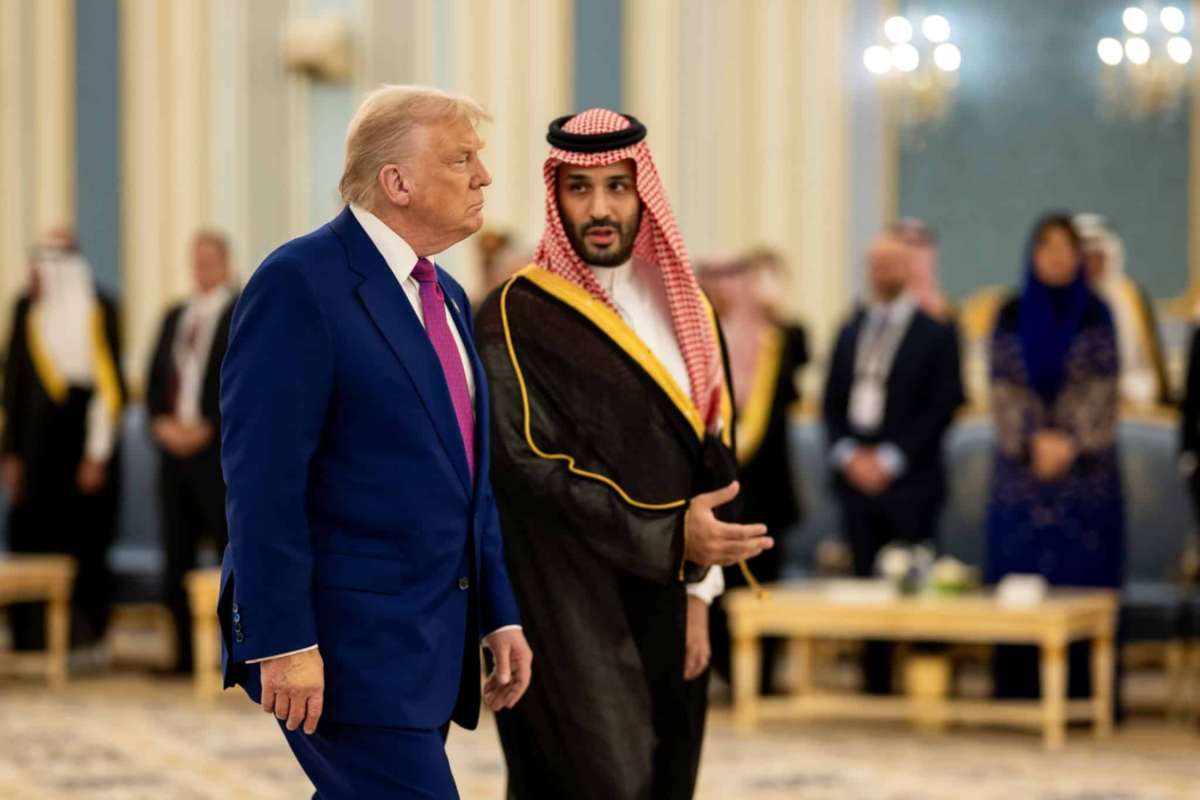
President Donald Trump publicly announced in November 2025 that Washington intended to sell F-35s to Saudi Arabia ahead of Crown Prince Mohammed bin Salman’s visit to the White House.
Riyadh had sought access to the aircraft for years, seeing it as a major component of the modernization of the Royal Saudi Air Force and of its ability to counter increasingly sophisticated regional threats.
The September approval turns that political commitment into a formal arms-sale process.
But it is important to distinguish an approval from a completed acquisition.
The proposed transaction must still move through the US Foreign Military Sales process and congressional scrutiny. No delivery timetable has been publicly announced.
What Saudi Arabia Would Actually Get
Saudi Arabia already operates a formidable combat fleet built around variants of the F-15 and Eurofighter Typhoon.
The F-35, however, represents a different category of capability.
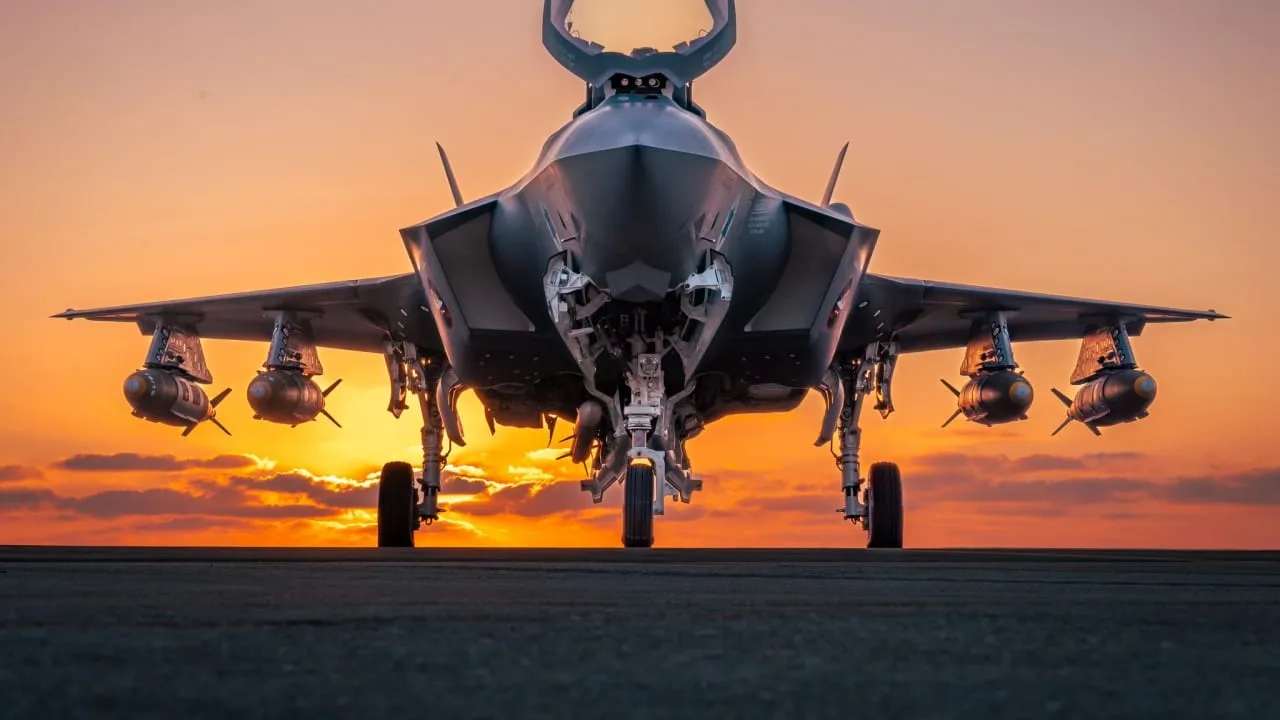
Its importance lies not simply in speed or weapons capacity, but in stealth, advanced sensors, data fusion and its ability to function as an information node across a wider battlespace.
The State Department says the proposed sale would strengthen Saudi homeland defense, improve its ability to deter current and future threats and increase interoperability with US and other partner forces.
That makes the F-35 more than another fighter purchase.
It would bring Riyadh deep inside one of Washington’s most sensitive military technology ecosystems.
Israel Is the First Strategic Question
That creates an immediate problem for US policy.
Washington is legally required to consider Israel’s Qualitative Military Edge, or QME, when evaluating major arms transfers in the Middle East.
Israel has operated the F-35 for years and has built multiple squadrons around the aircraft. US military assistance has also provided Israel access to some of America’s most advanced defense technologies.
The State Department argues that the Saudi sale would not fundamentally alter the regional military balance.
But Israeli officials have previously expressed concern about providing Riyadh with the F-35, and the question now becomes one of configuration as much as numbers.
Saudi F-35s would not necessarily have every capability available to Israel.
That distinction could become crucial as Washington tries to deepen its Saudi partnership without eroding the military advantage it has committed to preserving for Israel.
Then Comes China
The second strategic problem may be even more sensitive.
Saudi Arabia has spent years diversifying its international relationships, expanding economic and political ties with Beijing while maintaining its historic security partnership with Washington.
For most commercial sectors, that balancing strategy is manageable.
The F-35 makes it considerably more complicated.
US intelligence officials have reportedly warned that Beijing could potentially gain access to sensitive F-35 technology through espionage or through Saudi Arabia’s expanding military relationship with China. The concern has already produced opposition to the proposed sale among some members of Congress.
The reason is straightforward: the F-35 contains some of the most closely guarded military technology in the US arsenal.
Washington has demonstrated before that technology-security concerns can override alliance considerations.
Turkey was removed from the F-35 program after purchasing Russia’s S-400 air-defense system, because Washington argued that operating both systems could expose sensitive information about the aircraft.
Saudi Arabia is a very different case.
But the underlying question is similar: how much strategic access to China can an American partner maintain while simultaneously hosting one of Washington’s most sensitive weapons platforms?
A Deal Shaped by a More Dangerous Gulf
Timing matters too.
The proposed sale comes as Saudi Arabia faces a sharply deteriorated regional security environment. Recent attacks linked to Iran-aligned forces have triggered security alerts across the kingdom, while instability around the Red Sea and Bab el-Mandeb has increased the risks to Saudi infrastructure, shipping and energy exports.
That gives Riyadh a stronger argument for advanced air-defense and strike capabilities.
It also helps explain why Washington describes interoperability and homeland defense as central rationales for the sale.
The US-Saudi defense relationship was already enormous before the F-35 decision. Saudi Arabia has long been one of Washington’s largest Foreign Military Sales customers.
The F-35 would take that relationship into a much more technologically sensitive phase.
The Normalization Equation Has Changed
There is another important diplomatic dimension.
Under the Biden administration, access to advanced American weapons had been discussed as part of a much broader package involving a US-Saudi security arrangement and potential normalization between Saudi Arabia and Israel.
Those negotiations lost momentum after the Hamas attack of October 7, 2023 and the subsequent Gaza war.
The new F-35 approval therefore raises an important question.
Can Washington dramatically deepen its defense relationship with Riyadh without first securing Saudi-Israeli normalization?
The September decision suggests that the two tracks do not necessarily have to move at the same speed.
That matters because it gives Mohammed bin Salman greater room to negotiate the kingdom’s relationships with both Washington and regional actors separately.
The F-35 Would Tie Riyadh to Washington for Decades
There is also a structural consequence that goes beyond Middle Eastern diplomacy.
Buying an F-35 is not equivalent to purchasing a conventional weapons platform and then operating it independently.
The aircraft exists inside a vast US-led ecosystem involving software, training, maintenance, spare parts, upgrades, weapons integration and logistics.
A Saudi F-35 fleet would therefore create a long-term technological relationship between the kingdom and the United States.
That is particularly significant at a moment when Riyadh is pursuing a broader strategy of geopolitical diversification.
Saudi Arabia can expand trade with China, coordinate with Asian powers and seek greater diplomatic autonomy.
But operating F-35s would anchor a critical part of its military capability firmly inside the American defense architecture.
Riyadh’s Balancing Act Gets Harder
This may ultimately be the deal’s most important geopolitical consequence.
Saudi Arabia has tried to build a foreign policy based on optionality: US security guarantees, Chinese economic ties, independent Gulf diplomacy and increasingly ambitious relations with other global powers.
The F-35 introduces limits to that flexibility.
Washington will want stringent safeguards around technology.
Israel will want its qualitative military advantage protected.
Riyadh will want the most capable aircraft Washington is prepared to release.
And Beijing will continue to regard Saudi Arabia as one of the central prizes in its Middle East strategy.
Those interests do not automatically fit together.
The Deal Is Not Finished Yet
The headline number — 48 aircraft and $24.3 billion — should therefore not obscure the process still ahead.
The State Department approval is a major milestone, but it is not the same as aircraft arriving at Saudi bases.
The transaction still faces congressional review and subsequent contracting and implementation stages under the FMS system.
Congress could also become the arena where concerns over Israel, China and sensitive technology converge.
That means the final configuration of the aircraft, security conditions attached to the sale and delivery arrangements may ultimately prove as important as the number of jets.
More Than 48 Fighter Jets
If the transaction is completed, Saudi Arabia’s entry into the F-35 club would represent a major change in the military architecture of the Middle East.
It would end Israel’s regional monopoly on the aircraft.
It would deepen the US-Saudi defense relationship for decades.
It would force Washington to reconcile that partnership with its commitment to Israel’s military edge.
And it would put Saudi Arabia’s strategic balancing between the United States and China under far greater scrutiny.
The $24.3 billion price tag may be the easiest part of the deal to calculate. The harder question is what Washington will demand from Riyadh in return for access to one of America’s most sensitive military technologies — and how Saudi Arabia will balance those demands against its ambition to remain strategically open to both the US and China.
Διαβάστε όλες τις τελευταίες Ειδήσεις από την Ελλάδα και τον Κόσμο