The Greece–Cyprus electricity interconnection is entering a critical phase, with Athens preparing to complete the authorization process for renewed maritime surveys amid persistent geopolitical tensions in the Eastern Mediterranean.
According to information reported by Greek financial news outlet BusinessDaily, the licensing procedure is expected to be finalized between Friday, November 6, and Monday, November 9, potentially paving the way for the issuance of a maritime NAVTEX notice and the deployment of the French survey vessel Abeille Marengo.
The development carries considerable geopolitical significance, particularly following the confrontation near the Greek island of Kasos in July 2024, when Turkish naval vessels intervened during survey operations.
This time, the Greek government is seeking to establish that the continuation of the project cannot be made conditional on Turkish objections.
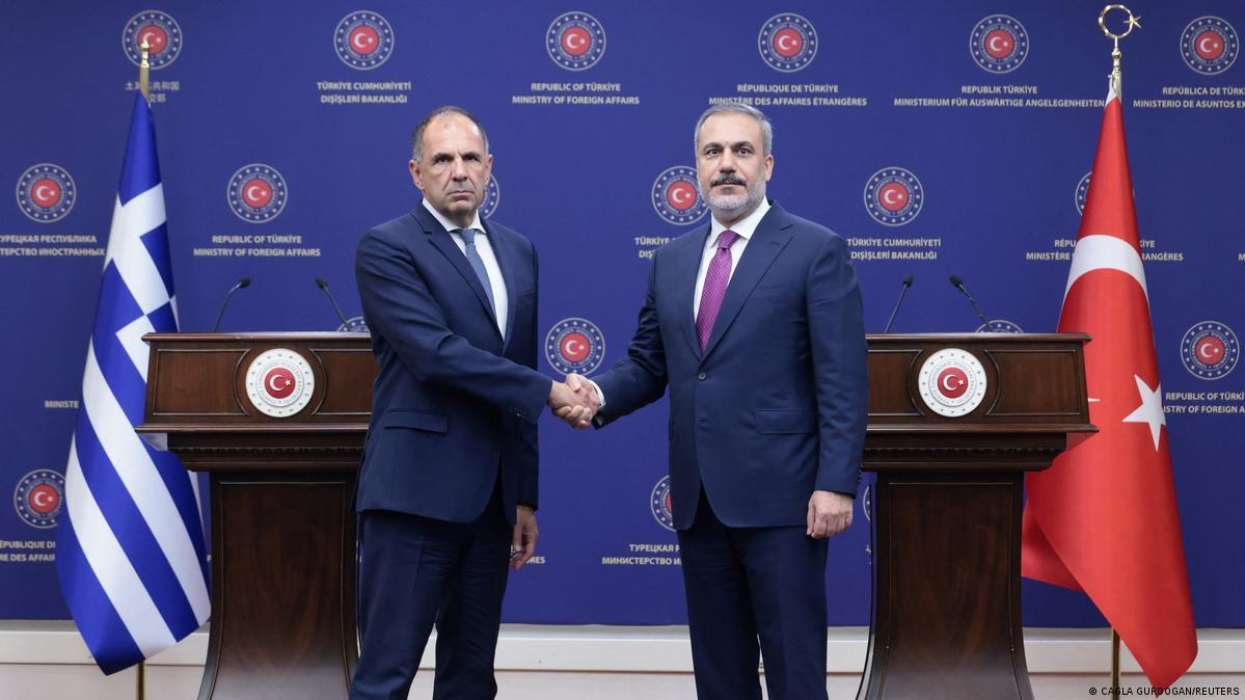
Foreign Minister George Gerapetritis has warned that Athens is prepared for every scenario and that any Turkish attempt to obstruct the surveys would meet a Greek response.
Nexans Seeks More Time as Licensing Process Nears Completion
French cable manufacturer Nexans, the contractor responsible for the submarine cable, submitted applications to Greece’s Foreign Affairs and Maritime Affairs ministries on October 8 and 9, respectively.
Although the licensing process had been expected to conclude earlier, the company subsequently requested an extension of the authorization period, currently scheduled to expire on December 31, 2026.
According to BusinessDaily, the request is intended to provide sufficient time for the necessary seabed surveys.
The application is being examined by the competent interministerial committee operating under the Greek Ministry of Foreign Affairs, which evaluates requests for marine research within areas of the Greek continental shelf.
Following a favorable assessment, the authorization would be signed by Foreign Minister George Gerapetritis and forwarded to the Ministry of National Defence.
The Hellenic Navy’s Hydrographic Service would then issue the relevant NAVTEX through the Heraklion station.
The French vessel Abeille Marengo would subsequently begin bathymetric survey operations.
The procedure is technically essential for the project, but it also represents a diplomatic test of Greece’s position regarding maritime research activities in the region.


Gerapetritis Warns Ankara: “Turkey Will Find Greece Standing Against It”
Speaking to Greek television channel ANT1, Gerapetritis addressed the possibility of renewed Turkish interference.
The Foreign Minister expressed confidence that Ankara would not repeat its actions near Kasos, while emphasizing that Athens had prepared for different contingencies.
“I do not believe that will happen. In any case, we have all scenarios ready. And I want to tell you that it is very clear that everyone bears responsibility for their actions. If Turkey attempts to obstruct the process, it will obviously find Greece standing against it,” he said.
The statement reflects two elements of Athens’ current approach: an expectation that a new confrontation can be avoided and a warning that interference with the surveys would not be accepted.
Gerapetritis also maintained that the 2024 survey operations had been completed and that subsequent difficulties primarily concerned the project’s financial and technical viability.
Nevertheless, the deployment of five Turkish naval vessels near Kasos had caused significant tensions and disrupted operations at the time.
The distinction between the government’s assessment and the events on the ground remains important in evaluating the risks surrounding the next stage of the project.
“Greece Is the Sole Licensing Authority”
A separate diplomatic issue concerns whether the French contractor might inform Ankara about the planned survey activities.
Gerapetritis categorically rejected the suggestion that Turkey’s permission would be required.
“The company will not request any authorization whatsoever. Greece is exclusively and solely the licensing country,” he stated.
Addressing the possibility of informal communication with Turkish authorities, he added:
“Whether there will be informal notification that a vessel will conduct a survey is not something excessive. It produces no legal consequences and obviously does not alter the balance regarding authorization.”
The distinction is central to Greece’s diplomatic position.
Athens maintains that practical communication with a neighboring country does not constitute recognition of that country’s right to approve maritime research activities.
According to the Greek government’s interpretation, any informal notification would have no effect on the applicable legal framework.
Officials cited by BusinessDaily, however, stressed that the issue is not merely whether the cable project advances, but also the conditions under which it proceeds.
The Centre for International Law and Diplomacy – Nafplion International Law Meetings has argued that international law does not establish a general obligation to notify neighboring third countries in connection with the laying of submarine cables.
Greek Foreign Ministry sources also indicated that they had no detailed knowledge of what any potential French communication with Ankara might contain.


European Commission Highlights Turkish Obstruction
The European dimension of the dispute has been reinforced by the European Commission’s latest report on Turkey’s accession process.
The report explicitly addresses Ankara’s interference with survey activities connected to the Great Sea Interconnector.
“Turkey continued to obstruct survey work for the Great Sea Interconnector, an EU Project of Common Interest under the TEN-E Regulation,” the report states, according to the Greek publication.
The reference is significant because the electricity link is not simply a bilateral infrastructure initiative between Greece and Cyprus.
It is a project of European strategic importance designed to connect Cyprus to the continental European electricity transmission network.
Its completion would reduce the Republic of Cyprus’s energy isolation and create new opportunities for electricity exchanges across the Eastern Mediterranean.
By formally recording Turkish interference, the European Commission places the dispute within the broader framework of EU–Turkey relations.
Turkey–Libya Maritime Agreement Faces Renewed Diplomatic Opposition
The European Commission’s report also reiterates the European Union’s position on the controversial Turkey–Libya maritime memorandum.
The agreement is considered invalid by the EU and incapable of producing legal consequences for third countries.
The report additionally records Turkey’s longstanding threat of war should Greece extend its territorial waters in the Aegean Sea, as well as Turkish military overflights involving inhabited Greek islands.
Athens has reinforced its objections through diplomatic correspondence at the United Nations.
In a letter dated October 22, Greece’s Permanent Representative to the UN, Aglaia Balta, rejected the Turkey–Libya memorandum in its entirety.
The Greek position is that the purported ratification of the agreement by Libya’s House of Representatives cannot change its legal status.
According to the letter, such ratification “can neither confer any legal effect upon it nor alter its legal character as null and void.”
Athens argues that maritime boundaries cannot be established in a manner that disregards the rights of third states or the principles of international maritime law.
Greece and Egypt Move Toward Further EEZ Delimitation
Alongside the dispute over the electricity interconnection, Athens is strengthening diplomatic coordination with Cairo.
Gerapetritis announced that Greece and Egypt had agreed to begin technical discussions aimed at extending the delimitation of their Exclusive Economic Zones.
According to the Greek Foreign Minister, the process is expected to produce “tangible results within a very short period of time.”
The initiative builds on the 2020 Greece–Egypt maritime delimitation agreement, which remains a central component of Athens’ diplomatic position in the Eastern Mediterranean.
Gerapetritis also argued that Libya’s recent maritime block announcements did not follow the boundary claimed under the Turkey–Libya memorandum.
“It did not follow its own line, but instead followed the Greek median line,” he said.
He further maintained that Libya’s ratification of the memorandum had “absolutely no consequences in practice,” either politically or on the ground.
These statements reflect Athens’ effort to strengthen its position through concrete delimitation agreements and cooperation with neighboring states.
Egypt: “The Memorandum Will Not Be Implemented”
Egypt has also reiterated its objections to the Turkey–Libya maritime arrangement.
Speaking to Ahram Online, Egyptian Foreign Ministry spokesperson Nader Zaki described the memorandum as invalid and maintained that it would not be implemented.
Asked about reports that Ankara had offered Cairo approximately 15,000 square kilometers of maritime zones, the Egyptian official emphasized that any delimitation must involve all relevant parties.
“The area must be precisely delimited, with the participation of all interested countries. International law must prevail,” he said.
Nevertheless, Cairo continues to maintain diplomatic channels with Ankara.
Zaki acknowledged that Turkish–Egyptian discussions were ongoing and would take time, while describing the messages received from Turkey and Libya as “quite encouraging.”
He also stated that Turkish Foreign Minister Hakan Fidan had indicated Ankara’s understanding of Egypt’s concerns and its willingness to seek an agreement.
Egypt’s position illustrates the complexity of the Eastern Mediterranean diplomatic landscape.
Cairo continues to defend its interpretation of maritime law while simultaneously pursuing dialogue with Turkey.
The Great Sea Interconnector: A Strategic Test for the Eastern Mediterranean
The expected authorization of the new surveys represents an important step toward advancing the Great Sea Interconnector, but several obstacles remain.
Financial viability, cost-sharing arrangements, construction schedules and geopolitical risks continue to shape the project’s prospects.
For Greece, the challenge is to advance a strategically important energy infrastructure project while maintaining its position regarding authorization of maritime activities.
For Cyprus, the electricity interconnection represents a major opportunity to end its longstanding isolation from the European electricity grid.
For the European Union, the project is a test of its ability to implement cross-border energy infrastructure in a region characterized by competing maritime claims and persistent geopolitical tensions.
The next procedural step is expected from Athens, with the completion of the authorization process and the subsequent issuance of the relevant NAVTEX.
The Greek government’s position, as expressed by Gerapetritis, remains unequivocal:
“The company will not request any authorization whatsoever. Greece is exclusively and solely the licensing country.”
And regarding the possibility of renewed Turkish interference:
“If Turkey attempts to obstruct the process, it will obviously find Greece standing against it.”
Source: pagenews.gr