Erdoğan Double Game:Turkey Demands Coordination on Greece–Cyprus Cable Ankara Deepens Defence Ties with Paris
 ΧΡΟΝΟΣ ΑΝΑΓΝΩΣΗΣ 11 '
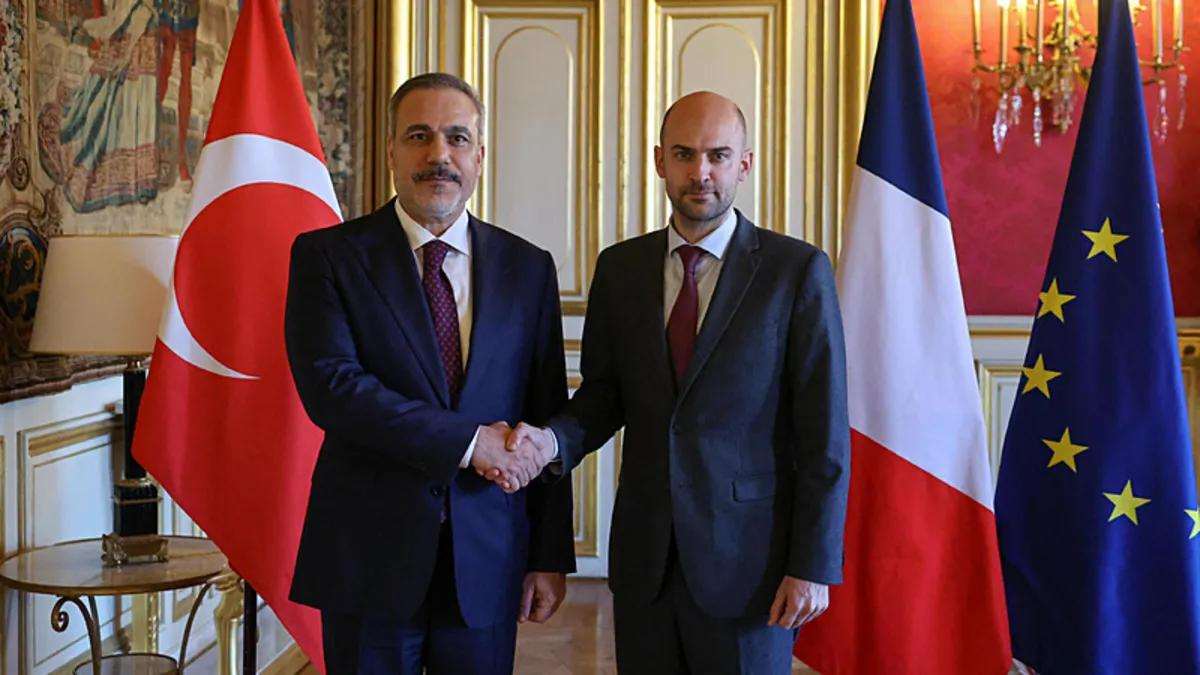
Πηγή Φωτογραφίας: AP Photo//Erdoğan’s Double Game: Turkey Demands Coordination on Greece–Cyprus Cable as Ankara Deepens Defence Ties with Paris



A complex diplomatic confrontation is taking shape in the Eastern Mediterranean, with the Great Sea Interconnector electricity project at the centre of renewed tensions between Greece and Turkey.
Ankara is signalling that it does not oppose submarine electricity infrastructure in principle. However, according to Turkish media commentary, it insists on prior diplomatic communication and coordination for activities conducted in maritime areas over which Turkey claims jurisdiction.
At the same time, Turkey and France are moving forward with a new defence cooperation roadmap, covering air defence, intelligence sharing, military training and defence-industrial cooperation.
The parallel developments carry considerable geopolitical significance. French companies are involved in the Greece–Cyprus electricity interconnection, while Paris remains one of Athens’ most important strategic and defence partners.
The central question is whether diplomatic coordination could facilitate the project’s implementation or become a mechanism through which Ankara seeks de facto influence over activities that Greece and Cyprus consider to fall within their lawful maritime rights.
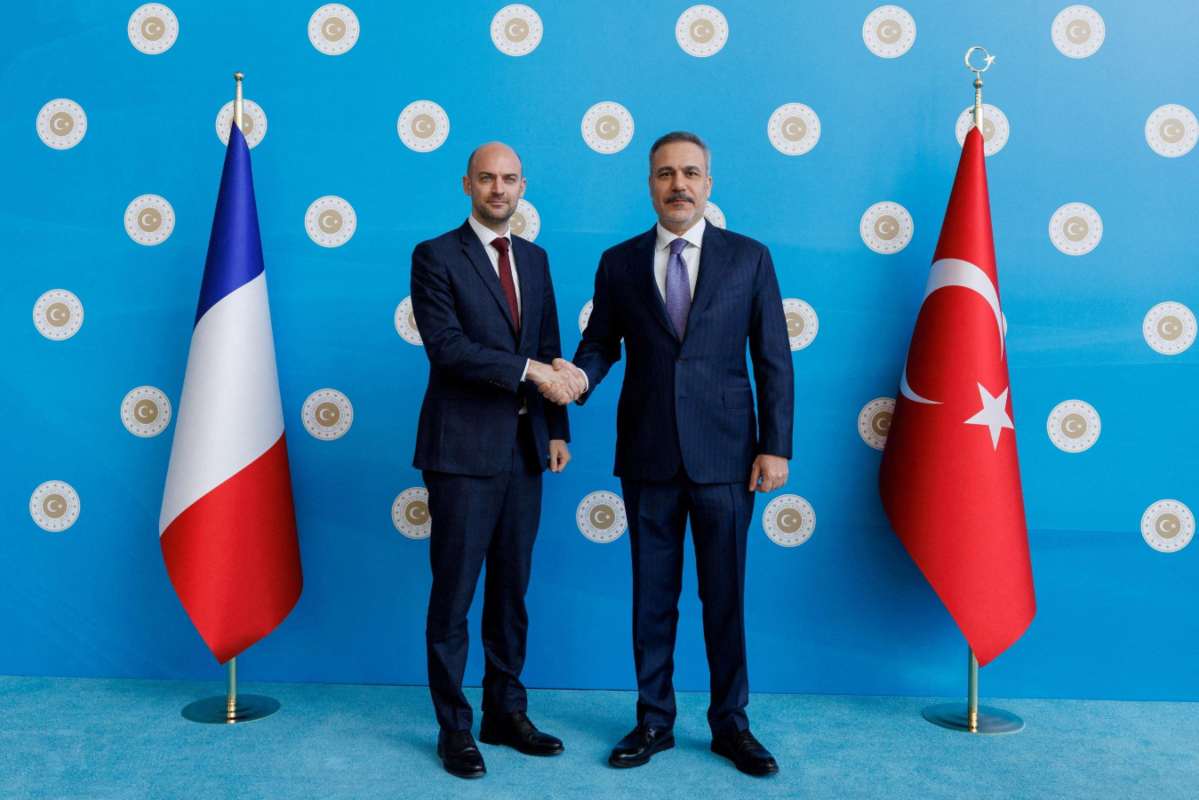
Ankara’s Message Through Milliyet: Coordination Before Cable-Laying
According to a Turkish newspaper analysis discussed during a Greek television programme, Ankara is seeking to frame its position on submarine cable operations in terms of international cooperation.
The Turkish argument presents Ankara as supportive of international infrastructure development, provided that countries conducting surveys or cable-laying operations communicate with Turkish authorities beforehand in maritime areas Turkey considers to be under its jurisdiction.
This distinction is crucial.
Greece does not recognise a Turkish right to authorise activities in maritime areas where Athens maintains that Greek sovereign rights apply.
Consequently, what might initially appear to be a technical request for coordination becomes a politically sensitive issue when linked to overlapping maritime claims.
Turkey’s position effectively raises the question of whether operational communication could be used to support a broader claim to decision-making authority.
The Diplomatic Trap: Coordination or Permission?
The debate centres on the difference between practical maritime coordination and a requirement to obtain another country’s consent.
Operational communication between states can serve legitimate purposes, including navigational safety and the prevention of incidents at sea.
Such communication does not automatically constitute recognition of a right to grant or withhold permission.
However, the meaning changes when coordination is explicitly connected to disputed maritime jurisdiction.
Turkish commentary suggests that Ankara expects diplomatic engagement before foreign vessels undertake activities in areas it claims.
The ambiguity lies in whether Turkey regards such engagement as routine coordination or as a prerequisite for allowing operations to proceed.
For Athens, this is a critical distinction.
Greece seeks to implement a European energy infrastructure project without establishing a precedent that could be interpreted as acceptance of Turkish maritime claims.
Turkey, meanwhile, appears determined to maintain a role in developments across the Eastern Mediterranean.
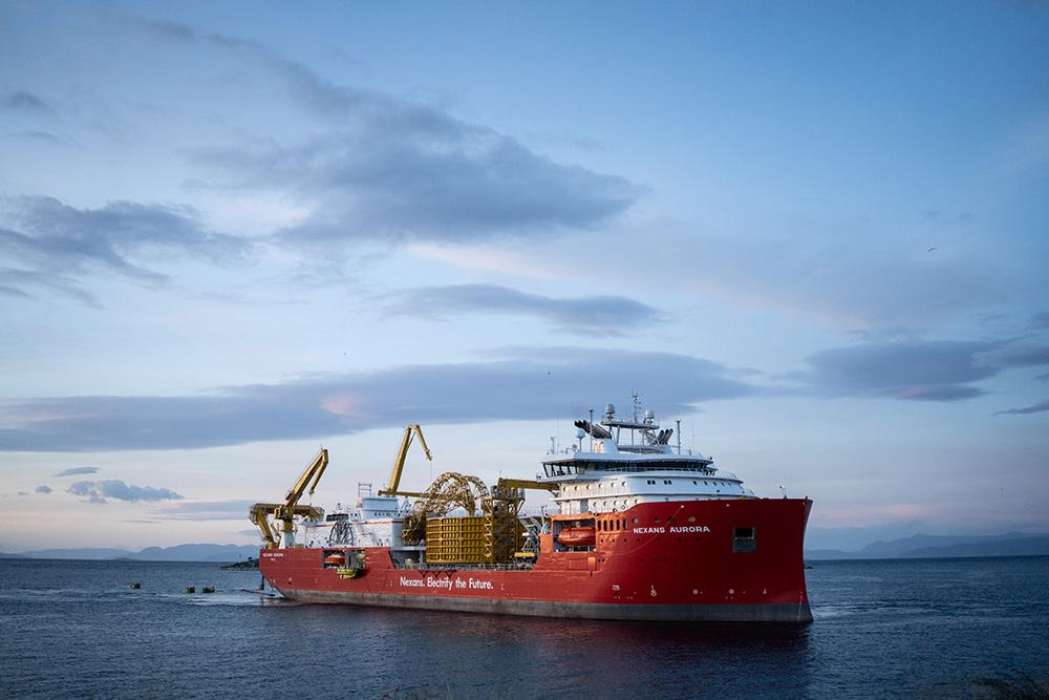
Cable or Crisis? The Question Raised in Turkey
The Turkish analysis also raises a politically charged question: Is Greece primarily interested in completing the electricity interconnection, or could its actions lead to another confrontation with Ankara?
This framing reflects Turkey’s effort to connect the project’s progress with the wider management of Greek–Turkish disputes.
From the Greek perspective, however, implementing a lawful submarine electricity project should not itself be regarded as a provocation.
The challenge is whether practical de-escalation can be achieved without compromising the legal positions of either Greece or the Republic of Cyprus.
Avoiding a crisis is an important diplomatic objective, but it does not necessarily require accepting the maritime claims of another state.
That distinction will be central to any attempt to find a workable arrangement.
Ankara and Paris Open a New Defence Chapter
While the electricity interconnection remains a source of friction, Turkey and France have agreed on a roadmap to expand defence and security cooperation.
According to the Turkish Defence Ministry’s announcement, the framework is intended to strengthen bilateral relations on the basis of mutual interests and provide a more institutional structure for cooperation.
The roadmap covers regular consultations on defence and security, intelligence exchanges, cooperation against hybrid threats and closer coordination in air defence.
It also envisages joint military training, personnel exchanges, exercises and potential cooperation between defence industries.
The agreement demonstrates that Paris and Ankara are seeking to broaden their relationship despite continuing disagreements over several regional issues.
For Athens, the development is significant because France is both a strategic defence partner and a country whose industrial sector has a direct stake in the electricity interconnection.
SAMP/T: The Air Defence System Turkey Wants
One of the most strategically important elements of the new cooperation framework concerns air defence.
Turkey has long expressed interest in the European SAMP/T system, developed by the Franco-Italian Eurosam consortium.
Potential cooperation in this field would fit Ankara’s broader effort to strengthen its air defence capabilities and gain access to advanced European technology.
Nevertheless, the signing of a defence roadmap does not itself constitute a final agreement to supply SAMP/T systems or transfer specific technologies.
Any such arrangement would require further negotiations and separate decisions.
Even so, closer French–Turkish engagement in air defence is a development that Greece will monitor closely, particularly given its own strategic defence relationship with Paris.
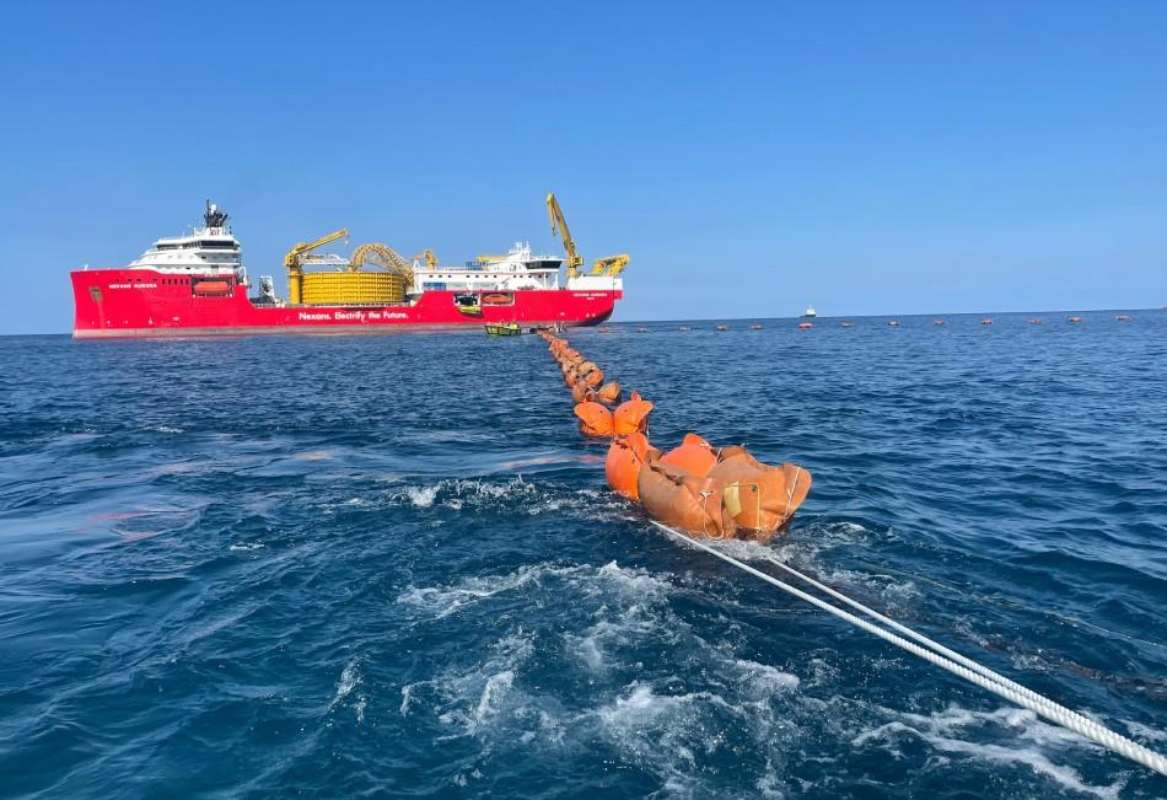
The French Factor in the Greece–Cyprus Interconnector
France’s involvement in the Great Sea Interconnector adds another layer to the geopolitical equation.
French cable manufacturer Nexans has been awarded the contract to manufacture and install the submarine cable, making the project directly relevant to French industrial interests.
This means the interconnection is not merely a bilateral infrastructure initiative between Greece and Cyprus.
It also involves major European companies, financial commitments and the broader credibility of European strategic energy planning.
Against this background, the expansion of French–Turkish defence cooperation raises questions about how Paris will balance its different regional relationships.
However, there is no established evidence that the defence roadmap signals a change in France’s position on the interconnector or its strategic partnership with Greece.
The two processes remain institutionally and politically distinct.
The €1.9 Billion Cable and Europe’s Strategic Commitment
The Great Sea Interconnector is among the Eastern Mediterranean’s most important planned energy infrastructure projects.
Its central objective is to connect the electricity systems of Greece and Cyprus, with the possibility of a future extension towards Israel.
The project has an estimated cost of approximately €1.9 billion and has secured €657 million in European Union funding for the Greece–Cyprus section through the Connecting Europe Facility.
The interconnection is intended to reduce Cyprus’s electricity isolation, strengthen security of supply and support greater integration of renewable energy.
Beyond its economic and technical benefits, the project has acquired considerable geopolitical importance.
The European Commission has repeatedly supported the interconnection as a strategic infrastructure initiative.
Its implementation is therefore increasingly viewed as a test of the European Union’s ability to advance major cross-border projects despite regional tensions.
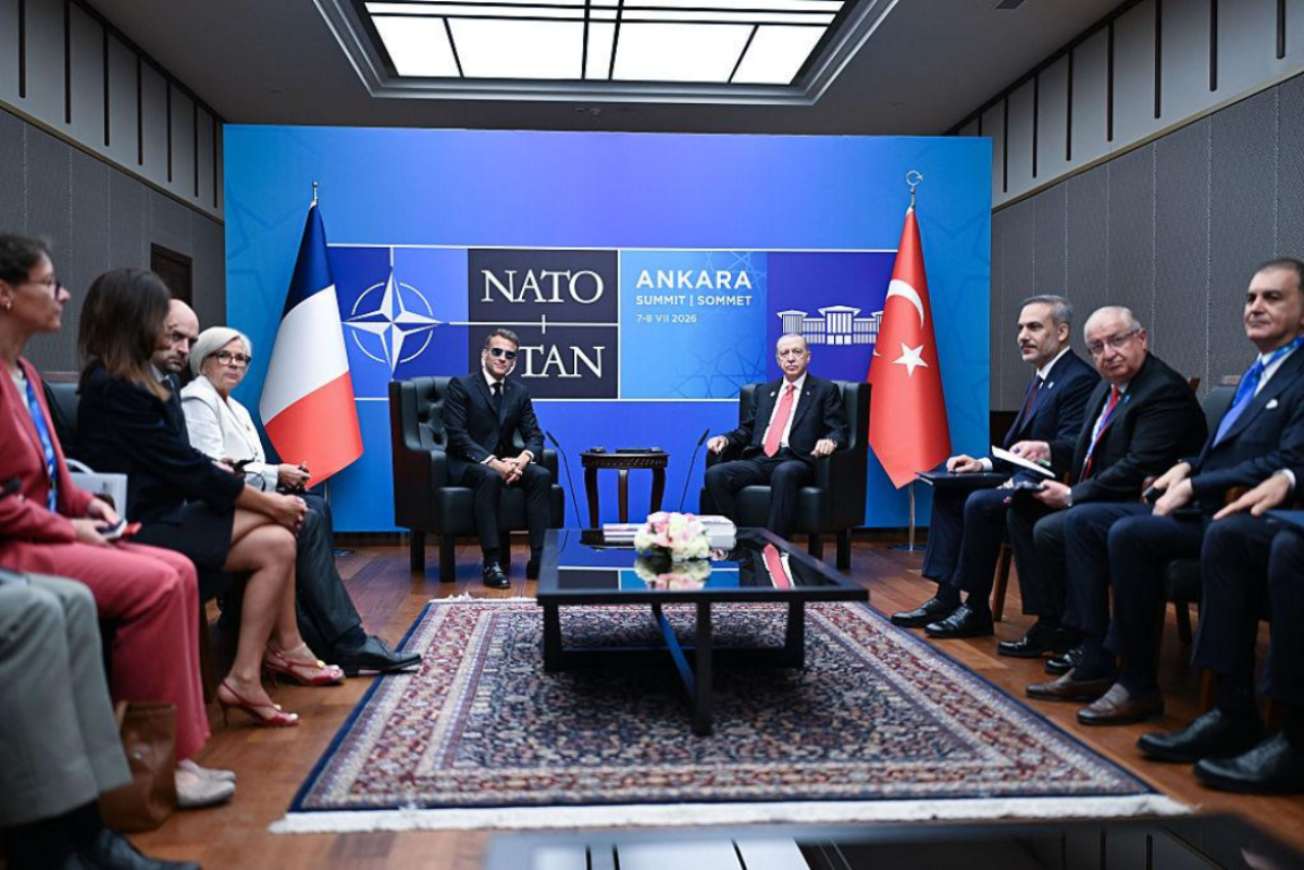
After Rubio’s Athens Visit: How Ankara Reads Washington’s Moves
The geopolitical debate has intensified following US Secretary of State Marco Rubio’s visit to Athens.
Turkish media commentary has focused on the implications of Washington’s engagement with Greece, the Eastern Mediterranean energy agenda and the wider regional security balance.
Some Turkish interpretations have also linked the visit to discussions surrounding F-35 fighter aircraft and the positions of Greece and Israel regarding potential deliveries to Turkey.
These are interpretations attributed to Turkish commentators, rather than independently confirmed accounts of Rubio’s diplomatic discussions.
For Athens, the central question is whether American engagement can help establish conditions under which the electricity interconnection can proceed without confrontation.
Washington’s involvement in regional diplomacy does not alter the European character of the project or automatically determine the legal status of disputed maritime areas.
NAVTEX and Cable-Laying: The Next Critical Test
Attention is now turning towards the next operational steps in the interconnection project.
During the television discussion, reference was made to reports suggesting that a new NAVTEX maritime notice could be issued in connection with cable-related activities.
However, no independently verified date or official announcement was established in the material presented.
Should new maritime operations be scheduled, the response from Ankara will become a major test of the diplomatic environment.
The issue is not simply whether a maritime notice is published.
It is whether the vessels involved can carry out the required operations safely, without interruption or escalation.
That question will determine whether diplomatic discussions translate into measurable progress.
Brussels Faces a Strategic Test
The European Commission has identified the Great Sea Interconnector as a project of strategic importance, particularly because of its role in ending Cyprus’s electricity isolation.
The Commission has also emphasised the importance of international law and respect for the sovereign rights of EU member states.
This creates an important political dimension beyond bilateral Greek–Turkish relations.
The project has received substantial European funding and is intended to advance the EU’s wider energy integration objectives.
Its successful implementation therefore concerns not only Athens and Nicosia but also Brussels.
The challenge for the European Union is to demonstrate that strategic infrastructure projects can move forward while maritime disputes are managed through diplomacy and applicable international law.
The Geopolitical Balancing Act Between Athens, Ankara and Paris
The simultaneous emergence of Turkish demands for coordination and expanded French–Turkish defence cooperation illustrates the increasingly interconnected nature of Eastern Mediterranean diplomacy.
Greece wants the electricity interconnection to proceed without recognising rights it considers inconsistent with international law.
Turkey seeks to preserve influence over maritime activities in areas it claims fall within its jurisdiction.
France maintains a strategic partnership with Greece, has major industrial interests connected to the cable and is simultaneously developing a broader defence relationship with Ankara.
The United States and the European Union also have important diplomatic and strategic interests in the region.
The decisive question is whether a practical diplomatic arrangement can enable cable-laying operations without creating a precedent that either side interprets as recognition of disputed maritime claims.
The answer will depend less on public statements than on developments at sea, the progress of diplomatic contacts and the willingness of European partners to support implementation.
For Greece and Cyprus, the stakes extend beyond a single infrastructure project.
They concern energy security, European strategic credibility and the future balance of influence in the Eastern Mediterranean.
Source: pagenews.gr
Διαβάστε όλες τις τελευταίες Ειδήσεις από την Ελλάδα και τον Κόσμο