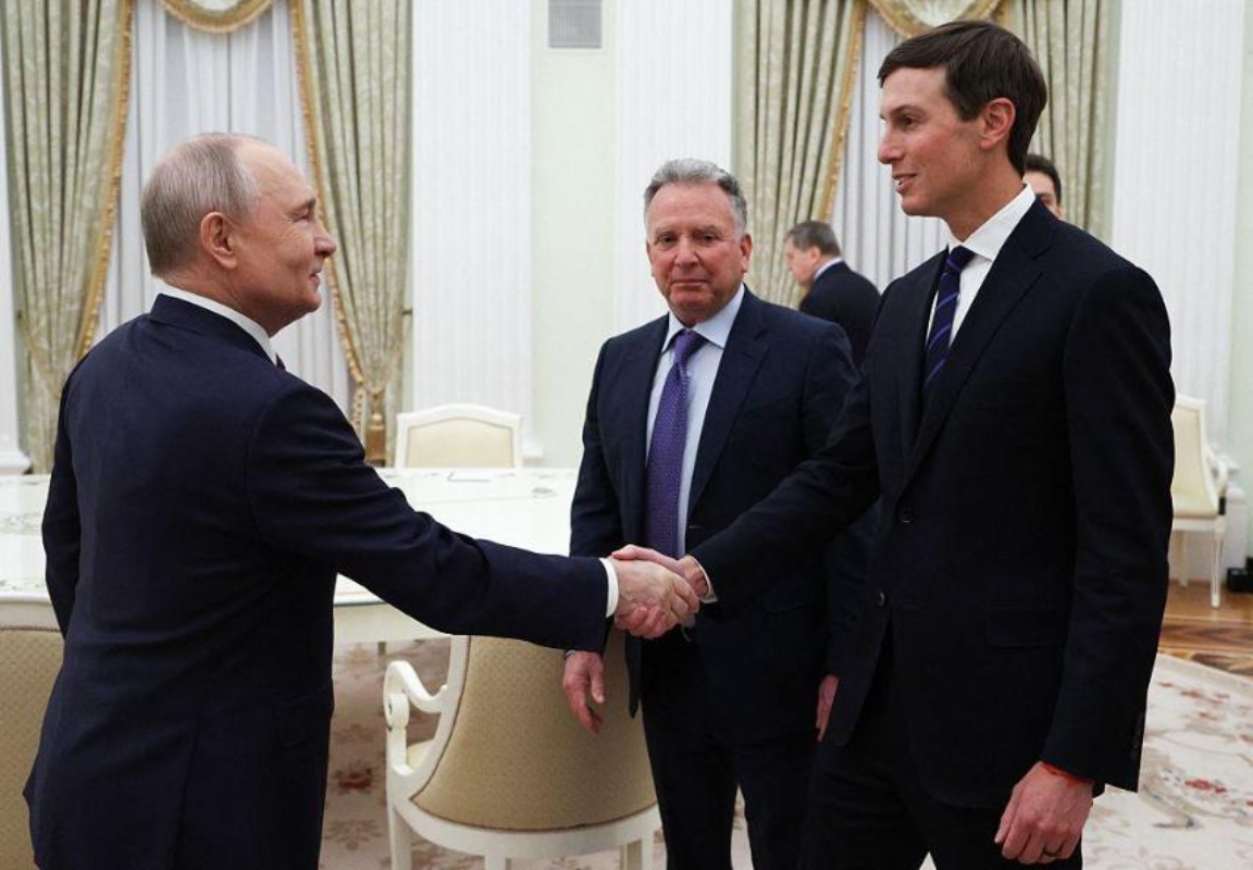
Vladimir Putin did not secure a peace agreement from the latest negotiations in Abu Dhabi. But according to POLITICO’s analysis, he gained something potentially valuable to the Kremlin: a negotiating process broad enough to drag on while the war continues.
Donald Trump’s envoys, Jared Kushner and Steve Witkoff, backed an approach linking peace in Ukraine to wider questions of European security.
Kushner described the objective as finding a pathway to resolve the issues “all at the same time.” Trump subsequently raised the prospect of a “very big” agreement involving all of Europe.
That connection is precisely what concerns critics: a ceasefire could become dependent on a much harder agreement over relations between Russia and the West.
From ending the war to negotiating Europe’s security
Moscow has long sought to frame Ukraine as part of its broader confrontation with the West.
Comprehensive negotiations would bring military operations, security guarantees, Kyiv’s relationship with NATO and Europe’s future security framework into the same discussion.
Eugene Rumer, who served on the U.S. National Intelligence Council under President Barack Obama, warned that this approach could succeed in:
“Diverting attention from what really is the critical issue, and that’s the war on Ukraine.”
In his assessment, the absence of clear sequencing is characteristic of a Russian diplomatic approach designed to complicate negotiations and blur their objectives.


Why the order of negotiations matters
The question is concrete: should hostilities stop first, or must negotiators first agree on a comprehensive package addressing every side’s demands?
The first approach allows negotiators to pursue individual, verifiable outcomes. The second ties progress to resolving questions that could require lengthy negotiations and agreement among numerous governments.
A comprehensive approach does not inherently rule out a settlement. It does, however, create a risk that disagreement over European security could block progress on ending the fighting in Ukraine.
POLITICO argues that this opportunity for delay benefits Putin if negotiations continue without corresponding limits on military operations.
Waiting for aid to stop and Europe to divide
Ukrainian opposition lawmaker Mykola Kniazhytskyi described the Kremlin’s negotiating tactics as part of its war of attrition:
“It is obvious that Putin is simply stalling for time, trying to destroy or capture Ukraine or win this war of attrition, waiting for aid to stop in Europe and for Europe to be divided.”
His warning links the negotiations to the endurance of Ukraine and its supporters. Without a ceasefire, Kyiv continues to need weapons, financing and political backing.
Ukraine’s former commander-in-chief and current ambassador to London, Valerii Zaluzhnyi, has also warned about negotiating practices intended to exhaust opponents.
Russia’s demands remain in place
So far, the broader discussion has not been accompanied by a public abandonment of Moscow’s central demands.
Russia seeks to exclude Ukraine from NATO, impose neutrality and restrictions on its armed forces and weapons stockpiles, and secure international recognition of its territorial claims over Crimea and the four Ukrainian regions it claims to have annexed.
Kurt Volker, the former U.S. special representative for Ukraine negotiations during Trump’s first presidency, challenged the assumption that Putin is ready for a reasonable compromise.
“Putin wants Empire, Ukrainians want freedom,” he told POLITICO. “The rest is detail.”
Assumptions that the Russian president wants peace, will negotiate seriously or will accept a reasonable agreement “are all misguided,” he added.
Medinsky and the message of a prolonged conflict
Russia’s delegation in Abu Dhabi was led by Vladimir Medinsky, a former culture minister and close Putin aide.
In earlier negotiations, Medinsky invoked the Great Northern War of 1700–1721, signaling that Russia was prepared to fight for an extended period.
His involvement reinforces the concerns of those who believe the Kremlin sees negotiations as a process that can run alongside military operations, rather than requiring their suspension.
Ukraine and Europe still have a say
Washington and Moscow cannot independently impose a workable, comprehensive settlement. Kyiv retains a decisive voice over its sovereignty and territory, while European governments oppose having the continent’s security arrangements reshaped without their participation.
The talks produced an agreement on a prisoner exchange and plans for another round, without a major breakthrough toward ending the war.
The test for the next stage is whether a broader negotiating agenda brings concrete commitments to de-escalation. Without them, the concern identified by analysts remains: Putin could discuss more issues without being required to stop the fighting.
Source: pagenews.gr