Ukraine Peace Talks in Abu Dhabi: Europe Fights for a Seat at the Table as Washington Engages Moscow
 ΧΡΟΝΟΣ ΑΝΑΓΝΩΣΗΣ 10 '
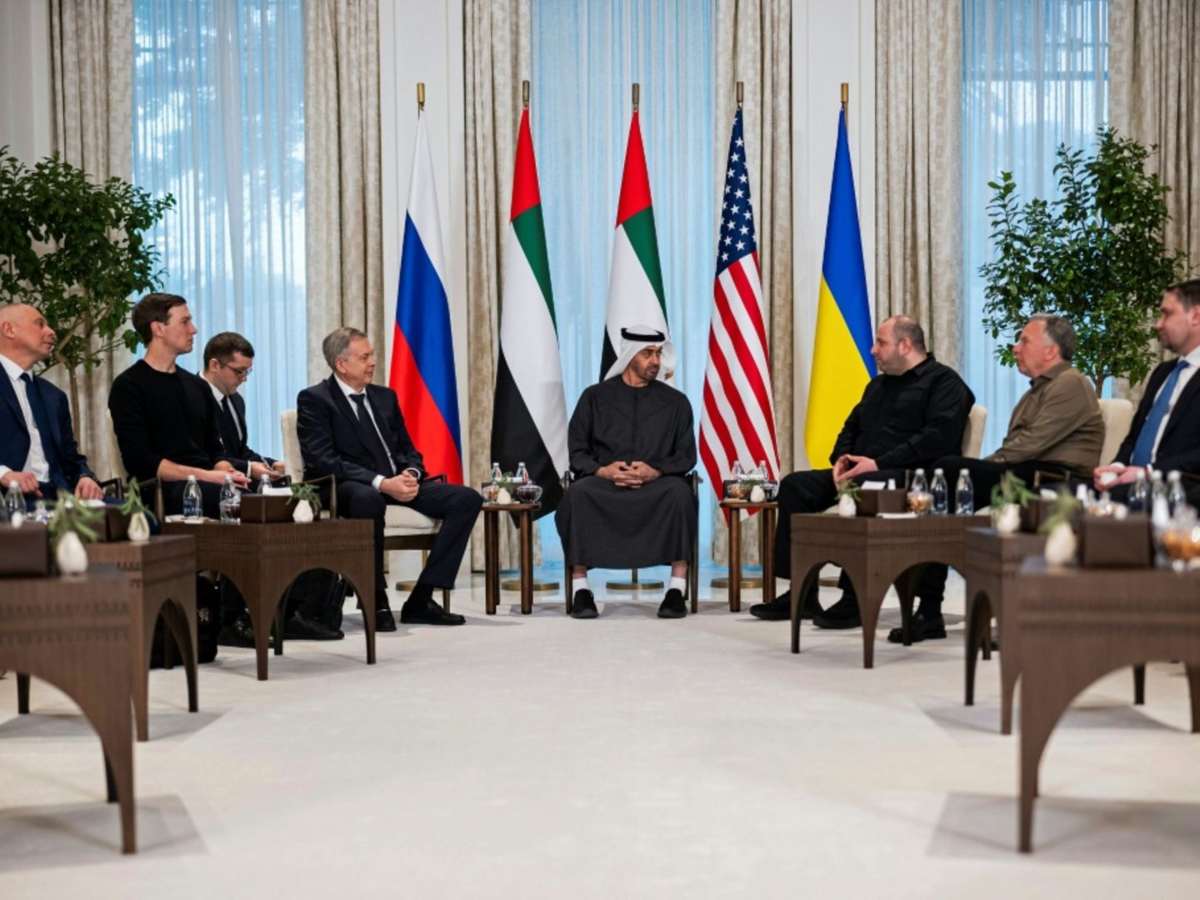
Πηγή Φωτογραφίας: This photo, taken and released by the UAE Presidential Court, shows UAE President Sheikh Mohamed bin Zayed al-Nahyan (C) speaking with the heads of delegations at the UAE-hosted trilateral talks between the US, Russia and Ukraine, at the Al Shati Palace in Abu Dhabi, on January 23, 2026. - / AFP



The future of Ukraine and the balance of power across Europe are at the centre of a crucial diplomatic round in Abu Dhabi, where two days of talks involving the United States, Russia and Ukraine have begun.
Behind the negotiations aimed at ending the war, a second diplomatic contest is taking shape: who will determine Europe’s postwar security architecture, and whether the European Union will have a direct role in decisions that could reshape the continent for decades.
Washington is seeking a broader framework for an agreement with Moscow. Kyiv wants credible, long-term security guarantees capable of preventing another Russian invasion. European governments, meanwhile, are insisting that the continent’s security cannot be redesigned without their participation.
Ahead of the trilateral negotiations, European, American and Ukrainian representatives coordinated their positions and agreed on a set of common principles intended to guide a sustainable peace settlement.
US and Europe Agree on Core Security Principles for Ukraine
In a joint statement issued ahead of the Abu Dhabi talks, representatives of the United States, Ukraine and European partners reaffirmed their commitment to a lasting peace supported by credible security arrangements.
At the heart of the discussions is the need for strong and reliable security guarantees for Ukraine, designed to ensure that any agreement does more than temporarily suspend hostilities.
Participants stressed that a future settlement must respect national sovereignty, territorial integrity and the right of states to make independent decisions.
They also agreed on the importance of developing a practical security framework capable of strengthening Ukraine over the long term while creating the conditions for a negotiated agreement.
Particular significance was attached to the reaffirmation that NATO will remain the central pillar of collective Euro-Atlantic defence.
That commitment carries considerable political weight as negotiations increasingly extend beyond the immediate battlefield to the broader question of Europe’s security order after the war.
The common statement signals a degree of transatlantic coordination, although important differences remain over how negotiations should proceed and who should participate directly.
Kushner and Witkoff Seek to Overcome Moscow’s Opposition to European Participation
Two of President Donald Trump’s key envoys, Jared Kushner and Steve Witkoff, are attempting to persuade Moscow to accept direct European participation in a subsequent round of negotiations.
According to American officials, Washington wants European representatives to become part of the main diplomatic process rather than remain confined to separate consultations.
Russia, however, continues to oppose their presence at the principal negotiating table.
As a result, European officials are currently holding parallel discussions with Ukrainian and American representatives rather than participating directly in the trilateral format.
The dispute is more than a procedural disagreement.
It concerns the political legitimacy of any eventual settlement and the ability of European governments to influence decisions that will determine their security environment.
For Brussels, exclusion from the central negotiations raises the prospect that European states could eventually be asked to finance, implement or guarantee arrangements they had little opportunity to shape.
Ukraine Coordinates with European Partners Before Trilateral Negotiations
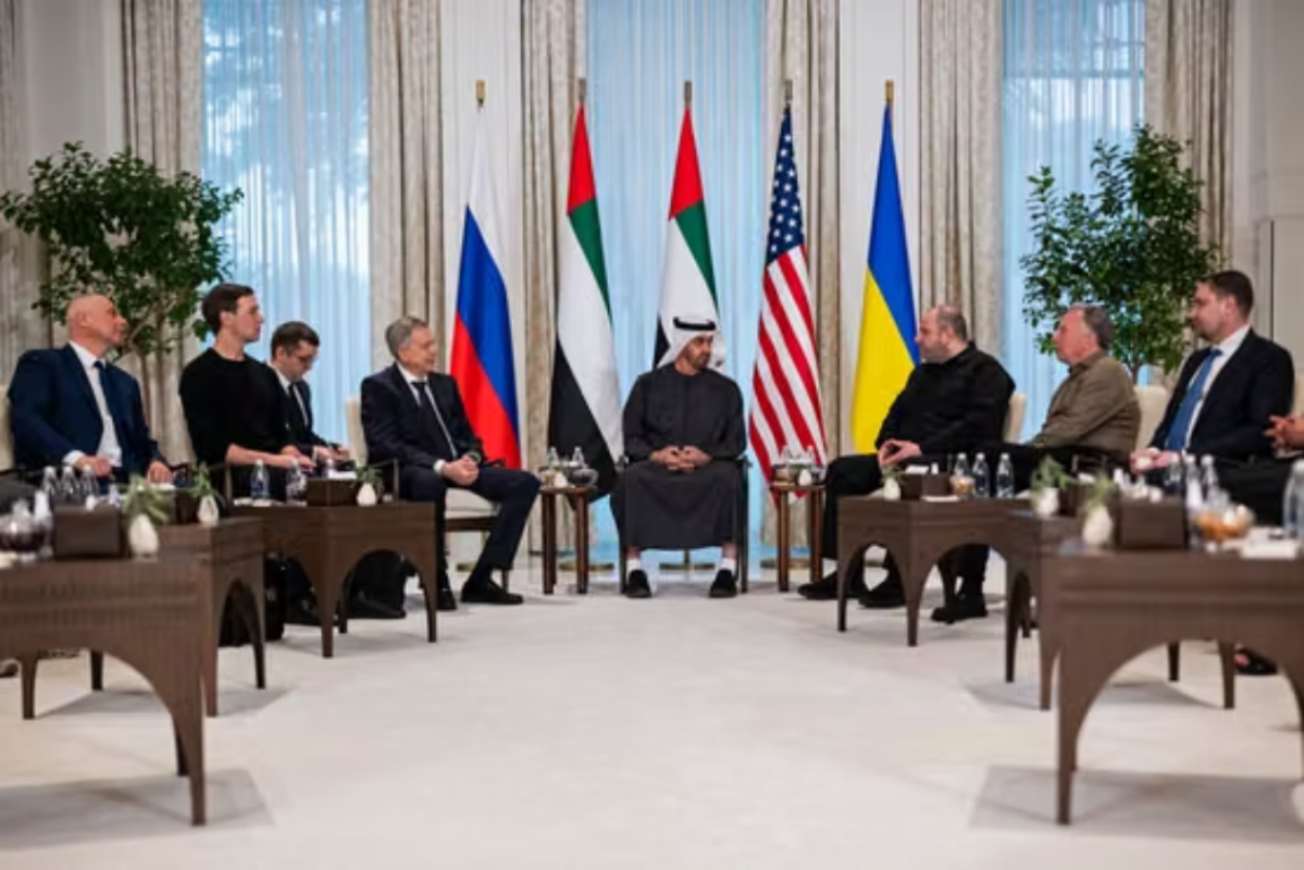
The head of Ukraine’s negotiating delegation, Rustem Umerov, confirmed that the first day in Abu Dhabi began with consultations involving Ukrainian representatives, European countries, NATO and the European Commission.
The purpose was to compare positions and establish common ground before the trilateral discussions with Russia.
The sequence reflects Kyiv’s determination to preserve coordination with its Western partners and prevent divisions over security guarantees from weakening its negotiating position.
The European Union is represented in Abu Dhabi by Björn Seibert, chief of staff to European Commission President Ursula von der Leyen, and Anna-Maria Boura, diplomatic adviser to European Council President António Costa.
Representatives of France, Germany, Italy, the United Kingdom and NATO are also participating in the consultations.
Their presence demonstrates Europe’s determination to remain involved, even while Russia resists direct EU participation in the principal negotiations.
For Ukraine, that coordination is particularly important because any lasting settlement will depend not only on American commitments but also on the willingness and capacity of European governments to sustain military, economic and political support.
A Fundamental Disagreement: Peace in Ukraine First, or a New European Security Order?
Beyond the question of representation, Washington and Brussels differ over the sequence of negotiations.
The American administration favours discussing a settlement of the war in Ukraine alongside broader arrangements concerning European security.
Such an approach could allow Washington and Moscow to negotiate a comprehensive framework in which the Ukrainian conflict becomes part of a wider strategic agreement.
The European Commission, by contrast, has made clear that discussions about the continent’s future security architecture should take place after the war has ended.
The distinction is consequential.
If both issues are negotiated simultaneously, Moscow could seek concessions extending beyond Ukraine, potentially linking a ceasefire or peace agreement to wider demands concerning European defence and security arrangements.
If the discussions take place sequentially, European governments would have greater scope to separate the immediate task of ending the war from longer-term negotiations about relations with Russia.
These competing approaches have not yet been reconciled.
They also illustrate a broader tension between Washington’s desire to pursue a negotiated settlement and Europe’s concern that an agreement reached too quickly could leave unresolved vulnerabilities in the continent’s security system.
Zelensky in Denmark as Nordic Leaders Discuss Military Support
While diplomatic representatives meet in the United Arab Emirates, Ukrainian President Volodymyr Zelensky is visiting Denmark for talks with Nordic leaders.
Danish Prime Minister Mette Frederiksen is hosting discussions focused on continued military assistance to Ukraine, European security and Kyiv’s urgent defence requirements.
Air defence capabilities and the protection of energy infrastructure feature prominently on the agenda.
Frederiksen emphasised that Ukrainians continue their struggle for a free Ukraine and a free Europe, praising their courage and resilience.
The programme includes a bilateral meeting between Zelensky and Frederiksen, followed by a working dinner with Nordic prime ministers.
The visit underscores a central reality of the diplomatic process: even as negotiations advance, Ukraine continues to require substantial military assistance.
The country’s ability to protect its population, infrastructure and territory remains closely linked to the support provided by its European partners.
Meloni Pushes European Representation onto the Dublin Agenda
The diplomatic developments in Abu Dhabi are expected to feature prominently at Friday’s informal meeting of European leaders in Dublin.
Following a request from Italian Prime Minister Giorgia Meloni, the question of European representation in peace negotiations will return to the agenda.
EU leaders are expected to discuss both their participation in the negotiating process and the need for a common position on proposals concerning Europe’s postwar security architecture.
The meeting comes at a sensitive moment for transatlantic relations.
European governments want to maintain close cooperation with Washington while ensuring that their own security priorities are reflected in any agreement with Moscow.
The challenge is to establish a coordinated European position without creating new divisions within the Western alliance.
For Brussels, the issue is not simply whether European officials attend future negotiating sessions. It is whether the EU can exercise meaningful influence over the substance of an eventual agreement.
NATO’s Role and the Future of European Security
The reaffirmation of NATO’s central role in collective defence provides an important point of agreement between European and American representatives.
However, the precise nature of the security guarantees that could be offered to Ukraine remains unresolved.
Any future arrangement would need to address difficult questions about deterrence, military assistance, monitoring mechanisms and the response to potential violations of a peace agreement.
European governments must also consider how existing institutions and security agreements could be used to reduce the risk of renewed confrontation with Russia.
The discussions therefore extend beyond the immediate question of a ceasefire.
They concern the foundations of a future European security order and the relationship between Ukraine’s long-term protection, NATO’s collective defence framework and the responsibilities of individual European states.
The fact that these questions are being discussed alongside negotiations with Moscow highlights both the significance and the complexity of the current diplomatic initiative.
Abu Dhabi’s Central Test: Can Peace Deliver Lasting Security?
The Abu Dhabi talks come at a moment when efforts to end the war are increasingly intertwined with competing visions for Europe’s strategic future.
For Ukraine, the priority is to secure guarantees strong enough to prevent another Russian attack.
For the United States, the negotiations offer an opportunity to pursue a wider diplomatic arrangement with Moscow.
For the European Union, the central objective is to ensure that decisions affecting the continent’s security are not taken without meaningful European participation.
The common principles agreed by American, European and Ukrainian representatives provide an initial foundation for coordination.
Yet they do not resolve the most difficult question facing negotiators: whether Russia will accept a settlement that preserves Ukraine’s sovereignty while providing Kyiv with credible and lasting security guarantees.
The outcome will depend not only on the willingness of Moscow and Kyiv to reach an agreement, but also on whether Washington and its European allies can translate their shared principles into a coherent negotiating position.
Source: pagenews.gr
Διαβάστε όλες τις τελευταίες Ειδήσεις από την Ελλάδα και τον Κόσμο