UK Sends Asylum Seekers Back to France Again: “We Are Being Punished” as Smugglers Threaten Their Lives
 ΧΡΟΝΟΣ ΑΝΑΓΝΩΣΗΣ 13 '
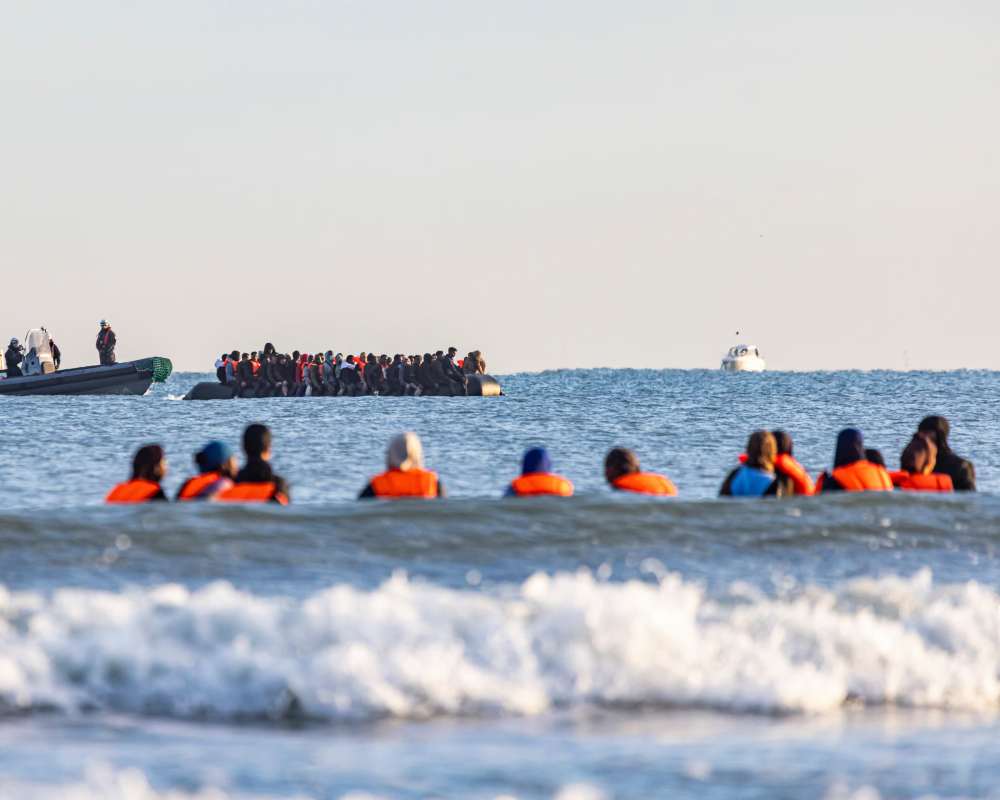
Πηγή Φωτογραφίας: AP Photo//UK Sends Asylum Seekers Back to France Again: “We Are Being Punished” as Smugglers Threaten Their Lives



“My mind is broken. I am scared that when I am returned to France on Tuesday, the smugglers will catch me and kill me.”
The words of an Iranian asylum seeker facing deportation from Britain capture the fear surrounding the final removal flight under the controversial UK-France “one in, one out” migration agreement.
For some of those scheduled to be returned to France, this is not their first deportation.
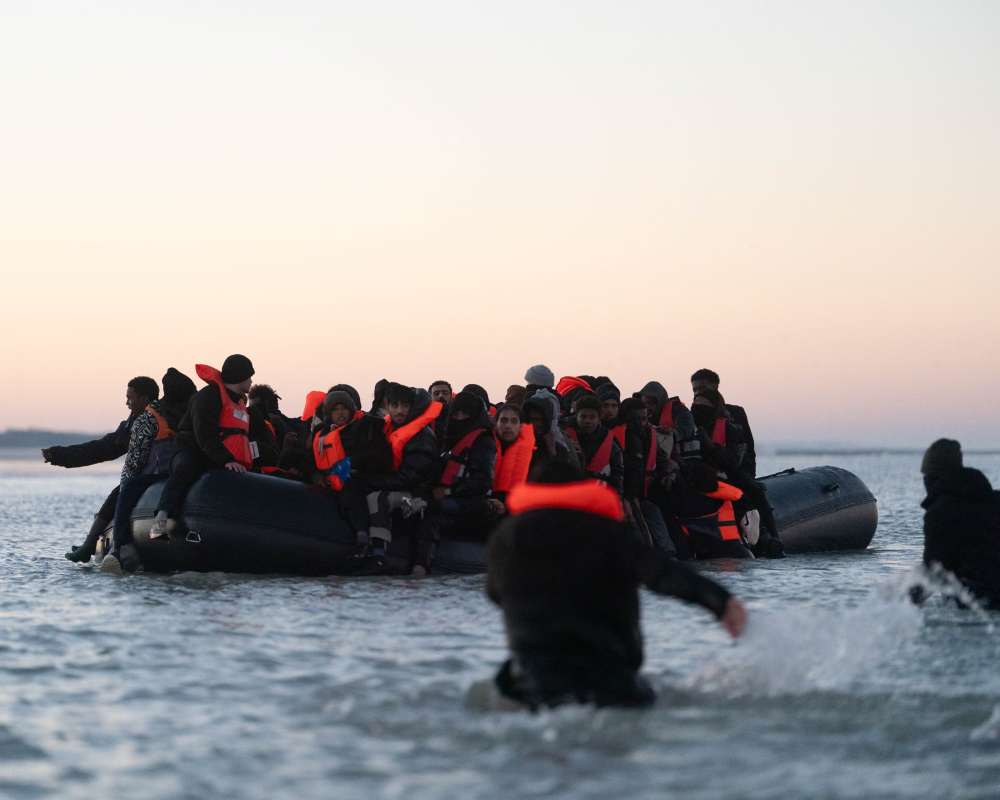
According to an investigation by The Guardian, several asylum seekers on Tuesday’s flight had previously been forcibly returned to France, only to make another dangerous journey across the English Channel after allegedly being threatened or abused by people-smuggling networks.
Their accounts raise serious questions about the effectiveness of a policy designed to discourage irregular Channel crossings.
While the British government has sought to demonstrate that migrants arriving by small boat can be returned to France, some of those affected say the policy has placed them in a cycle of deportation, exploitation and renewed attempts to reach the UK.
Deported Twice: Asylum Seekers Say They Are Being Sent Back Into Danger
The “one in, one out” agreement was introduced as a mechanism to reduce irregular migration across the English Channel.
Under the arrangement, Britain could return asylum seekers who arrived in small boats to France while accepting a comparable number of people from northern France through an authorised route to claim asylum.
The pilot programme’s final removal flight was scheduled for Tuesday, November 17.
However, the experiences described by asylum seekers suggest that deportation has not necessarily prevented further crossings.
Hundreds of people previously returned to France are believed to have made their way back to Britain, according to the Guardian.
Some say they were forced to flee after smugglers threatened them or demanded additional payments from their families.
For these individuals, returning to Britain was not simply another attempt to reach their preferred destination.
They say it was an attempt to escape people who had already subjected them to violence and intimidation.
“The Smugglers Caught Me in France”
One Iranian asylum seeker facing removal on Tuesday said he had previously been returned to France by the British Home Office.
He described himself as a political dissident and said he feared execution if he were deported to Iran.
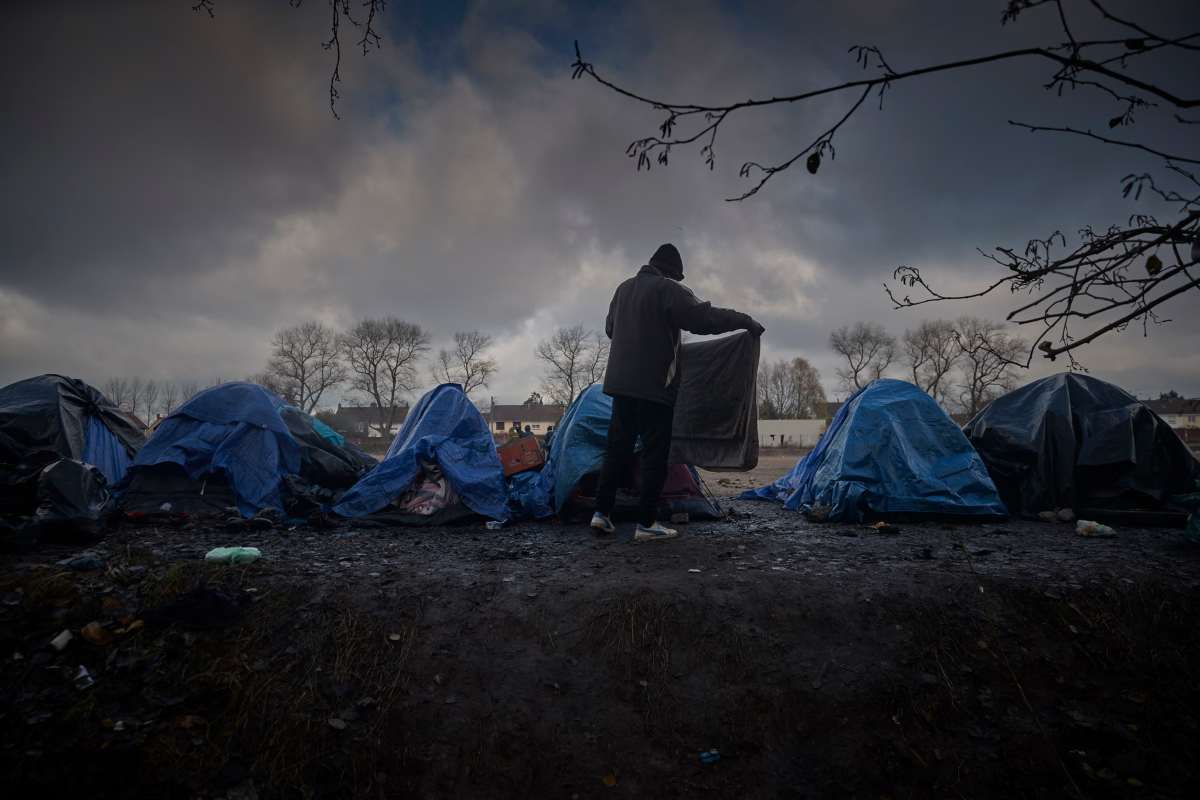
After his first removal from Britain, he said he was forced to sleep on the streets of Paris.
“I came back to the UK a second time because the smugglers caught me in France,” he told the Guardian.
“I was sleeping on the streets in Paris because France did not accept my asylum case.”
He believes that many of those facing removal on the final flight have experienced similar circumstances.
“Many of the people who have tickets for Tuesday’s flight are people like me, who came back to the UK a second time.”
He then made a direct accusation about the way the policy was being implemented.
“I believe those of us who came back to the UK a second time are being punished by being sent back to France a second time. I believe that 100%.”
His account highlights a central concern: whether repeated removals can achieve their intended purpose when individuals say they face threats after being returned.
Beatings, Sexual Assault and Forced Labour in Calais
The testimonies collected by the Guardian include serious allegations of violence and exploitation by people-smuggling networks operating in France.
Asylum seekers described being punched, beaten and raped.
Others said smugglers had found them sleeping rough and forced them to work in migrant camps around Calais, the northern French port city that has long been a focal point for attempts to cross the English Channel.
According to the accounts, some were forced to clean smugglers’ tents, carry water and collect firewood.
These allegations describe conditions consistent with forms of forced labour and modern slavery.
The reports suggest that exploitation does not necessarily end once a migrant has paid for a Channel crossing.
Some smugglers allegedly continue demanding money from migrants and their families, even after the journey has taken place.
When individuals are subsequently returned to France, they may encounter the same networks again.
The allegations have not all been independently established through judicial proceedings, but they raise serious safeguarding concerns that require investigation.
Medical Justice Calls the Pilot Scheme “A Disaster”
The charity Medical Justice, which has supported people detained under the “one in, one out” arrangement, has sharply criticised the programme.
It described the pilot scheme as “a disaster”.
The organisation’s criticism focuses attention on the treatment of vulnerable asylum seekers and the protections available to people facing forced removal.
A central issue is whether individual circumstances are being properly assessed before deportation.
France is a country with an established asylum system, but that does not automatically resolve every claim that an individual faces a specific threat from criminal networks.
Where a person alleges previous abuse, trafficking or forced labour, the authorities must consider the relevant legal protections and individual circumstances.
The Guardian’s investigation raises questions about whether those safeguards have been sufficiently accessible to the people affected.
“My Lawyer Has Done Nothing”: Concerns Over Access to Legal Representation
The Iranian asylum seeker also described difficulties obtaining effective legal assistance before his scheduled removal.
According to the Guardian, the Home Office has maintained that sufficient lawyers were available to assist asylum seekers detained for return to France.
However, the man said his experience had been very different.
“Friends paid privately for a lawyer for me. The lawyer promised me that 24 hours before the flight, they would challenge my removal, but he has done nothing,” he said.
He claimed that repeated attempts to contact his legal representative had failed.
“They do not even answer the phone although I have tried to call them 10 times.”
His account raises questions about the practical availability of legal remedies for people facing imminent deportation.
The existence of legal assistance does not necessarily mean that every detainee has been able to obtain timely and effective representation.
For individuals who claim they face serious risks after removal, the opportunity to present their circumstances before a decision is implemented can be crucial.
“They Made Me Feel Like a Criminal”
The asylum seeker also recalled the circumstances of his previous deportation.
“When the guards came to take me to the plane for France last time, three or four of them surrounded me and made me feel like a criminal.”
He insisted that he had not committed a criminal offence by seeking protection in Britain.
“I have committed no crime apart from coming to UK to claim asylum.”
His remarks reflect the distress he says he experienced during the removal process.
The right to seek asylum is recognised under international law, although governments retain powers to regulate entry and determine applications in accordance with their legal obligations.
The controversy surrounding the UK-France scheme concerns how those powers are exercised and whether the individual circumstances of vulnerable people are adequately considered.
Winter Adds Another Threat: “It Is Too Cold to Sleep Outside”
Beyond his fear of smugglers, the Iranian asylum seeker said he was deeply concerned about the conditions awaiting him in France.
During his previous removal, he had slept on the streets.
Now, with winter approaching, he fears that returning to homelessness could expose him to additional hardship.
“When I slept on the street last time the weather was warmer in France. Now it is too cold to sleep outside. I don’t know what I’m going to do.”
His testimony highlights an important practical issue.
A formal transfer between two countries does not necessarily guarantee that an individual will immediately have access to accommodation, protection or legal support.
For people who say they have previously been exploited, the absence of safe shelter may increase their vulnerability.
The availability of reception arrangements and protection against trafficking is therefore a significant part of assessing the consequences of return.
How the UK-France “One In, One Out” Agreement Was Designed to Work
The agreement was intended to address the continued movement of migrants across the English Channel in small boats.
Its central mechanism combined the return of certain people arriving irregularly in Britain with the admission of a comparable number of asylum seekers from France through an authorised process.
The British government sought to discourage dangerous crossings by demonstrating that arrival by small boat would not necessarily result in permission to remain in the UK.
At the same time, the authorised admission route was intended to provide an alternative pathway.
The arrangement formed part of broader cooperation between London and Paris on border enforcement and migration management.
However, the accounts of people who returned to Britain after their first deportation raise questions about the scheme’s deterrent effect.
If someone is sent back to France and subsequently flees again because of alleged threats, the original return may not have resolved the risks they face.
That does not, by itself, establish that every aspect of the programme failed.
It does suggest that the number of removals alone is not sufficient to assess its effectiveness.
Smugglers Continue Demanding Money From Families
One of the most troubling aspects of the testimonies concerns the financial pressure allegedly imposed by criminal networks.
According to asylum seekers interviewed by the Guardian, smugglers continued demanding payments from their families after the initial Channel crossing.
Such demands can create ongoing vulnerability.
People who have already paid for a journey may remain subject to intimidation, threats or coercion.
If they are returned to areas where the same criminal networks operate, they may face renewed exploitation.
The allegations also highlight the wider challenge confronting British and French authorities.
Reducing irregular Channel crossings is one objective.
Protecting people from organised trafficking networks is another.
The two are closely connected, but enforcement measures alone may not address the coercion and exploitation described by those affected.
What Happens After the Pilot Scheme Ends?
The final flight marks the conclusion of the programme’s pilot removal phase.
The pilot arrangement expired on October 1, but returns involving people covered by it continued afterward.
The British Home Office has argued that the scheme demonstrated the practical feasibility of returning asylum seekers to France.
Critics, however, point to the experiences of people who say they were exposed to renewed threats and hardship after removal.
Several questions remain unresolved.
How thoroughly are allegations of trafficking and violence examined before deportation?
What protection is available to people who have already experienced abuse?
Can detainees obtain effective legal advice before removal?
And what arrangements exist for individuals who fear homelessness or retaliation after returning to France?
The answers will be important in evaluating the pilot and any future UK-France arrangements.
A Migration Policy Confronts the Human Consequences
The UK-France agreement was designed to change the incentives surrounding irregular Channel crossings.
But the experiences described by asylum seekers reveal the complexity of the problem.
For governments, the immediate priority is controlling borders and reducing dangerous journeys.
For people who say they are fleeing persecution or criminal exploitation, the priority is finding somewhere safe.
Those objectives are not necessarily incompatible, but achieving both requires individual risk assessments, functioning legal safeguards and effective cooperation against trafficking networks.
The Guardian’s investigation brings those questions into sharper focus as the pilot removal programme concludes.
For asylum seekers who say they fled France after threats and violence, being deported a second time means returning to a place where they fear further exploitation. The challenge for London and Paris is whether policies designed to deter dangerous Channel crossings can also provide effective protection for people who face serious threats from the criminal networks controlling those routes.
Source: pagenews.gr
Διαβάστε όλες τις τελευταίες Ειδήσεις από την Ελλάδα και τον Κόσμο