Migrants: NGOs Step Aside as Greece Overhauls Asylum Legal Guidance Under New Ministerial Decision
 ΧΡΟΝΟΣ ΑΝΑΓΝΩΣΗΣ 6 '
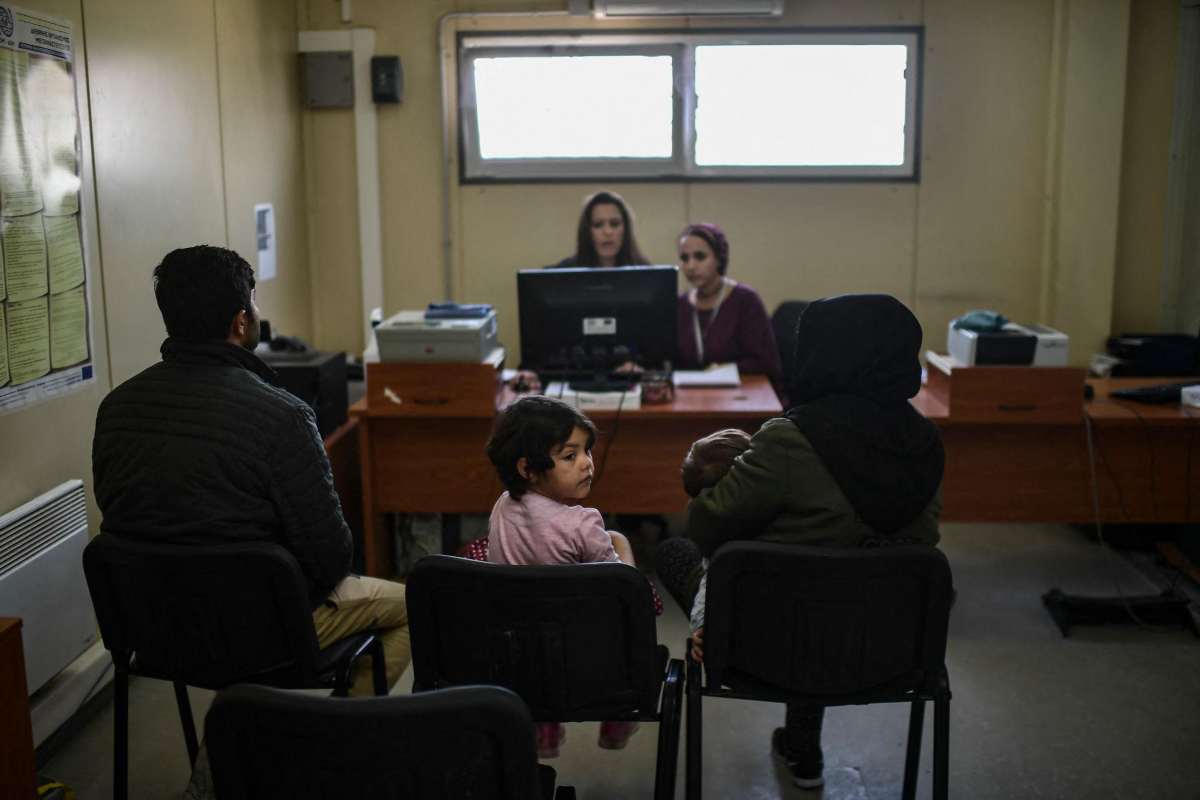
Πηγή Φωτογραφίας: eurokinissi//Migrants: NGOs Step Aside as Greece Overhauls Asylum Legal Guidance Under New Ministerial Decision



The Greek government has introduced a new institutional framework governing the provision of free legal guidance to asylum seekers, marking a significant shift in the country’s migration management policy. Following the publication of a new Joint Ministerial Decision (JMD) in the Government Gazette, legal guidance services will now be provided exclusively by certified lawyers enrolled in a newly established Lawyers’ Registry, replacing the previous model in which non-governmental organizations (NGOs) played a substantial role through publicly funded and European-supported programs.
The reform forms part of the Ministry of Migration and Asylum’s broader strategy to strengthen institutional oversight of asylum procedures while reinforcing policies that encourage the voluntary return of individuals who do not qualify for international protection.
The Joint Ministerial Decision was signed by Alternate Minister of National Economy and Finance Nikos Papathanasis, Minister of Justice Giorgos Floridis, and Minister of Migration and Asylum Thanos Plevris.

Certified Lawyers’ Registry Becomes the Sole Provider
At the heart of the reform is the establishment of the Registry of Lawyers for Legal Guidance, which will be maintained by the Athens Bar Association under the supervision of the Plenary of the Presidents of the Greek Bar Associations.
Only lawyers who meet specific professional qualifications, complete specialized training in asylum and international protection law, and comply with strict ethical and conflict-of-interest requirements will be eligible to participate in the program.
According to the government, the new framework aims to strengthen transparency, ensure uniform standards in the provision of legal guidance, and place the process under the direct responsibility of qualified legal professionals.
Compensation Reaches €410 with Incentive for Voluntary Return
Under the new scheme, participating lawyers will receive a standard fee of €160 plus VAT for each legal guidance session, regardless of whether it is conducted individually or in groups.
In addition, the decision introduces a performance-based payment of €250 plus VAT when an asylum applicant—whose case is not considered to present a strong protection profile—chooses to apply for voluntary return or voluntary departure within two months of receiving legal guidance, provided that the return is ultimately completed.
The additional payment will only be made after the applicant has successfully returned to their country of origin, rather than upon submission of the return application.
The incentive reflects the government’s intention to integrate legal information services into its broader return policy while encouraging informed decisions by applicants whose prospects of receiving asylum are considered limited.
What the Free Legal Guidance Includes
The legal guidance is limited to the initial stage of the international protection procedure and is designed to provide objective information rather than legal representation.
The sessions cover:
- the asylum application process;
- applicants’ rights and obligations;
- procedural safeguards under Greek and European law;
- appeal procedures following a negative asylum decision;
- available voluntary return and voluntary departure mechanisms;
- Assisted Voluntary Return and Reintegration (AVRR) programmes.
Particular emphasis is placed on applicants originating from countries with an international protection recognition rate below 20 percent. These individuals will also receive information regarding the legal consequences of irregular entry and stay in Greece, as well as the available pathways for assisted voluntary return.
Guidance, Not Legal Representation
The Joint Ministerial Decision explicitly states that the service does not constitute full legal representation.
Lawyers participating in the program will not prepare applicants for asylum interviews, draft legal submissions or appeals, or provide individualized legal strategies intended to strengthen an asylum claim.
Instead, their role is confined to providing general legal information so that applicants fully understand the asylum procedure and the options available under Greek law.

Fast Procedures and Primarily Group Sessions
The new framework introduces strict deadlines designed to accelerate the provision of legal guidance.
Within two working days of receiving a request, the competent authority must notify the Plenary of the Greek Bar Associations, which then has one additional working day to appoint the responsible lawyer.
Guidance sessions will generally be conducted in groups of up to 15 applicants sharing the same nationality and procedural stage. In exceptional cases, groups may include up to 50 participants, while individual sessions remain available for applicants held in criminal detention facilities.
Strict Conflict-of-Interest Rules
The regulation also introduces a strict incompatibility regime aimed at safeguarding impartiality.
Lawyers who provide free legal guidance will be prohibited from subsequently representing the same applicant privately before administrative or judicial authorities in connection with the asylum case.
All information disclosed during guidance sessions remains protected by legal professional privilege, and participating lawyers are bound by full confidentiality obligations.
Part of Greece’s Broader Migration Strategy
The new framework forms part of the Ministry of Migration and Asylum’s wider policy agenda to accelerate asylum procedures, increase returns of migrants not entitled to international protection, and strengthen institutional control over migration management.
According to figures cited by the ministry, 599 migrants have already opted for voluntary return in order to avoid detention, while 450 returns have been completed and the remaining cases are currently in progress.
Through the new Joint Ministerial Decision, the Greek government seeks to consolidate legal guidance within an institutional framework administered exclusively by certified lawyers while integrating the service into a broader migration policy focused on efficient asylum procedures, enhanced legal certainty, and increased voluntary returns for applicants who do not meet the criteria for international protection.
Διαβάστε όλες τις τελευταίες Ειδήσεις από την Ελλάδα και τον Κόσμο