Berlin’s Ukraine Plan B: Security Guarantees, 1,000 Drones and a Military Force Ready for a Ceasefire
 ΧΡΟΝΟΣ ΑΝΑΓΝΩΣΗΣ 14 '
Πηγή Φωτογραφίας: AP Photo//Berlin's Ukraine Plan B: Security Guarantees, 1,000 Drones and a Military Force Ready for a Ceasefire



“We are preparing for the prospect of successful negotiations, but we cannot rule out the possibility of failure.”
German Foreign Minister Johann Wadephul’s warning captures the central dilemma facing European leaders as the Coalition of the Willing meets in Berlin on Thursday, November 19.
The summit comes at a critical moment for Ukraine, with winter placing additional pressure on the country’s energy infrastructure, military operations continuing on both sides and renewed diplomatic efforts raising questions about the possibility of a negotiated settlement.
European governments want to send a clear message to Moscow: the time has come for serious peace negotiations, but Ukraine will not be abandoned if diplomacy fails.
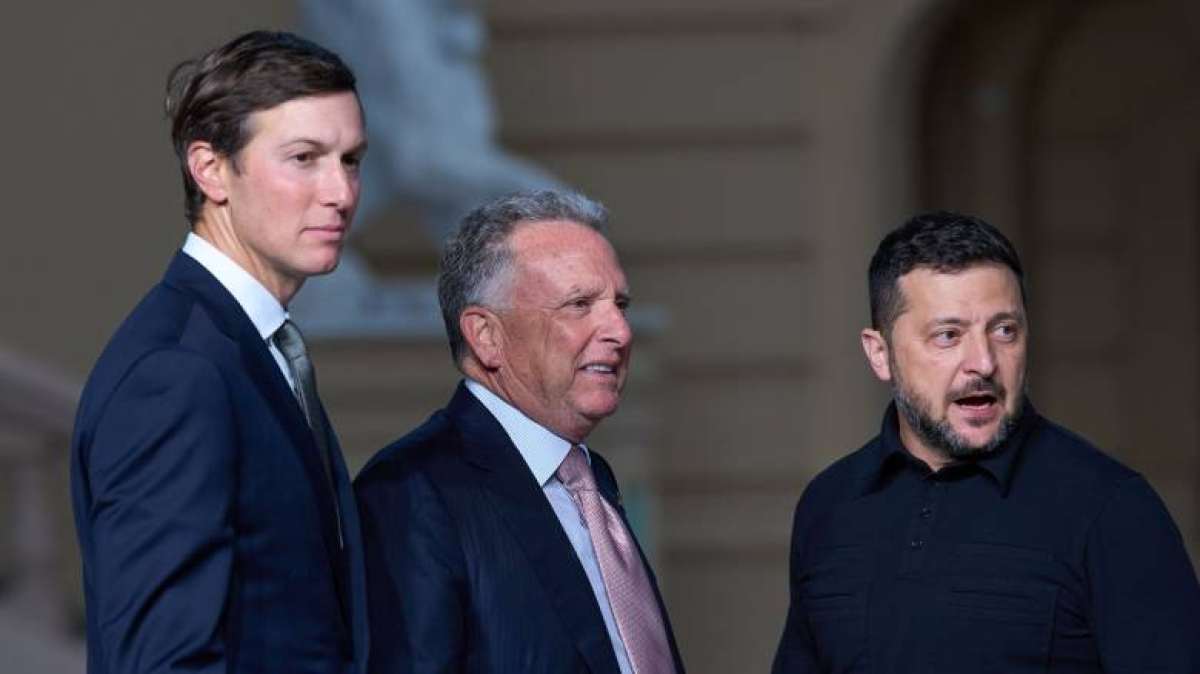
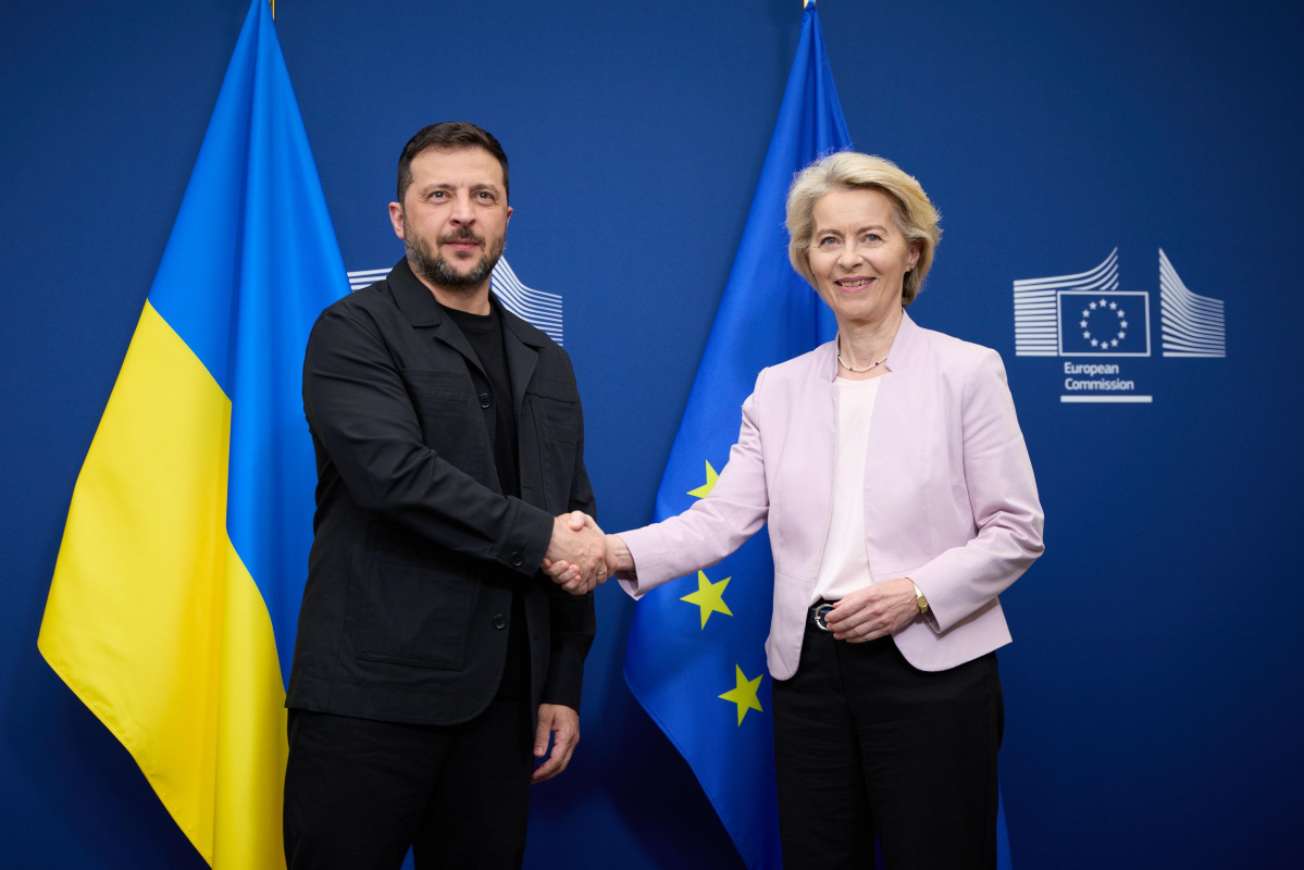
The gathering, convened by German Chancellor Friedrich Merz, French President Emmanuel Macron and British Prime Minister Andy Burnham, brings together European leaders, NATO representatives and senior US presidential envoys.
Among those participating are NATO Secretary-General Mark Rutte, American envoys Steve Witkoff and Jared Kushner, and Greek Prime Minister Kyriakos Mitsotakis.
The discussions focus on two parallel strategies.
The first involves creating a credible framework for peace, including legally binding security guarantees and a multinational force capable of supporting a future ceasefire.
The second is a contingency plan designed to sustain Ukraine militarily, economically and politically if negotiations with Russia collapse.
Berlin is not simply discussing how the war might end. European governments are preparing for what happens if it does not.
Plan A: Legally Binding Security Guarantees for Ukraine
The central objective of the summit is to reaffirm participating countries’ commitment to providing legally binding security guarantees to Ukraine in the event of a ceasefire agreement.
According to German officials, these guarantees are intended to ensure that any settlement does not become merely a temporary pause in hostilities.
Kyiv has consistently warned that a ceasefire without credible security arrangements could allow Russia to rebuild its military capabilities before launching another offensive.
European governments are therefore examining mechanisms designed to deter renewed aggression.
These could involve military assistance, international monitoring arrangements and commitments to support Ukraine’s defensive capabilities.
However, the precise legal structure and operational scope of the guarantees remain subject to negotiation.
An important distinction concerns the difference between political assurances and binding obligations.
A general declaration of solidarity does not carry the same weight as a formal agreement specifying what participating governments must do if Ukraine faces another attack.
Similarly, legally binding security guarantees would not automatically be equivalent to NATO’s Article 5 collective defence commitments.
The credibility of any future agreement will depend on the obligations governments are prepared to undertake and the mechanisms available to enforce them.
Plan B: What Happens if Peace Negotiations Collapse?
The German government has made clear that it is preparing for the possibility that diplomatic efforts will fail.
Wadephul stressed that Ukraine’s allies must remain ready for every eventuality.
“We will also continue to support Ukraine militarily,” he declared.
If negotiations collapse, European governments intend to maintain assistance to Kyiv, particularly in the areas of energy, essential services and military capabilities.
The approaching winter has intensified concerns about Ukraine’s electricity and heating infrastructure.
Continued attacks on critical facilities have increased the pressure on the country’s energy system and public finances.
A prolonged conflict would require sustained assistance to maintain basic services, including heating, electricity, water and food supplies.
For Berlin, contingency planning is therefore inseparable from diplomatic strategy.
The objective is to ensure that Ukraine remains capable of defending itself while negotiations continue.
Europe’s Plan B is not an alternative peace agreement. It is a strategy for sustaining Ukraine if no agreement can be reached.
This approach also aims to prevent Moscow from calculating that Western support will weaken if negotiations become prolonged or inconclusive.
Britain Announces €312 Million Military Package With More Than 1,000 Long-Range Drones
The British government has announced a new military assistance package worth approximately €312 million, equivalent to around £260 million.
The package includes more than 1,000 long-range unmanned aerial vehicles for Ukraine.
According to British government information, some of these systems have a range exceeding 1,000 kilometres.
The announcement highlights the increasingly important role of drones in the war.
Unmanned systems have become central to reconnaissance, surveillance, battlefield targeting and strikes against military infrastructure.
Their growing importance reflects the changing character of modern warfare.
Both Ukraine and Russia have expanded their use of unmanned systems, transforming the operational environment and increasing the demand for electronic warfare capabilities, air defence and rapid technological adaptation.
For Kyiv, additional long-range drones could strengthen its ability to conduct military operations while preserving other resources.
For London, the package demonstrates that preparations for peace negotiations do not necessarily imply a reduction in military support.
Instead, Britain is seeking to maintain Ukraine’s operational capabilities as diplomatic efforts continue.
A Multinational Force for Ukraine: 2,800 Troops Take Part in Military Exercises
Another major component of the Coalition of the Willing’s preparations concerns a proposed multinational force that could help monitor and support a future ceasefire.
The coalition agreed in principle during the previous year to develop plans for such a force.
Military preparations have now moved into an operational training phase.
According to the summit briefing, approximately 2,800 military personnel are participating in exercises involving forces from 11 countries.
French official reporting has referred to participation involving 13 countries, reflecting a broader count of participating states.
The exercises are taking place across three strategic areas: Poland, Romanian airspace and the western Black Sea.
Germany’s Bundeswehr is among the forces involved.
The activities are intended to test multinational coordination, command structures and operational procedures.
A future ceasefire-monitoring mission would require clear rules of engagement, reliable communications, intelligence-sharing arrangements and a defined mandate.
The ability of military units from different countries to operate together would be essential.
However, military exercises do not mean that a deployment inside Ukraine has already been approved.
Any such operation would require political decisions by participating governments, an agreed legal framework and clarity about the mission’s objectives.
The distinction is particularly important because countries may support preparations for a multinational force without committing troops to an eventual deployment.
The €45 Billion Question: How Europe Plans to Finance Ukraine in 2027
Financial assistance is another central issue at the Berlin summit.
The European Commission has proposed a €45 billion financing package to help meet Ukraine’s requirements in 2027.
According to the proposal outlined in the available reporting, approximately €25 billion would be directed towards military assistance and €20 billion towards budgetary support.
Ukraine’s wider funding gap for 2027 has been estimated at around €70 billion.
The scale of the proposed financing reflects the enormous economic burden imposed by the war.
Ukraine requires funding not only for weapons and military operations but also for salaries, public services, infrastructure maintenance and essential civilian needs.
Damage to energy facilities has further increased the cost of keeping the country functioning.
The Commission’s proposal has nevertheless faced criticism over aspects of its design.
Questions remain about financing arrangements, the distribution of obligations and the procedures required for approval.
The package should therefore not be treated as a finalised commitment until the relevant institutional decisions have been completed.
For Kyiv, securing predictable funding is essential to maintaining both economic stability and military resilience.
For European governments, the challenge is to provide sustained support while managing domestic fiscal pressures.
Mitsotakis in Berlin: Greece Joins the Debate Over Europe’s Security Future
Greek Prime Minister Kyriakos Mitsotakis is participating in the summit as European governments consider the future of Ukraine and the continent’s wider security architecture.
Athens has consistently supported Ukraine’s sovereignty and territorial integrity, joining European sanctions against Russia and participating in assistance initiatives.
The Berlin discussions concern issues with implications far beyond the immediate battlefield.
They include European defence cooperation, energy security, financial commitments and the conditions necessary for a sustainable peace.
For Greece, respect for international law, sovereignty and territorial integrity remains a central element of its foreign policy.
These principles are also fundamental to the European position on Russia’s invasion of Ukraine.
Mitsotakis’s participation places Greece within the broader diplomatic effort to coordinate European positions before the next phase of negotiations.
However, the information available does not establish any new Greek commitment to deploy troops as part of a multinational force.
Participation in the summit should not therefore be interpreted as an automatic decision to contribute military personnel to a future mission.
Washington’s Envoys in Berlin: Europe Wants a Direct Role in Peace Talks
The presence of Steve Witkoff and Jared Kushner gives the meeting additional diplomatic significance.
The two American envoys are participating as Washington explores renewed negotiations over the Ukraine war.
European governments are seeking closer coordination with the Trump administration to ensure that their security concerns are incorporated into any future settlement.
Germany has emphasised that decisions involving European sanctions and the continent’s security architecture cannot be resolved without European participation.
Chancellor Merz has made the position explicit.
“Key elements of a peace agreement, whether they concern sanctions or the security architecture, can only be resolved together with us Europeans. Everyone involved knows this very well,” he said.
The statement reflects growing concern that direct negotiations between Washington and Moscow could produce proposals affecting European security without sufficient European involvement.
For Brussels and major European capitals, the question is not simply whether negotiations take place.
It is whether the resulting arrangements are politically acceptable, legally workable and capable of providing lasting security.
Trump, Xi and Putin in China: The Geopolitical Shadow Over Berlin
The Berlin summit coincides with major diplomatic developments in China.
US President Donald Trump, Chinese President Xi Jinping and Russian President Vladimir Putin held a trilateral meeting in Shenzhen, with Ukraine among the issues discussed.
The timing gives European leaders an opportunity to assess the implications of the discussions between the three powers.
China’s role is particularly important because Beijing maintains close relations with Moscow while also engaging in strategic competition with Washington.
Russia, meanwhile, continues to seek international recognition of its security demands.
The United States remains a central participant in diplomatic initiatives concerning the war.
For Europe, these overlapping relationships create both opportunities and risks.
Diplomatic engagement among major powers could help reduce tensions and create openings for negotiations.
But any settlement affecting Ukraine’s territory, European sanctions or NATO’s security arrangements would have direct consequences for European governments.
The presence of American envoys in Berlin is therefore significant.
It allows European leaders to seek information and coordinate positions while the wider diplomatic process develops.
The initial briefing also raised the possibility of a further bilateral meeting between Trump and Putin.
That possibility should not be treated as a confirmed new encounter without an official announcement.
Security Guarantees: The Difficult Questions Still Unanswered
Despite the political momentum surrounding the summit, several fundamental questions remain unresolved.
Which countries would provide legally binding security guarantees to Ukraine?
Would those guarantees include military deployments, intelligence cooperation, air defence assistance or long-term weapons supplies?
What would happen if a future ceasefire were violated?
And which institutions would be responsible for monitoring compliance?
These questions go to the heart of any credible peace settlement.
A multinational monitoring force could provide an additional layer of security, but its effectiveness would depend on the mandate, resources and political support available to it.
A mission without clear authority or sufficient capabilities could struggle to respond to serious violations.
Equally, security guarantees that lack specific obligations might offer limited deterrence.
European governments must also consider their own constitutional and parliamentary requirements before accepting military commitments.
The complexity of these decisions explains why preparations for a possible ceasefire are taking place before any final peace agreement has been reached.
Europe Is Preparing for Peace — and for a Longer War
The Coalition of the Willing summit reflects a broader shift in European planning.
Governments are no longer concentrating exclusively on providing immediate assistance to Ukraine.
They are also considering the security arrangements, financial mechanisms and military structures that could be required after a ceasefire.
At the same time, they are preparing for negotiations to fail.
The British drone package, multinational military exercises and proposed EU financing form part of this dual approach.
If diplomacy succeeds, European governments want to be ready to help implement and sustain a settlement.
If it fails, they intend to preserve Ukraine’s ability to defend itself and maintain essential services.
The participation of Mitsotakis, Merz, Macron, Burnham, Rutte and the American envoys demonstrates the international importance of these decisions.
Berlin is sending two messages simultaneously: to Moscow, that Ukraine’s partners are preparing to sustain their support; and to Washington, that Europe must be involved in shaping any agreement affecting its own security.
The outcome of the summit will depend on whether the leaders translate their commitments into concrete financial, legal and military arrangements.
For now, one conclusion is clear.
Europe is not only preparing for the day after a possible peace agreement. It is also preparing for the possibility that the war in Ukraine will continue.
Source: pagenews.gr
Διαβάστε όλες τις τελευταίες Ειδήσεις από την Ελλάδα και τον Κόσμο