Genocide Without Justice? Myanmar Faces a Historic Reckoning Over the Rohingya
 ΧΡΟΝΟΣ ΑΝΑΓΝΩΣΗΣ 11 '
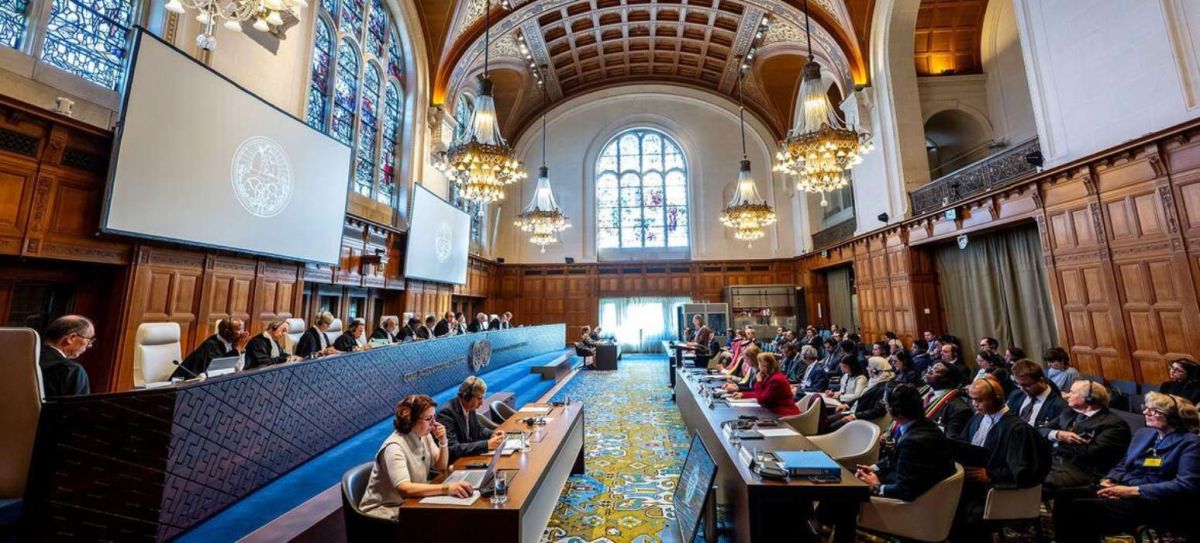
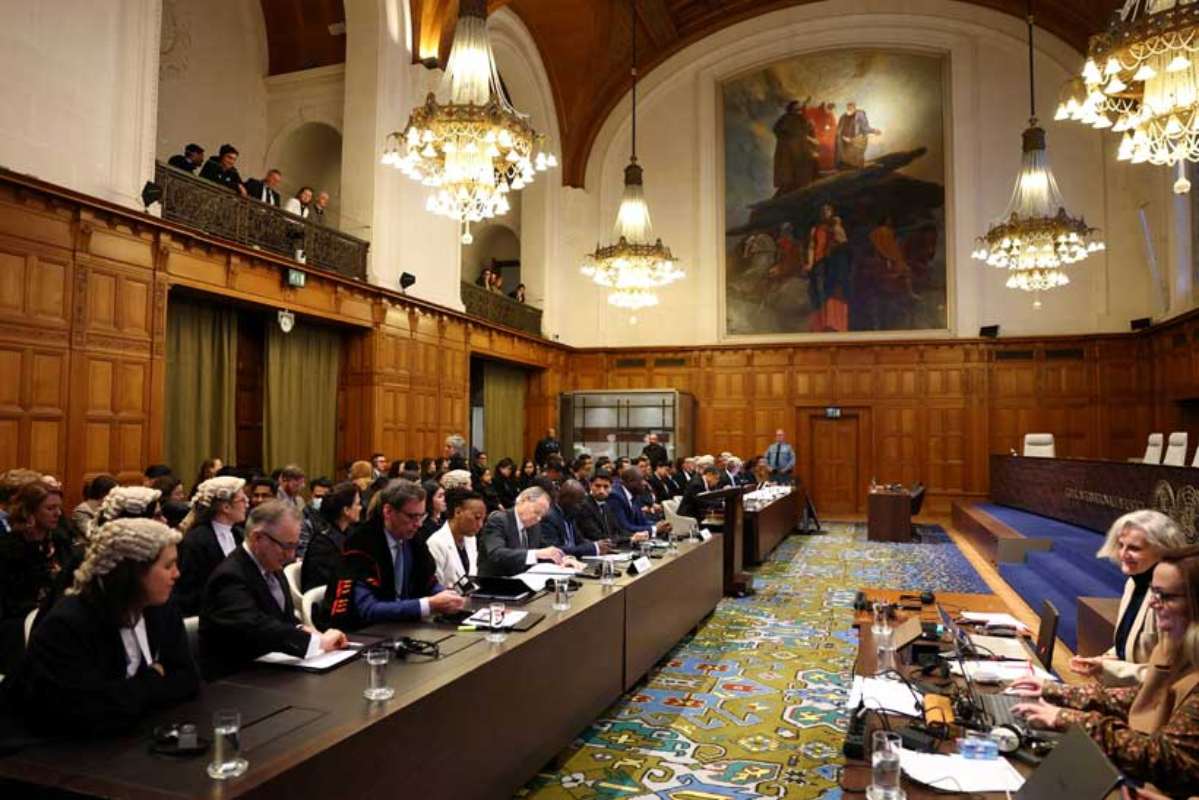
Πηγή Φωτογραφίας: Το Διεθνές Δικαστήριο της Χάγης// A view of the courtroom as the International Court of Justice (ICJ) starts two weeks of hearings in a landmark case brought by Gambia, which accuses Myanmar of committing genocide against the Rohingya, a minority Muslim group, in The Hague, Netherlands, January 12, 2026. REUTERS/Piroschka van de Wouw



Hundreds of thousands were driven from their homes. Entire villages were destroyed, families were separated, and refugees crossed into neighbouring Bangladesh to escape violence that would become one of the most devastating humanitarian crises of the past decade.
Nearly nine years after Myanmar’s military launched its sweeping operations in Rakhine State in 2017, the plight of the Rohingya Muslim minority remains at the centre of an international legal battle.
The International Court of Justice (ICJ) in The Hague is examining allegations that Myanmar violated the 1948 Convention on the Prevention and Punishment of the Crime of Genocide.
The case goes far beyond establishing responsibility for atrocities committed in the past.
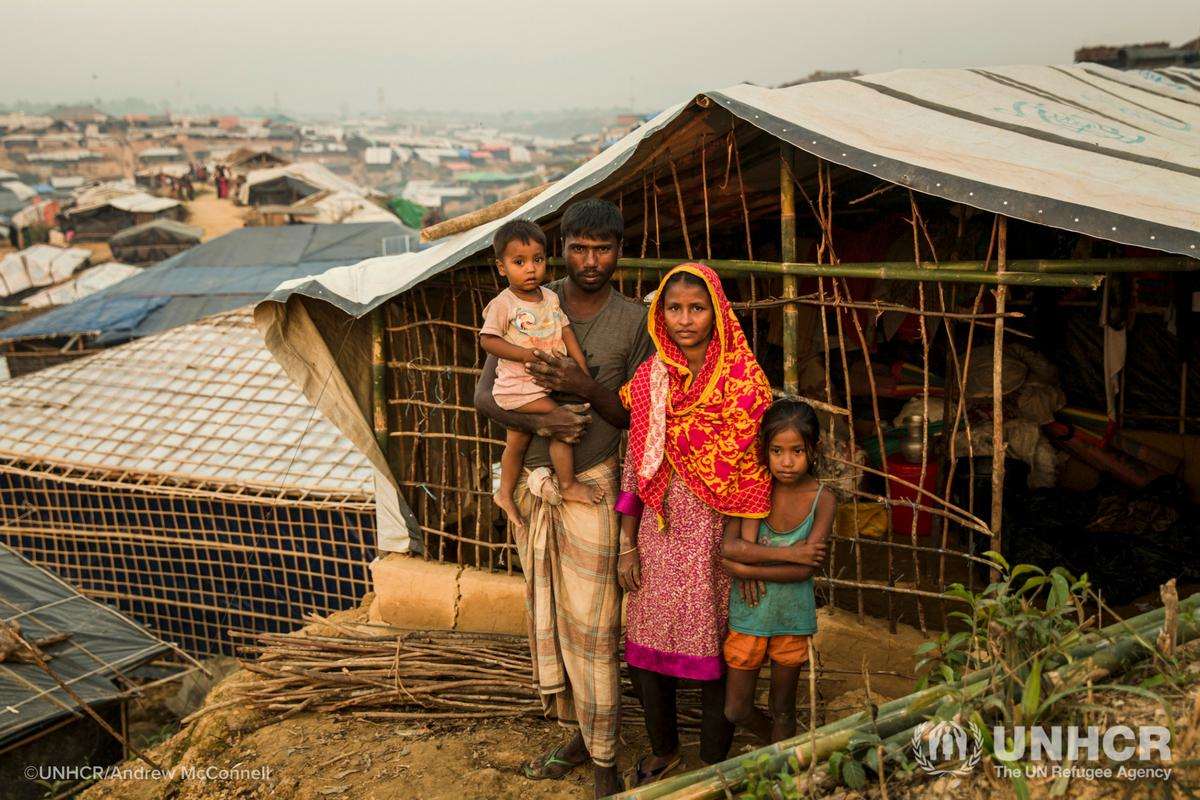
More than 1.3 million Rohingya remain displaced across South and Southeast Asia, according to figures cited in the source reporting. Approximately 1.2 million are living in Bangladesh, overwhelmingly in refugee settlements around Cox’s Bazar.
For these communities, justice is not simply about a legal judgment.
It is about citizenship, security, recognition and the possibility of returning to homes they have been unable to reach for almost a decade.
August 2017: The Military Offensive That Forced Hundreds of Thousands to Flee
The crisis escalated dramatically in August 2017, when Myanmar’s military launched a large-scale operation in Rakhine State following attacks by the Arakan Rohingya Salvation Army (ARSA) on approximately 30 police posts and a military base.
Myanmar’s authorities maintained that the operation targeted armed insurgents.
However, refugee testimonies and investigations by international human rights organisations described widespread violence against civilians.
According to Human Rights Watch, allegations included mass killings, sexual violence, torture and the destruction of hundreds of villages.
More than 730,000 Rohingya fled into Bangladesh, creating one of the world’s largest refugee emergencies.
Families crossed rivers, travelled through difficult terrain and arrived at the border carrying whatever possessions they could salvage.
Many had witnessed violence or lost relatives.
Myanmar denied that its military operations constituted genocide, arguing that security forces were responding to insurgent attacks.
The allegations nevertheless prompted international investigations and eventually proceedings before the United Nations’ principal judicial organ.
Why The Gambia Took Myanmar to the International Court of Justice
In November 2019, The Gambia filed a case against Myanmar at the ICJ, alleging violations of the Genocide Convention.
The legal initiative received support from the 57-member Organisation of Islamic Cooperation.
The case was significant because The Gambia was not a neighbouring state directly affected by the refugee influx.
Instead, it invoked the shared obligations of states under the Genocide Convention to prevent and punish genocide.
The proceedings therefore raise a broader question about international accountability: whether a state can seek judicial enforcement of obligations designed to protect vulnerable populations even when it has not suffered direct territorial or economic harm.
During the initial hearings, Myanmar’s then-leader Aung San Suu Kyi appeared before the Court and rejected the genocide allegations, disputing the completeness and accuracy of the accusations.
Her appearance attracted international attention because she had previously received the Nobel Peace Prize for her struggle for democracy.
The proceedings placed Myanmar’s treatment of the Rohingya under intense legal scrutiny.
The 2020 Court Order: Myanmar’s Obligations to Protect the Rohingya
In January 2020, the ICJ ordered Myanmar to implement provisional measures intended to protect the Rohingya population.
These included preventing acts covered by the Genocide Convention, ensuring that forces under the state’s control did not commit such acts, and preserving evidence relating to the allegations.
The order did not constitute a final determination that genocide had occurred.
It was nevertheless a major legal development because the Court recognised the need to protect rights at risk while the case proceeded.
The subsequent proceedings involved written submissions, preliminary objections and the examination of legal arguments and evidence.
A central issue is whether the requirements for establishing genocide have been met.
Under international law, genocide requires proof of prohibited acts committed with the specific intent to destroy, in whole or in part, a protected national, ethnic, racial or religious group as such.
Establishing that intent is among the most demanding aspects of genocide litigation.
Can the ICJ Actually Deliver Justice?
Judgments of the International Court of Justice are final and binding on the states involved in a case.
However, the Court has no independent police force or military mechanism to enforce compliance.
It cannot prosecute individuals for criminal responsibility or issue arrest warrants.
That distinguishes the ICJ from the International Criminal Court, which addresses individual criminal liability for international crimes.
A final finding that Myanmar violated the Genocide Convention would carry substantial legal and diplomatic significance.
It could strengthen international pressure, influence discussions about reparations and establish an important legal reference point for future accountability efforts.
But such a judgment would not automatically result in arrests or allow refugees to return immediately.
Implementation depends on the legal obligations identified by the Court, the conduct of the state concerned and the wider international response.
This distinction is particularly important in Myanmar, where the political and security environment has deteriorated significantly since the original atrocities.
Myanmar’s Civil War Has Made the Rohingya Crisis Even Worse
The situation became more complicated following Myanmar’s military coup on February 1, 2021.
The armed forces overthrew Aung San Suu Kyi’s elected government, triggering mass protests, violent repression and eventually a nationwide armed conflict.
The civil war has caused extensive casualties and displacement.
The original reporting cites estimates of approximately 100,000 deaths and more than 3.5 million people displaced, although casualty estimates vary and remain difficult to verify independently.
Fighting has been especially destructive in Rakhine State, the historical homeland of many Rohingya communities.
Since November 2023, clashes between Myanmar’s military and the Arakan Army, an ethnic armed organisation, have intensified.
The Rohingya consequently face threats from multiple directions.
Their insecurity is no longer limited to the military authorities accused of the 2017 atrocities.
It is also shaped by the wider conflict between armed groups competing for control of territory.
Fresh Allegations of Violence Against Rohingya Communities
The situation deteriorated further in 2024, when serious allegations emerged concerning attacks in areas inhabited by Rohingya civilians.
In May that year, the Arakan Army was accused of setting fire to large sections of Buthidaung, a settlement with a substantial Rohingya population.
The allegations highlighted the continuing vulnerability of civilians caught between rival armed forces.
For the Rohingya, the end of one military operation does not necessarily mean the restoration of safety.
Their future depends on the outcome of a conflict involving multiple actors, competing territorial claims and deeply rooted ethnic tensions.
These conditions make organised refugee repatriation extremely difficult.
Bangladesh’s Refugee Camps: More Than a Million Lives on Hold
In Bangladesh’s Cox’s Bazar region, refugee camps have become vast settlements inhabited by people who have spent years without a realistic prospect of returning home.
Overcrowding, limited economic opportunities, insecurity and dependence on humanitarian assistance remain persistent challenges.
Declining international funding has placed additional pressure on the humanitarian response.
Reductions in assistance threaten access to food, healthcare, education and other essential services.
For children born or raised in the camps, displacement is the only life they have known.
Bangladesh continues to host the overwhelming majority of Rohingya refugees while confronting substantial financial, environmental and social pressures.
The international community has repeatedly acknowledged the need to support the country.
Yet the prolonged nature of the crisis raises an increasingly urgent question: how long can such a large population remain in temporary settlements without a credible political solution?
Why the Rohingya Cannot Return Without Citizenship and Security
Many Rohingya refugees want to return to Myanmar.
But they have consistently demanded guarantees before agreeing to repatriation.
Security is essential, but it is not sufficient.
They also seek citizenship, legal recognition, freedom of movement, basic rights and assurances that they will not face renewed persecution.
Myanmar has historically restricted Rohingya access to citizenship.
Authorities have frequently characterised them as migrants from neighbouring Bangladesh, despite generations of Rohingya families having lived in the country.
These policies have left much of the community without full legal recognition.
According to the original source material, Myanmar announced that it had verified 308,797 refugees in Bangladesh as former residents of Rakhine State.
However, authorities maintained that repatriation could begin only when security conditions improved.
Earlier repatriation initiatives in 2018 and 2019 failed to produce meaningful returns.
Deep mistrust between refugees and Myanmar’s authorities remains a central obstacle.
A Court Judgment Cannot End a Civil War
The Rohingya case represents an important test of international law.
One state has brought proceedings against another over alleged violations of the Genocide Convention, while the population at the centre of the case continues to experience displacement and insecurity.
The legal process can clarify Myanmar’s international obligations and determine whether violations have been established.
It cannot, by itself, end the country’s civil war.
Nor can it independently restore Rohingya citizenship or guarantee their safe return to areas where armed conflict continues.
Meaningful repatriation requires security, legal recognition, political guarantees and protection against renewed persecution.
At the same time, sustained humanitarian assistance remains essential for refugees who cannot yet return.
The Hague Can Establish Responsibility. Who Will Guarantee the Rohingya’s Return?
The case brought by The Gambia against Myanmar concerns far more than a historical episode of violence.
It tests whether international legal institutions can contribute to accountability when a vulnerable community remains exposed to displacement, discrimination and armed conflict.
A final judgment on the merits could become an important milestone in the international legal response to alleged genocide.
But meaningful change will also depend on developments far beyond the courtroom.
It will depend on Myanmar, where civil war continues to threaten civilian populations.
It will depend on Bangladesh, where refugee families have waited for years for a durable solution.
And it will depend on whether international governments can translate legal obligations into practical measures protecting human rights.
For the Rohingya, justice means more than recognition of the atrocities they have suffered. It means the possibility of returning to their homeland as citizens with rights, security and dignity.
Source: pagenews.gr
Διαβάστε όλες τις τελευταίες Ειδήσεις από την Ελλάδα και τον Κόσμο