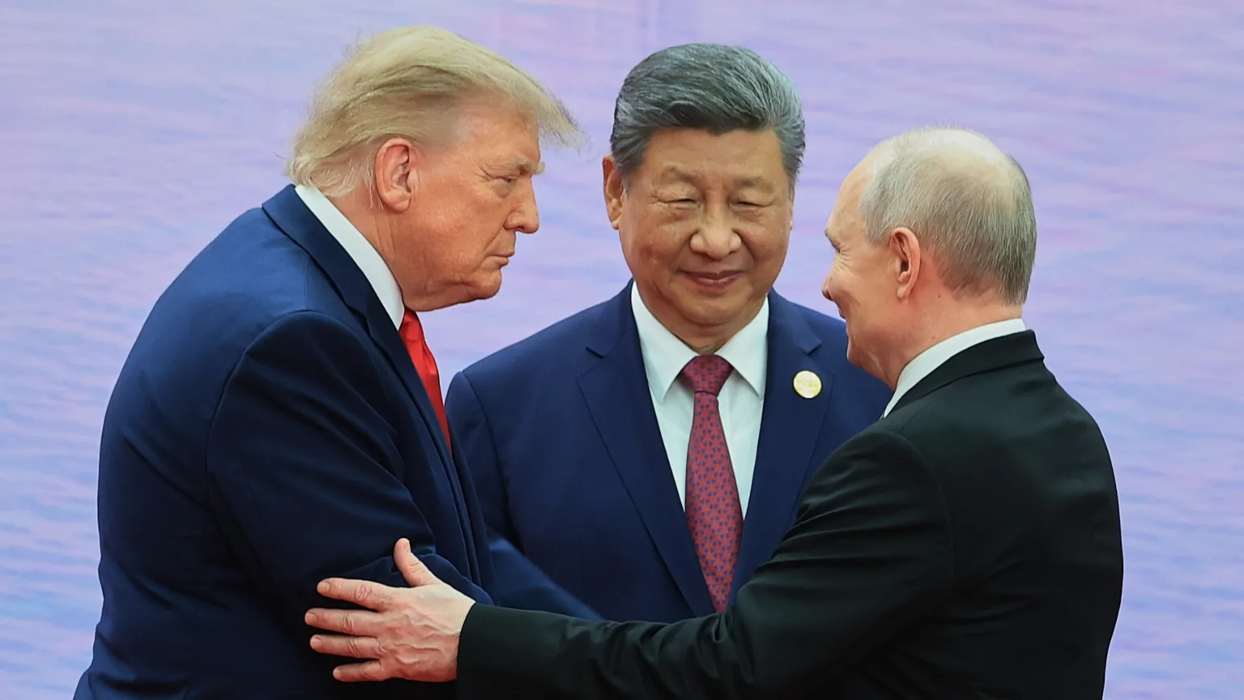
Trump, Xi and Putin at the Same Table – Is Europe Being Shut Out of Global Power?
 ΧΡΟΝΟΣ ΑΝΑΓΝΩΣΗΣ 15 '
Πηγή Φωτογραφίας: AP Photo//Trump, Xi and Putin at the Same Table – Is Europe Being Shut Out of Global Power?



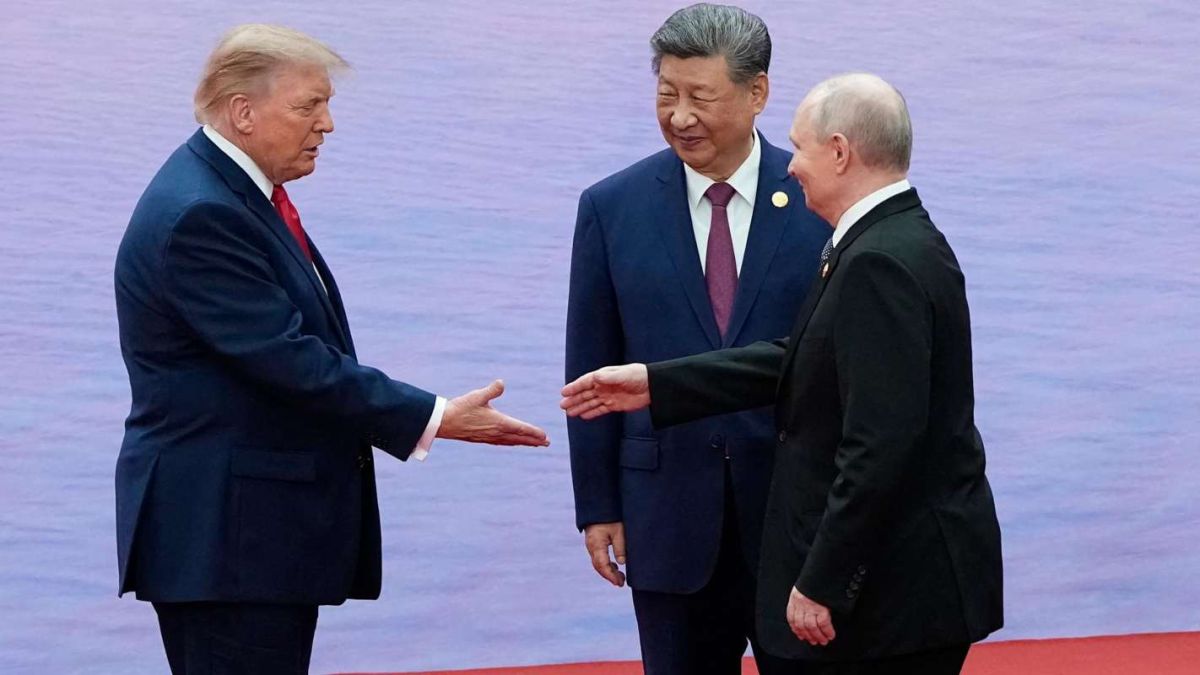
Three presidents, three major powers and a negotiating agenda that could reshape international politics. But one conspicuous absence: Europe.
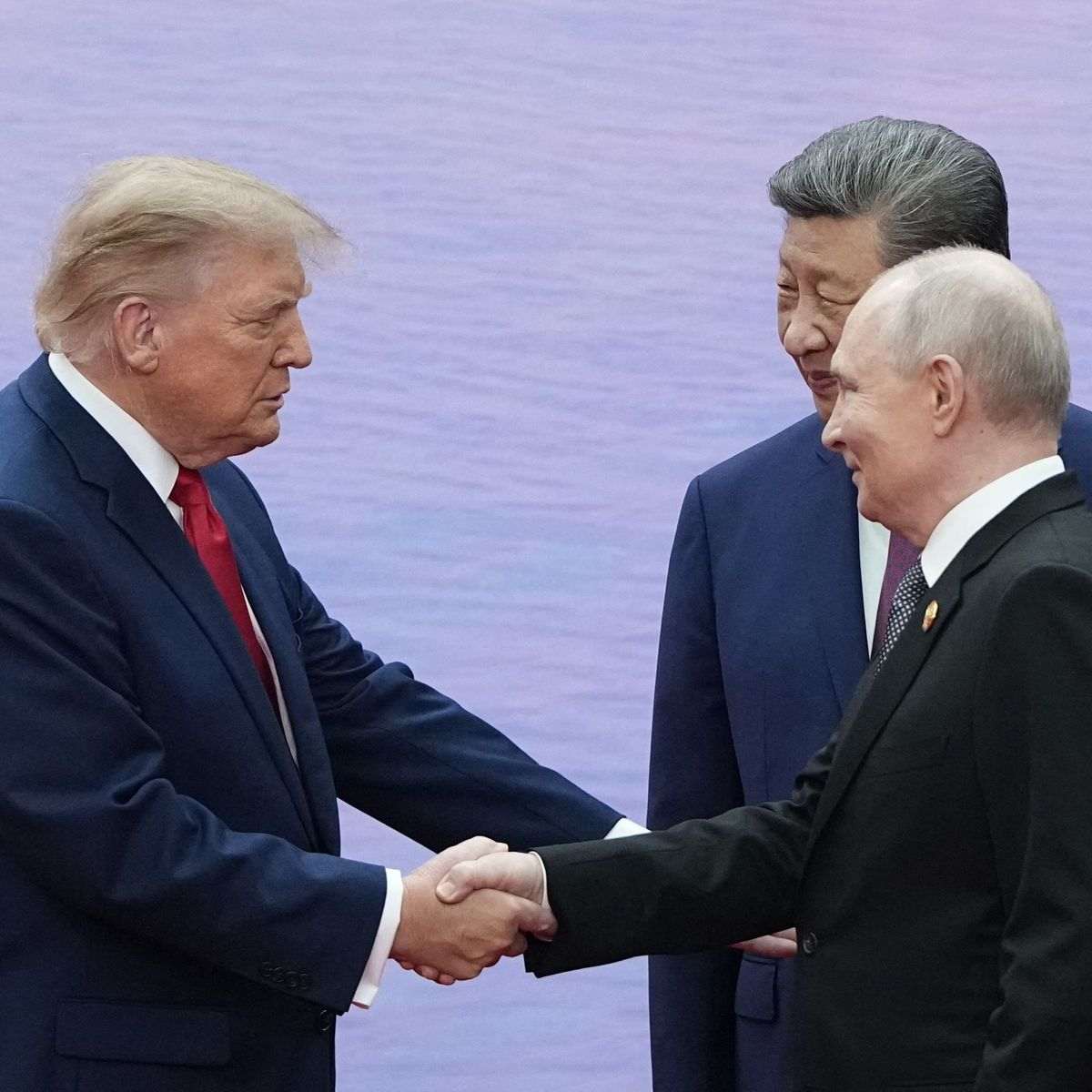
The prospect of Donald Trump, Xi Jinping and Vladimir Putin meeting on the sidelines of the Asia-Pacific Economic Cooperation forum has renewed concerns about the European Union’s influence in a world increasingly shaped by direct negotiations between powerful states.
The issues potentially on the table are enormous: the war in Ukraine, the conflict with Iran, nuclear arms control, energy security and the global competition for technological supremacy.
Each has profound consequences for European governments.
Yet the prospect of discussions among Washington, Beijing and Moscow without European leaders participating directly highlights an uncomfortable reality: Europe’s economic weight does not automatically translate into a seat at every major geopolitical negotiating table.
The symbolism is powerful, although the diplomatic significance of any such meeting ultimately depends on its confirmed participants, agenda and outcomes.
For Brussels, the underlying question extends far beyond a single summit.
Can the European Union become a geopolitical actor capable of shaping the international order, or will it remain an economic powerhouse whose security is influenced by decisions taken elsewhere?
Three Global Powers, One Missing European Voice
The United States, China and Russia approach international politics from sharply different positions.
Washington remains central to the Western security architecture, maintains extensive military alliances and exercises enormous influence over global finance.
Beijing possesses vast manufacturing capacity, significant technological capabilities and considerable leverage over international supply chains.
Moscow retains substantial military power, nuclear capabilities and influence over energy markets, despite the economic and diplomatic consequences of its war against Ukraine.
Direct engagement among their leaders would therefore attract international attention, regardless of whether it produced a formal agreement.
For Europe, the problem is not simply diplomatic visibility.
Decisions concerning Ukraine’s security arrangements, sanctions on Russia, Iranian energy exports or US-China technology restrictions could have immediate consequences for European economies and national security.
The EU has major interests in all these areas.
But having interests at stake is not the same as possessing decisive influence over the negotiations.
That distinction is increasingly central to Europe’s geopolitical debate.
Europe’s €8 Trillion Trading Power Has Not Delivered Equivalent Political Influence
The European Union remains one of the world’s most important economic actors.
According to EU figures cited in the source material, the bloc’s external trade in goods and services exceeded €8 trillion in 2025, accounting for almost 16% of global trade.
This economic scale gives Brussels considerable influence over international commercial relationships.
The EU can negotiate trade agreements, regulate access to its market, establish product standards and impose economic sanctions.
Its regulatory decisions can affect companies far beyond European borders.
Yet those strengths do not automatically translate into equivalent diplomatic or military leverage.
Trade policy is largely managed at the European level.
Foreign and security policy, by contrast, remains heavily dependent on agreement among individual member states.
This difference matters when international crises require rapid decisions, unified military commitments or negotiations backed by credible security guarantees.
Europe can exercise enormous influence over the conditions under which companies operate.
It faces greater difficulties when attempting to act as a single strategic power.
Ukraine: The War That Exposes Europe’s Strategic Dependence
The war in Ukraine illustrates the gap between Europe’s economic importance and its capacity to shape security outcomes.
European governments have provided substantial financial, military and humanitarian assistance to Kyiv.
They have imposed sanctions on Russia, supported Ukraine’s economy and undertaken major changes to their own energy systems.
The outcome of the conflict will directly affect Europe’s security architecture for years to come.
Any settlement could influence Ukraine’s territorial security, its future relationship with NATO and the European Union, and the broader balance of power between Russia and the West.
Nevertheless, Washington remains indispensable to the diplomatic and military calculations surrounding the war.
Trump’s approach to negotiations has repeatedly raised questions about the extent to which European governments will participate in decisions affecting their own security.
Russia has also resisted efforts to give European countries a central negotiating role.
For Brussels, this creates a fundamental dilemma.
Europe has a direct strategic interest in the outcome and bears substantial economic consequences, but it cannot independently determine the terms of a settlement.
Its influence depends partly on the unity of its member states, the resources it is prepared to commit and its ability to coordinate with Washington and Kyiv.
Russia, Gas and the Energy Price of Europe’s Dependence
Before Russia’s full-scale invasion of Ukraine in February 2022, the European Union was Moscow’s largest energy market.
In 2021, Russia supplied approximately 40% of EU natural gas imports and around a quarter of its oil imports.
These commercial relationships generated substantial revenue for Russia while leaving European economies exposed to disruptions in energy supplies.
The war fundamentally changed that relationship.
European governments moved to reduce their dependence on Russian fossil fuels, diversify supply routes and increase imports from alternative suppliers.
The United States became an especially important source of liquefied natural gas.
The resulting transformation strengthened transatlantic energy ties but also created new questions about Europe’s dependence on external suppliers.
A future settlement involving Russia could affect sanctions, commodity markets and Europe’s long-term energy strategy.
For Washington, energy policy is also connected to commercial interests and geopolitical leverage.
For Moscow, oil and gas revenues remain economically important.
For Brussels, the challenge is to protect energy security while ensuring that any diplomatic settlement does not undermine the strategic changes made since 2022.
This is another reason Europe’s participation in discussions over Ukraine matters.
The consequences extend well beyond the battlefield.
Iran: Europe Helped Negotiate the Nuclear Deal but Struggles to Shape the New Conflict
The conflict involving Iran provides another example of Europe’s limited ability to translate diplomatic experience into decisive influence.
European governments played an important role in the negotiations that produced the 2015 Joint Comprehensive Plan of Action, the agreement intended to constrain Iran’s nuclear programme in exchange for sanctions relief.
France, Germany and the United Kingdom participated alongside the United States, Russia and China, with the European Union coordinating important elements of the diplomatic process.
That experience gave European governments extensive knowledge of the negotiations and established diplomatic relationships with the parties involved.
Yet the current conflict has developed under very different circumstances.
The United States and regional powers have assumed prominent roles in military and diplomatic developments, while European involvement has been more limited.
Countries such as Pakistan and Qatar have emerged as important channels for regional engagement.
Their influence demonstrates that diplomatic relevance is not determined solely by economic size.
Geography, political relationships, communication channels and the willingness of conflicting parties to accept mediation can be equally important.
For Europe, the Iranian conflict carries direct economic consequences.
Instability around the Strait of Hormuz threatens a maritime route essential to international energy trade.
Disruptions can affect oil prices, shipping insurance, freight costs and industrial production.
European economies therefore have a major interest in de-escalation.
But that interest does not automatically guarantee a central negotiating role.
Why Brussels Cannot Always Speak With One Voice
The European Union’s institutional structure remains one of the principal obstacles to a more unified foreign policy.
Many decisions under the EU’s Common Foreign and Security Policy require unanimity among member states.
This gives individual governments significant influence over collective positions and can complicate rapid responses to international crises.
The 27 member states do not always share identical threat perceptions or strategic priorities.
Countries bordering Russia tend to place particular emphasis on deterrence, territorial defence and the credibility of NATO commitments.
Other European governments have historically prioritised different combinations of diplomacy, economic cooperation and strategic engagement.
These differences do not mean the EU is incapable of coordinated action.
The bloc has demonstrated an ability to adopt major sanctions packages, provide assistance to Ukraine and establish common policy initiatives.
But agreement can take time, especially when national governments disagree over the costs or consequences of a particular decision.
The challenge becomes even greater when negotiations involve military commitments or the potential deployment of armed forces.
Unlike a sovereign state, the European Union does not possess a single national military command with independent authority over all member states’ armed forces.
Its security capabilities remain distributed across national governments and international institutions.
€418 Billion in Defence Spending – But No Single European Army
Europe’s military expenditure has increased substantially in response to the deteriorating security environment.
According to the figures cited in the source material, EU member states collectively spent approximately €418 billion on defence in 2025, around 20% more than the previous year.
That represents a major commitment of public resources.
Yet the spending is divided among national budgets, procurement programmes and military structures.
European countries maintain different equipment inventories, industrial priorities and operational requirements.
The result is that substantial aggregate spending does not automatically produce the same capabilities as an integrated military system.
NATO remains the central collective defence framework for most EU member states.
American military capabilities, including strategic intelligence, logistics, air defence, nuclear deterrence and long-range power projection, continue to play an important role in European security.
The European Union has pursued initiatives to strengthen defence industrial cooperation and joint procurement.
However, converting national military expenditure into a more coherent European capability remains a long-term challenge.
The issue is not simply how much Europe spends.
It is how effectively that spending produces deployable forces, interoperable equipment and credible strategic options.
France, Germany and the Push to Change EU Foreign Policy
Growing concerns about Europe’s geopolitical influence have renewed calls for institutional reform.
According to the source material, France, Germany and nine other EU member states have advocated changes intended to accelerate foreign-policy decision-making.
One area of debate concerns reducing the scope of unanimity requirements in selected foreign-policy matters.
Supporters argue that allowing more decisions to be taken by qualified majority could prevent individual governments from blocking common positions.
They also contend that faster decision-making would make the EU more credible during international crises.
Critics, however, warn that foreign and security policy involves fundamental questions of national sovereignty.
Governments may be reluctant to accept decisions affecting sensitive strategic interests if they can be outvoted by other member states.
Even if institutional reforms were adopted, Europe would still need to address differences in military capabilities, industrial resources and political priorities.
A change in voting rules alone cannot create a unified strategic culture.
Nor can it automatically resolve disagreements about relations with Russia, China, the United States or the Middle East.
Artificial Intelligence, Nuclear Weapons and the New Global Hierarchy
The geopolitical significance of a potential Trump-Xi-Putin meeting extends beyond conventional security issues.
Competition over artificial intelligence, advanced semiconductors, critical minerals and digital infrastructure is increasingly connected to national power.
The United States and China are central competitors in several of these fields.
Russia remains a major nuclear power and an important participant in debates about strategic arms control.
Europe possesses advanced research institutions, major industrial companies and a significant regulatory role in technology markets.
But its technological strengths are spread across different national systems and commercial sectors.
The EU has sought to influence global AI governance through regulation and international diplomacy.
Yet regulating a technology is not the same as controlling its most important production capabilities.
The same distinction applies to semiconductors, cloud infrastructure and advanced defence technologies.
Europe’s future influence will depend not only on its ability to establish rules, but also on its capacity to develop and deploy technologies that other major powers need.
That requires investment, industrial coordination and long-term political commitments.
The Strategic Choice: Economic Giant or Geopolitical Power?
Europe’s difficulties cannot be reduced to its absence from a single international meeting.
The deeper issue concerns the relationship between economic influence, military capability and political unity.
The European Union is capable of shaping international trade, regulating large markets and financing major programmes.
It also possesses substantial diplomatic networks and considerable economic resources.
However, international security negotiations often depend on capabilities that are not fully centralised at the EU level.
These include military force, nuclear deterrence, intelligence, rapid decision-making and the authority to make binding security commitments.
The United States, China and Russia can negotiate as sovereign states with centralised political leadership.
The European Union must coordinate the positions of 27 governments, each with its own domestic political pressures and strategic interests.
That does not make European participation irrelevant.
It does mean that influence requires continuous coordination rather than relying solely on economic scale.
What the Trump-Xi-Putin Meeting Means for Europe
The prospect of direct discussions among Trump, Xi and Putin highlights a wider trend in international politics: major powers increasingly seek to address strategic disputes through direct engagement, sometimes outside the multilateral frameworks where European governments traditionally exercise influence.
For Europe, the consequences could be considerable.
Discussions about Ukraine may affect the continent’s security architecture.
Negotiations involving Iran could influence energy markets and regional stability.
US-China competition over trade and technology could reshape European manufacturing, investment and supply chains.
Nuclear arms control could affect the broader strategic balance on which European security depends.
The EU’s absence from a particular meeting would not mean that it has lost its economic power or diplomatic relevance.
But it would illustrate the limits of influence based primarily on trade, regulation and financial resources.
Europe has the economic weight to influence the international system. Its challenge is developing the political unity, military capabilities and strategic authority needed to shape the decisions that will define it.
Until that gap narrows, Brussels risks remaining central to the consequences of global power politics without always being central to the negotiations themselves.
Source: pagenews.gr
Διαβάστε όλες τις τελευταίες Ειδήσεις από την Ελλάδα και τον Κόσμο