Britain at Europe’s Security Table, Shut Out of Its Defence Billions – The SAFE 2 Showdown
 ΧΡΟΝΟΣ ΑΝΑΓΝΩΣΗΣ 14 '



Britain has returned to the table where Europe’s security future is being negotiated. But it still lacks full access to the financial machinery that will determine who builds the continent’s next generation of weapons.
That contradiction is becoming increasingly difficult to ignore ahead of the November 20 EU–UK summit in Brussels.
London has been included alongside France, Germany, Italy and Poland in European diplomatic efforts surrounding the war in Ukraine. Yet British defence manufacturers remain subject to restrictions under the European Union’s €150 billion Security Action for Europe programme, known as SAFE.
The distinction goes beyond the lingering political consequences of Brexit.
It exposes a fundamental disagreement over the future of European defence: should military capability determine who belongs inside Europe’s security architecture, or should access to European defence funding remain primarily a privilege of EU membership?
For Britain, the answer will determine whether its defence industry becomes an integral part of Europe’s rearmament or remains a valuable but constrained external supplier.
For Brussels, the decision will test whether strategic cooperation with London can extend beyond diplomatic declarations and military coordination into industrial investment.
Britain Returns to Europe’s Security Table
The decision to include the United Kingdom in the group of countries participating in diplomatic discussions on Ukraine marks a significant development in relations between London and Brussels.
According to Reuters, the European group includes Britain, France, Germany, Italy and Poland.
The inclusion of a non-EU country reflects Britain’s continuing strategic importance despite its departure from the bloc.
London remains a major European military power, possesses significant intelligence capabilities and has played a central role in supporting Ukraine.
Britain also co-leads the Coalition of the Willing, which has explored potential security arrangements for Ukraine following a negotiated settlement.
Together with France, it has supported discussions about the possible deployment of international forces as part of future security guarantees.
These commitments demonstrate that European security cooperation already extends well beyond the institutional boundaries of the European Union.
Yet Britain’s military relevance has not translated into equivalent access to European defence financing.
London can help negotiate Europe’s security arrangements while its manufacturers remain subject to restrictions when competing for contracts financed through EU instruments.
The €150 Billion Defence Fund Britain Cannot Fully Access
The first EU–UK summit in May 2025 produced a Security and Defence Partnership intended to rebuild cooperation after years of strained relations following Brexit.
The agreement opened the possibility of British participation in European defence programmes, including SAFE, subject to mutually agreed conditions.
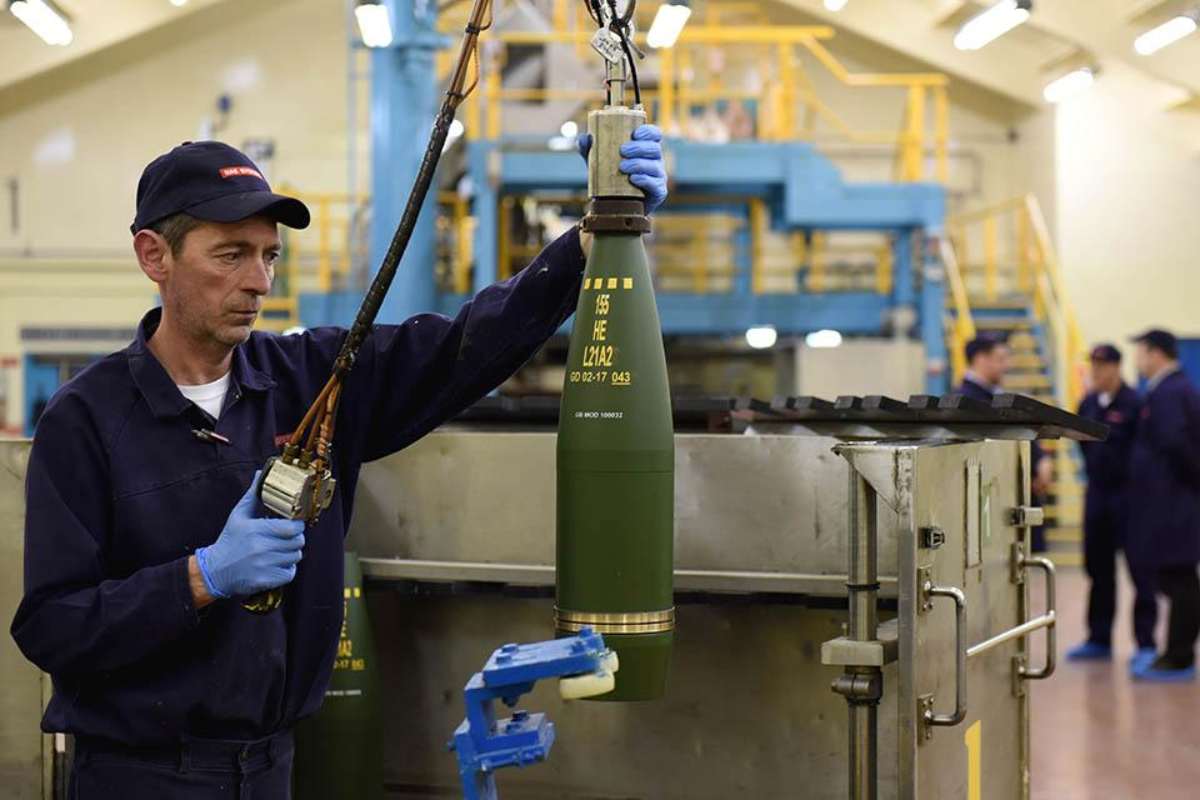
SAFE was designed to strengthen Europe’s defence industrial base through up to €150 billion in EU-backed loans supporting joint procurement.
Its purpose is to accelerate investment in critical military capabilities while encouraging participating countries to purchase equipment together.
For European governments, the programme offers access to financing for major defence acquisitions.
For manufacturers, it creates opportunities to secure long-term contracts, expand production and develop new technologies.
Britain initially sought a broader role in the scheme.
However, negotiations broke down in November 2025 after the two sides failed to agree on the financial contribution London would have to make.
According to published estimates, the proposed entry fee ranged between €4 billion and €6 billion.
The Centre for European Reform estimated that the amount was equivalent to roughly 10 per cent of Britain’s annual defence budget.
London considered the proposed contribution excessive, particularly because it would not guarantee a corresponding volume of contracts for British companies.
The disagreement left Britain outside the arrangement for full participation.
British manufacturers can still participate in certain EU-financed defence supply chains, but their position is significantly different from that of companies based in eligible participating countries.
The 35% Rule: Where Industrial Protection Meets Military Reality
One of the most consequential restrictions concerns the origin of components used in defence products financed under SAFE.
Under the programme’s general eligibility rules, components originating outside the EU and eligible associated countries cannot exceed 35 per cent of the estimated cost of the final product’s components.
For British manufacturers, the restriction creates practical obstacles when competing for European defence contracts.
The problem is particularly significant because modern military equipment rarely comes from a single national production system.
A missile defence platform may incorporate British sensors, German electronics, French software and components manufactured elsewhere.
An unmanned aircraft may depend on communications systems, batteries, artificial intelligence and targeting technologies developed across several countries.
When procurement financing is linked to strict origin requirements, companies may reorganise supply chains to satisfy eligibility rules rather than purely on the basis of technological performance, availability or price.
That creates a difficult trade-off.
The EU wants to strengthen its domestic industrial capacity and reduce dependence on external suppliers.
Britain argues that excluding capable European partners could weaken the continent’s ability to expand military production quickly.
The disagreement is therefore about more than market access.
It concerns who will manufacture Europe’s weapons, who will finance their production and which industries will benefit from the continent’s rearmament.
France and the Battle Over Europe’s Defence Industry
France has been among the strongest advocates of strict conditions governing participation by non-EU countries in European defence financing.
Paris argues that European public resources should primarily support Europe’s own industrial base.
That position reflects a broader objective: strengthening strategic autonomy by developing production capabilities that reduce dependence on outside powers.
European defence spending is not simply a military expenditure.
It also supports employment, industrial investment, research, technology development and long-term manufacturing capacity.
For countries with major defence industries, access to European procurement funding carries considerable economic importance.
Britain, however, sees the question differently.
London argues that its defence companies already form part of Europe’s wider military-industrial ecosystem.
British technologies contribute to European weapons systems, while British military personnel and intelligence capabilities support collective security.
From that perspective, excluding British industry from financing arrangements while relying on British military capabilities creates an imbalance.
The European Commission and member states must therefore reconcile two objectives that do not always align: protecting the EU’s industrial base and maximising the military capabilities available to Europe.
Ukraine Exposes the Limits of Europe’s Defence Production
The war in Ukraine has transformed the debate over European defence manufacturing.
Years of sustained fighting have demonstrated the enormous quantities of ammunition, drones, air defence systems and electronic equipment required in a prolonged high-intensity conflict.
European governments have increased defence budgets, but industrial production has struggled to expand at the same pace.
Manufacturing capacity, skilled labour, raw materials and supply-chain constraints have become central security concerns.
Britain’s defence industry possesses capabilities that could contribute to addressing some of those shortages.
Its manufacturers operate in areas including advanced electronics, naval systems, aircraft, missiles, surveillance technologies and military communications.
London’s argument is that Europe cannot afford unnecessary duplication at a time when rapid industrial expansion is essential.
The UK has also emphasised that higher defence budgets alone will not automatically translate into greater military capacity.
Even substantial increases in spending may produce limited results if factories cannot manufacture equipment quickly enough.
This is where the SAFE dispute becomes strategically significant.
If European countries expand production through separate national or institutional systems, the result could be duplicated investment, incompatible standards and smaller manufacturing runs.
If they coordinate production more closely, they may be able to increase output while reducing costs.
The challenge is determining how that cooperation should be financed and governed.
Why SAFE 2 Matters More Than This Week’s Summit
Despite the political attention surrounding the November 20 summit, an immediate British return to the first SAFE programme is unlikely.
The initial €150 billion financing envelope covers the 2025–2030 period, and participating governments have already begun planning investments around its framework.
The more important question concerns a potential successor programme, commonly described as SAFE 2.
Such a programme has not yet been formally agreed, and its financial structure, eligibility rules and participation conditions remain undecided.
However, discussions about the EU’s next seven-year budget could create an opportunity to establish a different arrangement for Britain and other strategic partners.
That possibility is particularly important because the financial dispute that blocked Britain’s participation in the original programme may not be impossible to resolve.
One potential model would link Britain’s financial contribution to the actual value of defence contracts awarded to British companies.
Instead of paying a large fixed entry fee, London would contribute according to the economic benefits its industry receives.
Such an arrangement could preserve the principle that non-EU participants must contribute financially while addressing British objections to an expensive upfront payment.
It would also create a possible framework for other countries seeking closer industrial cooperation with the European Union.
A Defence Partnership Without a Shared Industrial Strategy
The absence of an agreement has consequences beyond individual contracts.
Britain is developing its own defence investment plans, while the European Union is pursuing initiatives involving drones, sensors, communications equipment, batteries and artificial intelligence.
Many of the technologies targeted by these programmes overlap.
Without closer coordination, companies could face different technical requirements, procurement procedures and financing conditions.
That risks dividing European defence production into parallel systems.
For manufacturers, the result may be higher development costs and smaller production volumes.
For governments, it could mean paying more for equipment that might otherwise be produced through coordinated industrial programmes.
Yet the EU’s concerns cannot simply be dismissed.
SAFE relies on financing raised through European institutions, and participating countries have legitimate reasons to demand that the benefits of that financing support their own industrial development.
The strongest argument for charging Britain is therefore straightforward: access to EU-backed procurement should come with an appropriate financial contribution.
The unresolved issue is how that contribution should be calculated.
A fixed entry fee treats Britain largely as an external customer.
A contract-based contribution would recognise its role as both an industrial supplier and a strategic security partner.
The November 20 Summit: Three Possible Outcomes
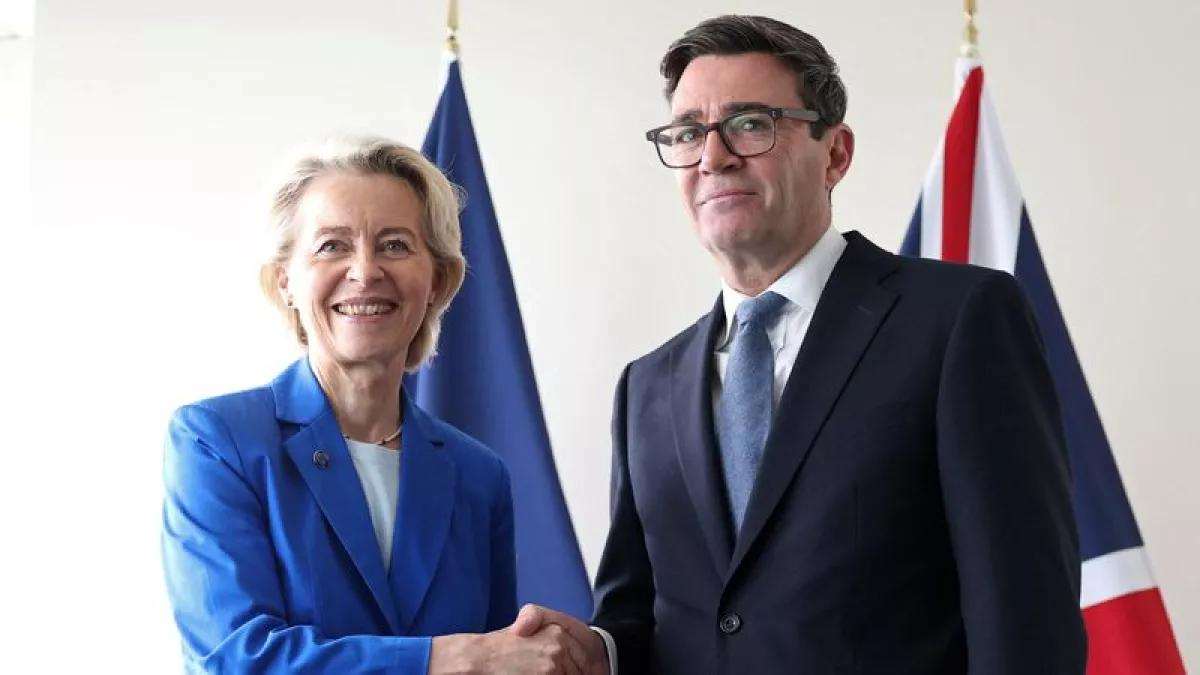
The meeting between British Prime Minister Andy Burnham, European Council President António Costa and European Commission President Ursula von der Leyen will test the direction of the EU–UK relationship.
A joint declaration is expected to address areas of cooperation including security, defence and other elements of the bilateral relationship.
Reports have also pointed to a possible arrangement allowing British participation in EU civilian crisis-management missions.
For the defence industry, however, the most important issue will be whether the declaration offers a concrete path towards participation in future EU financing instruments.
Scenario One: Political Progress, No Funding Agreement
The two sides agree on closer security cooperation and confirm their intention to explore British participation in future European defence programmes.
However, they avoid committing to a specific financial formula.
The substantive negotiations move into discussions surrounding the EU’s next multiannual budget.
For British manufacturers, the existing restrictions remain in place.
Scenario Two: Wider Negotiations Delay Defence Cooperation
Disagreements over other issues, including fisheries, youth mobility or trade arrangements, complicate the broader relationship.
The defence section of the summit declaration contains limited commitments.
Britain consequently places greater emphasis on bilateral industrial agreements with individual European countries.
Germany, Italy and Nordic partners could become increasingly important in that approach.
Such a development would allow cooperation to continue, but without creating a unified European defence financing framework.
Scenario Three: A Framework for British Participation in SAFE 2
The leaders agree on principles for possible British participation in a future European defence financing programme.
The arrangement could include a contribution mechanism linked to the volume of contracts awarded to British manufacturers.
That would not amount to immediate membership of the existing SAFE scheme.
It would, however, establish a basis for negotiating a more integrated industrial partnership.
These are possible outcomes rather than confirmed decisions, and the summit declaration will determine which direction the discussions actually take.
The Sentence That Could Define the EU–UK Defence Reset
The most revealing part of the summit may not be the language celebrating renewed cooperation.
It may be a single sentence concerning Britain’s participation in future European defence instruments.
A commitment merely to explore options would suggest that the central financial disagreement remains unresolved.
A reference to negotiating specific participation conditions, including a contribution mechanism, would indicate more substantive progress.
For London, the distinction matters because defence manufacturers need predictable access to future procurement opportunities before committing to major industrial investments.
For Brussels, it matters because Europe’s rearmament strategy requires not only additional financing but also sufficient production capacity.
Britain already participates in European security diplomacy, contributes military capabilities and supports efforts to shape Ukraine’s future security arrangements.
What remains uncertain is whether its defence industry will be integrated into the next phase of European procurement.
Brussels has given Britain a seat at Europe’s security table. The question now is whether it will also give British industry a place in Europe’s defence contracts.
Source: pagenews.gr
Διαβάστε όλες τις τελευταίες Ειδήσεις από την Ελλάδα και τον Κόσμο