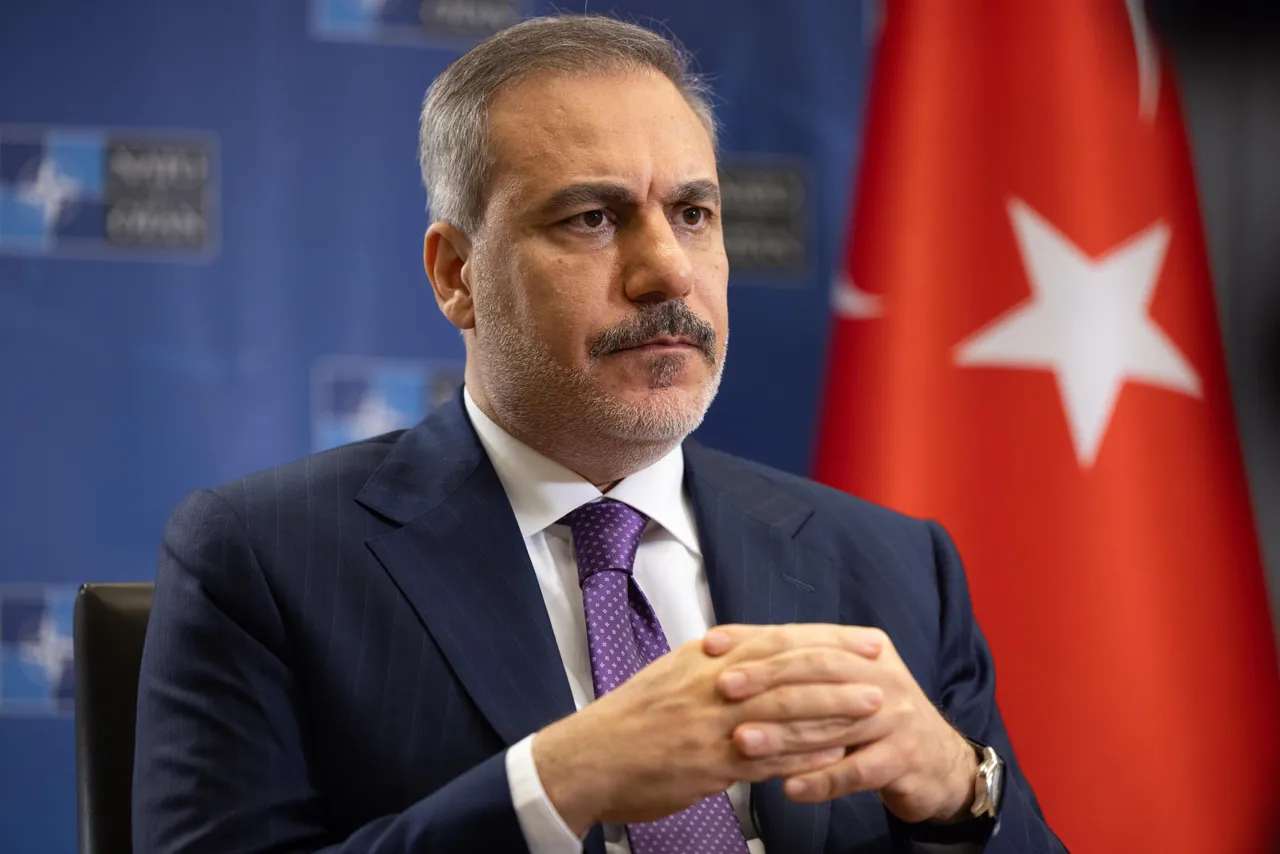
Turkish Foreign Minister Hakan Fidan has accused Greek and Israeli lobbying groups of obstructing efforts to lift US sanctions against Turkey, arguing that the dispute extends beyond Ankara’s purchase of Russia’s S-400 air defence system.
Fidan portrayed the negotiations as a contest for influence in Washington. The official American explanation for imposing sanctions, however, directly links the measures to Turkey’s acquisition of the Russian system.
Fidan describes a “lobbying war”
In an excerpt circulated by Clash Report, Fidan alleged that Israel was lobbying heavily in Washington against Turkey.
“This has turned into something of a lobbying war,” he said, according to the English rendering accompanying the footage.
He also named Greek lobbying groups and invoked the competing slogans “America First” and “Israel First”, framing Turkey’s request within the debate over American foreign policy priorities.
These statements represent Fidan’s assessment of political influence in Washington, rather than an established explanation for US decision-making.
What Fidan claims Rubio told him
Fidan also discussed his conversations with US Secretary of State Marco Rubio.
According to the Turkish minister, Rubio said that, had he known how binding the relevant legislative provision would become, he would not have supported its approval.
Fidan expressed confidence that the US administration wanted to lift the sanctions, while acknowledging that achieving this would require sustained work. He announced neither a decision to remove the restrictions nor a timetable.
His account of the private conversation should therefore be distinguished from a publicly confirmed statement by Rubio.
Why Washington imposed sanctions
The US decision of December 14, 2020, explicitly identified the purchase of the S-400 system as its basis.
Washington imposed sanctions on Turkey’s Presidency of Defence Industries, known as SSB, under Section 231 of the Countering America’s Adversaries Through Sanctions Act, or CAATSA. The decision concerned a significant transaction with Rosoboronexport, Russia’s principal arms export organisation.
The State Department said Turkey had proceeded despite repeated warnings that the purchase could threaten the security of American military technology and personnel.
Fidan’s allegations about lobbying do not alter that documented rationale: the sanctions followed Turkey’s decision to acquire the Russian system.


Restrictions affecting Turkey’s defence industry
The 2020 package restricted US export licences for goods and technology transferred to SSB, financing available to the organisation and certain forms of export support.
It also imposed measures against named Turkish defence procurement officials.
These were targeted restrictions with consequences for defence cooperation. The same US announcement linked Turkey’s S-400 acquisition to its suspension and removal process from the F-35 programme.
The comparison with other buyers of Russian weapons
Fidan questioned why other countries purchasing Russian defence equipment had not faced comparable sanctions.
There is, however, a documented precedent. In September 2018, Washington sanctioned China’s Equipment Development Department and its then director, Li Shangfu, under Section 231 of CAATSA.
Those measures concerned transactions with Rosoboronexport involving Su-35 fighter aircraft and S-400-related equipment. Turkey is therefore not the only case in which this sanctions mechanism has been applied over Russian weapons procurement.
Diplomatic expectations await a formal decision
Ankara wants improved relations with Washington to produce concrete relief for its defence industry. Fidan alleges that Turkey’s opponents are preventing that outcome.
The unresolved question is what Washington will decide and under which conditions. Ministerial conversations, expectations of a breakthrough and accusations about lobbying do not themselves change the sanctions regime.
Source: pagenews.gr