Cyprus at Heart of EU–Turkey Talks:Brussels Presses Ankara Fitto Meets Fidan Christodoulides Draws a Red Line
 ΧΡΟΝΟΣ ΑΝΑΓΝΩΣΗΣ 10 '
Πηγή Φωτογραφίας: AP Photo//Cyprus at the Heart of EU–Turkey Talks: Brussels Presses Ankara as Fitto Meets Fidan and Christodoulides Draws a Red Line



The European Union is seeking to bring fresh momentum to efforts to resolve the Cyprus dispute, placing the decades-old conflict firmly on the agenda of its relationship with Turkey.
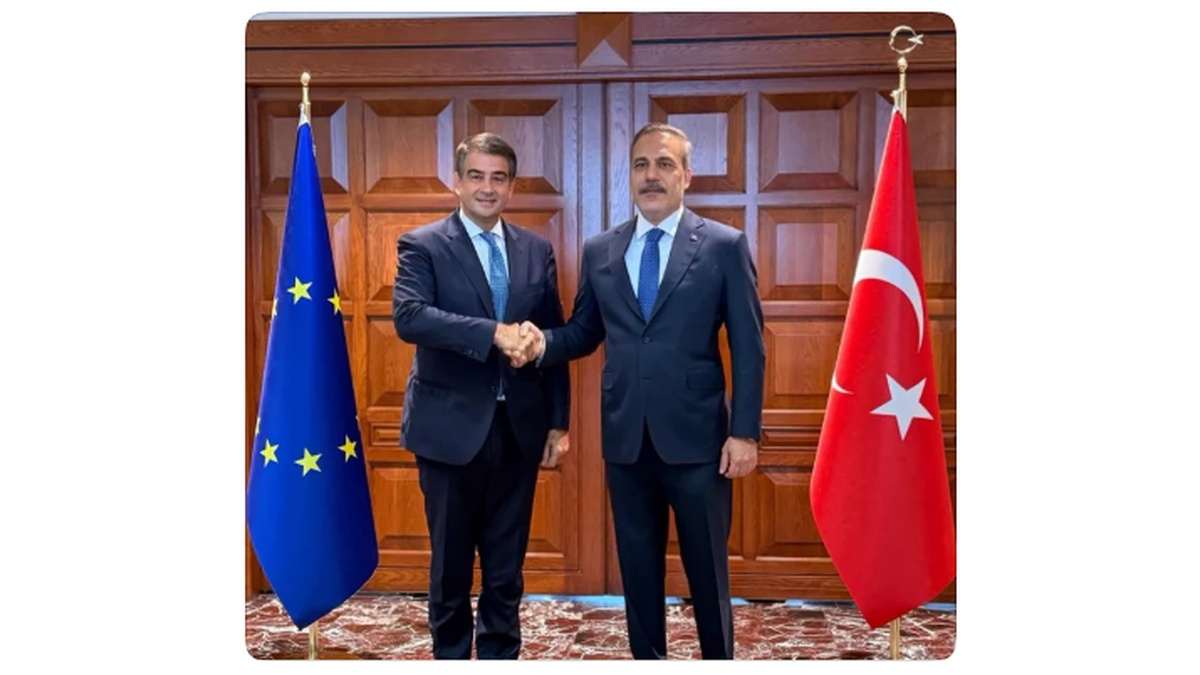
A meeting in Ankara between Raffaele Fitto, European Commission Vice-President and the Commission’s special representative for Cyprus, and Hakan Fidan, Turkey’s foreign minister, has highlighted Brussels’ determination to play a more active role in the search for a comprehensive settlement.
According to sources in Brussels, the discussions focused on the prospects for a solution under the auspices of the United Nations, alongside the broader relationship between the European Union and Turkey.
The central diplomatic message was clear: progress towards resolving the Cyprus dispute could create a more favourable environment for EU–Turkey relations.
For Nicosia, that connection is particularly important.
Cyprus has consistently argued that Ankara’s ambitions for closer cooperation with Brussels cannot be separated from its position on the island’s future.
Fitto–Fidan Meeting: Cyprus Becomes a Test for EU–Turkey Relations
The meeting in Ankara brought together two issues that have long shaped European diplomacy: the unresolved Cyprus question and Turkey’s relationship with the European Union.
According to Brussels sources, the discussions emphasised that progress towards a comprehensive settlement would benefit Cyprus, Turkey, the European Union and the wider Eastern Mediterranean.
The exchange of views on EU–Turkey relations was described as constructive, with both sides stressing the importance of maintaining dialogue and strengthening cooperation in areas of mutual interest.
However, the meeting did not produce an announced agreement or a timetable for renewed Cyprus negotiations.
Its significance lies instead in the renewed diplomatic attention being given to the relationship between progress on Cyprus and the wider European agenda with Ankara.
For Turkey, closer relations with Brussels offer potential economic and strategic advantages.
For Cyprus, meaningful engagement by Ankara in UN-led negotiations remains an essential requirement.
The challenge is whether these interests can create sufficient momentum to overcome the political divisions that have prevented a settlement for decades.
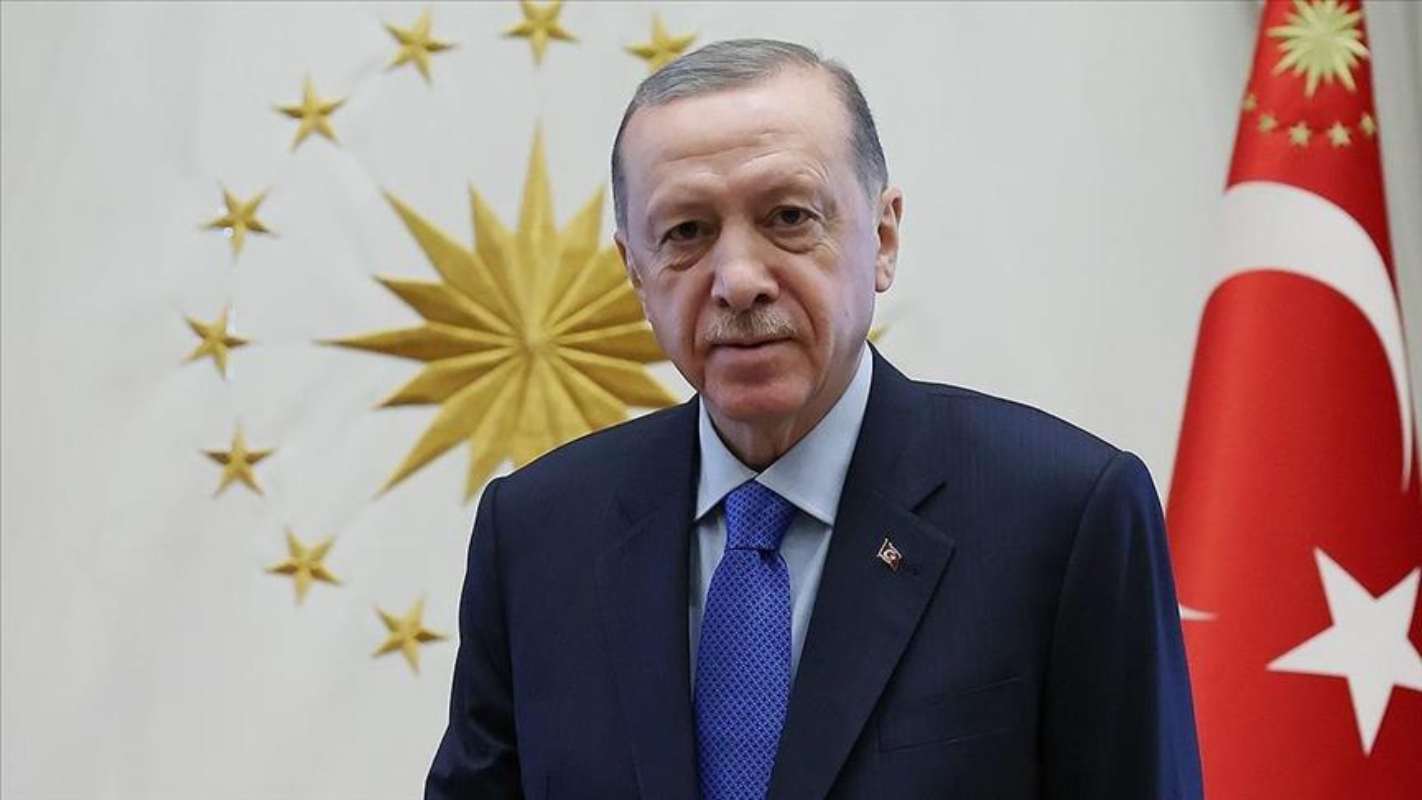
Christodoulides: A “Very Important” Meeting in Ankara
Cyprus President Nikos Christodoulides welcomed the meeting, describing it as “very important”.
He confirmed that he had been in contact with Fitto in the days preceding the discussions and expected to receive a briefing on their outcome.
The Cypriot president also emphasised the importance of a stronger European role in the settlement process.
Referring to the visit, he said:
“It also demonstrates the role that the European Union is seeking to play, a role we have pursued from the outset, because we genuinely believe that the EU has the tools that can lead us to a mutually beneficial situation.”
His remarks reflect Nicosia’s longstanding objective of ensuring that the European Union becomes an active diplomatic participant rather than merely an observer.
For the Cypriot government, Brussels possesses political and economic instruments that could help create incentives for renewed negotiations.
Nevertheless, Christodoulides has made clear that European engagement must reinforce, rather than replace, the established United Nations framework.
Nicosia’s Message to Ankara: No EU Breakthrough Without Cyprus Progress
Christodoulides also delivered a clear message concerning Turkey’s expectations of closer ties with the European Union.
If Ankara wants positive developments in EU–Turkey relations, he argued, it must support the resumption of substantive negotiations on Cyprus.
Those talks, according to the Cypriot president, must restart on the basis of the agreed framework and from the point at which negotiations broke down in the summer of 2017.
This is a critical distinction.
Nicosia does not want a completely new negotiating process that disregards the progress achieved during previous rounds.
Instead, it is seeking a return to the established UN parameters, including the framework for a bizonal, bicommunal federation.
Turkey’s position remains a major obstacle.
In recent years, Ankara and the Turkish Cypriot leadership have advocated sovereign equality and a two-state solution, a position that diverges from the framework established by relevant UN Security Council resolutions.
The gap between these approaches remains one of the central barriers to renewed negotiations.
The Shadow of Crans-Montana: Why 2017 Still Matters
Christodoulides’ reference to the summer of 2017 points directly to the collapse of the Cyprus settlement talks at Crans-Montana, Switzerland.
Those negotiations represented one of the most significant attempts in recent decades to reach a comprehensive agreement.
The discussions addressed some of the most difficult aspects of the Cyprus dispute, including security arrangements, guarantees, the presence of foreign troops, governance and power-sharing.
Despite intensive diplomatic engagement, the parties failed to reach a settlement.
The collapse left the negotiating process stalled and deepened uncertainty about the prospects for reunification.
For Nicosia, returning to the point where the talks ended is intended to preserve the work already completed and prevent the process from beginning again without an agreed foundation.
For Ankara, however, the question of the political status and sovereign equality of the Turkish Cypriot side remains central.
Reconciling these positions will be essential if the latest diplomatic contacts are to produce meaningful progress.
Brussels’ Strategic Leverage: Trade, Customs and Political Cooperation
The European Union has several instruments that could influence the broader diplomatic environment.
Turkey is an important economic and strategic partner for the EU, with substantial trade links and cooperation across migration, security, transport and energy.
The EU–Turkey Customs Union is particularly significant for the economic relationship.
Discussions over its potential modernisation have long been affected by broader political disagreements, including the Cyprus question.
Political dialogue, sectoral cooperation and other elements of the bilateral relationship also provide opportunities for engagement.
Cyprus, as an EU member state, participates in the Union’s decision-making processes on Turkey.
This gives Nicosia a direct role in discussions about the future of EU–Turkey relations.
However, the European Commission cannot independently deliver a Cyprus settlement.
The negotiations remain under United Nations auspices, and any comprehensive agreement would require political decisions by the parties directly involved.
The EU’s potential contribution is to strengthen incentives for dialogue and help ensure that any settlement is compatible with European law and institutions.
Turkey’s European Ambitions Meet the Cyprus Question
Ankara’s relationship with Brussels is shaped by a complex mixture of economic interests, geopolitical considerations and political disagreements.
Turkey remains a NATO member and a major regional actor, with influence across the Black Sea, the Middle East and the Eastern Mediterranean.
Its role in migration management and European security gives it considerable strategic importance.
At the same time, disputes over Cyprus and other political issues have constrained the development of a closer relationship with the EU.
The Fitto–Fidan meeting reflects an attempt to keep diplomatic channels open while acknowledging that the Cyprus question cannot simply be set aside.
For Brussels, improved relations with Ankara could serve wider European interests.
For Nicosia, any such improvement should be accompanied by genuine progress towards a settlement.
Whether Turkey is prepared to adjust its negotiating position remains uncertain.
Greece and Cyprus: The Eastern Mediterranean Dimension
The developments also carry important implications for Greece.
Athens has consistently supported a comprehensive Cyprus settlement based on relevant UN Security Council resolutions and the European acquis.
The Cyprus dispute remains closely connected to the wider security environment in the Eastern Mediterranean and to relations between Greece and Turkey.
Progress towards a settlement could help reduce regional tensions and create opportunities for greater economic and political cooperation.
Conversely, a prolonged deadlock would leave one of Europe’s most enduring disputes unresolved.
The involvement of the European Commission therefore has implications beyond the island itself.
It reflects a broader European interest in regional stability at a time when energy security, maritime interests and geopolitical competition remain significant concerns.
No Date Yet for a UN Trilateral Meeting
Despite the renewed diplomatic activity, there is still no confirmed date for a trilateral meeting involving Cyprus President Nikos Christodoulides and UN Secretary-General António Guterres.
Christodoulides said he had been in contact with María Ángela Holguín, the UN Secretary-General’s personal envoy on Cyprus.
The contacts indicate that diplomatic efforts are continuing, but no formal timetable for the resumption of substantive negotiations has been announced.
The next significant development will be whether the discussions in Ankara help create the conditions for further UN-led engagement.
For now, expectations remain cautious.
The diplomatic process has gained attention, but the fundamental disagreements have not been resolved.
The Next Test: Can Ankara Turn Dialogue into Progress?
The Fitto–Fidan meeting has brought the Cyprus question back into the centre of discussions between the European Union and Turkey.
It has also reinforced the position of the Cypriot government that progress on the island should form part of the wider conversation about Ankara’s relationship with Brussels.
Christodoulides sees the EU’s involvement as an opportunity to strengthen diplomatic efforts and create a more constructive negotiating environment.
Yet the central challenge remains unchanged.
Turkey’s desire for closer cooperation with the European Union must be weighed against its willingness to return to substantive Cyprus negotiations within the agreed UN framework.
The meeting in Ankara may mark an important diplomatic step, but its real significance will depend on what follows.
For Cyprus, Greece and the wider European Union, the question is whether renewed European engagement can help transform a prolonged diplomatic deadlock into a credible path towards a comprehensive settlement.
Source: pagenews.gr
Διαβάστε όλες τις τελευταίες Ειδήσεις από την Ελλάδα και τον Κόσμο