Turkey Claims Right Grant Permits in the Mediterranean:Ankara’s Diplomatic Gambit Over Greece–Cyprus Cable
 ΧΡΟΝΟΣ ΑΝΑΓΝΩΣΗΣ 13 '
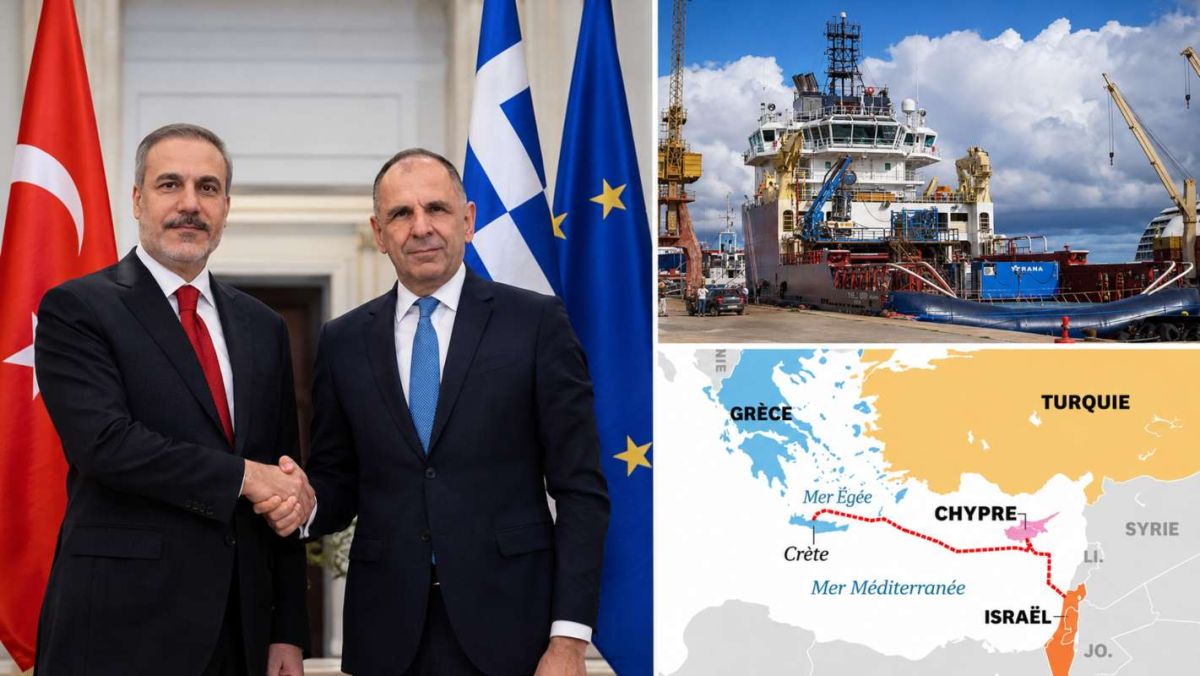
Πηγή Φωτογραφίας: eurokinissi//Turkey Claims the Right to Grant Permits in the Mediterranean: Ankara’s Diplomatic Gambit Over the Greece–Cyprus Cable



A diplomatic exchange involving France and Turkey has developed into a new confrontation over maritime jurisdiction in the Eastern Mediterranean, with potentially significant consequences for the Great Sea Interconnector (GSI), the electricity project designed to connect Greece and Cyprus.
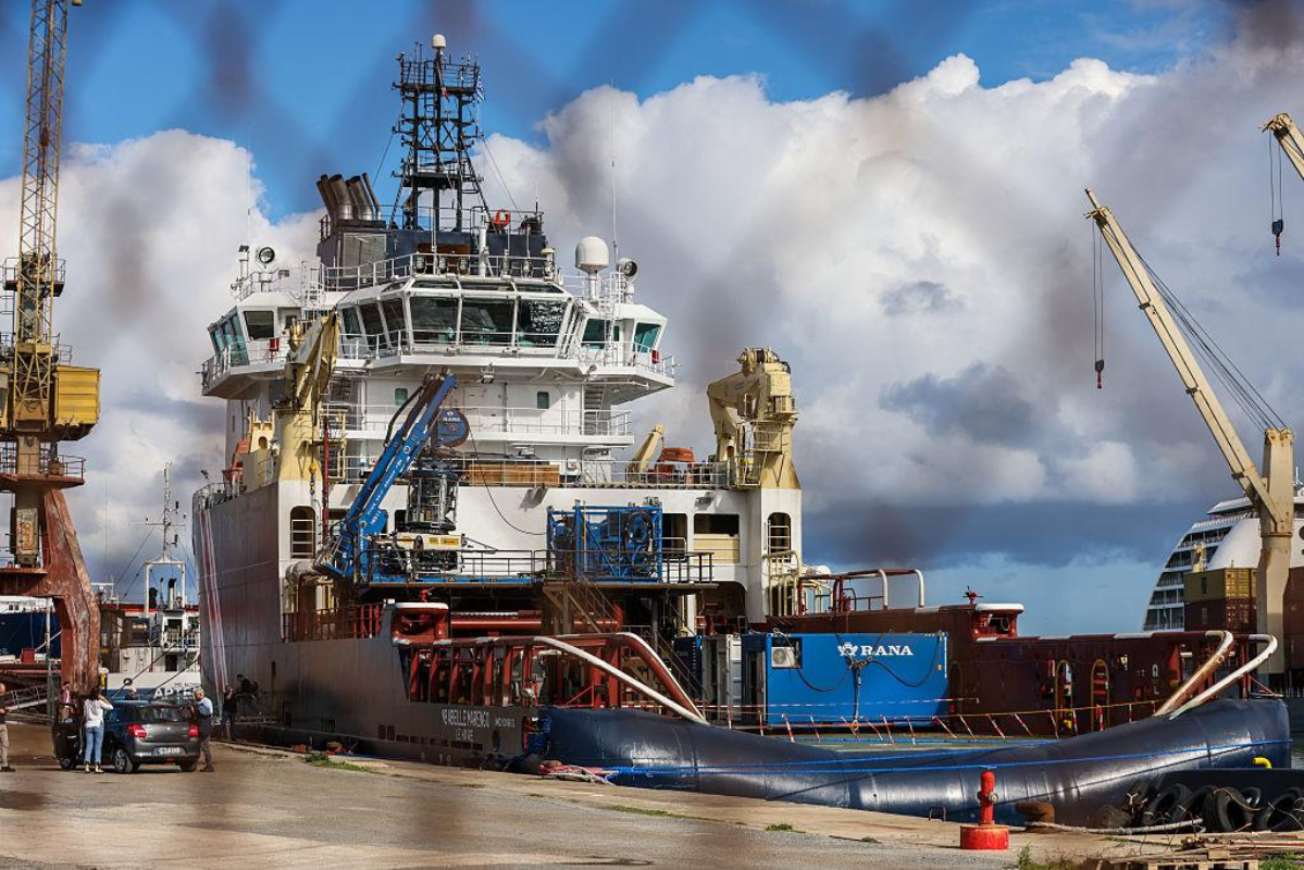
Ankara claims that it has granted consent for the planned seabed surveys by the French vessel Abeille Marengo, presenting the move as recognition of Turkey’s rights in the maritime area concerned.
Athens rejects that interpretation.
The Greek government maintains that France merely notified Turkey of the planned activities and did not request permission to conduct them.
The disagreement may appear technical, involving diplomatic notes and maritime navigation warnings known as NAVTEX. In reality, it touches upon one of the most sensitive issues in Greek–Turkish relations: the competing interpretations of maritime jurisdiction, continental shelf rights and the legal status of activities in disputed waters.
For now, the confrontation has remained primarily diplomatic, with no confirmed major operational escalation at sea.
That does not make it insignificant.
The question is whether Ankara can use a routine diplomatic exchange to strengthen its broader claims over maritime areas where Greece and Cyprus reject Turkish jurisdiction.
Ankara’s Diplomatic Note: Consent That Was Never Requested?
According to Turkish newspaper Türkiye, citing diplomatic sources, Ankara delivered a formal diplomatic note to France on November 10.
The note reportedly reiterated Turkey’s position on compliance with international law and stated that Ankara had given its consent for the French vessel’s planned seabed surveys.
Turkish sources presented the development as confirmation that research activities in areas claimed by Turkey as part of its continental shelf require Ankara’s approval.
They also suggested that Turkey had prevented a new Greek attempt to establish facts on the ground—or, more precisely, at sea.
These claims, however, represent Turkey’s interpretation of the diplomatic exchange, not an internationally agreed legal conclusion.
Greece and Cyprus reject the suggestion that Ankara has the authority to authorize the activities in question.
Nor has France publicly confirmed that it sought Turkish permission or recognized Turkish jurisdiction over the relevant maritime areas.
The distinction is crucial.
Ankara is not necessarily seeking to halt the surveys outright. Instead, it appears determined to frame their continuation as something made possible by Turkish consent.
That interpretation could carry implications beyond the immediate project.
Athens Responds: “Notification Is Not Permission”
The Greek government has firmly rejected the Turkish account.
Government spokesperson Pavlos Marinakis drew a distinction between notifying another country about planned maritime activities and requesting authorization from it.
“Notification and permission are two different things,” Marinakis said, dismissing claims that France had sought Turkey’s approval.
According to Athens, the necessary authorizations for the surveys and cable-laying activities have been issued by the competent Greek and Cypriot authorities.
The French communication with Turkey, the government argues, was intended to provide information rather than acknowledge any Turkish right to grant or withhold permission.
The distinction matters politically and legally.
Greece does not want an infrastructure project linking two European Union member states to be presented as dependent on the approval of a third country.
Athens has also rejected Turkish counter-NAVTEX notices, maintaining that they do not alter the legal responsibilities or jurisdiction of the Greek authorities.
For the Greek government, the immediate objective is to ensure that the project proceeds without creating an apparent precedent that could later be invoked in maritime negotiations.
NAVTEX 1127/26: Turning a Maritime Notice into a Political Statement
Turkey issued a new maritime notice, NAVTEX 1127/26, on November 10 concerning the activities of the Abeille Marengo.
In the notice, Ankara presented the planned surveys as operations taking place with Turkish consent in an area it considers part of its continental shelf.
The notice reportedly covers survey lines extending toward Cyprus, with activities scheduled through March 2027.
Its significance extends beyond navigational safety.
A NAVTEX is primarily intended to inform mariners about activities and potential hazards at sea.
It does not, by itself, establish sovereignty or create maritime jurisdiction.
Yet Turkey is using the notice to reiterate its position on the continental shelf and to associate the French vessel’s activities with its claimed authority.
The result is a diplomatic contradiction.
The project may continue, but Ankara seeks to record that it has allowed the work to proceed.
Athens, meanwhile, insists that no such authorization was necessary.
The issuance of a Turkish NAVTEX does not establish that France or Greece has accepted Turkey’s maritime claims.
The dispute therefore concerns not only the activities of the vessel but also the political and legal meaning attached to the communications surrounding them.
France Caught Between Two Competing Interpretations
France has emerged as a central player in the latest phase of the dispute.
The Abeille Marengo is carrying out activities connected to a major European energy infrastructure project, giving Paris a direct interest in ensuring that the surveys proceed without disruption.
According to reports in Kathimerini, intensive diplomatic contacts took place between France and Turkey before the vessel began its planned activities.
The purpose was reportedly to overcome obstacles and prevent a confrontation at sea.
Athens maintains that the French communication was informational.
Ankara presents its own response as an exercise of maritime authority.
The same diplomatic exchange is therefore being used to support two fundamentally different narratives.
For Greece, the French note demonstrates that notification does not amount to permission. For Turkey, its response is being presented as evidence that Turkish consent matters.
France has not publicly released the complete diplomatic correspondence, leaving room for competing interpretations.
The absence of a fully disclosed record also complicates efforts to determine precisely what was communicated and how the relevant parties understood it.
The Great Sea Interconnector: More Than an Energy Project
The Great Sea Interconnector is intended to connect the electricity systems of Greece and Cyprus, with a potential future extension to Israel.
Cyprus remains the only European Union member state without an electricity interconnection to another country.
The project is therefore strategically important for European energy integration, security of supply and the reduction of Cyprus’s energy isolation.
But the cable route also passes through maritime areas where Greece and Turkey hold conflicting positions on continental shelf and exclusive economic zone boundaries.
Athens bases its position on the international law of the sea, including the maritime entitlements of islands.
Turkey disputes aspects of the Greek interpretation in parts of the Eastern Mediterranean and relies on its own maritime claims and coordinates submitted to the United Nations.
The disagreement over the cable thus reflects a much wider geopolitical conflict.
It concerns whether energy infrastructure can be developed without becoming entangled in unresolved maritime delimitation disputes.
For Ankara, maintaining its legal and diplomatic position is a strategic priority.
For Athens and Nicosia, the objective is to ensure that a European infrastructure project can proceed without acknowledging Turkish authority over areas where they reject such jurisdiction.
Hakan Fidan’s Measured Response
Turkish Foreign Minister Hakan Fidan has adopted a relatively restrained public tone.
Asked about the confrontation over the maritime notices, he sought to play down the possibility of escalation.
“Everything is normal, everything is fine,” he said.
In earlier remarks, Fidan had indicated that Turkey was not opposed in principle to survey activities, provided that Ankara received written notification.
That position offers an important insight into Turkey’s diplomatic approach.
Ankara appears willing to keep communication channels open with Paris while continuing to assert its maritime claims.
It is not presenting itself as categorically opposed to regional electricity interconnections.
Instead, it argues that such projects must respect what Turkey considers the rights of all relevant parties.
The Greek position is different: the project should proceed without any implication that Turkey possesses a veto over the planned activities.
The two governments are therefore pursuing conflicting objectives even as they seek to avoid a direct confrontation.
Why Ankara Is Keeping the Dispute Diplomatic
The latest developments suggest that the parties are seeking to manage their differences without triggering an immediate crisis at sea.
The French vessel departed Heraklion on November 10 to undertake preparatory activities and surveys connected to the electricity interconnector.
Diplomatic contacts continued, while Turkish objections were expressed largely through NAVTEX notices, diplomatic communications and reports attributed to officials.
This pattern suggests an effort to keep the confrontation within controlled diplomatic channels.
But it does not eliminate the possibility of future tensions.
The decisive test will come when survey activities take place in maritime areas where Turkey’s claims overlap with the planned operations.
At that point, the effectiveness of the current diplomatic arrangements will become clearer.
Until then, neither side can claim that the underlying dispute has been resolved.
A New Domestic Political Dispute in Greece
The controversy has also entered Greece’s domestic political debate.
Opposition parties have sought more detailed information about the French diplomatic communication with Turkey.
Their central question concerns whether the note was limited to navigational information or contained language that Ankara could use to support its claims.
The government insists that France did not seek Turkish permission and that Greece has fulfilled the necessary procedures.
The opposition argues that greater transparency is needed over diplomatic exchanges involving sensitive maritime issues.
The dispute highlights the political importance of precise language in international communications.
Even where a document is intended as a practical notification, competing governments may seek to attach different legal or political meanings to it.
For Athens, preventing such interpretations from gaining traction is part of the broader challenge of defending its maritime positions.
The European Union’s Strategic Dilemma
The Great Sea Interconnector has implications beyond Greek–Turkish relations.
The European Union has supported the project because of its importance for energy integration and the security of Cyprus’s electricity supply.
Its implementation is therefore relevant to the EU’s broader energy strategy.
The Turkish intervention raises a question for Brussels.
How can the Union ensure the completion of strategic energy infrastructure when a third country asserts maritime claims affecting the areas in which work is planned?
The issue is not simply whether the cable can be laid.
It concerns the practical ability of the EU to support cross-border projects involving its member states in geopolitically contested regions.
France’s involvement adds another European dimension.
Paris has an interest in maintaining regional stability while ensuring that the planned maritime activities can proceed.
The challenge is to achieve that objective without allowing routine diplomatic exchanges to be interpreted as recognition of disputed claims.
The Next Test Will Take Place at Sea
The dispute over the Great Sea Interconnector now has two parallel dimensions.
The first is operational: whether the surveys and subsequent cable-laying activities can proceed according to schedule.
The second is diplomatic and legal: whether Turkey can use its communications with France to reinforce its claims over maritime jurisdiction.
Ankara says it has granted consent.
Athens says no consent was requested.
France finds itself at the center of those competing interpretations as the French vessel prepares to continue its work.
The outcome will not ultimately be determined by which government dominates the diplomatic narrative. It will depend on whether the project advances without obstruction and without changing the parties’ positions on maritime jurisdiction.
Turkey is seeking to establish a diplomatic role in areas where Greece rejects its authority to grant permission.
Greece is seeking to ensure that the work continues without setting a precedent that could undermine its maritime claims.
And the Eastern Mediterranean faces a familiar geopolitical question:
Can a strategic European energy project move forward without becoming another confrontation over maritime boundaries, sovereignty and regional influence?
Source: pagenews.gr
Διαβάστε όλες τις τελευταίες Ειδήσεις από την Ελλάδα και τον Κόσμο