“No One in Turkey Dreams of Greek Territory”
 ΧΡΟΝΟΣ ΑΝΑΓΝΩΣΗΣ 12 '
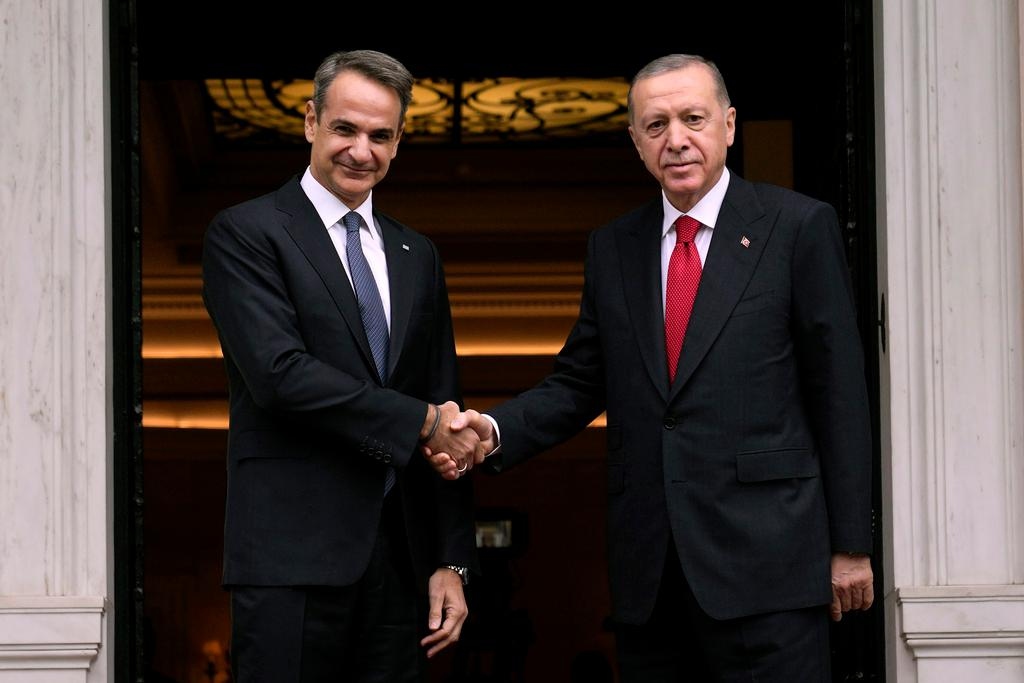
Πηγή Φωτογραφίας: Thanassis Stavrakis | Συντελεστές: AP Πνευματικά δικαιώματα: Copyright 2023 The Associated Press. All rights reserved//“No One in Turkey Dreams of Greek Territory”



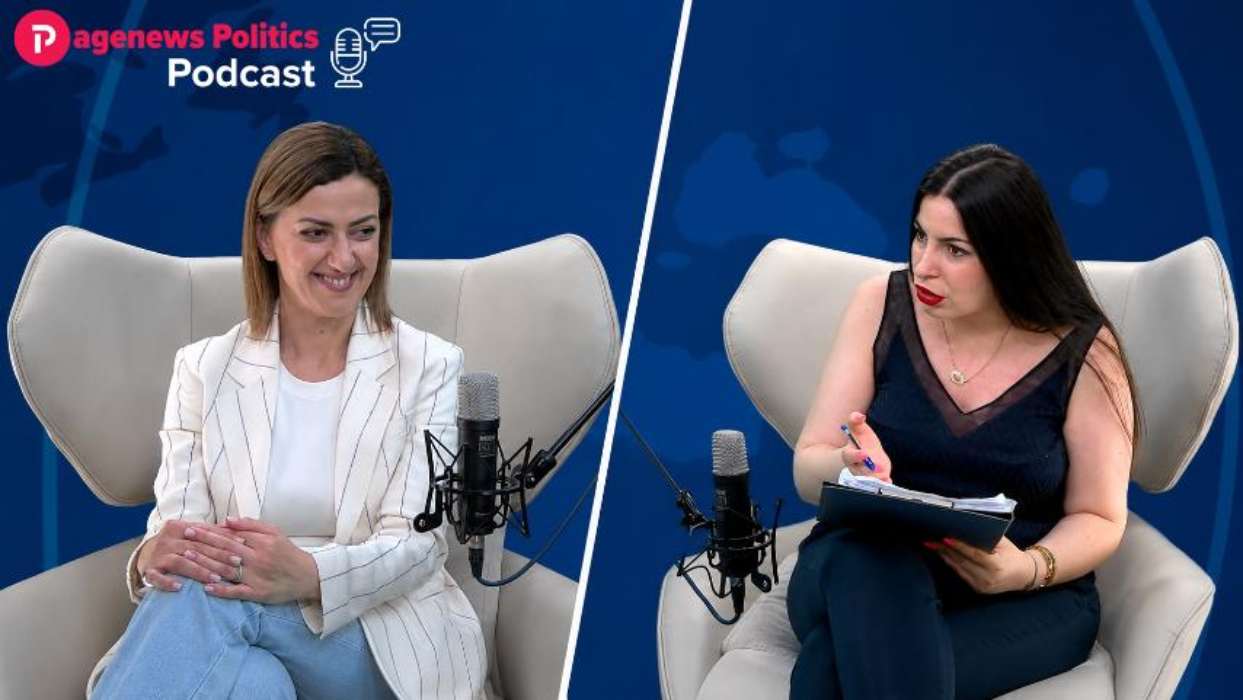
The director of Milliyet, one of Turkey’s largest and most influential newspapers, Oğuz Sedir, is considered one of the strongest journalistic voices in the neighboring country. In the following interview, he discusses the real priorities of the two societies, the long-standing trap of domestic politics that fuels mutual suspicion, and the prospects for a new, stable mechanism of Greek-Turkish cooperation.
He stresses that “no party in Ankara dreams of Greek territory,” reminding that “Turkey has far more serious issues to deal with than focusing constantly on Greek-Turkish relations.” He also underlines that the moment Turkey stops being used as a tool of internal political consumption in Greece, “relations will move to an entirely new level.”
— Do you believe Greece and Turkey can build a long-term strategic trust mechanism that goes beyond leaders and governments? What is currently missing from such a framework?
— In Turkey, how much does the government’s stance on Greek-Turkish relations actually influence public opinion? Are we seeing a shift toward more realistic perspectives or does the national narrative still dominate?
Your question about political rhetoric in Turkey is indeed important. In daily Turkish politics, tensions with Greece do not occupy even 1% of the agenda. The records show clearly that statements from Ankara perceived as “threats” in Athens are always responses to measures taken by Greece.
I understand Greece’s efforts to reform its military, but I do not understand why the Minister of Defense limits modernization efforts exclusively in relation to Turkey. At a time when all of Europe is preparing their armed forces for a potential war with Russia, Greek politics behaves as if the only threat in the world is Turkey.
I can say with certainty that even the most nationalist parties in Turkey have no desire to annex Greek territory. However, all political parties—large or small—agree that the Aegean islands cannot be militarized in violation of the Lausanne Treaty of 1914 and the Paris Treaty of 1947. There is not a single political party in Ankara dreaming of incorporating into Turkey even the Greek islands only “20 minutes swimming distance” from Turkish shores.
However, for all sides, Greece’s attempt to extend its territorial waters in the Aegean to 12 nautical miles, or to restrict Turkey in the Eastern Mediterranean through Kastellorizo (Meis), is absolutely unacceptable.
It saddens me when I read in Greek newspapers claims that Turkey pursues an expansionist “neo-Ottoman” policy. If Turkey had such a goal, it would target former Ottoman regions rich in natural resources—not Greece. The spread of fear does not benefit Greece, but France and Israel.
— Recently, the U.S. ambassador to Turkey emphasized the idea of potential joint exploitation in the Aegean. How is this perceived in Turkey? Could such proposals realistically enter the bilateral dialogue, or do they risk heightening sensitivities on both sides?
The idea of creating joint cooperation zones, especially in the Aegean, was not first proposed by the American ambassador but by the Turkish-Greek Media and Academic Forum. These meetings stopped because every time Greek politicians used the “Turkey card” for domestic consumption, civil society and the media hesitated to move forward. But today, Turkey is much more ready to support such initiatives.
To be honest, I visited all major TV channels in Greece to propose a joint series about the human tragedy of the Nazi occupation: about the aid that arrived from Turkey at that time and about the children who found refuge in Anatolia. Similarly, I proposed to major newspapers such as Kathimerini a regular exchange of opinion articles, so we can systematically hear each other’s voices.
When Greece announced the hiring of 240,000 Egyptian workers, I publicly requested that at least 40,000 could be hired from Turkey, a country with similar culture and daily habits. From Alexandroupolis to Kavala and from Thessaloniki to Athens, countless restaurants employ Romanians, Bulgarians and Moldovans who speak Turkish—while actual Turks are absent. We must create cooperation in the social and economic fields where neither side has anything to fear or lose.
It is encouraging that the American ambassador reached the same conclusion. After all, the country that has benefited most from Greek-Turkish tensions—even more than France or Israel—is the United States.
There is no real obstacle preventing Turkey and Greece from creating a cooperation mechanism that goes beyond day-to-day politics. On our side of the Aegean, we do not wake up in the morning looking for ways to behave hostilely toward Greece. Turkey has far more serious issues to deal with than focusing on Greek-Turkish relations. For ordinary people, Greece is simply a familiar and pleasant holiday destination. For example, today, throughout Istanbul there are sirtaki classes, while recently a Greek Folk Dance Festival was held, which I attended together with the Consul General, Ambassador Dr. Konstantinos Koutras, experiencing firsthand the warmth of the people.
Turkish public opinion sincerely desires good relations with Greece—we share music, flavors, and common concerns.
— How responsible are Turkish and Greek media for reinforcing distrust? What could journalists on both sides do differently?
In both countries, there are media figures who believe that hostility increases sales and viewership. From this perspective, we face similar problems. As journalists, however, we have responsibilities not only to our publishers but also to the future of our children.
When I had coffee in Athens with Alexis Papachelas, director of Kathimerini, he explained to me that there was no military reinforcement at the American base in Alexandroupolis, and that the incoming weapons systems were destined for other regions. I immediately reported this in my column, and from that day on, the topic disappeared from Turkish public discourse. We don’t need to agree on everything—but we must be able to talk.
Milliyet, which I direct, has had editors-in-chief throughout its 75-year history who worked systematically for peace between Turkey and Greece. That stance stems from the knowledge that peace benefits both sides, not only Greece.
In Greece there is a loud minority—what Prime Minister Mitsotakis calls “fanatical nationalists.” Their influence on bilateral relations must be limited. We often forget that we are members of NATO: if Greece were attacked today, Turkey would be among the first to rush to help; and vice versa.
I understand that it is not easy for some to see Turkish drones not as a threat but as a possible tool to enhance Greece’s security. But let history speak: during the battles on the Aegean islands against the Italians, Turkey sent ammunition to Greece and treated wounded soldiers. This memory exists and reminds us that our peoples can stand beside each other when needed. A journalistic narrative portraying every development as a repetition of past wars helps no one—on the contrary, it harms us all.
— How do you assess current relations between Prime Minister Mitsotakis and President Erdoğan? Do you see real political will for de-escalation, or mostly tactical management?
Turkey is fully aware of the difficulties faced by Prime Minister Mitsotakis, as well as the internal dynamics over the leadership of New Democracy. We also observe the rise in polling numbers after recent economic measures. Could the Prime Minister show more courage? Undoubtedly. Even in their current form, the de-escalation atmosphere brings tens of millions of euros into the Greek economy.
From Turkey’s side, President Erdoğan took significant risks regarding the Annan Plan just days before the 2004 local elections—even at the cost of losing votes, which indeed happened. References to the Greek Prime Minister’s speech in the U.S. Senate have been conveyed to Ankara, and a relationship of trust has been built between the Foreign Ministers.
Although the Prime Minister did not make his scheduled visit to Turkey in 2025, the fact that he postponed it to the first quarter of 2026 is significant. No criticism was voiced from the Turkish side about the delay. As long as statements aimed at inflaming tensions for domestic political consumption are avoided, there is no reason why Greek-Turkish relations should not continue improving.
— You recently wrote that “the problem in Greece is that the only subject of its diplomacy is Turkey.” How central are Greek-Turkish relations for the Turkish government and public?
Turkish society sincerely wishes for good relations with Greece—we share music, food, and common concerns. Turkey would not endanger its relations with Italy because Rome sells weapons to Greece; nor do our issues with France arise from fighter jets sold to Athens. The tension with Israel stems from the humanitarian tragedy in Gaza—not because it arms Greece or because it tries to use it against Turkey.
By contrast, Greek politics created friction with Spain because the Turkish aircraft carrier was built with Spanish technology, and with France due to the purchase of Meteor missiles. Paris even made clear to the Greek Prime Minister that there would be consequences after the insult toward the French ambassador in Athens.
Basing Greek diplomacy solely on other countries’ relations with Turkey does not harm Turkey—it harms Greece itself.
The Turkish government also wants cooperative and stable relations with Greece. Many may not realize it, but Turkey is facing extremely serious challenges from Syria to Iraq.
— Finally, what do you love about Greece and why?
What I love most about Greece is the people. Our peoples passionately love their homelands, and this makes us more alike than we think.
I love the lively, creative chaos that makes me feel at home whenever I visit Greece. I love the songs of Mikis Theodorakis, which can also be heard in Turkish, and I love Dionysis Savvopoulos—not only for his music but also for his stance against the junta of the colonels.
I admire the brave works of Aeschylus, which show that humans can defy even the gods—Prometheus was recently staged in Ankara as well. I love the people in Greece who refuse to remain indifferent to violence and injustice, and those who are not afraid to speak openly about difficult moments in history, such as the fact that EOKA killed more peaceful Greek Cypriots than British soldiers, and who criticized the celebrations for the 70-year anniversary.
I love the loukoumi served with coffee in Thessaloniki and seeing kebab featured on the tables of “Kyr-Aristos” in Athens. I love following the steps of my grandfather from Serres and my grandmother from Crete. And I love wandering through the timeless love myths of Ioannina.
Διαβάστε όλες τις τελευταίες Ειδήσεις από την Ελλάδα και τον Κόσμο