“Concrete Clause” & Eurobonds: Athens–Paris axis reshapes Europe’s power balance
 ΧΡΟΝΟΣ ΑΝΑΓΝΩΣΗΣ 3 '
Πηγή Φωτογραφίας: eurokinissi/“Concrete Clause” & Eurobonds: Athens–Paris axis reshapes Europe’s power balance



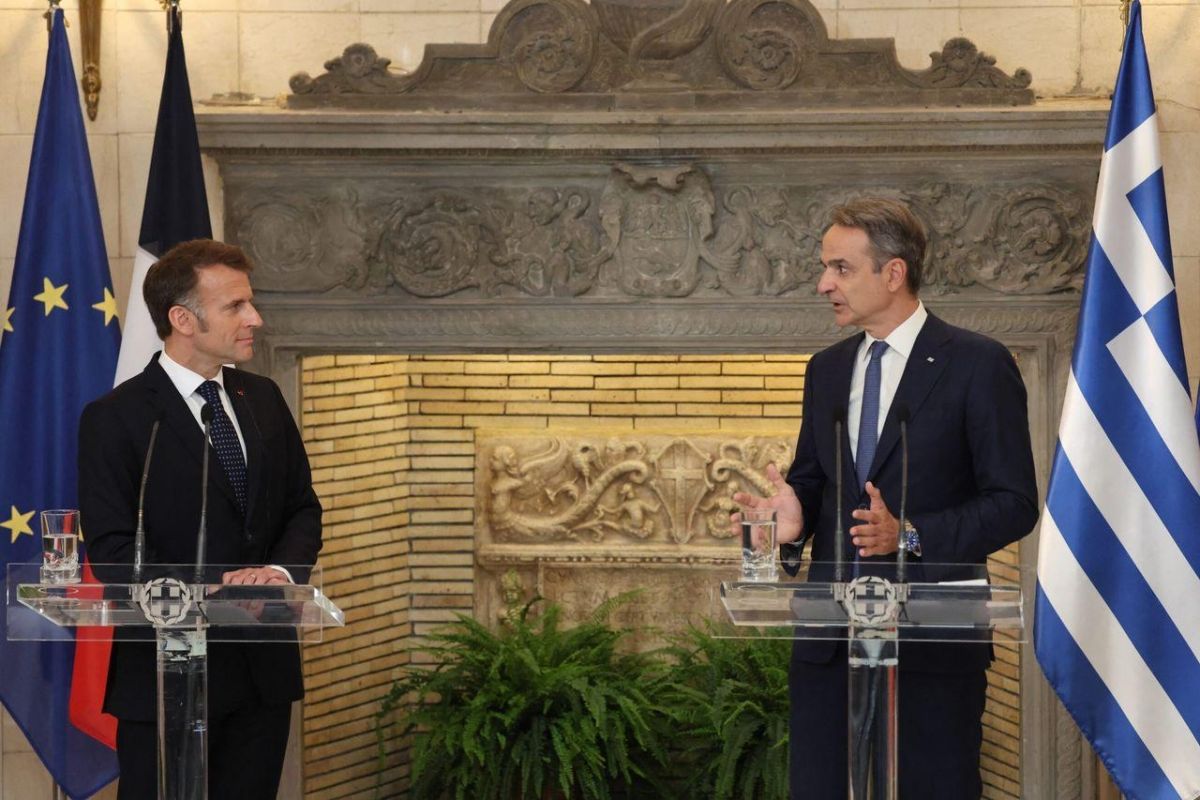
The visit of French President Emmanuel Macron to Athens and his joint appearance with Prime Minister Kyriakos Mitsotakis was far more than a ceremonial diplomatic event. It signaled a deliberate projection of power—toward both the Eastern Mediterranean and the European core.
At the center stood Article 42.7 of the EU Treaty, the mutual defense clause, now elevated from legal provision to strategic doctrine. Macron delivered a clear deterrent message:“Do not question it—we will stand by your side.”
He went further, describing the clause as:“Non-negotiable.”
Mitsotakis framed it as the cornerstone of bilateral ties:“The crown jewel of our agreements is mutual assistance.”
The strategic weight of Article 42.7
Article 42.7 is gradually evolving into a European deterrence mechanism, with France positioning it as a pillar of European strategic autonomy.

- Macron has argued it is politically more binding than NATO’s Article 5
- Both leaders described it as:“Reinforced concrete”
This rhetoric is not accidental—it reflects a shift toward operational credibility, particularly in regions like the Eastern Mediterranean.
Mitsotakis hinted at practical application:“It has been tested in practice… and we must build upon it.”
The implication is clear: Europe is exploring ways to act militarily under its own framework, beyond reliance on NATO.
The nine agreements: building a strategic axis
The agreements signed between Greece and France form a multi-layered geopolitical architecture, extending well beyond defense:
- Strategic partnership framework
- Defense and security cooperation
- Diplomatic coordination
- Technology, innovation, and research
- Education and workforce development
- Nuclear and economic collaboration
Together, they shape a Mediterranean pillar inside the EU, aligned with France’s vision of a more autonomous Europe.
From defense to finance: the eurobond push
Beyond security, Athens and Paris are aligning on economic strategy—specifically on joint European borrowing.
Their proposals include:
- Issuing new Eurobonds
- Extending repayment timelines for Covid-era debt
The goal: create a permanent EU fiscal capacity capable of funding:
- defense investments
- energy security
- industrial policy
This places them at odds with more fiscally conservative EU members, reopening debates over the future of European integration.
A message to rivals
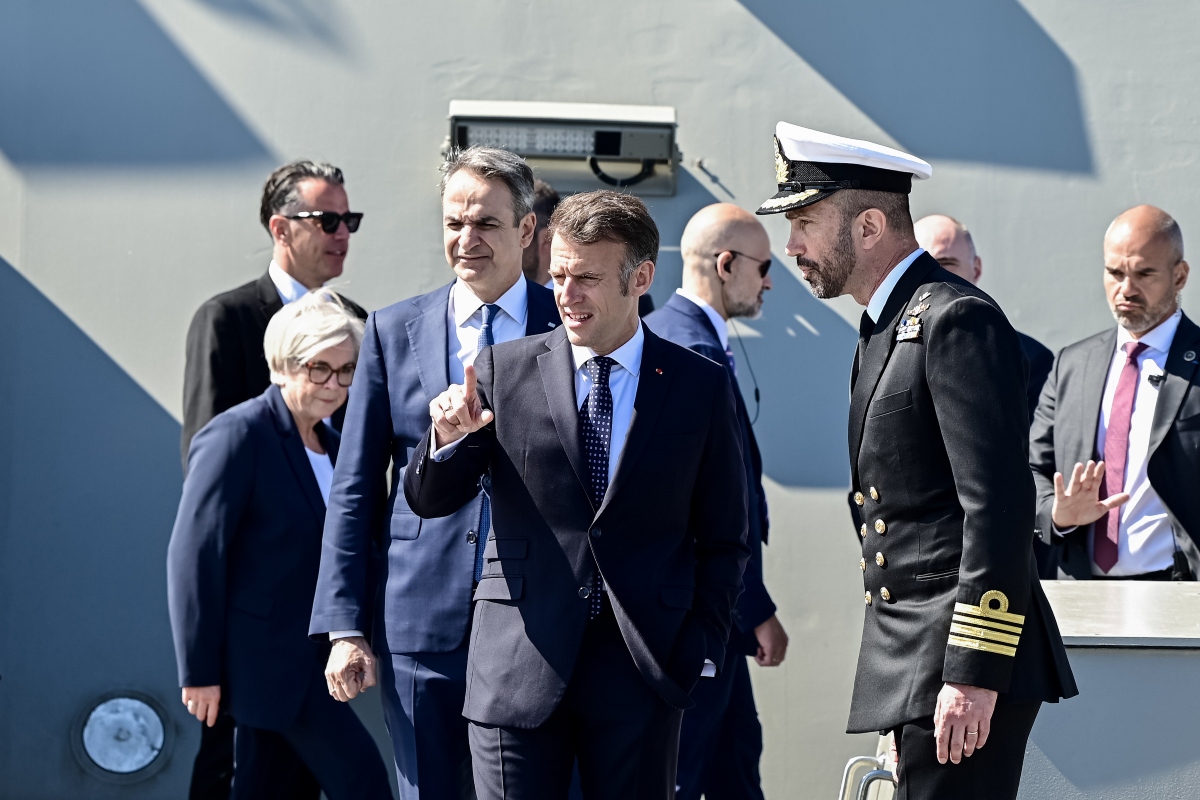
The symbolic appearance aboard the frigate “Kimon” carried clear strategic messaging: a demonstration of military partnership and political resolve.
France reaffirmed:“You can rely on us.”
Greece, in turn, is leveraging this alliance to reinforce its security posture in the Eastern Mediterranean, a region marked by ongoing tensions and competing claims.
The Athens–Paris alignment is evolving into something far more consequential than a bilateral partnership:
- In defense, it advances a European deterrence framework
- In economics, it pushes for deeper fiscal integration
- In geopolitics, it establishes a new axis of influence in Europe’s الجنوب and periphery
The real question is no longer whether Article 42.7 matters—but when and under what crisis it will be fully tested.
Source: pagenews.gr
Διαβάστε όλες τις τελευταίες Ειδήσεις από την Ελλάδα και τον Κόσμο