Hegseth blasts Europe: “Stop pointless meetings – Hormuz is your fight”
 ΧΡΟΝΟΣ ΑΝΑΓΝΩΣΗΣ 3 '

Πηγή Φωτογραφίας: AP Photo//Hegseth blasts Europe: “Stop pointless meetings – Hormuz is your fight”



“Hormuz under siege”: Washington tightens grip, pressures allies
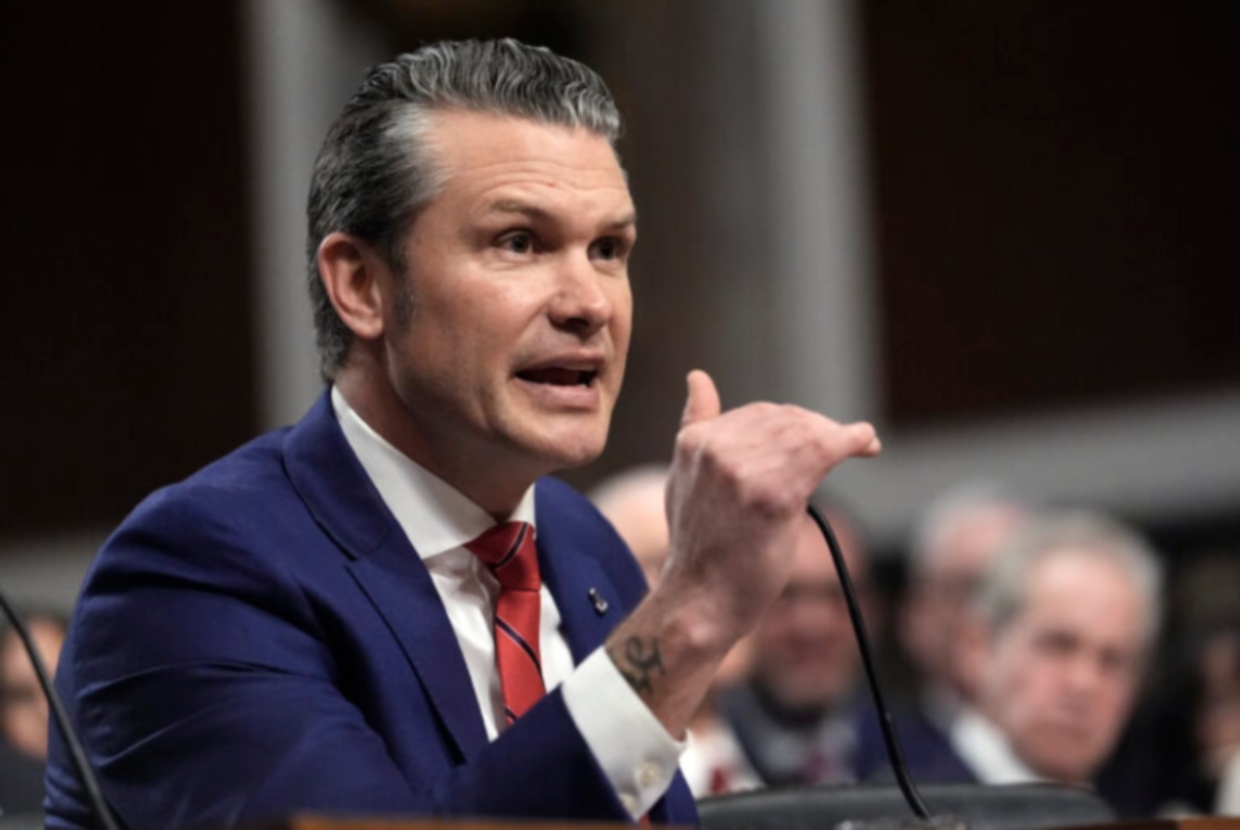
The crisis in the Strait of Hormuz is entering a new and dangerous phase, as U.S. Defense Secretary Pete Hegseth adopts an increasingly aggressive tone and reshapes the narrative of the conflict.
In his remarks, he asserted that the United States has effectively imposed a de facto naval blockade in the region: “We have control. Nothing in, nothing out,” he said, making clear that no vessel transits without U.S. Navy approval.
According to reports, at least 34 ships have already been forced to turn back, while the blockade is taking on a “global dimension”, extending beyond the Middle East.
Stark warning to Iran
Hegseth warned that any attempt by Iran to deploy additional naval mines “would constitute a violation of the ceasefire,”leaving open the possibility of immediate military retaliation.
At the same time, Washington signaled readiness to strike Iranian vessels deemed a threat to maritime security, under clearly defined rules of engagement.
Shifting responsibility: “Not just America’s fight”
The most consequential element of Hegseth’s statements is the geopolitical shift in responsibility:
- “This should not be America’s fight alone”
- “Europe and Asia benefit more from these waterways”
- “Alliance is a two-way street”
With these remarks, Washington is openly pressuring its allies to assume a greater share of the military and economic burden—signaling a doctrinal shift:
From “global security guarantor” → to “selective power with expectations”
Why the Strait matters
The Strait of Hormuz is one of the world’s most critical energy chokepoints:
- Roughly 20% of global oil supply passes through it
- Any disruption immediately impacts energy prices and the global economy
U.S. strategy appears aimed at maintaining full control over this “bottleneck,” preventing Iran from leveraging it as a geopolitical weapon.
What this really means
1. Military dominance – without stability
Despite claims that Iran’s naval capabilities have been severely degraded, the need for sustained U.S. presence suggests the threat is far from eliminated.
2. Pressure on Europe
Criticism of “pointless meetings” reflects growing U.S. frustration with Europe’s limited military engagement.
3. Globalization of the conflict
Expanded operations into the Indian and Pacific Oceans risk transforming a regional crisis into a global maritime confrontation.
4. Energy leverage as strategy
Control of maritime flows is being used not only against Iran, but also as leverage over allies.
The crisis in the Strait of Hormuz is no longer just a U.S.–Iran confrontation. It is evolving into:
- a test of Western unity
- a battle over global energy control
- a redistribution of geopolitical responsibility
Hegseth’s remark — “it’s more their fight than ours” — may be the clearest signal yet that Washington is redefining its global role.
Source: pagenews.gr
Διαβάστε όλες τις τελευταίες Ειδήσεις από την Ελλάδα και τον Κόσμο