PASOK’s Election Machine Gears Up: New Faces, Strategic Transfers and the Battle for Attica
 ΧΡΟΝΟΣ ΑΝΑΓΝΩΣΗΣ 6 '
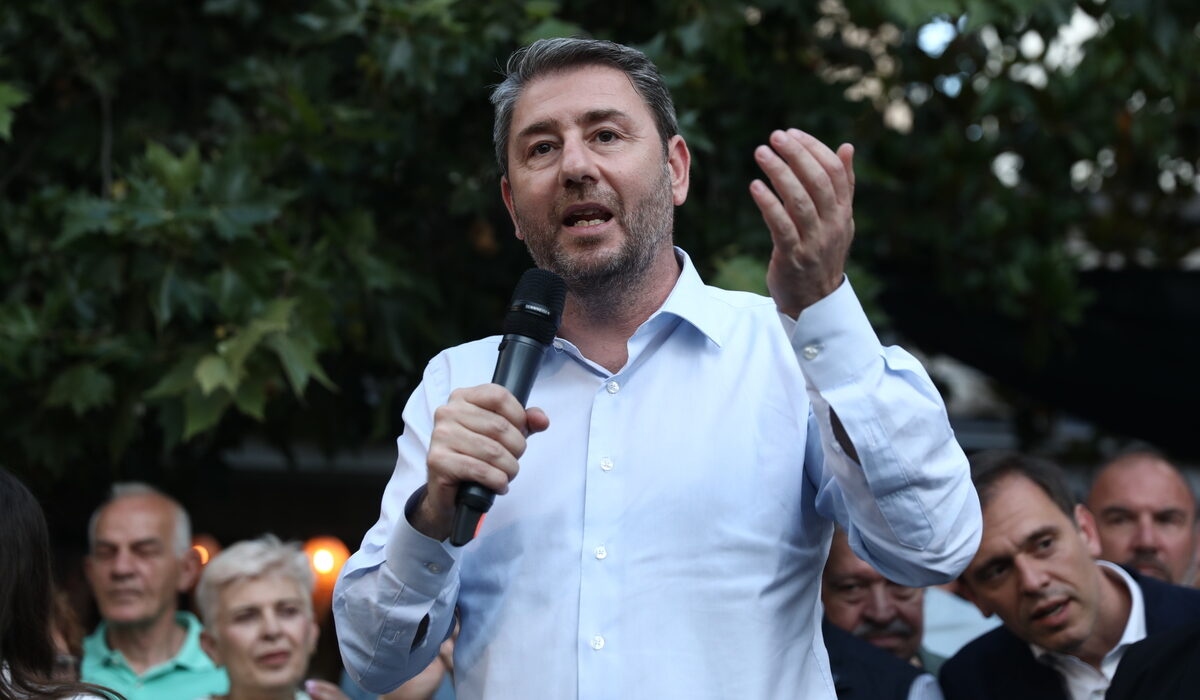
Πηγή Φωτογραφίας: eurokinissi/PASOK’s Election Machine Gears Up: New Faces, Strategic Transfers and the Battle for Attica



PASOK Bets on Renewal, Expansion and Attica in Its Push for Political Revival
While Greece remains months — and possibly years — away from the next national election, PASOK has already entered campaign mode.
Behind the scenes at the party’s headquarters on Charilaou Trikoupi Street, preparations are intensifying as leader Nikos Androulakis seeks to transform PASOK from a stable opposition force into a genuine contender for power.
The strategy is ambitious and multifaceted: refresh the party’s image, attract new political talent, reconnect with voters who abandoned the center-left over the past decade and strengthen its presence in Attica, the country’s most important electoral region.
According to party insiders, the first major wave of candidate announcements is expected in early July, with approximately 70% of PASOK’s electoral slate set to be unveiled.
The move is designed to send a clear message: PASOK wants to be seen not as a party preparing for elections, but as a party preparing for government.
High-Profile Transfers Signal a Broader Political Opening
One of the most closely watched aspects of PASOK’s preparations involves a number of potential high-profile additions from outside the party’s traditional ranks.
Among the names generating significant discussion is former SYRIZA MP Nina Kasimati, who is reportedly being considered for a candidacy in Piraeus B, a constituency with strong political symbolism and considerable electoral importance.
Another notable figure is former Defense Minister and retired Admiral Evangelos Apostolakis, whose potential candidacy in Athens A would bring national recognition and expertise in security and defense matters to the PASOK ticket.
Neither move has been officially confirmed, but both reflect a broader effort by Androulakis to expand PASOK’s appeal beyond its traditional electoral base.
The message is clear: PASOK wants to attract voters from across the center-left spectrum while presenting itself as a serious governing alternative.
The Party’s Heavyweights Remain at the Frontline
Alongside new additions, PASOK is relying heavily on its most recognizable political figures.
Pavlos Geroulanos is expected to run again in Athens A, while Manolis Christodoulakis will likely contest Eastern Attica.
In Northern Athens, Milena Apostolaki and Dimitris Mantzos are expected to lead the campaign effort, while in Southern Athens the party will field two of its most recognizable names: Anna Diamantopoulou and Pavlos Christidis.
Party strategists believe that combining experienced politicians with new faces can help project an image of both credibility and renewal — a balance PASOK considers essential if it hopes to expand its electoral reach.
Why Attica Matters More Than Ever
Inside PASOK, there is little doubt about where the next election could be won or lost.
Attica has become the centerpiece of the party’s electoral strategy.
Senior officials argue that PASOK’s current support in the Athens metropolitan area does not reflect its real political potential and believe there is substantial room to recover voters who drifted toward New Democracy, SYRIZA or smaller parties over the past decade.
For that reason, a dedicated campaign plan has been developed for Athens, Piraeus, Western Attica and key suburban districts.
Rather than relying solely on parliamentary debates and media appearances, the party intends to focus on direct engagement with local communities, professional groups, young workers and civic organizations.
As one party official put it privately:
“The next election will not be decided in television studios. It will be decided in neighborhoods and workplaces.”
Winning Back Young Voters
A particularly important target demographic is Greece’s younger generation.
PASOK believes that voters under 35 will play a decisive role in shaping the country’s future political landscape.
Recent events organized in Drapetsona marked the beginning of a broader national campaign focusing on issues that directly affect younger citizens.
Housing affordability, rising living costs, transportation expenses, labor conditions and wage stagnation have emerged as key themes.
Party officials argue that these concerns have been largely ignored by the political establishment and believe they represent an opportunity to reconnect with a generation that has often felt politically homeless.
The challenge for PASOK is to convince young voters that it offers practical solutions rather than campaign slogans.
The Leadership Test for Androulakis
Ultimately, the candidate lists are about more than selecting names.
They represent a broader test of Nikos Androulakis’ leadership.
Despite remaining one of the country’s strongest opposition parties, PASOK has struggled to translate dissatisfaction with the government into a decisive electoral breakthrough.
The emergence of new political initiatives, speculation surrounding Alexis Tsipras’ future role and growing competition for center-left voters have only increased the pressure on the party leadership.
For Androulakis, the coming months will therefore be about more than organization.
They will be about proving that PASOK can once again become a party capable of governing Greece.
The First Real Test Has Already Begun
The official campaign may still be distant.
But politically, the race has already started.
Candidate selections, strategic alliances, grassroots mobilization and targeted outreach efforts are now shaping the contours of the next electoral contest.
For PASOK, the road back to power begins with rebuilding credibility, expanding its coalition and winning back voters where it matters most.
And nowhere will that battle be more important than Attica.
Διαβάστε όλες τις τελευταίες Ειδήσεις από την Ελλάδα και τον Κόσμο