Bloomberg Bombshell: Trump Uses “Putin-Style Tactics” to Keep Oil Below $90
 ΧΡΟΝΟΣ ΑΝΑΓΝΩΣΗΣ 8 '
Πηγή Φωτογραφίας: AP Photo//Bloomberg Bombshell: Trump Uses “Putin-Style Tactics” to Keep Oil Below $90



For years, “dark” oil trading was synonymous with Russia, Iran and shadow fleets designed to circumvent Western sanctions.
Now, however, similar operational tactics appear to be serving an entirely different purpose: keeping oil flowing out of the Persian Gulf despite the war and preventing a dramatic surge in global crude prices.
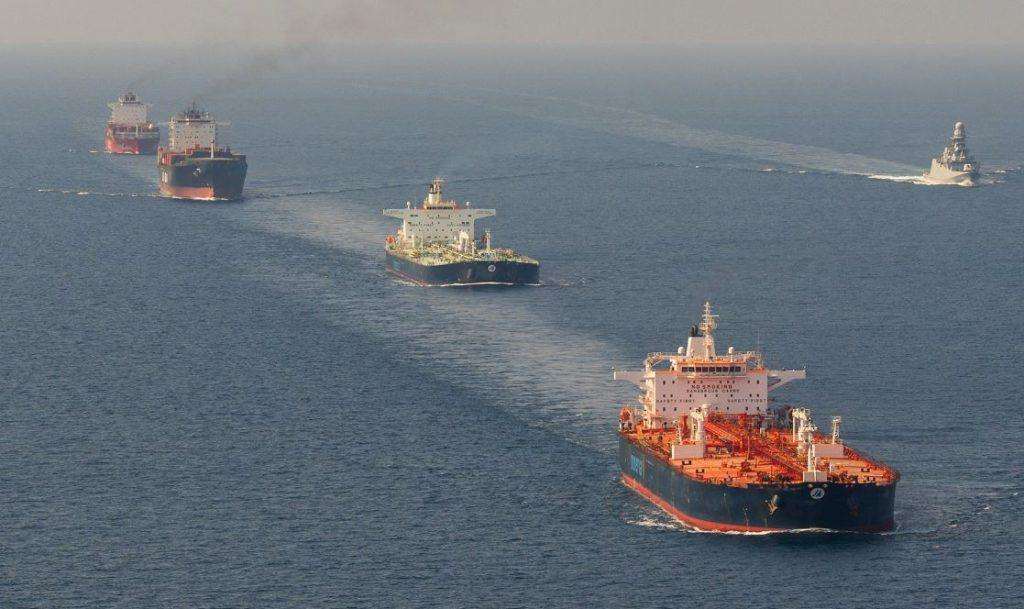
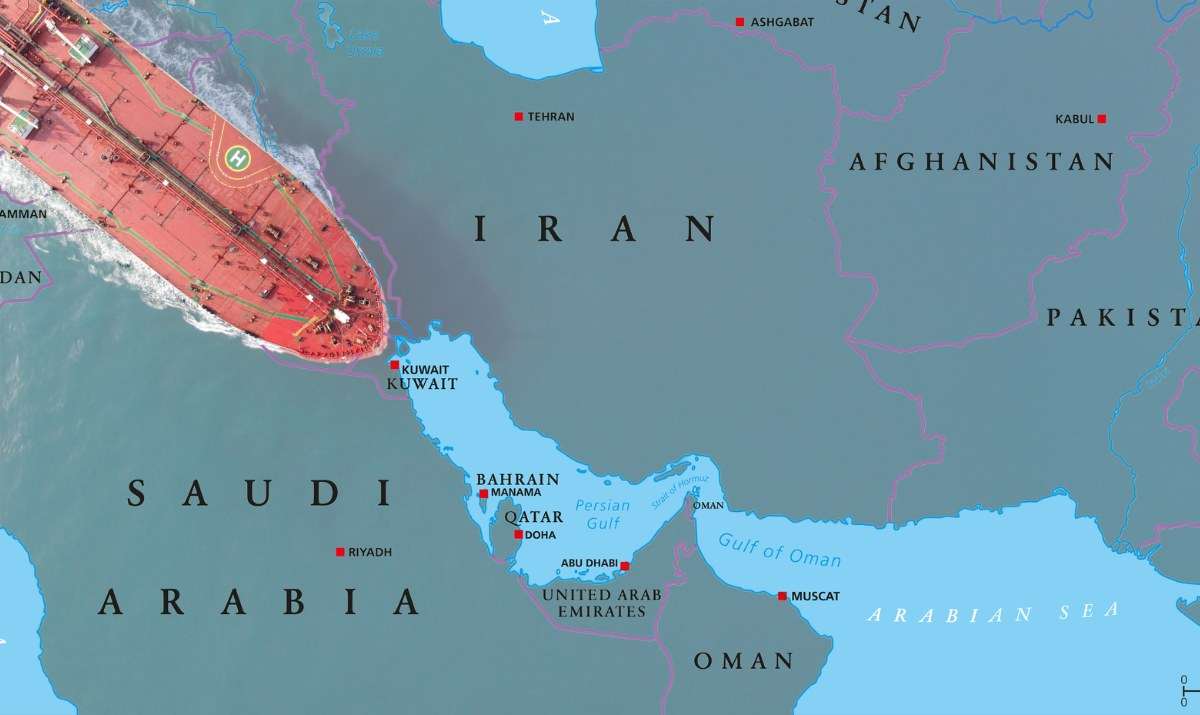
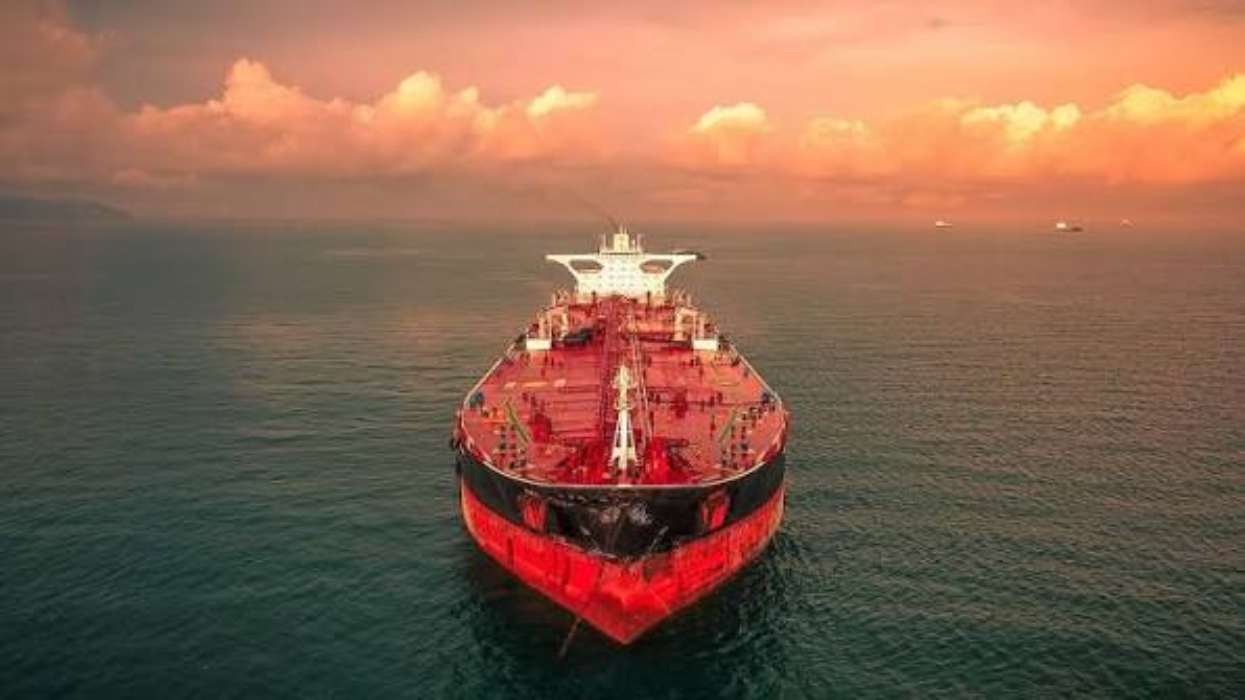
Tankers are switching off their Automatic Identification Systems, or AIS, crossing the Strait of Hormuz with limited visibility to conventional vessel-tracking systems and transferring their cargoes to larger ships in the Gulf of Oman.
The result is that actual oil flows may be significantly higher than those visible on public tracking platforms.
And that could help explain one of the biggest paradoxes of the conflict: despite repeated attacks on commercial vessels and a sharp decline in conventional traffic through Hormuz, Brent crude has remained around $90 a barrel rather than exploding toward $120 or even $150.
The tankers disappearing from the map
The method bears striking similarities to practices long associated with so-called shadow fleets.
Tankers turn off their AIS transponders, reducing the ability of observers to track their position and course.
They then move through the Strait of Hormuz and, after reaching safer waters in the Gulf of Oman, transfer crude from ship to ship.
The tactic makes it considerably harder for traders, analysts and vessel-tracking companies to establish an accurate picture of actual flows through the world’s most important energy chokepoint.
The difference from Russia’s shadow fleet is important.
In the Russian case, dark shipping practices have frequently been associated with sanctions circumvention and efforts to obscure the origin, ownership or destination of cargoes.
In the Gulf, similar techniques are being used primarily to reduce the exposure of vessels operating in a war zone and to keep energy exports moving.
Operationally, however, the resemblance is striking.
Trump buys the one thing he needs most: time
For the White House, keeping Gulf oil flowing has become strategically critical.
Brent at $130 or $150 a barrel could rapidly transform the Iran war from a geopolitical confrontation into a domestic economic and political crisis for Washington.
Higher crude prices would feed directly into gasoline and transportation costs, reignite inflationary pressures and complicate the Federal Reserve’s job.
As long as oil remains closer to the $80-$90 range, however, the economic consequences of the conflict remain considerably more manageable.
That does not mean there is evidence that Donald Trump personally designed a secret tanker network.
But the ability of Gulf producers to maintain exports — alongside U.S. military support for maritime security — objectively works in Washington’s favor.
The mystery of the real Hormuz flows
Before the conflict, roughly 20 million barrels of oil and petroleum products moved through the Strait of Hormuz each day — close to one-fifth of global petroleum consumption.
The war caused conventional traffic to collapse.
But measuring today’s real flows has become extraordinarily difficult precisely because some vessels are operating with AIS switched off.
This creates an unprecedented problem for the oil market.
Traders are being asked to price a major Middle Eastern war without knowing with certainty how much crude is actually moving through the world’s most strategically important oil corridor.
Oil moves through a maritime relay system
The emerging mechanism effectively resembles an offshore relay network.
Smaller or specially selected tankers take on the dangerous part of the journey through Hormuz.
They move through the Strait — in some cases with limited electronic visibility — and carry their cargoes toward the Gulf of Oman.
There, larger tankers can receive the oil through ship-to-ship transfers and continue toward Asian and other international markets.
The system adds cost, time and risk to every barrel.
But as long as it works, oil continues reaching consumers.
Iran targets the system’s weakest link
The same mechanism has created an obvious vulnerability.
Tankers involved in these movements have become potential targets as attacks on commercial shipping continue.
That matters because the strategic objective of keeping Hormuz economically functional depends not merely on having enough crude available.
It depends on having shipowners, crews, insurers and traders willing to assume the risks involved in transporting it.
Every successful attack raises insurance premiums, freight costs and the possibility that more vessel operators will simply refuse to enter the area.
ADNOC refuses to stop
The United Arab Emirates’ ADNOC has continued trying to maintain exports despite the deteriorating security environment.
The company has portrayed uninterrupted energy flows as a matter of global economic importance and has warned against the weaponization of the Strait of Hormuz.
The risks to crews, however, are very real.
Repeated attacks on shipping demonstrate that the system keeping Gulf oil flowing operates under permanent military pressure.
This is also why caution is required with casualty and vessel numbers circulating publicly. Claims that exactly 23 ADNOC vessels have been attacked should not be treated as established without further independent confirmation.
Saudi Arabia watches Oman
The next major question is Saudi Arabia.
Riyadh has an important strategic advantage because its East-West Pipeline allows crude to reach the Red Sea without passing through Hormuz.
But threats to shipping in the Red Sea create another layer of risk.
That makes the concentration of large tankers around the Gulf of Oman particularly significant.
If Saudi Arabia increasingly uses offshore transfer arrangements, the effective capacity of this alternative maritime system could expand substantially.
Iraq, Kuwait and Qatar need an exit too
Other Gulf producers face the same problem.
Iraq is particularly dependent on maintaining export access through the Persian Gulf, while Kuwait and Qatar also need reliable maritime routes to Asian customers.
The more producers manage to keep cargoes moving despite the conflict, the smaller the geopolitical premium embedded in global crude prices becomes.
That is precisely why these unconventional shipping arrangements matter far beyond the Strait itself.
Why Brent has not reached $150
Dark or low-visibility shipping is not the only explanation.
Global oil demand has also weakened, inventories provide an additional cushion, alternative pipeline routes remain available and strategic reserves can mitigate temporary disruptions.
Taken together, those factors help explain why the market is pricing serious geopolitical risk without yet pricing an outright global shortage.
In other words, the market is behaving as though there is a dangerous war — but still enough oil.
Trump’s high-stakes oil gamble
This is where the geopolitical significance becomes clear.
As long as Gulf producers can keep millions of barrels flowing, Trump avoids the scenario Washington fears most: an energy shock severe enough to force a choice between military escalation and domestic economic stability.
But the system is fragile.
It depends on dangerous crossings, ships operating with reduced visibility, offshore transfers, military protection, insurance capacity and shipowners willing to assume extraordinary wartime risks.
One major attack, a serious maritime accident or a prolonged disruption of these shuttle routes could overturn the balance within hours.
For now, however, the war continues, Hormuz remains extraordinarily dangerous — and enough oil is still reaching global markets to keep Brent around $90.
And the tactics helping make that possible look remarkably similar to the shadow-shipping playbook the West spent years trying to contain.
Source: pagenews.gr
Διαβάστε όλες τις τελευταίες Ειδήσεις από την Ελλάδα και τον Κόσμο