‘Zero Hour’ for the Greece–Cyprus Power Cable: The Next Big Test With Turkey
 ΧΡΟΝΟΣ ΑΝΑΓΝΩΣΗΣ 10 '
Πηγή Φωτογραφίας: eurokinissi//‘Zero Hour’ for the Greece–Cyprus Power Cable: The Next Big Test With Turkey


The next major stress test in Greek-Turkish relations may not begin with a fighter jet, a drilling rig or even a warship.
It could begin with a cable on the seabed of the Eastern Mediterranean.
The planned resumption of marine surveys for the Great Sea Interconnector (GSI), the electricity link between Greece and Cyprus, is bringing one of the most sensitive geopolitical disputes between Athens and Ankara back to the forefront.
And this time, the stakes are even higher.
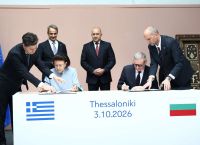
On August 5, in the presence of Greek Prime Minister Kyriakos Mitsotakis, an agreement was signed for French infrastructure investor Meridiam to acquire a majority stake in the GSI, while a tripartite agreement involving Greece’s IPTO, GSI and Nexans was also concluded for the seabed surveys required to move the project forward.
The development effectively relaunches a project that has faced not only financial and technical difficulties, but also the much larger geopolitical confrontation between Greece and Turkey over maritime jurisdiction in the Eastern Mediterranean.
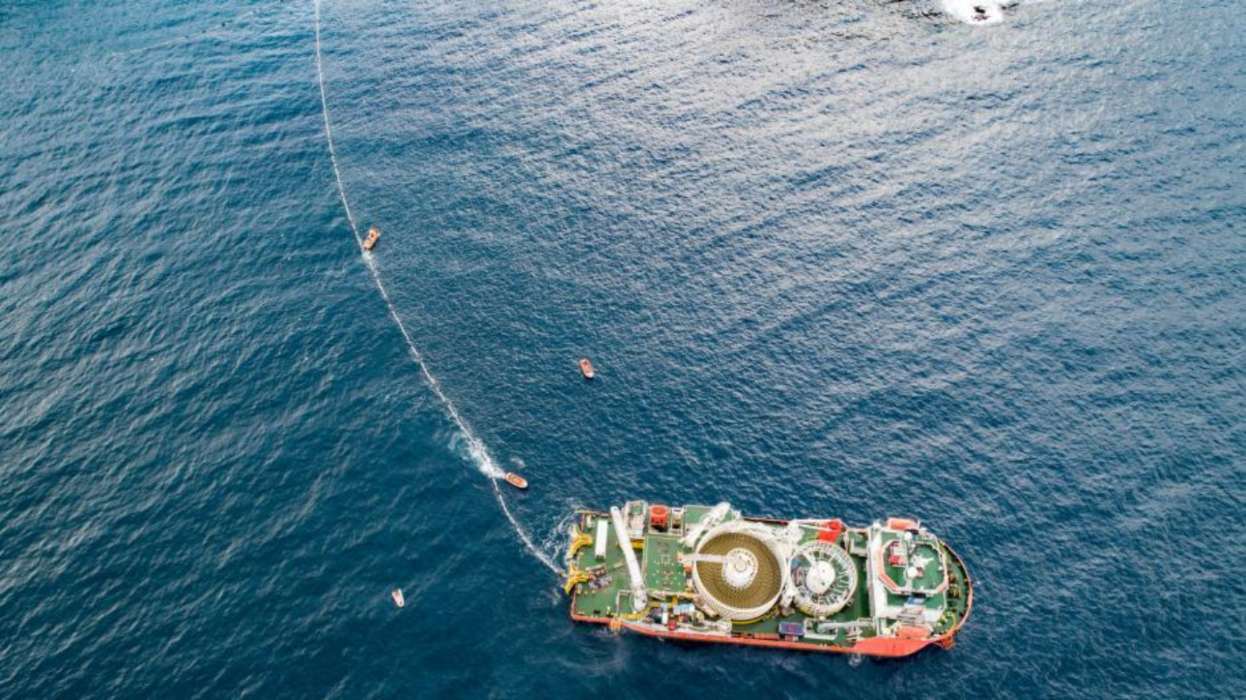
The Cable That Could Put Greek and Turkish Warships Face to Face Again
Athens knows the danger well.
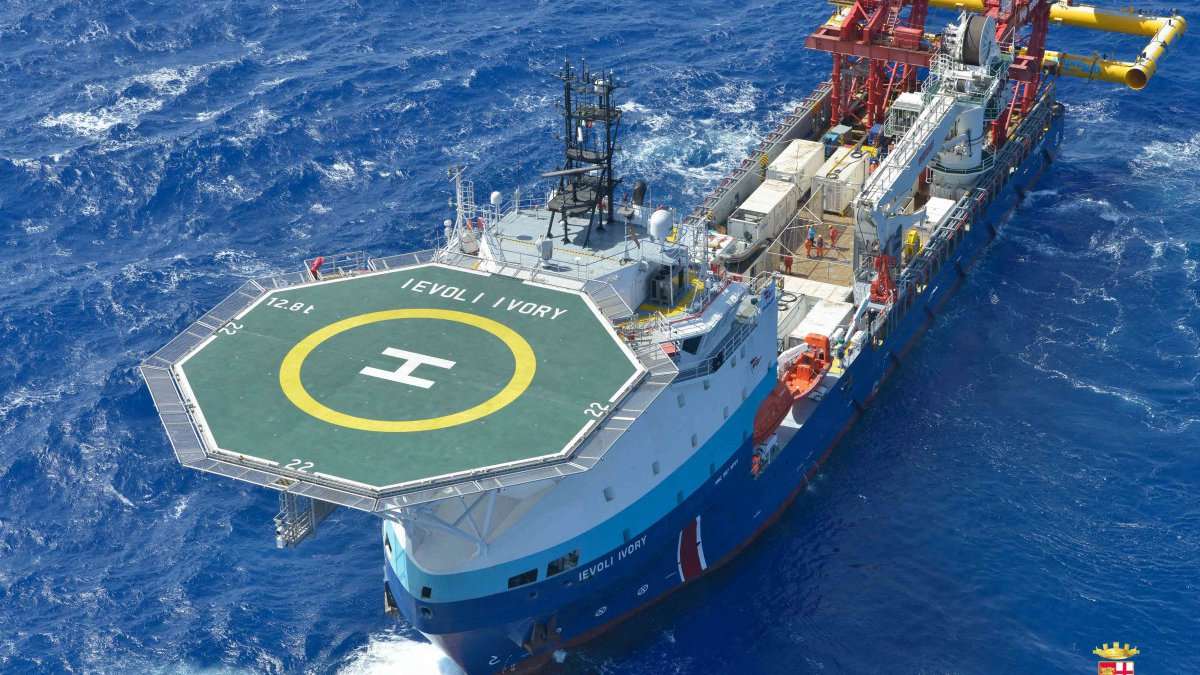
In July 2024, the Italian research vessel Ievoli Relume was conducting surveys connected with the interconnector south of the Greek islands of Kasos and Karpathos.
On July 22 and 23, Turkish naval vessels appeared in the area, Greece deployed its own warships, and the two NATO allies entered a tense stand-off lasting roughly 40 hours before diplomatic channels helped defuse the situation.
Greece’s electricity transmission operator subsequently announced that the Ievoli Relume had completed the planned work in international waters between Kasos and Karpathos.
But the confrontation left behind a far more important question:
What happens when survey vessels return to waters where Turkey asserts competing maritime claims?
That question is now moving back towards the centre of Greek-Turkish relations.
Ankara’s Maritime Claims Are the Real Issue
Turkey’s objections are not fundamentally about the electricity cable itself.
They are about who has jurisdiction over the waters through which it must pass.
Ankara has invoked maritime claims associated with its 2019 agreement with Libya to argue that activities in parts of the Eastern Mediterranean cannot proceed without Turkish involvement or consent.
Athens rejects that position.
During the Kasos episode, Greece maintained that survey activities were being conducted both within Greek territorial waters and in areas where Athens considers its maritime rights established, including through the 2020 Greece-Egypt maritime delimitation agreement.
This transforms what might appear to be an engineering project into something much more consequential:
a real-world test of competing Greek and Turkish positions over the maritime map of the Eastern Mediterranean.
France Is Now in the Game
This is where the equation has changed significantly.
The arrival of Meridiam alters not only the financial structure of the project but also its geopolitical profile.
The French infrastructure investor has taken a majority position in the GSI project company, bringing international capital and expertise to a project whose geopolitical risks have long worried investors.
For Athens, the French involvement carries obvious strategic value.
It adds a substantial French commercial interest to an infrastructure project that Turkey has previously challenged at sea.
That does not mean Paris has undertaken any military obligation to protect survey vessels.
But it does mean that another major European country now has a direct economic stake in the project’s successful completion.
The cable is therefore becoming increasingly difficult to portray as simply another bilateral dispute between Athens and Ankara.
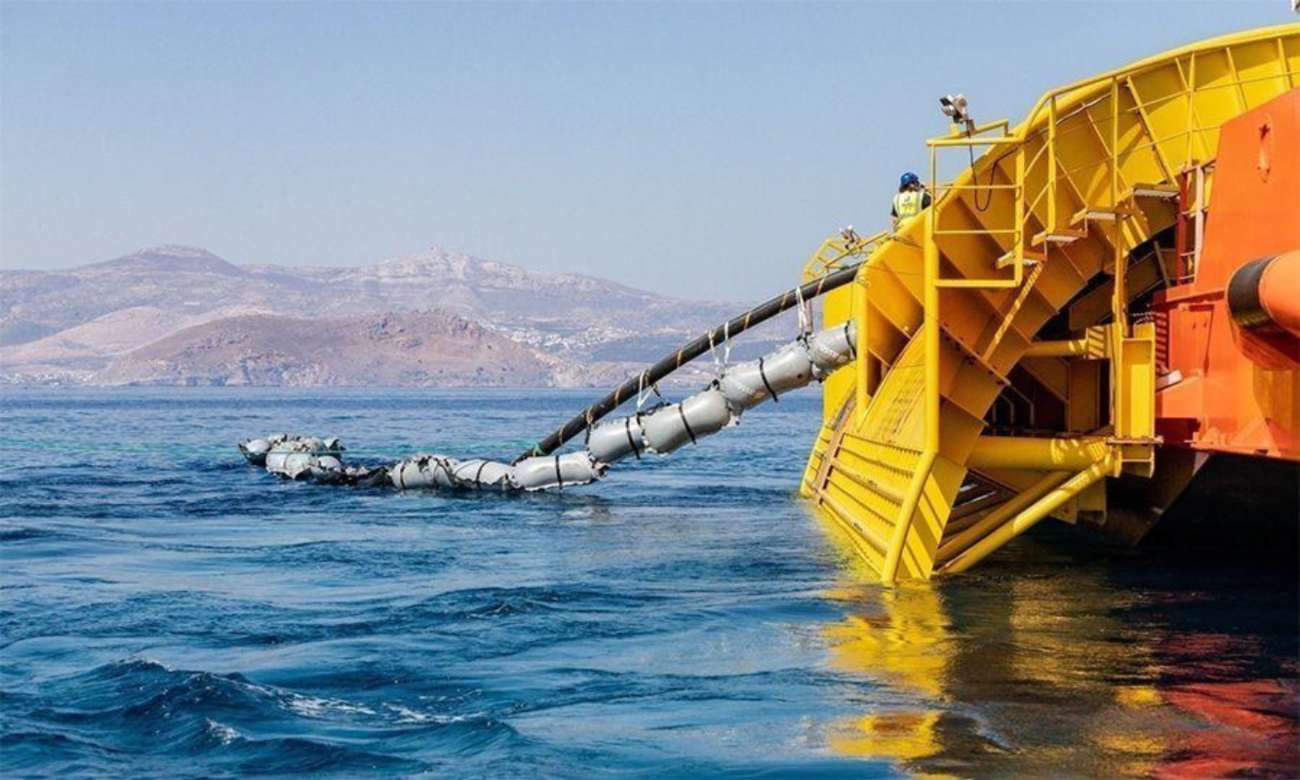
Athens Wants to Turn It Into a European Issue
That is arguably Greece’s strongest diplomatic card.
The Great Sea Interconnector is not merely a Greek-Cypriot energy project.
It has been designated an EU Project of Common Interest, placing it within Europe’s broader strategy for cross-border energy infrastructure.
The European dimension is particularly important because Athens wants any Turkish challenge to be viewed not simply as pressure against Greece or Cyprus, but as interference with a strategically important European energy project.
The logic is straightforward:
the more the GSI becomes a European infrastructure project backed by French capital and EU policy, the higher the political cost of obstructing it becomes.
For Greece, Europeanisation of the dispute is therefore part of the deterrence strategy.
Why Cyprus Needs the Cable
For Cyprus, the project carries even greater strategic importance.
The island remains electrically isolated from the continental European grid.
The interconnector is designed to change that by linking Cyprus to Greece and, through Greece, to the wider European electricity market.
Such a connection could strengthen energy security, support greater integration of renewable energy and reduce the strategic vulnerability created by Cyprus’s isolation.
The project therefore goes far beyond simply laying another electricity cable.
For Nicosia, it is an infrastructure project with economic, energy-security and geopolitical consequences.
And for Europe, connecting the EU’s last electrically isolated member state carries obvious strategic significance.
But There Is Still an Economic Problem
Geopolitics is not the project’s only challenge.
The GSI has also faced financial uncertainty, regulatory disagreements and questions over how construction costs and investment risks should be divided.
Meridiam’s entry is designed to address part of that problem by strengthening the project financially and spreading risk.
It does not make every difficulty disappear.
Long-term financing must remain credible, regulatory arrangements between Greece and Cyprus need to function, and investors must be convinced that geopolitical tensions will not repeatedly interrupt construction.
The latest deal therefore does not mark the end of the GSI saga.
It represents an attempt to restart a project caught between finance and geopolitics.
The Real Test Will Come at Sea
All the agreements, investors and diplomatic statements will ultimately be tested in one place:
when the survey vessels return to the Eastern Mediterranean.
If the work proceeds without interference, it would be a significant development and potentially a sign that Athens and Ankara are prepared to prevent this particular dispute from triggering a wider confrontation.
But if Turkish naval units again appear to challenge the surveys, the Greek government could face an extremely difficult decision.
Does Athens insist that the vessel continues its work, accepting the risk of escalation?
Or does it again seek a diplomatic de-escalation, risking the perception that Turkish pressure can influence activities Greece considers lawful?
That is what makes the coming surveys so important.
Kasos Created a Precedent Athens Cannot Ignore
The 2024 confrontation matters because it demonstrated how rapidly a technical survey mission can turn into a military crisis.
Greek and Turkish naval vessels found themselves operating in the same area, while diplomatic intervention became necessary to prevent the situation from deteriorating.
Two years later, the circumstances are different.
There is a new majority investor.
There is renewed momentum behind the seabed surveys.
And Athens is making a clear effort to give the project a stronger French and European identity.
But one fundamental problem remains unchanged:
Turkey has not abandoned its maritime claims.
The next phase of the GSI will therefore test whether the relative political calm between Greece and Turkey can survive when their competing positions move from diplomatic statements to actual operations at sea.
The Turkey Factor Cannot Be Separated From the Energy Map
The dispute also reflects a much broader strategic competition.
The Eastern Mediterranean is becoming increasingly important as a corridor for electricity, natural gas, data infrastructure and potential future energy links between Europe and the wider Middle East.
Control over routes and maritime jurisdiction therefore has implications far beyond national prestige.
Greece wants to strengthen its role as an energy and infrastructure gateway linking Europe with the Eastern Mediterranean.
Cyprus wants to end its electricity isolation.
Turkey, meanwhile, wants to ensure that regional energy architecture does not develop in ways that exclude Ankara or undermine its maritime claims.
The GSI sits directly at the intersection of those competing ambitions.
It Is Not Just a Cable
That is why the Great Sea Interconnector matters far beyond the energy sector.
For Cyprus, it offers a route out of electrical isolation.
For Greece, it is both a strategic energy project and a test of Athens’ ability to carry out activities in maritime areas where Turkey advances competing claims.
For France, it now represents a significant commercial investment.
For the European Union, it forms part of the architecture of cross-border energy connectivity.
And for Turkey, it touches the heart of a much broader struggle over who shapes the maritime and strategic order of the Eastern Mediterranean.
The Next Greek-Turkish Crisis Could Begin on the Seabed
Athens and Ankara have powerful reasons to avoid another military confrontation.
But the Greece-Cyprus cable creates exactly the kind of situation in which competing legal and geopolitical positions cease to be theoretical and become a practical confrontation on the ground – or, in this case, at sea.
As long as the project remains on maps and engineering plans, disagreements can be managed diplomatically.
When a survey ship sails into contested waters and begins working along the planned cable route, somebody must decide whether it will be allowed to continue.
That is where the real test begins.
The arrival of Meridiam has given the Great Sea Interconnector new financial and political momentum. French involvement has widened the geopolitical equation, while the European character of the project gives Athens another diplomatic card.
But the most difficult part of the project will not be decided in offices in Athens, Nicosia, Paris or Brussels.
It will be decided in the waters of the Eastern Mediterranean – where Greece and Turkey may soon discover whether a cable designed to connect two European states can become the trigger for their next major geopolitical confrontation.
Source: pagenews.gr
Διαβάστε όλες τις τελευταίες Ειδήσεις από την Ελλάδα και τον Κόσμο